Ryegrass needs direct contact with soil to germinate. A dense warm-season canopy blocks that contact — and blocks the light that young seedlings need to establish. To scalp a warm season lawn before overseeding, you’ll need to time the cut correctly, match the cutting height to your grass type, and clear the surface before seed goes down. This article covers exactly when to scalp by region and grass type, how low to cut, and what to do in the short window between scalping and spreading seed.
Disclosure: This article contains affiliate links. If you purchase through these links, I may earn a small commission at no extra cost to you. As an Amazon Associate, I earn from qualifying purchases.
Why Scalping Matters Before Overseeding Warm Season Grass With Ryegrass
Scalping is not a maintenance mow. It’s a deliberate canopy removal cut done once before overseeding, designed to expose the soil surface.
Bermuda, zoysia, and St. Augustine all grow laterally and develop a dense upper canopy. When ryegrass seed lands on that canopy, it sits on leaf tissue — not soil. Without direct soil contact, germination rates drop sharply regardless of seed quality or watering technique.
Light penetration matters too. Young ryegrass seedlings need light to push through and establish. A tall warm-season canopy shades the surface, giving seedlings a weak start even when some germination occurs.
Thatch is a secondary concern. Thatch is the layer of dead and living organic matter that builds up just above the soil surface. If thatch depth exceeds about ½ inch, it can trap seed just as effectively as the canopy above it. Scalping alone doesn’t fix a thatch problem — heavy thatch requires a separate dethatching step before seed goes down. If your lawn has broader issues beyond overseeding prep, a How to Fix a Bad Lawn Step by Step Renovation Guide can help you assess whether a full renovation makes more sense than seasonal overseeding.
When to Scalp a Warm Season Lawn Before Overseeding With Ryegrass
Timing is the most common place homeowners get this wrong.
The target window: Scalp when warm-season grass has visibly slowed its growth rate but before a hard frost arrives. In practical terms:
- Transition zone (zones 7–8a): Late September to mid-October
For a full seasonal task calendar that maps these windows to your specific grass type, see this lawn care schedule by grass type and region.
The warm-season grass should be coasting, not pushing new growth. If it’s still actively growing when you scalp, the canopy will rebuild before you get seed down — and you’ll have stressed the grass for nothing.
Soil temperature as a timing signal: Ryegrass germinates best when soil temperatures are between 50°F and 65°F. A probe-style soil thermometer takes the guesswork out of timing, especially in the transition zone where conditions vary week to week. Stick the probe 2 inches deep and measure in the morning for the most accurate reading.
The practical rule: Scalp 1 to 3 days before you plan to seed. Don’t scalp a week out and let the surface sit — warm-season grass starts recovering quickly, and you want to seed onto an open surface, not one that’s already closing back up.
How Low to Cut — Scalping Heights by Grass Type
These cuts are significantly lower than normal mowing heights. That’s the point. The goal is canopy removal, not maintenance mowing.
Bermuda grass: Cut to 0.5–1 inch. Bermuda tolerates aggressive scalping and recovers well in spring. Target the lower end of this range when overseeding. This is the easiest grass type to scalp for overseeding prep. Understanding Bermuda Grass Winter Dormancy: What’s Normal and What’s Not can help you recognize when the grass has slowed enough to make scalping worthwhile without causing unnecessary stress.
Zoysia: Cut to 0.5–1 inch. Zoysia has a denser canopy than bermuda. If your lawn is currently taller than 2.5 inches, consider a two-pass approach — drop one notch the day before, then follow with the scalp cut the next day.
St. Augustine: Cut to 1.5–2 inches. St. Augustine does not tolerate aggressive scalping. Its stolons — the above-ground runners that spread the grass — run close to the surface, and cutting too low damages them. Spring recovery will be slow and patchy if you scalp St. Augustine below 1.5 inches.
Centipede: Centipede grass is rarely overseeded with ryegrass. Centipede is sensitive to the spring transition from ryegrass back to warm-season growth, and the competition can damage it. Most centipede lawn owners are better off skipping winter ryegrass overseeding entirely.
With your target height confirmed, here’s how to execute the scalp cut from start to finish.
Step-by-Step: How to Scalp a Warm Season Lawn Before Overseeding With Ryegrass
Step 1: Set Your Mower Height — Drop Gradually If Needed
Step 2: Mow in a Consistent Pattern at the Scalp Height
Mow with overlapping passes — about 30% overlap prevents uneven strips and missed areas. Use a sharp blade. A dull mower blade tears grass tissue rather than cutting it cleanly, which leaves ragged edges that are more susceptible to disease.
Step 3: Bag or Remove All Clippings Immediately
This step is not optional. Clippings left on the lawn surface create a mat that prevents seed from reaching soil. If your mower bags, use it — an electric lawn mower with a bagging option makes this step straightforward. If not, rake or blow clippings off the surface right after mowing. An electric leaf blower clears clippings from a scalped lawn quickly and evenly.
Step 4: Check Thatch Depth and Dethatch If Needed
After scalping, cut a small section at the edge of the lawn and look at the cross-section. The thatch layer sits between the green shoots and the soil. If it’s thicker than ½ inch, run a thatch rake over the surface before seeding. A manual thatch rake handles light thatch on smaller lawns. For large areas or thick buildup, a power dethatcher — available at most equipment rental shops — is worth the effort.
Thatch at ¼ inch or less can stay without affecting germination.
Step 5: Clear Remaining Surface Debris
Scalping exposes dead organic matter, clumped clippings, and surface debris that a first pass misses. Rake or blow the surface clean so it’s as open as possible. Seed landing on debris instead of soil won’t germinate reliably.
Step 6: Inspect the Surface Before Seeding
Walk the lawn and look down. You should see soil between the grass shoots. If the surface still looks like a solid mat of green and brown with no visible soil, make one more light pass or spend more time on debris removal. A properly scalped lawn looks noticeably shorter and more open than a normal mow.
What to Do After You Scalp a Warm Season Lawn Before Overseeding
The window between scalping and seeding is short. When you scalp a warm season lawn before overseeding, the timing of seeding afterward matters as much as the cut itself.
Seed within 1–3 days. Warm-season grass starts recovering quickly. The longer you wait, the more the surface closes up.
Water lightly if the soil surface is dry. Seed needs moist soil for germination to start. A light pass with the hose the day before seeding is enough.
Do not fertilize the warm-season grass at this point. Nitrogen encourages the warm-season grass to push new growth, which undermines the open surface you just created.
Apply seed at the right rate. Use a walk-behind broadcast spreader for even coverage on lawns larger than a few hundred square feet. Target these rates for your chosen ryegrass seed:
- Perennial ryegrass: 5–8 lbs per 1,000 sq ft
- Annual ryegrass: 10–15 lbs per 1,000 sq ft
Topdress lightly if needed. On sandy or very thin soil, apply a ⅛ to ¼ inch layer of compost after seeding to improve seed-to-soil contact and retain moisture during germination.
Water immediately after seeding. Keep the top ½ inch of soil consistently moist until germination — light and frequent watering works better than deep, infrequent sessions at this stage. Ryegrass typically germinates in 10–14 days when soil temperatures are in range.
Common Mistakes When You Scalp a Warm Season Lawn Before Overseeding
Scalping too early while the grass is still actively growing. The warm-season canopy rebuilds before you seed. You’ve stressed the grass and gained nothing.
Leaving clippings on the surface. Clipping mats are a physical barrier — seed lands on them, not soil. Germination rates drop significantly.
Cutting St. Augustine too low. Stolon damage from an aggressive scalp cut leads to slow, patchy spring recovery. Don’t cut St. Augustine below 1.5 inches.
Skipping thatch assessment. A thick thatch layer blocks seed just as effectively as the canopy. Scalping a heavily thatched lawn without dethatching first is a common reason ryegrass germination disappoints.
Waiting too long after scalping to seed. The surface won’t stay open for a week. Seed within 1–3 days of the scalp cut.
Applying pre-emergent herbicide before or around overseeding time. Pre-emergent herbicides prevent seed germination — they don’t distinguish between weed seeds and ryegrass seed. Do not apply any pre-emergent in the weeks leading up to overseeding.
What a Successful Scalp and Prep Looks Like
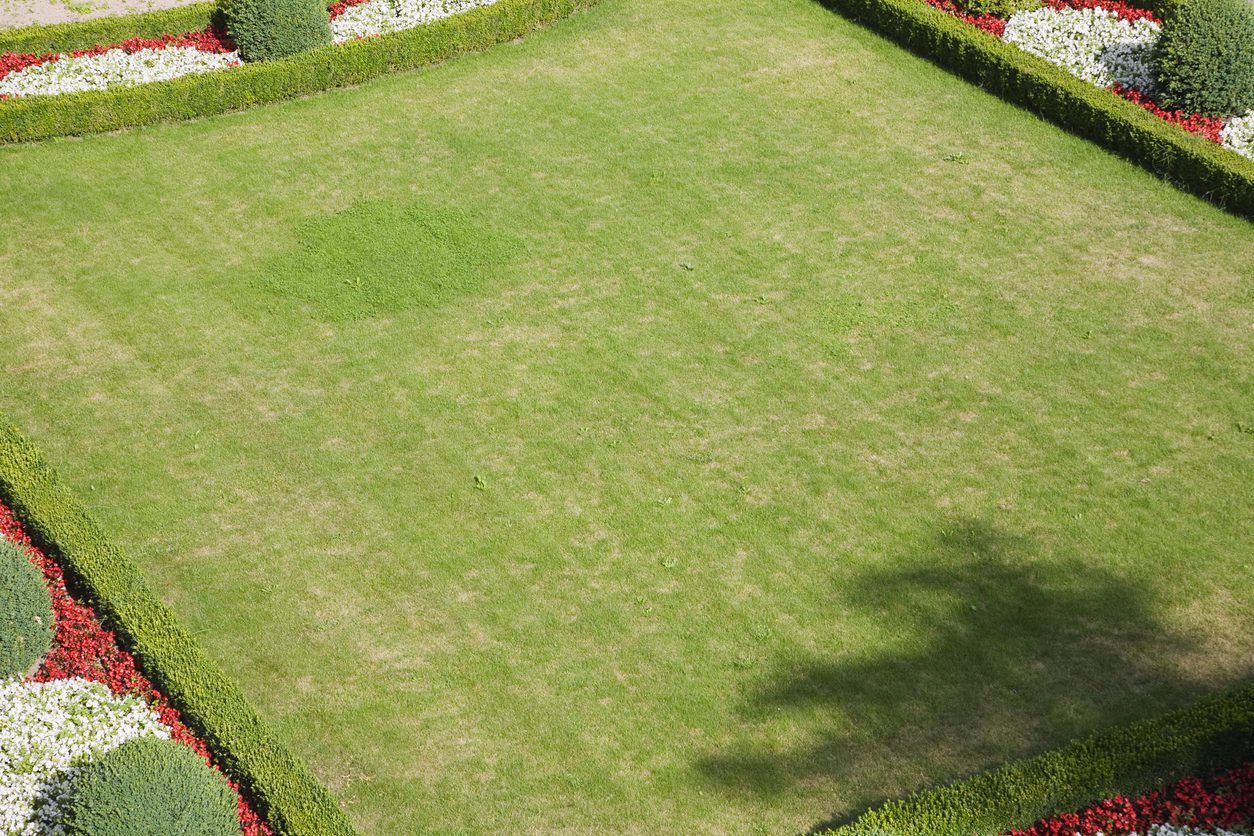
A properly scalped lawn ready for overseeding looks short, open, and slightly bare between grass shoots. You should be able to see soil. Clippings are gone. The surface is clean. When seed goes down and you water, the lawn looks lightly dusted — seed sitting on or very near soil, not perched on top of leaf matter.
Within 10–14 days of seeding in the right soil temperature range, you’ll see even green germination spread across the surface. That consistent, wall-to-wall emergence is the sign that the scalp and prep worked. Patchy germination — green in some spots, bare in others — usually traces back to uneven scalping, missed debris, or a thatch problem that wasn’t addressed before seeding. If you run into that situation, see Overseeded Lawn Not Germinating for step-by-step troubleshooting.
Get the prep right and the ryegrass takes care of itself.
Subscribe to our Newsletter for Weekly updates!