If you’re planning on overseeding a warm season lawn with ryegrass this fall, you’ve already made the right call on grass type. But there’s a second decision most homeowners don’t think about until they’re standing in the seed aisle: annual or perennial ryegrass? These two seed types look different, perform differently through winter, and create very different situations in spring. This guide breaks down both options so you can choose the right one before you buy.
Disclosure: This article contains affiliate links. If you purchase through these links, I may earn a small commission at no extra cost to you. As an Amazon Associate, I earn from qualifying purchases.
Why Homeowners Choose Ryegrass for Overseeding Warm Season Lawns
Warm-season grasses — bermuda, zoysia, St. Augustine, and centipede — go dormant and turn brown when soil temperatures drop below roughly 50–55°F. For homeowners in the Southeast, Gulf Coast, Southwest, and transition zone, that means months of brown turf. Overseeding warm season lawns with ryegrass solves that problem. A temporary cool-season grass grows over the dormant base, keeping the lawn green through fall and winter.
This is a cosmetic strategy. The ryegrass is not replacing your permanent turf — it’s borrowing space for one season. As spring arrives and soil temps climb, the ryegrass dies out and your warm-season grass takes back over.
Not all warm-season grasses handle overseeding equally well:
- Bermuda and zoysia tolerate overseeding well and recover aggressively in spring
- St. Augustine and centipede require caution — both are discussed in the recommendation section below
Timing matters. Overseed when daytime temperatures are consistently in the 60s°F and your warm-season grass has clearly slowed growth. Soil temperature is the more reliable indicator — aim for soil that’s cooled below 70°F but is still above 50°F so ryegrass germinates properly. A probe-style soil thermometer takes the guesswork out of this decision.
If your seed doesn’t come up as expected, check out this guide on overseeded lawn not germinating for common causes and fixes.
Annual Ryegrass for Overseeding Warm Season Lawns: Pros, Cons, and Best Uses
Annual ryegrass (Lolium multiflorum) completes its full life cycle in one growing season. It germinates fast, grows through winter, and dies once spring heat builds — no extra management required.
Strengths:
- Cost: Noticeably cheaper than perennial ryegrass — typically $1–2 less per pound. On a large bermuda lawn, that savings adds up fast.
- Germination speed: Very fast — often visible green-up within 5–7 days under good conditions. If you’re seeding late in fall, this speed matters.
- Spring die-off: Annual ryegrass exits on its own as temperatures rise. That means less competition pressure on your returning warm-season grass.
Trade-offs:
- Mowing: Annual ryegrass can become stemmy and bolt quickly. It’s harder to mow cleanly later in winter, and it has a shorter window before it starts to look ragged.
Best suited for: Homeowners prioritizing cost and fast green-up over appearance, or those overseeding warm season lawns on a large scale where per-pound savings are significant.
Perennial Ryegrass for Overseeding Warm Season Lawns: Better Quality at a Higher Cost
Perennial ryegrass (Lolium perenne) is a finer-textured, darker green grass that looks significantly better in a lawn setting. Despite the name, it behaves as a temporary grass when overseeded into warm-season turf — it just takes longer to die out in spring.
Strengths:
- Appearance: Finer leaf blade, richer dark green color, and a denser, more uniform stand. This is the choice if you want a lawn that actually looks good through winter.
- Germination: Nearly as fast as annual ryegrass — typically 5–10 days — with better density once established.
- Traffic tolerance: Holds up better to foot traffic. That makes it a worthwhile upgrade for families with kids or pets using the lawn through winter.
Trade-offs:
- Spring transition: Perennial ryegrass is more competitive than annual. It can linger into late spring and crowd out emerging bermuda or zoysia. This is manageable, but it requires some attention.
Management in spring: Start lowering your mowing height gradually in March. This stresses the ryegrass without scalping the warm-season base. Reduce irrigation slightly as temperatures warm. Stop fertilizing ryegrass after February. In most cases, rising heat handles the transition on its own — but on zoysia or in climates that warm slowly, you’ll want to be more deliberate.
Best suited for: Homeowners who want the best-looking winter lawn and are willing to pay more and monitor the spring transition carefully.
Annual vs. Perennial Ryegrass: Side-by-Side Comparison for Warm Season Lawns
| Criteria | Annual Ryegrass | Perennial Ryegrass |
|---|---|---|
| Cost per pound | Lower (~$1–2 less/lb) | Higher |
| Germination speed | 5–7 days | 5–10 days |
| Leaf texture | Coarse | Fine |
| Color | Light green | Dark green |
| Traffic tolerance | Moderate | Good |
| Spring die-off | Natural, minimal effort | Slower, may need management |
| Competition risk to warm-season grass | Low | Moderate to high |
| Best for | Budget, large areas | Appearance, smaller lawns |
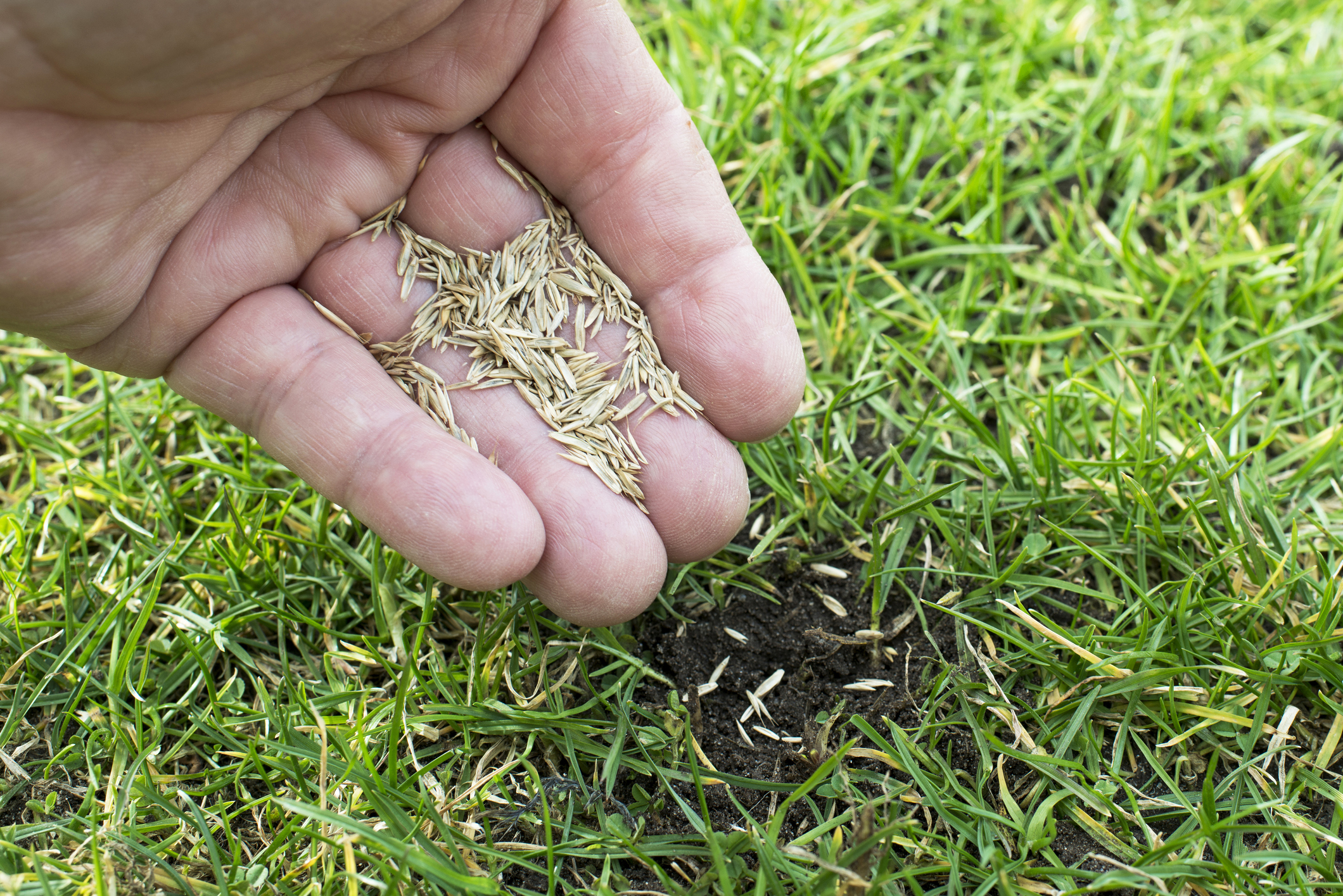
When overseeding warm season lawn turf with ryegrass, both types are typically applied at 5–10 lbs per 1,000 sq ft. Use the lower end for light, functional coverage and the higher end for a dense, uniform stand.
What to look for on the bag: Check for a certified seed label, a germination percentage of 85% or higher, and a weed seed percentage at or near 0%. These three indicators separate quality seed from cheap filler.
Application equipment: For lawns over 2,000 sq ft, a Scotts Turf Builder EdgeGuard DLX broadcast spreader gives you the even seed distribution that hand-casting can’t match. For smaller lawns, a Scotts Whirl handheld spreader is a simpler, lower-cost option that handles the job well.
How Ryegrass Transition Affects Your Warm Season Grass in Spring
Transition is the period in late spring when soil temperatures rise, your warm-season grass breaks dormancy, and the ryegrass declines. How smoothly this goes depends on which ryegrass type you used — and how you managed it through winter. Understanding the timing is an important part of any lawn care schedule based on your grass type and region.
Annual ryegrass transitions with minimal effort. Once heat builds, it dies quickly. Your warm-season grass fills back in without much competition.
Perennial ryegrass is slower to exit. It competes with emerging bermuda or zoysia for light, water, and nutrients in April and May. This can delay green-up or cause thin, pale growth in your permanent turf.
Transition management steps:
- Begin lowering mowing height gradually in March — this stresses the ryegrass without scalping the warm-season base
- Reduce irrigation slightly as temperatures warm to favor the drought-tolerant warm-season grass
- Stop all ryegrass fertilization after February — feeding it into spring extends competition. For guidance on fall and winter fertilizer timing, see best lawn winterizer fertilizers. If you do fertilize before February, a fall fertilizer like Scotts Turf Builder WinterGuard minimizes the risk of pushing excessive ryegrass growth late into the season
One important caution: Do not apply a pre-emergent herbicide in early spring if you overseeded the previous fall. Pre-emergents prevent seed germination. Applying them at the wrong time can interfere with your warm-season grass as it breaks dormancy and resumes growth from stolons and rhizomes (the surface and underground runners that spread warm-season grasses).
Which Ryegrass to Use for Overseeding Based on Your Grass Type
Here’s how the ryegrass overseeding decision on warm season turf breaks down by grass type:
Bermuda Grass
Either annual or perennial ryegrass works well on bermuda. Bermuda is the most overseeding-tolerant warm-season grass and transitions back aggressively once soil temps climb into the 70s°F. Perennial ryegrass is a popular choice here because bermuda’s strong spring comeback reduces the risk of competition damage. Annual ryegrass is a smart pick for cost-conscious homeowners or large bermuda lawns where seed volume is a factor.
Before overseeding, it’s worth considering whether your lawn needs any prep work first. See sand vs. compost topdressing after dethatching for guidance on whether a topdressing step makes sense before you seed.
Zoysia
Either type works, but reduce the seeding rate — zoysia transitions more slowly than bermuda. If you use perennial ryegrass on zoysia, be more attentive to spring management. Start lowering your mowing height two weeks earlier than you would on bermuda, and watch for signs of delayed green-up in May before reducing irrigation. Annual ryegrass is the lower-maintenance, safer choice on zoysia overall.
As with bermuda, topdressing before overseeding zoysia can improve seed-to-soil contact. The sand vs. compost topdressing after dethatching guide covers which material to use and when.
St. Augustine
Overseeding St. Augustine is generally not recommended. The wide leaf blade of St. Augustine competes poorly with ryegrass. Ryegrass competition can thin the stand over winter and into spring — sometimes significantly. If winter color is essential, use annual ryegrass only at a reduced rate (4–5 lbs per 1,000 sq ft). The honest answer for most St. Augustine homeowners: skip the overseeding.
Centipede
The same caution applies. Centipede is a low-input, slow-recovering grass that doesn’t handle competition stress well. Overseeding rarely pays off. Ryegrass can cause stand damage that takes the entire growing season to recover from. If you attempt ryegrass overseeding on warm season turf like centipede, use annual ryegrass only, apply at a low rate, and have a clear spring transition plan in place before you seed.
Recommendation Summary
| Situation | Recommended Choice |
|---|---|
| Bermuda grass, appearance matters | Perennial ryegrass |
| Bermuda grass, large lawn or budget priority | Annual ryegrass |
| Zoysia grass | Annual ryegrass (perennial with careful management) |
| St. Augustine grass | Skip overseeding; annual only if necessary |
| Centipede grass | Skip overseeding; annual only if attempted |
Default recommendation for most bermuda and zoysia homeowners: Perennial ryegrass. Better appearance, similar germination speed, and the aggressive spring recovery of these grass types handles the transition risk without much extra work.
Budget or large-lawn recommendation: Annual ryegrass. Functionally solid, lower cost, and the easiest possible spring exit.
Frequently Asked Questions About Ryegrass Overseeding on Warm Season Lawns
When should I overseed my warm season lawn with ryegrass? Overseed in fall when daytime temperatures are consistently in the 60s°F and your warm-season grass has slowed or stopped growing. Soil temperature matters most — aim for below 70°F but above 50°F. A soil thermometer gives you a precise reading instead of guessing by air temperature alone.
Will ryegrass hurt my bermuda grass in spring? Annual ryegrass rarely causes problems — it dies quickly once heat builds. Perennial ryegrass can slow bermuda’s spring green-up if it lingers too long. Gradual mowing height reductions in March and reduced irrigation in April usually handle the transition without intervention on bermuda.
Do I need to scalp or dethatch before overseeding with ryegrass? On bermuda, scalping before overseeding improves seed-to-soil contact and is generally recommended. On zoysia, a light dethatching or mowing at a lower height helps. The key goal is to clear enough of the dormant canopy so the ryegrass seed actually reaches the soil. Deep thatch layers can prevent germination entirely.
How much ryegrass seed do I need per 1,000 square feet? Both annual and perennial ryegrass are typically applied at 5–10 lbs per 1,000 sq ft. Use 5 lbs for light, functional coverage and up to 10 lbs when you want a dense, uniform stand. On St. Augustine or centipede, reduce that to 4–5 lbs if you overseed at all.
What’s the difference in appearance between annual and perennial ryegrass? The difference is visible from across the yard. Annual ryegrass has a coarser leaf blade and lighter green color. Perennial ryegrass is finer-textured, darker green, and produces a denser, more uniform look. If winter lawn appearance matters to you, perennial is the clear choice.
Can I fertilize ryegrass after overseeding? Yes, but stop by February. A starter fertilizer at the time of overseeding helps establishment. A light feeding in late fall or early winter is fine. Fertilizing ryegrass into spring feeds the competition — it makes transition harder and delays your warm-season grass recovery. See best lawn winterizer fertilizers for fall fertilizer timing guidance.
How do I get rid of ryegrass in spring so my warm season grass comes back? Gradual mowing height reduction starting in March is the most reliable method. Lower the deck by a quarter to half inch every one to two weeks. Reduce watering slightly. Stop fertilizing. In most cases, rising soil temperatures do the rest. On perennial ryegrass in slow-warming climates, you may need to be more aggressive — but most homeowners never need to apply herbicide.
Conclusion
The choice between annual and perennial ryegrass for overseeding a warm season lawn comes down to two things: your budget and how much the lawn’s appearance matters to you through winter. Annual ryegrass is cheaper, germinates fast, and exits cleanly in spring. Perennial ryegrass looks better, holds up to traffic, and is the right call for bermuda or zoysia homeowners who want a genuinely attractive winter lawn.
Whichever ryegrass type you use for overseeding your warm season lawn, seed quality and timing matter as much as the variety itself. Use a soil thermometer to confirm conditions before you seed. Apply evenly with a broadcast spreader or handheld spreader depending on your lawn size. And plan your spring transition before you need it — not after you notice a problem.
Subscribe to our Newsletter for Weekly updates!