It’s mid-winter, your lawn has gone completely tan and straw-colored, and you’re trying to figure out whether your warm season grass is dead or dormant before you make any decisions. In most cases, dormancy is the answer — but disease and cold damage are real possibilities that can look nearly identical from the street. This article walks you through a physical diagnosis before you treat, replace, or panic. For a broader look at brown lawn causes across all grass types, the general brown lawn diagnostic guide covers the three-state framework in more detail — this article focuses specifically on warm season grass behavior and the dormancy-vs-disease distinction that plays out in fall and winter.
Disclosure: This article contains affiliate links. If you purchase through these links, I may earn a small commission at no extra cost to you. As an Amazon Associate, I earn from qualifying purchases.
Why Warm Season Grass Goes Brown — and What That Doesn’t Mean
Warm season grasses — bermuda, zoysia, St. Augustine, and centipede — go dormant when soil temperatures consistently drop below 50–55°F. This is a survival mechanism, not a sign of failure. The plant pulls resources into its root system, stops top growth, and shuts down until conditions improve.
The result is a uniform tan, straw, or dull brown lawn across the entire yard. This is expected and normal.
What makes dormancy different from cool season grass behavior is how complete it is. Warm season dormancy turns the whole lawn brown — not patchy, not gradual. If you’ve moved from a northern climate or this is your first winter with warm season grass, the color change can look alarming.
That said, dormancy is not a guarantee that the grass is fine. Disease and cold kill happen during or around dormancy, and they can mimic the same brown color. That’s why a physical check matters before you conclude anything.
Is Your Warm Season Grass Dead or Dormant? 3 Physical Tests
These are the core diagnostic tests. Do all three before drawing any conclusions, and repeat them in multiple spots across the lawn — a single test in one location isn’t enough.
Start with a soil temperature check. Before running physical tests, use a probe-style soil thermometer to check the temperature at a 2–3 inch depth. If it’s still below 55°F, dormancy conditions are actively present and dormancy is the most likely explanation for brown grass. If soil temps have climbed back above 65°F and the grass still hasn’t moved, that shifts the picture toward dead or diseased. A basic soil thermometer is inexpensive and available at most garden centers.
Test 1: The Tug Test
- Dormant grass resists. The roots hold and the plant stays in the ground.
- Dead grass releases easily. It pulls free with little force, sometimes coming up in patches with soil attached.
Isolated easy-pull spots can happen near edges or high-stress areas. Widespread pull-free results across the lawn indicate a larger problem.
Test 2: Crown Inspection
The crown is the growth point at the base of each grass plant, sitting at or just above the soil surface. It’s the most reliable indicator of whether a plant is alive.
Part the blades and examine the crown closely:
- Healthy dormant crown: firm, off-white or pale tan in color
- Diseased crown: soft, mushy, or dark brown to black — a sign of rot or fungal activity
- Dead crown: dry and brittle, crumbles when pressed
Note: St. Augustine has above-ground stolons (horizontal runners) that are easier to inspect than the tighter growth habit of bermuda or zoysia. On St. Augustine, check the stolon nodes specifically.
Test 3: The Scratch Test
Use a fingernail or key to lightly scratch the surface of a stolon or stem just at soil level.
- Living tissue — even in full dormancy — will show white or faint green just beneath the surface.
- Dead tissue is uniformly brown, dry, or hollow all the way through.
This test works well for bermuda and zoysia. For St. Augustine, scratch the stolon at multiple nodes along a runner. If three or four consecutive nodes are dead, that section of grass is not recovering.
Visual Patterns That Reveal Whether Warm Season Grass Is Dead or Dormant
Before you touch the grass, read the lawn from a distance. Pattern is a pre-test — it tells you what you’re likely dealing with before you get on your hands and knees.
| Pattern | Most Likely Cause |
|---|---|
| Uniform tan/brown across the entire lawn | Dormancy |
| Irregular brown patches with defined or circular edges | Fungal disease |
| Brown spots expanding outward from a center point | Active disease (large patch, dollar spot) |
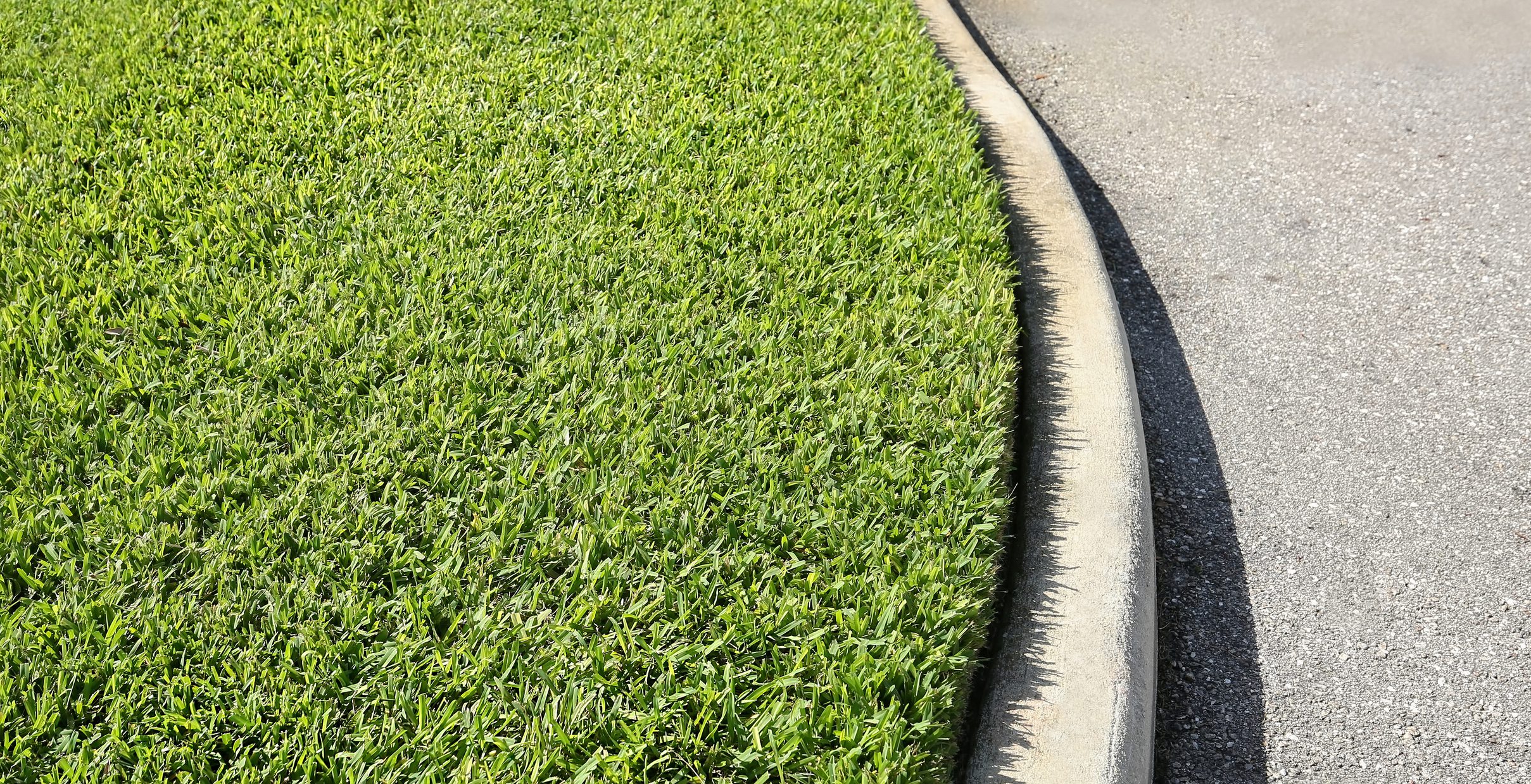
| Brown only along curbs, sidewalks, or elevated areas | Cold desiccation or drought stress |
| Slimy, matted-down areas | Disease or waterlogging |
| Thin patches where grass lifts in sheets | Grub damage or root-level disease |
The key principle: dormancy is uniform. Disease is patchy.
If your lawn is not an even, wall-to-wall brown — if there are rings, irregular patches, or zones with darker centers surrounded by yellowing margins — dormancy alone doesn’t explain what you’re seeing. When warm season grass is dead or dormant from a single cause, the pattern tells you which one is more likely before you ever run a physical test.
Large patch, caused by the fungus Rhizoctonia solani, is the most common warm season lawn disease active in fall and winter. It creates ring or arc patterns that can expand to several feet in diameter. It does not cause uniform browning. Large patch is active when soil temps are between 50–70°F. That range overlaps directly with dormancy onset and spring green-up. If you see ring or arc patterns in fall or early spring, large patch is the primary suspect.
If large patch or another disease is confirmed, don’t wait until spring to act. Active disease can kill grass through the dormant period. A granular fungicide labeled for large patch on warm season grasses is the right intervention — apply according to label directions and document the patch locations so you can track whether spreading stops.
Grass-Type Differences: Bermuda, Zoysia, St. Augustine, and Centipede in Dormancy
Dormancy signs vary by grass type. Misreading normal species behavior leads to unnecessary panic — or to missing a real problem. Understanding how each type behaves helps you decide whether your warm season grass is dead or dormant more quickly.
Bermuda goes dormant early and completely. If you’re asking is my bermuda grass dead or dormant, timing is your first clue. If it went brown after the first cold snap and the browning is uniform, dormancy is expected. Bermuda turns straw-tan quickly and dramatically — the color change is one of the most striking of any warm season grass.
Cold tolerance is moderate. Bermuda survives well below freezing but can be killed by extended hard freezes in the upper transition zone. Recovery in spring is aggressive. Bermuda spreads from nodes and rhizomes underground. Even lawns that look sparse in dormancy often fill back in solidly.
Zoysia Grass
If you’re asking how to tell if zoysia is dead, start with timing. Zoysia holds its color slightly longer into fall than bermuda before going dormant. It turns golden-tan to gray-brown and has a dense, matted appearance in dormancy. Cold tolerance is higher than bermuda. Zoysia handles transition zone winters reliably across most varieties.
One diagnostic challenge with zoysia: the dense thatch layer can conceal disease activity at crown level. When inspecting dormancy vs. disease, physically part the canopy and check down to the soil. Surface browning on zoysia can mask serious problems underneath.
St. Augustine Grass
St. Augustine is the most cold-sensitive common warm season grass. It goes dormant at similar soil temperatures but has less tolerance for sustained cold. In Zone 8a and warmer, dormancy is the normal explanation for winter browning. In areas that experience extended freezes below 20°F, outright cold kill is a real possibility — not just dormancy.
To diagnose dormant vs. dead St. Augustine, focus on the stolons. Above-ground runners make this grass easier to test than others. Scratch nodes along multiple stolons in different areas of the lawn. Living nodes show white or faint green tissue. Dead nodes are dry and brown all the way through. If you’re finding dead nodes consistently across the lawn after a hard freeze, the grass may not recover.
Centipede Grass
Centipede goes dormant early and deeply. It turns straw-yellow to brown in a way that closely resembles dead grass. This trips up many homeowners diagnosing warm season grass dormancy for the first time.
Cold tolerance is moderate. Centipede decline is an additional risk. It’s caused by a combination of stress factors — high pH soil, over-fertilization, thatch buildup, and drought. It can develop over time and mimic dormancy or cold damage. If your centipede has been struggling in prior seasons, the browning may reflect accumulated stress rather than simple dormancy.
Most importantly: centipede is a slow recoverer. Don’t make replacement decisions until late April or May. It is normal for centipede to be one of the last warm season grasses to show spring green-up.
What to Do After Diagnosing Dead vs. Dormant Warm Season Grass
If Dormant
- Do not fertilize. Applying nitrogen to dormant warm season grass forces energy into top growth at the wrong time and increases disease vulnerability.
- Do not over-irrigate. Dormant grass has minimal water needs. Excess moisture in winter creates conditions for disease. A soil moisture meter can help you avoid unnecessary watering — only irrigate if there’s been more than 3–4 weeks with no rain and temperatures are above freezing.
- Leave it alone. If you haven’t overseeded with winter ryegrass, there’s no mowing needed and no maintenance required until spring green-up.
- Plan ahead. Your first fertilizer application should come after the lawn is 50% green and soil temperatures have returned to a consistent 65°F. At that point, a warm season fertilizer like Andersons PGF Complete 16-4-8 is a strong all-around choice to kick off the growing season. For a full seasonal approach, see this lawn care scheduling framework by grass type and region.
- If you’re considering a ryegrass bridge while you assess the lawn, see ryegrass overseeding for warm-season lawns and how and when to scalp a warm season lawn before overseeding with ryegrass before you start.
If Disease Is Suspected
- Identify the pattern. Ring or arc shapes point to large patch in winter. Irregular spots may indicate dollar spot or another fungal issue.
- Apply a fungicide labeled for the suspected disease — do not wait for spring.
- Avoid adding nitrogen to the affected area. Nitrogen accelerates disease spread.
- Photograph the patches and recheck in two weeks to determine if they’re expanding or stable.
If Dead
- Confirm death using all three physical tests across multiple lawn sections before deciding to replace anything.
- Dead patches may be surrounded by living dormant grass — spot repair in spring may be sufficient.
- Full replacement or renovation planning happens after all frost risk has passed and soil temperatures are back above 65°F.
When to Wait and When to Replace: The Decision Threshold
This is how to make the final call on whether your warm season grass is dead or dormant — and what to do about it.
Wait if:
- Physical tests show living crowns and nodes in most areas
- Browning is uniform across the lawn
- No circular or expanding patches are present
- The grass type is bermuda or zoysia, both of which recover reliably from underground rhizomes
Replace if:
- The tug test releases grass with no resistance in large areas
- Crowns or nodes are mushy, hollow, or dead across multiple test sites
- Scratch tests show no green or white tissue in 50% or more of the lawn
- St. Augustine stolons are dead at the nodes through multiple sections of the yard
The gray zone: If 25–40% of the lawn shows dead tissue but the rest tests living, hold off. Wait until late spring green-up and let the surviving grass fill in. Reassess in May. Spot-repair what hasn’t recovered rather than replacing the whole lawn.
The final confirmation point is spring. If soil temperatures have consistently reached 65°F and your warm season grass still hasn’t begun greening, the dormancy window has passed. At that point, the grass is dead — not dormant.
Frequently Asked Questions
How long does warm season grass stay dormant? Typically 3–5 months depending on region and grass type — from first dormancy in late October or November through spring green-up in March or April across most of the South.
Can I walk on dormant warm season grass? Yes, but minimize heavy or repeated traffic. Dormant grass is slower to recover from wear. Occasional foot traffic is fine.
Should I water my lawn in winter if it’s dormant? Only if there’s been an extended dry period of more than 3–4 weeks without rain and temperatures are above freezing. Dormant grass needs very little water.
My bermuda grass is still brown in April — is it dead? Possibly, but check soil temperature first. Bermuda won’t green up until soil temps consistently reach 65°F. If your soil is still below that, wait before concluding it’s dead.
Can disease kill grass while it’s dormant? Yes. Large patch (Rhizoctonia) is active in fall and spring and can spread during dormancy. If you see expanding ring or arc patterns, treat rather than wait.
What does dead warm season grass feel like compared to dormant? Dead grass feels brittle, hollow, or loose at the crown. Dormant grass feels dry but firm, with resistance when tugged.
Subscribe to our Newsletter for Weekly updates!