A lawn care schedule by grass type is the only kind worth following. Generic month-by-month calendars look organized, but they ignore the two variables that actually control when your lawn needs attention: what grass you’re growing and where you live. Get those wrong and you’re fertilizing dormant turf, missing pre-emergent windows, or seeding into conditions that guarantee failure.
This guide walks through how to identify your grass type, build a seasonal schedule around its growth cycle, adjust for your region, and sequence tasks so they don’t conflict with each other. Think of it as your grass type lawn maintenance calendar — one built around biology and climate, not arbitrary dates.
Disclosure: This article contains affiliate links. If you purchase through these links, I may earn a small commission at no extra cost to you. As an Amazon Associate, I earn from qualifying purchases.
Why a Generic Lawn Care Calendar Fails Most Homeowners
Most published lawn care calendars are built around calendar months, not grass biology. That’s a fundamental problem.
A March nitrogen application is appropriate for cool-season lawns in Ohio where grass is actively growing. Apply that same fertilizer in March to a Bermuda lawn in Georgia — still dormant, roots barely active — and you risk burning the turf and disrupting the soil without producing any benefit.
Two variables override everything else:
- Grass type determines growth cycles — when the plant actively grows, when it rests, and when its roots are building reserves
- Regional climate determines when those cycles actually start and end in your specific location
A cool-season lawn in Minnesota and a cool-season lawn in Virginia grow the same species, but spring green-up might differ by four to six weeks. The schedule template is the same; the timing is not.
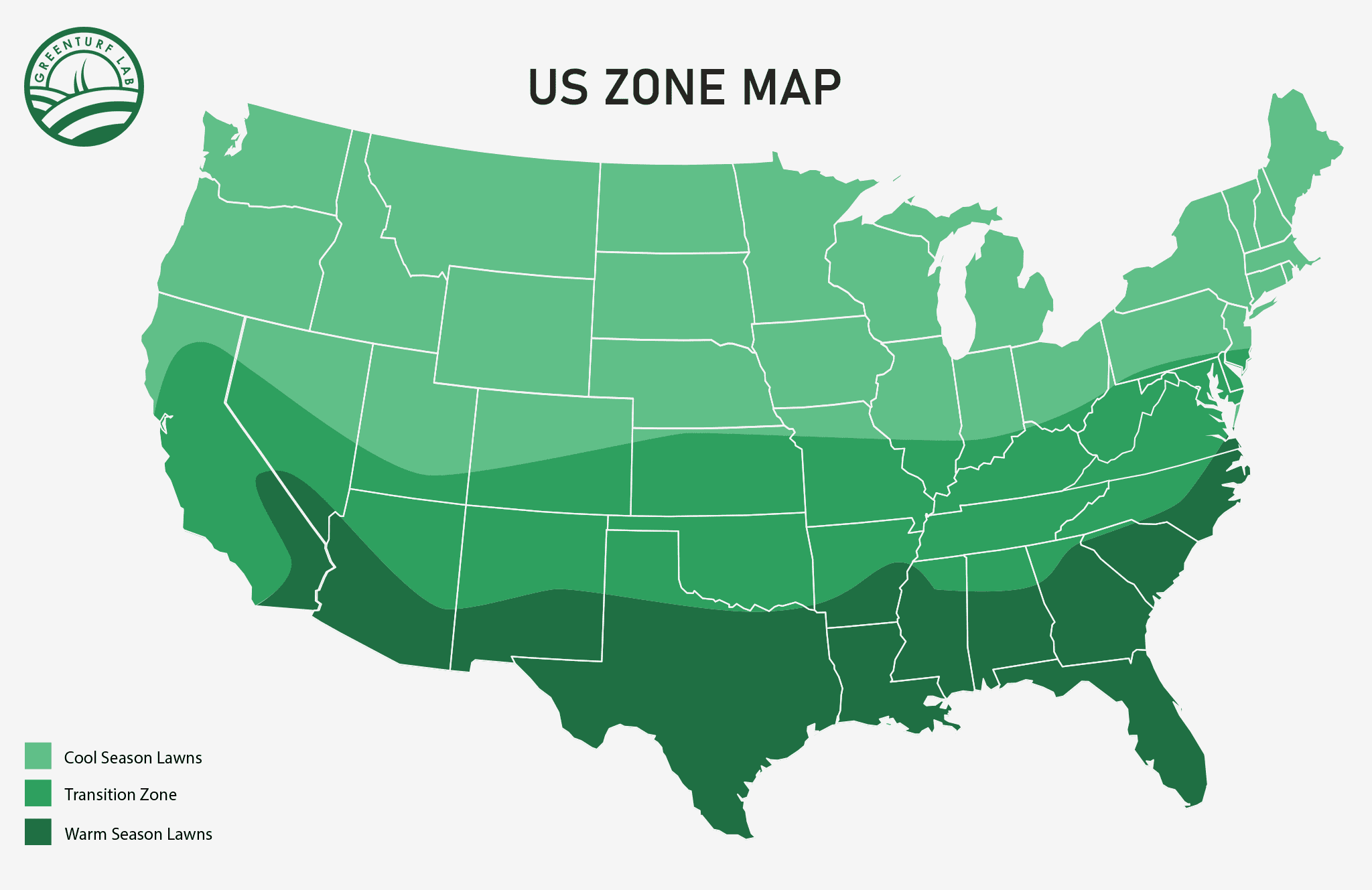
USDA Plant Hardiness Zones add another layer. The transition zone — a band running roughly from Virginia through Kansas — sits in climatic territory where neither warm-season nor cool-season grasses thrive perfectly year-round. Homeowners there often struggle with schedules because their grass doesn’t fit neatly into either framework.
Step One: Identify Your Grass Type Before Building Any Schedule
This is the non-negotiable first step. Every downstream decision — when to fertilize, when to seed, when to apply pre-emergent — depends on which category your grass falls into.
Warm-Season Grasses
Warm-season grasses include Bermuda, Zoysia, St. Augustine, Centipede, and Bahia. These grasses go dormant in winter and hit peak growth from late spring through early fall. They thrive when soil temperatures are consistently above 65°F. You’ll find them predominantly in the South, Southeast, Southwest, and warm coastal regions.
Cool-Season Grasses
Cool-season grasses include Kentucky bluegrass, tall fescue, perennial ryegrass, and fine fescue. They have two growth peaks — spring and fall — with a stress or semi-dormancy period during hot summers. These grasses dominate the North, Midwest, Pacific Northwest, and mountain regions.
The Transition Zone
The transition zone is the band of states in the middle of the country where neither grass type is fully at home. Tall fescue and Zoysia are the most common choices here. Both tolerate moderate cold and moderate heat better than alternatives. Each requires different scheduling logic, so knowing which one you have matters.
If you’re uncertain, contact your county cooperative extension office. They can confirm common grass types in your area based on local growing conditions.
How to Identify Your Grass Type If You’re Unsure
A soil thermometer is useful here beyond just identification. Monitoring soil temperature throughout the season becomes the foundation of your entire scheduling system. Rather than guessing based on the date, you can trigger each task at the right biological moment.
Warm-Season Grass Care Schedule: How to Build One by Season
The warm-season grass care schedule is structured around summer as the primary growth window, with spring and fall serving as transition periods.
Spring (Soil Temp 55–65°F)
Don’t rush spring. Wait for visible green-up before doing anything significant. Green-up is a reliable signal that the grass is exiting dormancy, regardless of what the calendar says.
The pre-emergent herbicide window opens when soil temperatures approach 50–55°F at a 2-inch depth. A granular pre-emergent herbicide like Scotts Halts Crabgrass Preventer applied at this threshold stops crabgrass before it germinates — act before you see it, not after.
Hold nitrogen fertilizer until soil temperatures consistently reach 65°F or higher. Applying nitrogen to a lawn that’s only half out of dormancy is wasteful at best and damaging at worst. Make sure you’re applying the right rate once the timing is correct.
The first mow of the season on Bermuda or Zoysia often involves a scalp mow. Cut lower than normal to remove dead material and encourage faster green-up. Return to your regular mowing height once growth is underway.
Summer (Peak Season — June Through August)
Summer is the primary fertilization window for warm-season grasses. This is when the plant is actively building biomass and can use the nitrogen you apply.
Mowing heights vary by species. Bermuda performs best at 1–1.5 inches, Centipede at 1.5–2 inches, and St. Augustine at 3–4 inches. Cutting below these ranges weakens the turf’s stress tolerance.
Watch for fungal disease when heat and humidity combine. Slow-release fertilizer formulations are worth considering in summer because they deliver nitrogen gradually. This reduces the flush of growth that makes turf more disease-susceptible and burn-prone during peak heat. That article also covers grass-specific nitrogen rates by species.
Fall (Soil Temp Dropping Below 65°F)
Wind down nitrogen applications 6–8 weeks before your first expected frost. Pushing top growth late in the season weakens the plant heading into dormancy.
Shift to a potassium-focused fertilizer to support root hardening. This is where a winterizer fertilizer fits into the warm-season schedule — not as a heavy feed, but as a transition product. See Best Lawn Winterizer Fertilizers for guidance on what to look for and when to apply.
Aeration for warm-season lawns fits best in late summer to early fall, while soil temperatures are still warm enough for active recovery.
If you’re considering overseeding a Bermuda lawn with perennial ryegrass for winter color, understand the tradeoff. The cool-season grass will compete with Bermuda for resources, and spring transition back can be rough on the permanent turf.
Winter (Dormancy Period)
Once the lawn is dormant, fertilizer does nothing useful. Avoid any product that stresses dormant turf.
Light foot traffic is manageable, but heavy wear on dormant warm-season grass — especially during freezes — can damage the crowns. Monitor for winter weeds like chickweed and henbit throughout the dormancy period. Post-emergent options exist if the pressure is severe enough to warrant treatment.
Cool-Season Grass Maintenance Plan: Building Your Seasonal Schedule
The cool-season grass maintenance plan is built around fall as the primary growth window. Spring is a secondary window. Summer is a period to manage stress rather than push growth.
Spring (March–May Depending on Zone)
Spring is not the most important season for cool-season grass — fall is. That said, spring still requires attention.
Pre-emergent herbicide timing is critical here. Apply before soil temperatures reach 50–55°F at 2 inches. This prevents crabgrass and annual weed germination without interfering with established turf. For detailed guidance on hitting this window correctly, see When to Apply Pre-Emergent Herbicide on Cool Season Lawns.
Keep spring nitrogen applications light, especially if you overseeded the previous fall. The lawn is coming out of winter with stored reserves. Over-fertilizing in spring encourages excessive top growth. That top growth diverts energy away from root development before summer stress arrives.
Aeration can be done in spring, but fall is strongly preferred for cool-season lawns. Reserve spring aeration for situations where soil compaction is severe.
Summer (Stress Period)
This is the most hands-off period for cool-season grass. Once soil temperatures exceed 85°F, the grass slows or stops growing entirely. Applying nitrogen during this window risks burning, disease, and compounding heat stress.
Raise your mowing height to 3.5–4 inches. The extra leaf blade length shades the soil, reduces moisture loss, and protects the crown from heat damage.
Fall (September–November — Primary Season)
Fall is the most important maintenance window for cool-season lawns. Cooler temperatures trigger active root growth, carbohydrate storage, and recovery from summer stress. Every investment you make this window pays off through the following year.
A fall fertilizer approach typically involves multiple applications. Apply in early fall to restart growth, mid-fall to build density, and late fall to store energy for winter. A fall lawn fertilizer works well in early-to-mid fall because it delivers nitrogen steadily without pushing a flush of soft growth heading into cold conditions. For the full breakdown, see Fall Fertilizing Schedule for Cool Season Grasses.
Overseeding windows open in early fall when soil temperatures drop below 70°F. Aerate before seeding to improve seed-to-soil contact. This one step meaningfully improves germination rates.
Winter (Dormancy and Preparation)
The final fertilizer application of the year — a winterizer with low nitrogen and elevated potassium — goes down before the ground freezes. This supports root health through winter without pushing top growth into cold conditions.
Keep foot traffic light on frozen or snow-covered turf. Physical damage to crowns in winter doesn’t become visible until spring. It’s easy to underestimate.
Leaf cleanup matters more than most homeowners realize. Matted leaves sitting on dormant turf through winter promote snow mold and other fungal diseases. These show up as dead patches in early spring.
Adjusting Your Lawn Care Schedule by Region and Climate Zone
The same grass type grows on different timelines depending on where it’s planted. A Zoysia lawn in coastal South Carolina and a Zoysia lawn in northern Virginia will have meaningfully different green-up dates, dormancy dates, and pre-emergent windows.
Use soil temperature as your actual trigger, not the calendar date. A soil thermometer removes the guesswork entirely. When you know your soil hit 55°F, you know it’s time — regardless of what month it is.
Cool-Season Regions
- Pacific Northwest: Mild winters extend the growing season in both directions. Spring pre-emergent timing often comes earlier than the calendar would suggest. Wet winters create fungal disease pressure worth monitoring.
- Upper Midwest and Northeast: Shorter growing season overall. Spring green-up arrives later and fall frost arrives earlier. The active window is compressed. Fall fertilizer timing needs to start early enough to complete all applications before freeze.
- Mountain West: Elevation is the key variable. Push all timing windows 2–3 weeks later than lower-elevation regions at similar latitudes.
Warm-Season Regions
- Deep South (Zones 8–10): Near year-round growing conditions. Green-up can begin in February. The last nitrogen application often extends into October. Dormancy may be brief or incomplete in the warmest years.
- Mid-South and Southeast (Zones 7–8): Spring green-up typically arrives in March to April. Pre-emergent pressure begins in late February. Dormancy is more defined than in Zone 9+.
- Southwest and Arid Regions: Summer heat rivals anything in the country. Irrigation scheduling becomes as important as fertilizer timing. Grasses that handle drought — Bermuda and Zoysia — are better suited here than St. Augustine or Centipede.
Transition Zone
Pick one grass type and build one schedule. Splitting the calendar across two grass categories creates confusion and missed windows.
If you’re growing tall fescue in the transition zone, follow the cool-season grass maintenance plan — but push fall overseeding slightly earlier than you would in northern regions. Fall soil temperature drops arrive sooner here. If you’re growing Zoysia, follow the warm-season grass care schedule and adjust for the shorter dormancy window compared to deeper South climates.
How to Sequence Fertilizer, Weed Control, and Mowing Without Conflicts
The most common scheduling failure isn’t wrong timing on a single task. It’s applying the right product at the right time but in the wrong order relative to other tasks.
A few core sequencing rules prevent the most costly conflicts:
- Pre-emergent before the weed germination window, never after overseeding. Pre-emergent prevents seed germination — including your grass seed. Wait at least 3–4 weeks after a pre-emergent application before seeding.
- Post-emergent herbicides should not be applied when air temperatures exceed 85°F or when grass is drought-stressed. Heat-stressed turf absorbs herbicide differently. Damage can result.
- Mow 2–3 days before applying granular products so turf is at a manageable height. Then avoid mowing for 2–3 days after application to let the product settle and work.
- Water in pre-emergent before applying fertilizer, not the reverse. Pre-emergent needs to be activated into the soil before other products are layered on top.
For large lawns, a broadcast spreader makes granular product application faster and significantly more consistent than hand spreading. Overlapping passes and uniform distribution matter when you’re applying herbicide or fertilizer across several thousand square feet. For smaller areas or targeted applications, a handheld spreader is more practical and easier to control.
For a complete breakdown of how to avoid conflicts between fertilizer, pre-emergent, and overseeding, see How to Plan Your Fertilizer, Pre-Emergent, and Overseeding Schedule So They Don’t Conflict — link to be added by site team before publication.
Frequently Asked Questions
What grass type do I have if I don’t know?
Start by looking at the blade shape and texture. Fine, stiff blades point to Bermuda or Zoysia. Wide, flat blades with rounded tips suggest St. Augustine. Medium-width blades with a visible center vein are typical of tall fescue. The simplest confirmation: if your lawn goes brown and dormant in winter, it’s warm-season. If it stays green through mild winters but struggles in heat, it’s cool-season. Your county extension office can confirm for free.
Can I use the same fertilizer schedule for all grass types?
No. Warm-season grasses need fertilizer in summer when they’re actively growing. Cool-season grasses need it most in fall. Applying the wrong schedule — heavy spring nitrogen on a cool-season lawn, or fall nitrogen on a warm-season lawn — wastes product and can cause real damage.
When should I start my lawn care schedule in spring?
Use soil temperature, not the calendar. For warm-season lawns, wait for soil temps to reach 55°F before applying pre-emergent and 65°F before fertilizing. For cool-season lawns, pre-emergent goes down before soil hits 55°F. A soil thermometer gives you the exact number instead of guessing by date.
What if I live in the transition zone — which schedule do I follow?
Follow the schedule that matches your specific grass type. Tall fescue follows a cool-season maintenance plan. Zoysia follows a warm-season care schedule. Don’t try to blend both — pick one grass type and build around its growth cycle.
How do I adjust my schedule if I missed a treatment window?
Skip the missed application rather than applying late in the wrong conditions. If you missed spring pre-emergent, use a post-emergent herbicide once weeds emerge. If you missed fall overseeding, wait for spring on warm-season lawns or the following fall on cool-season lawns. Applying the right product at the wrong time causes more problems than skipping it.
Does it matter what order I apply fertilizer and weed control?
Yes. Pre-emergent goes first, before weed germination. Then water it in. Apply fertilizer after. Never seed within 3–4 weeks of a pre-emergent application. Post-emergent herbicides should be applied when temps are below 85°F and the grass is not drought-stressed.
What’s the most important lawn care task to get right by season?
For warm-season lawns: timing summer fertilization correctly is the highest-impact task. For cool-season lawns: completing the fall fertilizer program before the ground freezes determines how your lawn enters and exits winter.
Conclusion
Everything in a lawn care schedule by grass type flows from two decisions: what grass you’re growing and where you live. Get those right, and the scheduling framework becomes straightforward.
Warm-season lawns peak in summer — build your fertilizer, weed control, and aeration windows around that. Cool-season lawns peak in fall — that’s where the most important investments go, not spring. Both schedules require regional adjustment, and a soil thermometer is the most reliable way to make those adjustments accurately.
Sequencing matters as much as timing. A pre-emergent applied at exactly the right soil temperature does no good if you seed three days later. A fall fertilizer program delivers full value only if it starts early enough to complete all three stages before the ground freezes.
Use this guide as your grass type lawn maintenance calendar framework, then go deeper on each phase:
- For cool-season fall feeding details, see Fall Fertilizing Schedule for Cool Season Grasses
- For pre-emergent timing on cool-season lawns, see When to Apply Pre-Emergent Herbicide on Cool Season Lawns
- For winterizer selection and timing across both grass types, see Best Lawn Winterizer Fertilizers
- For Bermuda dormancy — what’s normal and what’s not — see Bermuda Grass Winter Dormancy
Build the schedule once, adjust it each year as your lawn tells you what it needs, and the guesswork disappears.
Subscribe to our Newsletter for Weekly updates!