Most homeowners pick a date in March or April to put down pre-emergent herbicide — and a lot of them still end up with a yard full of crabgrass by July. The reason is almost always the same: pre-emergent timing soil temperature is what actually matters, not the month. Getting the soil temp right before you apply is the difference between a clean lawn and a weed problem you could have prevented. This guide covers the correct temperature trigger, how to measure it, what it means by region, and the mistakes that let weeds win even when you applied the product.
Disclosure: This article contains affiliate links. If you purchase through these links, I may earn a small commission at no extra cost to you. As an Amazon Associate, I earn from qualifying purchases.
Why Calendar Date Is the Wrong Way to Time Your Pre-Emergent
Calendar dates are averages. They reflect what happened in past years across a broad region. They do not reflect what is happening in your soil right now.
A warm February can push soil temperatures up fast. A cold snap in March can drop them back down. Any fixed calendar date can be off by two to three weeks in either direction.
Crabgrass and other summer annual weeds germinate based on soil temperature — full stop. They do not check the calendar. When soil conditions hit a certain threshold, germination begins. When they have not, it does not.
What pre-emergent herbicide actually does is create a chemical barrier in the upper layer of soil. That barrier interrupts the germination process. It does not kill existing plants, and it does not destroy seeds. It prevents germination from completing. That barrier has to be in place before weed seeds begin to germinate, or it does nothing for the ones already moving.
The other reason calendar timing is risky: that barrier degrades. Depending on the product and conditions — rainfall, microbial activity, temperature — most pre-emergent barriers last roughly 6 to 12 weeks. Apply in late February because a gardening blog told you to, and that protection may be gone before peak germination pressure arrives in June.
Soil temperature removes the guesswork. It tells you directly what the biology is doing.
The Soil Temperature Trigger: What Pre-Emergent Timing Actually Requires
Understanding pre-emergent timing soil temperature starts with one number: 55°F at a 2-inch soil depth. Once soil reaches that temperature consistently, crabgrass seeds begin to germinate.
Timing here is directional. You want the barrier established while germination has not started yet. You do not want to be playing catch-up after the threshold is crossed.
You may have heard of using forsythia bloom as a proxy. The idea is that when forsythia shrubs start flowering, it is time to apply. It is a rough regional indicator with some historical value. But it is not a substitute for an actual temperature reading. Forsythia bloom timing varies by cultivar and microclimate, and it does not tell you what is happening at 2 inches below the soil surface — which is where it matters.
Surface soil temperature swings dramatically during the day based on sun exposure. A 2-inch depth reading is far more stable and far more relevant to germination biology. That is the number you are after.
One other note: crabgrass is the benchmark for spring pre-emergent applications because it is the most widespread summer annual weed in U.S. lawns. But other weeds have different triggers. Goosegrass germinates when soil temps are closer to 60°F. A second application later in spring can catch a second wave that your first application will not cover.
How to Check Soil Temperature Before You Apply Pre-Emergent
The simplest tool is a soil thermometer — an inexpensive probe thermometer designed for garden use. Insert it to a 2-inch depth and read the temperature. That is it.
A few things that matter when you take readings:
- Check in the morning. Soil is coolest in the early morning. Morning readings give you the minimum daily temperature. Since you are trying to catch the threshold before it is crossed, morning readings are the most useful.
- Take readings over several days. One warm afternoon reading does not mean the window has opened. You want a trend. Several consecutive mornings hovering near 50°F is your cue.
- Do not rely on surface readings. A meat thermometer pressed lightly into the soil surface is not giving you the 2-inch reading you need. It will not work as a substitute.
A soil thermometer is one of the best low-cost investments for timing-dependent lawn tasks. Pick one up at a garden center or find one online before spring monitoring season begins.
If you want to check soil temps without buying a thermometer yet, there is a free alternative. NOAA and many state university extension programs publish soil temperature maps that update regularly during spring. Search for “[your state] extension soil temperature” and you will often find county-level data. It is not as precise as measuring your own yard, but it is a solid starting point and far better than guessing.
Pre-Emergent Timing by Region: Cool-Season vs. Warm-Season Lawns
Soil temperature for pre-emergent application varies widely depending on where you live. Knowing your region helps you plan your monitoring window correctly.
Cool-Season Lawn Regions (North)
For homeowners in the Upper Midwest, Northeast, Pacific Northwest, and high-elevation areas, soil typically approaches the 50–55°F target somewhere between late March and early May. That range shifts every year.
A few things to watch for in northern regions:
- Microclimates matter. South-facing slopes, areas near driveways or pavement, and low-lying spots that drain heat differently can reach target temps days or even weeks ahead of your backyard average.
- Grass type does not change the timing. Kentucky bluegrass, tall fescue, and perennial ryegrass lawns all face the same crabgrass pressure. The pre-emergent window is set by weed germination biology, not the turf type you are growing. If you are newer to cool-season turf, the Complete Guide to Cool Season Grasses (Fescue, Bluegrass, Rye) is a useful reference for understanding the characteristics of each grass type before building your seasonal care plan.
Warm-Season Lawn Regions (South)
The most common mistake in southern regions is waiting until the “spring lawn care” feeling sets in around April. By then, the window has already closed.
This is the region where skipping the thermometer check is most costly. The application window can open and close before it registers as “pre-emergent season” in most people’s minds.
The transition zone — mid-Atlantic states, the Piedmont, lower Midwest — is the most unpredictable. Year-to-year variation is high. A mild winter can push the threshold into early March. A late cold snap can delay it until mid-April. If you are in the transition zone, soil temperature monitoring is the only reliable method.
Split Applications
A split application strategy extends your coverage window. Apply at half the label rate when temps approach 50°F, then follow with a second half-rate application 4 to 6 weeks later. This is especially useful in the transition zone. It also helps if you have had good early-season control in past years followed by late-summer crabgrass. A single application may not carry protection through August in warm climates with high rainfall.
When a Calendar Date Is a Useful Backup (and When It Is Not)
Calendar dates are not useless. They are just being used wrong.
The right use for a regional average date is as a planning prompt. It tells you when to start monitoring — not when to apply.
Here is the practical version: if your area historically hits 55°F around April 10, put a reminder on your calendar for late March. Use that reminder to start taking daily soil temperature readings. The date gets you ready. The soil temp tells you when to act.
The one scenario where calendar dates work reasonably well: if you have monitored your own property for several years and recorded your own soil temp data alongside application dates. Your own multi-year history is more reliable than a regional average. It reflects your specific soil, drainage, and microclimate.
Calendar dates fail hardest in two situations. First, unseasonably warm springs — the window comes early and you miss it. Second, new properties where you have no prior baseline to work from.
One more thing on this: combo “weed and feed” products — spring pre-emergent plus fertilizer formulas — are typically marketed with calendar-based timing on the packaging. That guidance is a regional average. It can push you to apply before your soil temp is actually at the threshold. The fertilizer component also drives timing decisions that may not align with your pre-emergent window. If you use these products, check the soil temp yourself rather than relying on the bag’s suggested date range.
Timing Mistakes That Let Weeds Win Despite Applying Pre-Emergent
Even homeowners who understand pre-emergent timing soil temperature make these errors:
- Applying too early. The barrier degrades before peak germination. By the time crabgrass is germinating hard in June and July, your protection is gone. This is the most common mistake in cool-season regions.
- Applying too late. If soil is already above 60°F, germination has begun. Pre-emergent will not stop plants that are already growing. A granular crabgrass preventer applied to already-germinated weeds is wasted product.
- Disturbing the barrier after application. Pre-emergent works as a chemical layer in the top inch or two of soil. Tilling, aggressive raking, or heavy foot traffic breaks that layer. Apply it and leave it alone.
- Skipping a second application. In warm climates or long growing seasons, one application will not carry through the full weed germination window. Plan for a second application if your season runs into late summer.
- Applying pre-emergent before overseeding. This catches a lot of homeowners. Pre-emergent does not distinguish between crabgrass seeds and grass seeds — it blocks germination of both. If you apply pre-emergent and then try to overseed shortly after, your new grass seed will not germinate. Always plan your pre-emergent and overseeding windows separately, with enough time between them.
- Trusting the bag’s date range alone. Product packaging gives a wide application window. That is a broad regional average designed to cover a lot of geography. It is not a soil-temp-specific recommendation for your property. Use it as a rough reference, not a directive.
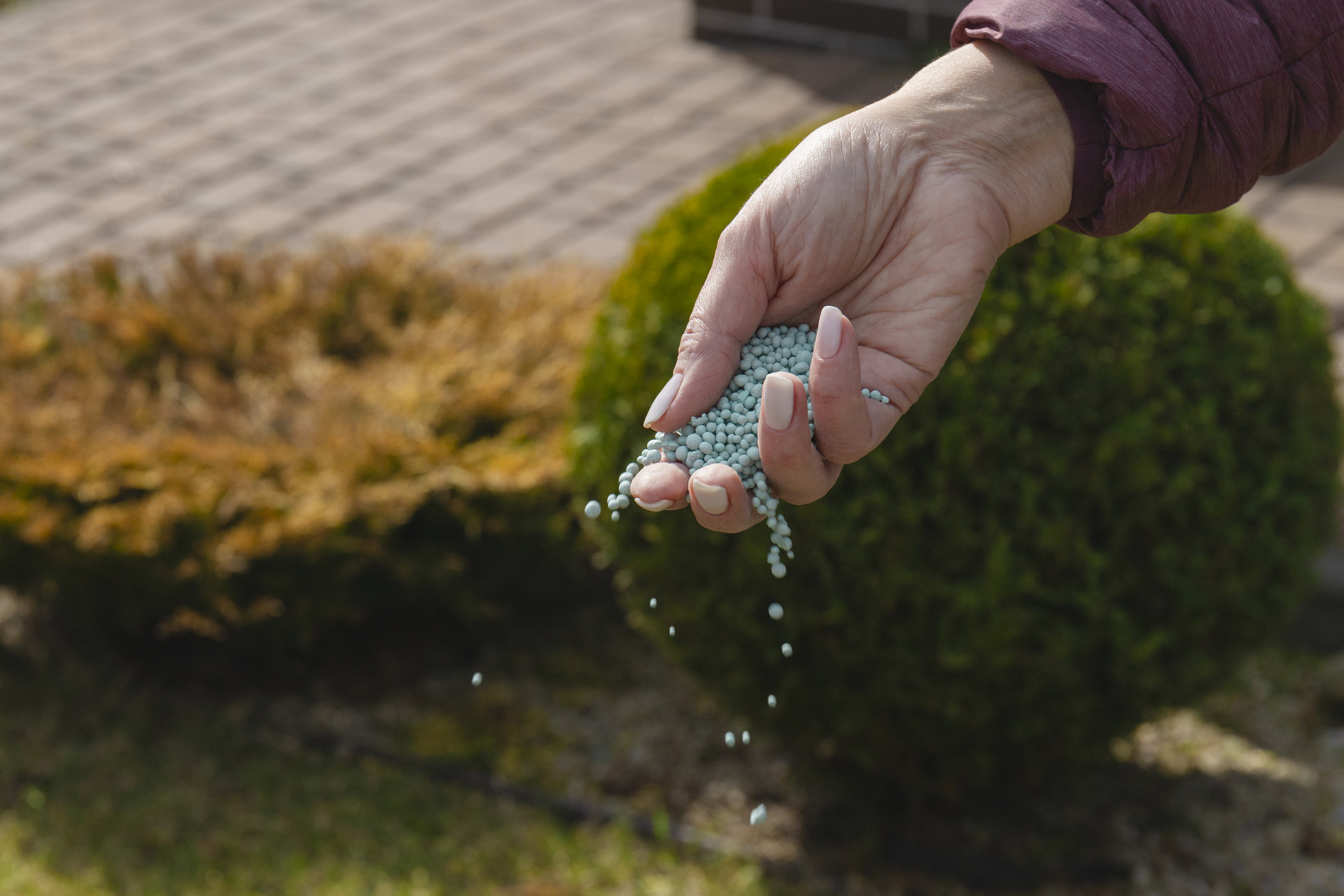
When you apply a granular pre-emergent, use a broadcast spreader to get even coverage. Uneven application leaves gaps that weeds will find.
Frequently Asked Questions About Pre-Emergent Timing and Soil Temperature
What soil temperature is needed before applying pre-emergent? The target is 50–55°F at a 2-inch soil depth. Apply the pre-emergent before soil temperatures consistently reach 55°F. Once temps have been near 50°F for several consecutive mornings, that is your window to act.
Can I use a regular meat thermometer to check soil temperature? A meat thermometer can give you a rough surface reading, but it will not reliably reach a 2-inch depth and is not designed for repeated soil use. A dedicated soil thermometer is inexpensive and gives you an accurate reading at the right depth. It is worth the small investment.
What happens if I apply pre-emergent too early? The chemical barrier degrades before peak weed germination arrives. Most pre-emergents last 6 to 12 weeks depending on the product and conditions. If you apply in late February but peak crabgrass pressure hits in June or July, the barrier may already be gone.
Does pre-emergent work on all weeds or just crabgrass? Crabgrass is the primary target for spring pre-emergent applications, but many products also suppress other annual weeds like foxtail and spurge. Some weeds, like goosegrass, germinate at higher soil temps (around 60°F) and may require a second application later in spring. Check your product label for the specific weeds it covers.
How long does pre-emergent last in the soil? Most pre-emergent herbicides provide 6 to 12 weeks of barrier protection. The exact duration depends on the product formulation, rainfall, temperature, and soil microbial activity. In warm, wet climates, degradation happens faster. This is why a split application or a second application later in the season is sometimes necessary.
Can I apply pre-emergent and overseed at the same time? No. Pre-emergent blocks germination regardless of seed type — it cannot tell the difference between crabgrass seed and grass seed. Applying pre-emergent and then overseeding will prevent your grass seed from germinating. You need to separate these two activities by several weeks, or wait until fall to overseed after your pre-emergent has fully degraded.
Where can I find current soil temperature data for my area? Your state’s university extension service is the best starting point. Many publish county-level soil temperature maps updated regularly throughout spring. NOAA also provides soil temperature data. Search “[your state] extension soil temperature” to find your local resource.
Should I apply pre-emergent if it is going to rain? Light rain after application can actually help activate granular pre-emergent by moving it into the soil. Heavy rain shortly after application can wash or dilute the product before it sets. Check your product label for specific rainfall guidance. Most manufacturers recommend watering in granular pre-emergents with a quarter to half inch of water if rain is not expected within a few days.
Conclusion
The core idea here is simple: soil temperature is the biological trigger for weed germination, and it is the only reliable signal for when to apply pre-emergent herbicide. The benchmark to work with is 50–55°F at a 2-inch depth. Get the barrier down before temps consistently reach that threshold, and you are ahead of the problem.
Calendar dates have a role, but it is a supporting one. Use them to schedule your soil temperature monitoring, not your application.
The practical steps are straightforward:
- Get a soil thermometer and check at 2 inches every morning once you are approaching the window
- If you do not have a thermometer yet, use your state extension service’s soil temp data as a starting point
- Apply before the threshold, not after — and do not disturb the barrier once it is down
If you are building a fuller lawn care routine around this, the next step is understanding how pre-emergent timing fits into a broader seasonal schedule by grass type and region. And if you are in your first season managing a lawn from scratch, it is worth starting with the fundamentals before diving into herbicide timing — getting the basics right in year one makes every subsequent season easier.

Subscribe to our Newsletter for Weekly updates!