Disclosure: This article contains affiliate links. If you purchase through these links, I may earn a small commission at no extra cost to you. As an Amazon Associate, I earn from qualifying purchases.
Most fall fertilizer advice you’ll find online was written with cool season grass in mind. If you have bermuda, zoysia, St. Augustine, or centipede, following that advice is one of the most damaging things you can do heading into winter. Fall fertilizer mistakes on warm season grass don’t always show up immediately — they show up as winter kill in January, a patchy and sluggish green-up in April, or disease pressure that drags on through the following summer. This list covers the most common fall fertilizer mistakes warm season grass owners make, ordered from most damaging to most overlooked.
Disclosure: This article contains affiliate links. If you purchase through these links, I may earn a small commission at no extra cost to you. As an Amazon Associate, I earn from qualifying purchases.
Why Fall Fertilizing Rules Are Different for Warm Season Grass
Warm season grass goes dormant. When soil temperatures drop below 55°F, these grasses stop growing, stop absorbing nutrients, and begin storing energy in their crowns and root systems. That process is a feature, not a problem — but it means fall is a time to support hardening off, not to push new growth.
Cool season grasses like fescue and bluegrass actively grow in fall and genuinely need fertilizer before winter. The general “fertilize in fall” advice is written for them. Getting clear on your grass type first will save you from applying the wrong program at the wrong time. If you’ve recently moved in and are still learning your lawn, New Homeowner Lawn Care: The First 5 Things to Do in Your First Season is a helpful starting point before diving into fall fertilizer decisions. A Complete Guide to Warm Season Grasses can help you confirm exactly what you’re working with before you make any fall fertilizer decisions. If you have zoysia specifically, following a Best Fertilizer Schedule for Zoysia Grass by Season helps you stay on the right track year-round. For a broader view of when to apply each input throughout the year, a Warm Season Lawn Care Schedule Month by Month Guide gives you the full seasonal picture.
Mistake 1: Applying Nitrogen Too Late — The Most Damaging Fall Fertilizer Mistake for Warm Season Grass
This is the most common fall fertilizer mistake warm season grass owners make, and it carries the highest consequences.
What happens: A late nitrogen application forces new, tender leaf growth at exactly the wrong time. That fresh tissue hasn’t hardened before frost arrives, so it dies back. In mild cases, you lose a layer of top growth. In severe cases — especially with bermuda — the frost damage reaches the crown, which is the growth point at the base of the plant. Crown damage can set a lawn back significantly or kill sections outright. Centipede grass, which is already sensitive to over-fertilization, is particularly vulnerable here.
Why it keeps happening: Many fertilizer bags list a “fall application” on the schedule without distinguishing between grass types. Homeowners follow the bag. The bag was written for a different lawn.
The fix: For most warm season grasses, the last nitrogen application should happen 6–8 weeks before your average first frost date. In Zone 9 and warmer (deep South, Gulf Coast), that can still allow a September application. In transitional zones — Zone 7 and 8 — that window often closes in late August.
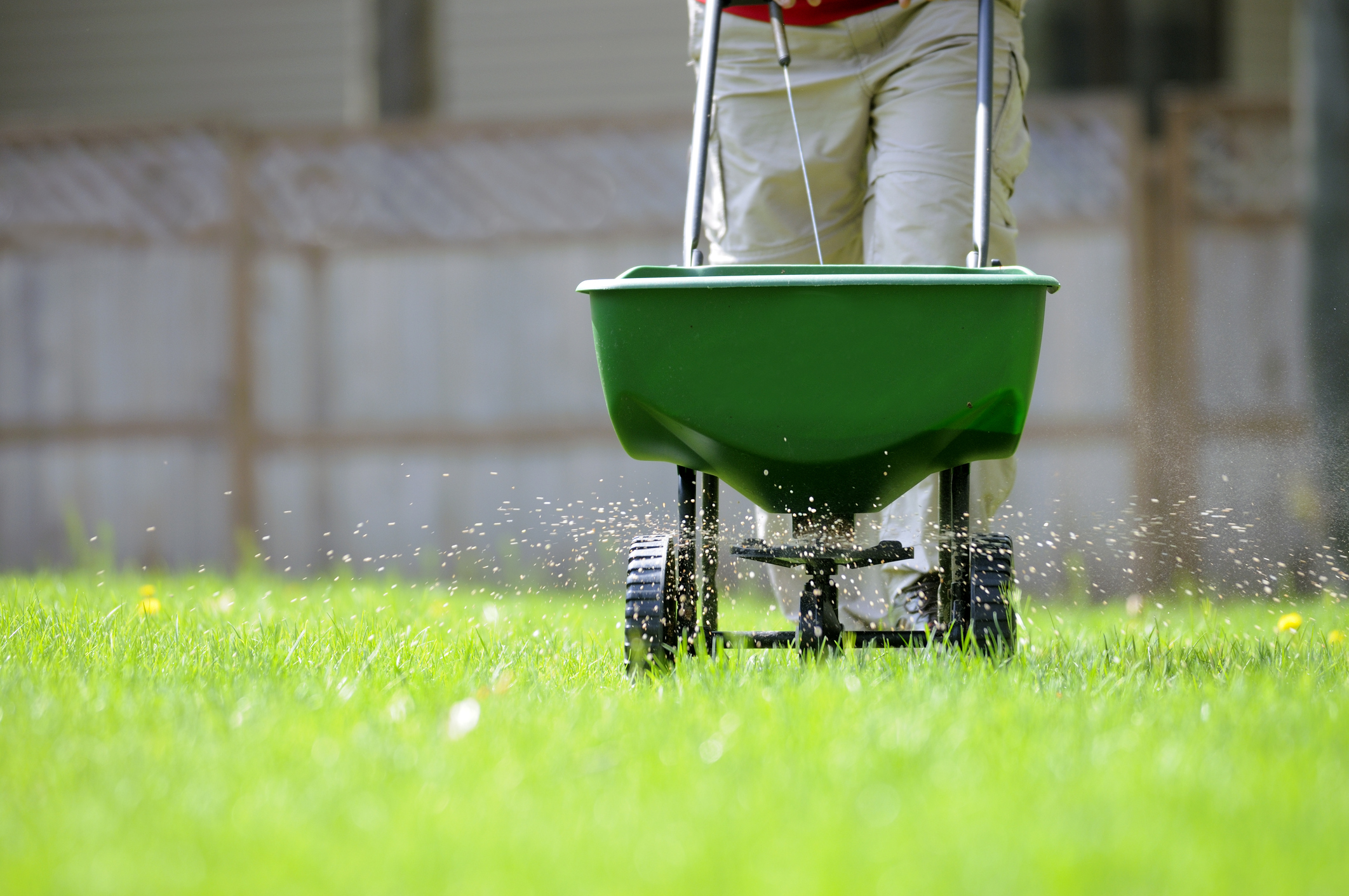
If you’re making an application close to that cutoff, slow-release granular fertilizer is a safer choice than quick-release. Slow-release nitrogen feeds gradually and is less likely to trigger a sudden flush of vulnerable new growth. For even application without hot spots, pair it with a quality broadcast spreader — uneven distribution concentrates nitrogen in patches and amplifies the risk.
Mistake 2: Using the Wrong Fertilizer Type Before Dormancy (Warm Season Grass)
Even homeowners who get the timing roughly right often reach for the wrong product.
What happens: A balanced or high-nitrogen fertilizer — even one marketed as a “fall fertilizer” — may be formulated for cool season grass. Many fall products carry elevated nitrogen specifically to support fescue and bluegrass germination in fall. That’s the opposite of what warm season grass needs. A product like Scotts Turf Builder WinterGuard fall lawn fertilizer, for example, is designed to prepare cool season grass for winter — not warm season turf heading into dormancy.
The fix: Read the NPK ratio on the bag before you buy. NPK stands for nitrogen, phosphorus, and potassium — the three numbers on every fertilizer label, in that order. For a late-season warm season grass application, you want a low first number (nitrogen) and a higher third number (potassium). Something in the range of 5-0-20 is appropriate. Something labeled 32-0-10 is not.
The mistake most people make is assuming a product labeled “fall fertilizer” is universal. It isn’t. Potassium is what your lawn actually needs as it prepares for dormancy — it supports root health and cold hardiness without pushing shoot growth. This is also why quick-release nitrogen is the higher-risk option here — it delivers nitrogen fast, right when your lawn least needs it.
Mistake 3: Ignoring Soil Temperature When Timing Your Last Application for Warm Season Grass
Calendar-based rules are convenient, but they can be meaningfully wrong depending on where you live and what the season is doing.
What happens: The same calendar date — say, September 15 — might mean a 64°F soil in coastal Georgia and a 51°F soil in the Tennessee foothills. If soil temperature has already dropped below 55°F, warm season grass isn’t actively absorbing nutrients. Fertilizer applied in those conditions sits in the soil unused. It leaches into groundwater and costs you money without providing any benefit.
The fix: Check soil temperature at 2–4 inch depth before any fall application. When soil consistently reads below 65°F, transition away from nitrogen. Below 55°F, don’t apply anything.
Mistake 4: Skipping Potassium When Warm Season Grass Needs It Most
This is the most overlooked mistake on the list, and it runs in the opposite direction from the others.
What happens: Many homeowners hear “stop fertilizing in fall” and interpret that as stopping everything. They skip the one nutrient input that actually helps warm season grass survive winter better. Potassium — the K in NPK — regulates water movement in plant cells. It supports drought tolerance and helps grass tissue harden against cold stress. A potassium-deficient lawn going into dormancy is more vulnerable to winter desiccation. It also tends to green up more slowly in spring.
This matters most in sandy soils. Sandy soils leach potassium quickly and are common across much of the warm season grass belt.
The fix: A late-summer potassium application — timed before your nitrogen cutoff window — is appropriate and beneficial for most warm season grasses. Products like muriate of potash (0-0-50) or a blended fertilizer with minimal nitrogen and elevated potassium are the right choices here.
That said, don’t guess. A soil test tells you whether potassium is actually deficient or just adequate. Over-applying potassium when levels are already sufficient is wasteful and can interfere with other nutrient uptake.
What a Safe Fall Fertilizer Plan for Warm Season Grass Actually Looks Like
If you want to pull these mistakes into a clear action sequence, here’s how to approach it:
- Get a soil test if you haven’t done one in the last two to three years. It tells you whether potassium is deficient before you spend money on amendments.
- Make your last nitrogen application 6–8 weeks before your average first frost date — earlier in transitional zones, potentially as late as September in Zone 9+. A cool season fertilizer like Andersons PGF Complete 16-4-8 is a reliable all-around option for this final summer feeding.
- Check soil temperature before that application. Stop nitrogen inputs when soil approaches 65°F consistently. Don’t apply anything after it drops below 55°F.
- Time a potassium application in late summer if your soil test shows deficiency. This is a separate, earlier step — not a substitute for the nitrogen cutoff.
- Choose a fertilizer formulated for warm season grass with a low nitrogen-to-potassium ratio. Read the NPK numbers, not just the marketing on the front of the bag.
- Stop all fertilizer inputs once dormancy begins. Dormancy isn’t a problem to solve — it’s a natural process. Set the lawn up well before it happens, then leave it alone.
Once your lawn goes brown, the question most homeowners have is whether it’s dormant or actually dying — and knowing the difference matters as much as getting the fall fertilizer right.

Lawn Care Enthusiast & Homeowner
Subscribe to our Newsletter for Weekly updates!