The date printed on the bag and the old rule about forsythia blooming are useful approximations — but they fail regularly. Getting pre-emergent timing right on a cool season lawn comes down to one thing: soil temperature. That’s the actual trigger for crabgrass and other summer annual weed germination, and it’s what your pre-emergent barrier needs to intercept. This guide covers the target soil temperature for pre-emergent herbicide application, how to measure it accurately, when different cool-season regions typically hit the target window, and how to handle the overseeding conflict that catches many homeowners off guard. If your lawn is still in full dormancy, review what the lawn actually needs through winter before taking any spring action.
Disclosure: This article contains affiliate links. If you purchase through these links, I may earn a small commission at no extra cost to you. As an Amazon Associate, I earn from qualifying purchases.
Why Soil Temperature Controls Pre-Emergent Timing on Cool Season Lawns — Not the Date on the Bag
To understand the timing, you need to understand what pre-emergent herbicide actually does. It creates a chemical barrier in the top layer of soil that kills weed seedlings as they germinate. It does not kill established weeds. It does nothing to seeds still sitting dormant. The barrier is only effective for a finite window — typically 6 to 12 weeks, depending on the product and how much rainfall it receives.
Crabgrass and most summer annual weeds begin germinating when soil temperature for pre-emergent herbicide timing reaches a 2-inch depth of around 50–55°F. That’s a biological threshold, not a calendar date. When the soil hits that range and stays there, germination begins in earnest.
The timing problem on both ends becomes clear:
- Apply too early — the barrier degrades before soil temps sustain the range that drives peak germination. The product’s effectiveness is spent before it’s needed.
- Apply too late — crabgrass seeds have already cracked open and begun germinating. A pre-emergent barrier cannot stop a process that has already started.
Calendar dates and bloom-based indicators like forsythia can shift by two to four weeks from year to year. A warm February followed by a cold March throws off every bloom-based rule on the market. Soil temperature doesn’t interpret weather — it records it.
The target is straightforward: soil temperature at a 2-inch depth reaching 50–55°F for several consecutive days.
The 55°F mark is the pre-emergent soil temp threshold where crabgrass germination begins in earnest. The practical strategy is to apply before the soil holds at 55°F — not after it’s already there. Many recommendations use 50°F as the action trigger, which gives you a small buffer before germination pressure builds.
A few points specific to cool-season lawns:
- Your grass may still be dormant or just beginning to green up when this window arrives. That’s fine. Apply based on soil temperature, not on how the lawn looks.
- If you’re in a high-pressure area — a lawn that dealt with heavy crabgrass the prior season — a split application is worth considering. Apply the first treatment when soil temps hit 50°F, then apply a second application 6 to 8 weeks later to extend protection through late spring when crabgrass pressure is still building.
To confirm you’re in the application window, you need a soil thermometer. Air temperature, forecasts, and guesswork aren’t precise enough. Soil temperature lags behind air temperature and can vary significantly by location and time of day. A probe-style soil thermometer pushed to a 2-inch depth removes the guesswork entirely.
How to Check Soil Temperature Before You Apply
Using a soil thermometer correctly takes less than a minute, but the details matter.
Where to measure: Push the probe 2 inches into the soil in a representative area of your lawn. Avoid spots near pavement, building foundations, or heavy shade. These microclimates run warmer or cooler than your open turf and will skew the reading.
When to measure: Early morning gives the most conservative (lowest) reading. Afternoon runs higher. Pick one time of day and stick with it so your readings are comparable across days.
How many readings before you act: Check for three to five consecutive days before applying. You want to confirm a trend, not react to a single warm afternoon. If temperatures are consistently approaching 50°F and the forecast shows continued warming, that’s your signal to prepare.
Free alternatives: Many state cooperative extension services and land-grant universities publish daily or weekly soil temperature maps during spring. These are updated from monitoring stations across the state and are a reliable free option if you don’t have a thermometer yet. The NOAA Climate website also provides soil temperature data by region.
Regional Pre-Emergent Timing Breakdown: When Cool Season Lawns Hit the Target Window
Knowing when to apply pre-emergent in spring on cool season grass is easier with regional context — but treat these as typical windows, not fixed dates. A cold or warm year can shift the window by two to three weeks in either direction. That’s exactly why soil temperature is the more reliable trigger than any calendar.
| Region | Typical Window |
|---|---|
| Pacific Northwest (cool zones) | Late March to mid-April |
| Upper Midwest / Great Lakes | Late April to early May |
| New England / Northeast | Mid-April to early May |
| Mid-Atlantic / Transition Zone (northern edge) | Late March to mid-April |
| Mountain West / High Plains | Varies widely by elevation — use soil temp, not region |
The Mountain West and High Plains deserve a specific note: elevation matters more than geography here. A lawn at 5,000 feet in Colorado hits 50°F soil temperatures several weeks later than one at lower elevation in the same state. If you’re in that region, treat the regional averages as a starting point only and measure your own soil.
What Happens If You Apply Pre-Emergent Too Early or Too Late
Too Early
Applying in late February or early March in northern cool-season zones is the most common timing mistake. The soil is still cold. Crabgrass isn’t close to germinating. The pre-emergent barrier begins breaking down in the soil immediately after application. Cool, wet spring conditions accelerate herbicide breakdown. By the time soil temperatures reach the 55°F+ range that drives peak crabgrass germination, the barrier has already degraded. The result is crabgrass breaking through in midsummer with nothing to stop it.
Too Late
Once sustained soil temperatures reach 60°F, crabgrass seeds are already germinating. A pre-emergent applied at this point may suppress some germination at the margins, but it cannot stop a process that has already begun. Missing the window by even one to two weeks in a warm spring can mean significant crabgrass pressure by midsummer. At that point, you’re looking at post-emergent herbicide options. Those are less effective, more labor-intensive, and require repeat applications against established plants.
The stakes on both sides of the window are real. This is why pre-emergent timing for cool season lawn care is the single most consequential spring decision most homeowners make all year.
Pre-Emergent Timing and Overseeding: How to Handle the Conflict
This is the scheduling tension that catches the most homeowners off guard. Pre-emergent herbicides cannot distinguish between a crabgrass seed and a grass seed — they block germination of both. If you apply pre-emergent in spring, you cannot overseed that same area for 8 to 12 weeks after application. The exact restriction varies by product and active ingredient, so check your label.
This is the core reason fall overseeding is strongly preferred for cool-season lawns. There’s no spring pre-emergent conflict in fall timing. Soil temperatures are dropping, crabgrass pressure is gone, and newly seeded grass establishes without competing barriers. For guidance on fall weed prevention timing alongside other seasonal tasks, the fall weed control guide covers what to target and when.
If you need to overseed in spring, you face a direct choice:
- Skip pre-emergent in that area and accept weed pressure for the season while the new grass establishes
- Apply pre-emergent and delay overseeding in that zone until the product’s restriction window has passed — typically late summer, which overlaps with fall seeding timing anyway
There’s no workaround that lets you do both simultaneously. Make the call before spring arrives, not after the pre-emergent is already down.
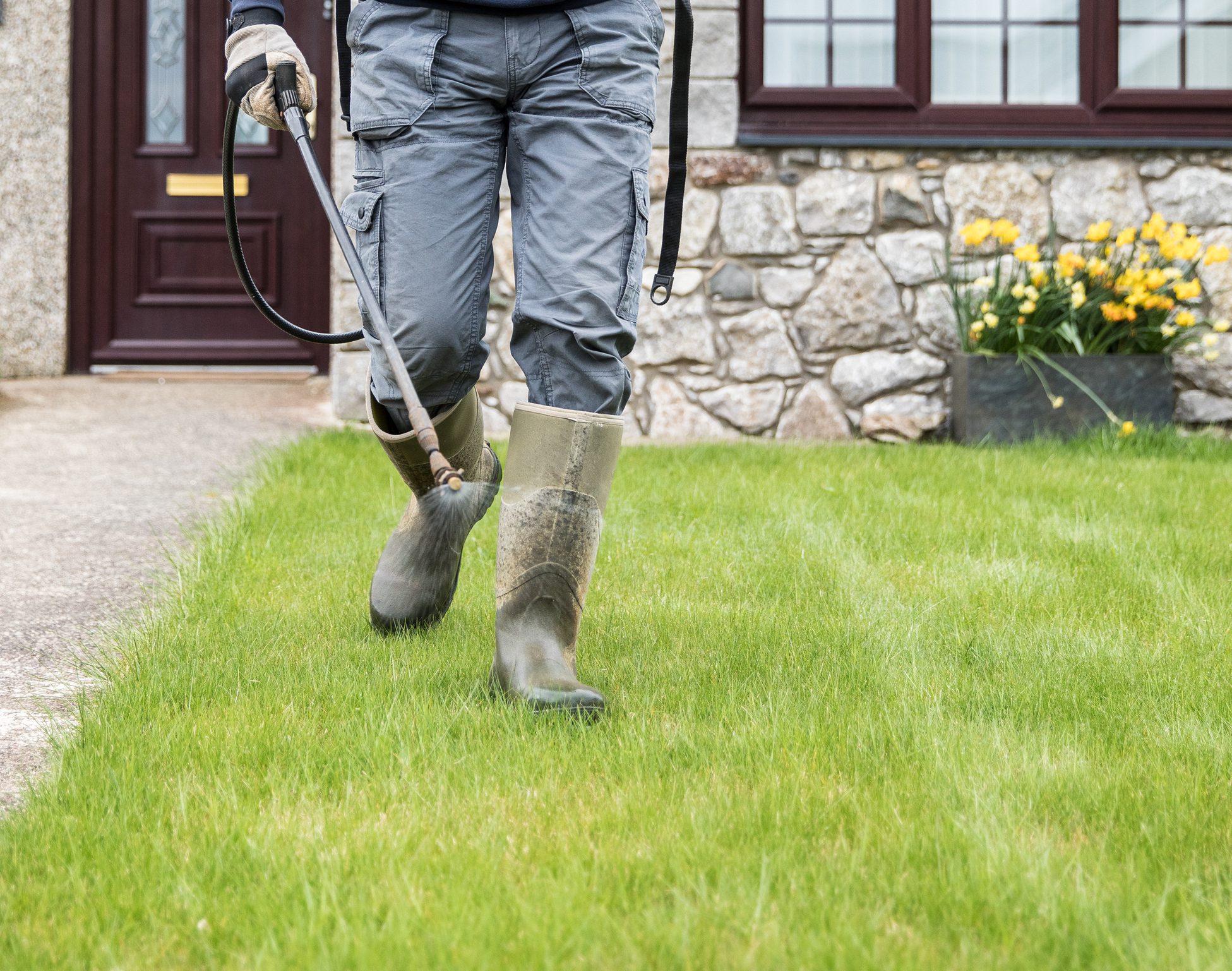
For lawns where overseeding is not the priority, a granular crabgrass preventer applied with a broadcast spreader is the standard approach for most homeowners. Uniform coverage matters more than the specific brand or formulation for most residential lawns. A quality broadcast spreader ensures even distribution across the lawn, which is critical because gaps in coverage become gaps in the weed barrier.
Frequently Asked Questions
What soil temperature triggers crabgrass germination? Crabgrass begins germinating when soil temperature at 2 inches reaches and holds 50–55°F. Apply pre-emergent before that threshold is sustained — not after.
Can I use air temperature or the forecast instead of measuring soil temp? No. Air temperature lags behind soil temperature and doesn’t correlate consistently. Soil temperature is the only reliable measure for pre-emergent timing on cool season lawns. Use a thermometer or your state extension’s soil temp map.
Is it too late to apply pre-emergent if the soil is already at 60°F? Most likely yes for early-germinating weeds. At sustained 60°F, crabgrass is already germinating. A late application may still suppress some germination but won’t provide full-season control.
Do I need a second application of pre-emergent in spring? In high-pressure areas, yes. A split application — first at 50°F, second 6 to 8 weeks later — extends coverage through late spring when crabgrass pressure is still building.
Can I overseed and apply pre-emergent at the same time? No. Pre-emergent blocks germination of both weed seeds and grass seed. You must choose one or the other for that season and area.
Does pre-emergent harm established cool-season grass? No. Established grass isn’t germinating, so the barrier doesn’t affect it. Pre-emergent only impacts the germination process.
Conclusion
Three things to take away from this guide:
- Soil temperature at a 2-inch depth — not the calendar, not the bag date — is what triggers correct pre-emergent timing on cool season lawns. Bloom-based rules are approximations that fail in variable springs.
- The pre-emergent soil temp threshold is 50–55°F consistently. Apply before the soil holds at 55°F. At 60°F, you’ve missed the window.
- The overseeding conflict is real. Decide between weed prevention and lawn renovation before spring arrives — not after the pre-emergent is already down.
For more detail on sequencing pre-emergent with fertilizer and overseeding across the full season, the sequencing guides that cover how those three tasks interact are the logical next step.
Subscribe to our Newsletter for Weekly updates!