Summer is the most productive season your warm season lawn will have all year. A well-timed warm season grass summer fertilizer schedule determines whether you finish the season with dense, healthy turf or a lawn that limps into fall. Most homeowners either overfeed during peak heat, use the wrong formulation, or stop too early. This guide covers what to apply as summer lawn fertilizer for warm season grass in June, July, and August — with specific guidance for bermuda, zoysia, St. Augustine, and centipede.
Disclosure: This article contains affiliate links. If you purchase through these links, I may earn a small commission at no extra cost to you. As an Amazon Associate, I earn from qualifying purchases.
Why Summer Is the Most Important Fertilizer Window for Warm Season Grass
Warm season grasses thrive when soil temperatures sit between 80–95°F. That describes most of June, July, and August across southern and transitional zones. During this window, the grass actively builds leaf tissue, lateral shoots called stolons, and root mass. This is when warm season grass nitrogen uptake in summer peaks — not in spring, and not in fall.
Unlike cool-season grasses that go semi-dormant in summer heat, warm season varieties are in full swing. For a full overview of how cool-season turf differs in its seasonal needs, see the Complete Guide to Cool Season Grasses (Fescue, Bluegrass, Rye). Getting your warm season grass summer fertilizer schedule right during these months determines turf density heading into fall and the lawn’s ability to survive winter dormancy. For a broader view of how summer fits into the full growing year, the Warm Season Lawn Care Schedule Month by Month Guide provides useful context for each season’s priorities.
Nitrogen (N) drives leaf and lateral growth. But too much nitrogen in high heat produces soft, fast-growing tissue that is vulnerable to fungal disease and heat stress. Potassium (K) plays a supporting role — it strengthens cell walls and improves drought and heat tolerance. Managing both nutrients together matters more in summer than any other season.
June Warm Season Grass Fertilizer: Fueling Early Summer Growth Without Burning
June is the safest and most important month to make a full nitrogen application. Grass is actively growing, soil temperatures are high enough for strong uptake, and daytime highs haven’t yet pushed into the sustained 95°F-plus range that raises burn and disease risk.
Target application window: Early to mid-June, before prolonged heat peaks arrive in your area.
Nitrogen rate: 0.5–1 lb of actual nitrogen per 1,000 sq ft. Adjust down for sandy soils. Adjust up for bermuda, which has the highest nitrogen demand of any common warm season grass.
If you’re unfamiliar with “actual nitrogen,” here’s the math: a bag labeled 32-0-10 is 32% nitrogen by weight. A 10 lb bag contains 3.2 lbs of actual nitrogen. To apply 1 lb of actual N per 1,000 sq ft across a 3,000 sq ft lawn, you’d need roughly 9.4 lbs of that product.
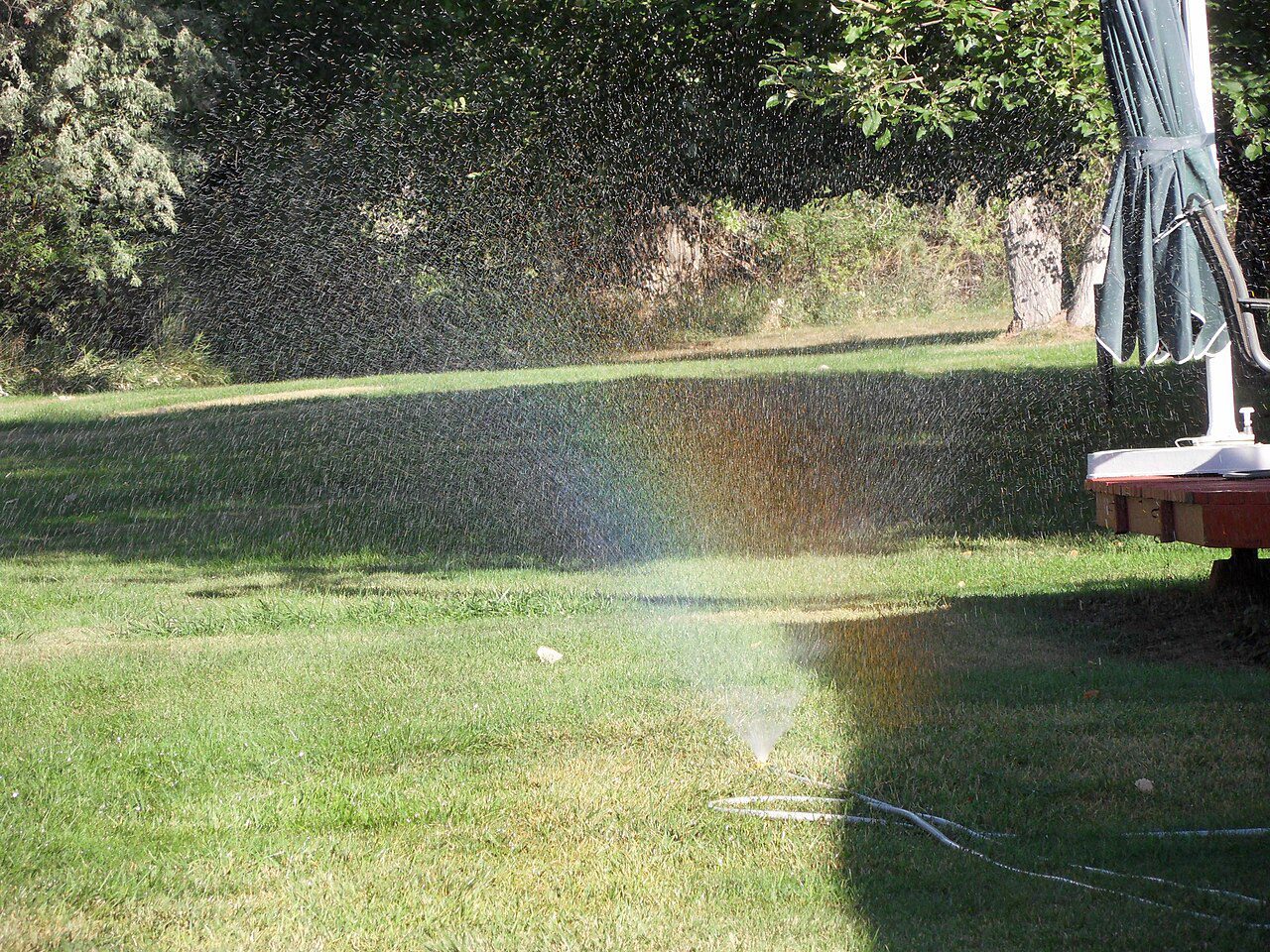
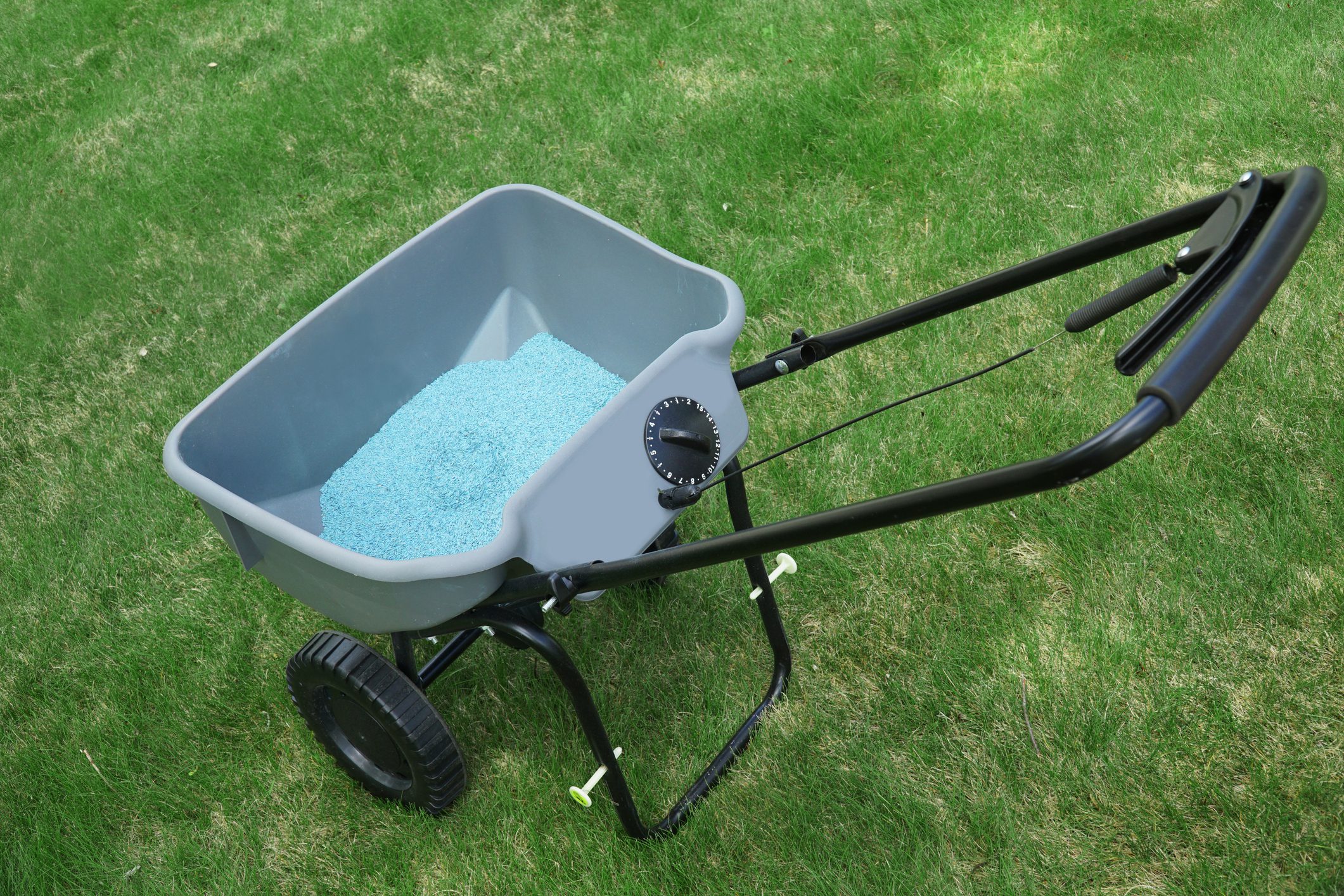
Application mechanics: Water the lawn deeply the day before. Apply granules to dry grass blades using a broadcast spreader to ensure even coverage and prevent streaking. Water in within 24 hours. Granules left on wet blades or not watered in can burn leaf tissue.
If your lawn received fertilizer in late May, push June’s application to mid-month or skip it if the turf is already dark green and dense.
What NPK Ratio to Use in June
For most warm season grasses in June, a nitrogen-forward formula with low or zero phosphorus works well. A 3-1-2 ratio — products like 30-0-10 or 24-0-11 — covers most situations. Established warm season lawns rarely need phosphorus unless a soil test confirms a deficiency. High-P products can lock up micronutrients over time.
Potassium is worth including from the start of summer. When possible, choose products using sulfate of potash (SOP) rather than muriate of potash (MOP). SOP has a lower salt index, which matters on warm, sandy soils where salt buildup adds extra stress.
July Adjustments to Your Warm Season Grass Summer Fertilizer Schedule
July is the highest-risk month for fertilizer misuse. Peak heat, drought stress, and elevated disease pressure all intersect during the same weeks you might be thinking about feeding your lawn.
The core rule for July: reduce your nitrogen rate. Target 0.5 lb actual N per 1,000 sq ft maximum — half the upper end of what June allows.
If your lawn is showing drought stress — look for footprinting (grass blades that don’t spring back when walked on) or a blue-gray tint — skip fertilizer entirely until the grass recovers and consistent irrigation is restored. Fertilizing stressed turf accelerates damage rather than fixing it.
Slow-release formulations matter even more in July than in June. When temperatures regularly exceed 95°F, quick-release nitrogen can cause rapid soft growth that becomes an immediate target for fungal disease. A slow-release product meters out warm season grass nitrogen throughout the hottest summer weeks without overwhelming the plant.
Potassium is the more important nutrient focus in July. A summer formula with a higher K ratio — such as 15-0-15 — is appropriate during heat waves. Potassium supports the cell wall strength and osmotic function that help grass tolerate extreme heat and limited water.
Timing within the day: Apply granular products in early morning or late evening. Midday application on hot soil raises burn risk.
When to Skip July Fertilizer Entirely
Skip July fertilizer if any of the following apply:
- Active disease pressure is present — brown patch or dollar spot are already spreading, and additional nitrogen will make it worse
- A slow-release product applied in June is still actively feeding — check the bag’s stated release window before reapplying
August Fertilizer Strategy for Warm Season Grass: What to Apply Before Growth Slows
August is the final full-feeding month in any warm season grass summer fertilizer schedule. The goal is to maximize turf density before fall — not to push excess top growth.
Application timing: Apply no later than mid-August in zones 7–8. Late August is acceptable in the deep south (zones 9–10) where the growing season extends further. In zone 7, late nitrogen pushes soft growth that won’t harden before the first frost.
Rate: Return to 0.5–1 lb actual N per 1,000 sq ft, similar to June, now that peak heat is beginning to moderate.
Potassium matters again in August, but for a different reason than July. Heading into fall, potassium helps the lawn build carbohydrate reserves that support dormancy survival and spring green-up. A balanced summer fertilizer with meaningful K content is the right choice here.
After August, the fall fertilizer (winterizer) strategy picks up where summer leaves off — that’s a separate window focused on potassium-heavy, low-nitrogen formulations for dormancy prep rather than active growth.
Should You Use a Soil Test Before August Fertilizer?
If you already fertilized in June and July, a soil test isn’t strictly necessary for the August application. But if you haven’t tested in the past two to three years, August is a practical time to pull one. You’ll have results before you need to make fall fertilizer decisions.
A basic soil test kit can give you actionable data on pH, phosphorus, potassium, and magnesium. That information is especially useful heading into winter prep, where correcting pH or adding lime has all fall and winter to work before spring growth resumes.
For a comprehensive overview of these grasses and their characteristics, see the Complete Guide to Warm Season Grasses.
Bermuda Grass Summer Fertilizer Schedule
Bermuda has the highest nitrogen demand of the four warm season grasses covered here. It can handle 1 lb of actual N per 1,000 sq ft monthly from June through August when actively growing. Bermuda is also the most forgiving grass for summer fertilizer timing — it recovers quickly and responds well to both slow-release and properly applied quick-release nitrogen. If you overseeded bermuda with ryegrass last fall, see how to fertilize bermuda after spring transition before starting your summer schedule. And avoid excess nitrogen on bermuda going into September in zones 7–8, where early frost risk rises.
Zoysia Grass Summer Fertilizer Schedule
Zoysia needs moderate nitrogen in summer — 0.5 lb actual N per 1,000 sq ft monthly is the standard. Pushing higher causes excessive thatch buildup over time. Zoysia grows more slowly than bermuda and doesn’t benefit from aggressive feeding. Potassium supplementation matters more than increasing nitrogen here — zoysia responds well to K applications during heat. If zoysia was aerated and topdressed in late spring, account for any amendments already in the soil before applying more.
St. Augustine Fertilizer Schedule: June, July, and August
St. Augustine handles 0.5–1 lb actual N per 1,000 sq ft monthly but burns more easily than bermuda. Following a consistent St. Augustine fertilizer schedule across June, July, and August means watching for heat and disease signals more carefully than you would with bermuda. In July specifically, stick to slow-release products — St. Augustine is susceptible to gray leaf spot during hot, wet periods, and excess nitrogen worsens disease severity. Iron supplementation (liquid iron or iron sulfate) can deepen color without adding more nitrogen. It’s a useful option when the lawn looks pale but nutrient levels are already adequate. Apply in early morning, water in lightly, and never leave granules on wet blades in July heat.
Centipede Grass Summer Fertilizer Schedule
Centipede has the lowest nitrogen demand of all warm season grasses. Over-fertilizing is the more common mistake — too much nitrogen causes centipede decline, a chronic weakening condition that’s slow to reverse. Keep applications at a maximum of 0.5 lb actual N per 1,000 sq ft per application, and aim for no more than 1–1.5 lbs of total nitrogen per year. A single June application is sufficient in most cases. July and August feeding is optional and only warranted if the lawn shows clear signs of nitrogen deficiency — yellowing or poor density. Centipede also prefers slightly acidic pH (5.0–6.0), so iron supplementation often addresses summer yellowing more safely than adding more nitrogen.
Common Summer Fertilizer Mistakes That Set Back Warm Season Lawns
- Fertilizing drought-stressed grass: Stressed grass can’t take up nutrients. You’re feeding weeds and risking burn. Wait for active growth and adequate moisture before applying anything.
- Using high-phosphorus fertilizer on established turf: Warm season lawns rarely need added phosphorus after establishment. High-P formulas tie up micronutrients in the soil over time.
- Following a cool-season fertilizer schedule: Cool-season schedules often call for reduced or no summer feeding. Applying that approach to bermuda or St. Augustine means missing the peak weeks of warm season grass nitrogen uptake in summer entirely.
- Not watering in granular fertilizer: Granules left on grass blades during summer heat can burn leaf tissue within hours. Apply to dry blades and water in within 24 hours. A quality broadcast spreader also helps ensure even distribution so no single area gets an excess concentration.
- Over-fertilizing centipede: This is the most grass-specific mistake on the list. Centipede decline from excess nitrogen is common and takes seasons to reverse. With centipede, less is always more.
- Skipping the August window: Many homeowners stop after July assuming the season is winding down. August is still a full growth month across most warm season zones, and skipping the final feeding in your warm season grass summer fertilizer schedule costs you turf density heading into fall.
- Stacking slow-release and quick-release products without tracking total N: Using both without adjusting rates leads to overapplication without realizing it. Calculate total actual nitrogen per 1,000 sq ft across all products before applying.
Conclusion
The warm season grass summer fertilizer schedule follows a clear framework: June is your primary feeding month, July requires restraint and awareness of heat and drought stress, and August finishes the season before growth begins to slow. Grass type matters — bermuda can handle monthly applications at higher rates, while centipede often needs just one light June feeding. Use slow-release nitrogen when in doubt, always water granules in, and skip fertilizer when the lawn is stressed. Keep potassium in the picture throughout the summer. For an all-around option that fits this schedule well across bermuda, zoysia, and St. Augustine, a warm season fertilizer like Andersons PGF Complete 16-4-8 covers the nitrogen, potassium, and micronutrient bases in a single product. Following a warm season grass summer fertilizer schedule tailored to your grass type is the single most impactful thing you can do for turf density before fall. Once August wraps up, shift your attention to fall prep and winterizer timing — a separate strategy built for dormancy, not growth.
Subscribe to our Newsletter for Weekly updates!