Cool season grass heat and drought is a combination that pushes your lawn to its limits every July and August. If you’re watching Kentucky bluegrass, tall fescue, fine fescue, or perennial ryegrass turn tan and stop growing, you’re not alone — and you’re probably not doing anything wrong. What you do next, however, matters a great deal.
Summer lawn stress on cool season grass is where most homeowners cause accidental damage: over-reacting to dormancy, watering inconsistently, or reaching for fertilizer at the worst possible time. This guide covers the full summer management picture — why cool-season grass reacts to heat the way it does, how to tell dormancy from actual death, how to water correctly, what mowing adjustments to make, and how to bring the lawn back when fall arrives.
Disclosure: This article contains affiliate links. If you purchase through these links, I may earn a small commission at no extra cost to you. As an Amazon Associate, I earn from qualifying purchases.
Why Cool Season Grass Struggles in Summer Heat and Drought
Cool-season grasses thrive in soil temperatures between 60 and 75°F — spring and fall in most of the U.S., which is exactly when these grasses grow most aggressively. When air temperatures push above 85 to 90°F consistently, shoot growth slows and the plant redirects energy toward survival rather than growth.
The more critical number is soil temperature. Roots are more heat-sensitive than blades. Once soil temps exceed 85°F — which happens easily in full sun during a heat wave — root function degrades. Water and nutrient uptake slow down. The lawn looks stressed before it looks dead because root damage happens first and invisibly.
Drought compounds the problem. Grass cools itself through transpiration: pulling water from the soil and releasing it through leaf tissue. When soil moisture runs out, that cooling mechanism shuts down. Heat stress and drought stress stack on each other fast.
Where this plays out: If you’re in the transition zone — roughly Virginia through Kansas — summer lawn stress on cool season grass is a seasonal reality. Northern homeowners in the Midwest, Northeast, and Pacific Northwest typically deal with it during heat waves rather than as a sustained season. Either way, the same biology applies.
Understanding this explains every recommendation that follows. The goal in summer isn’t to push the lawn — it’s to keep the plant alive until conditions improve.
Cool Season Grass Dormancy in Summer: Dead or Just Dormant?
Cool season grass dormancy in summer is a survival mechanism, not damage. Cool-season grass goes tan and stops growing when temperatures and moisture levels make active growth unsustainable. This is normal plant behavior, not a sign that you’ve failed.
How to check: Use the tug test. Grab a small handful of grass near the crown — the growing point at soil level — and pull gently. If the crown is firm, white or pale tan, and the grass resists tearing, the lawn is dormant. If the grass pulls away easily, the crown feels mushy, or there’s an off smell, the grass may be dead in that spot.
Pattern matters too. Heat-stress dormancy tends to be uniform across a lawn or concentrated in the hottest, most exposed areas. Isolated dead patches — especially circular or irregularly shaped spots with no green at the crown — are more likely disease, grub damage, or physical stress, not heat dormancy alone.
The key takeaway: dormant grass doesn’t need rescue. Treating dormant grass like it’s dying is where most homeowners cause real damage.
Watering Cool Season Grass in Heat and Drought: What Actually Works
Watering cool season grass in heat correctly comes down to a single decision: do you keep it actively growing, or do you let it go dormant? Both are legitimate choices. What’s not legitimate is doing both at once.
Option 1: Sustain Active Growth
If you want to keep the lawn green through summer, commit fully. Water deeply — 1 to 1.5 inches per week, including rainfall — and water infrequently, no more than two to three times per week. Deep, infrequent watering encourages roots to grow down where soil stays cooler. Always water early morning so the grass dries before evening, reducing disease pressure.
Consistency is everything. Inconsistent summer watering — green for a week, dry for two, then watered again — is harder on the plant than sustained dormancy.
Option 2: Let It Go Dormant
Stop supplemental watering and allow the lawn to go dormant naturally. Once dormant, apply one light watering of about 0.5 inch every two to three weeks during extended dry periods. The goal isn’t to wake the lawn up — it’s to keep the crown tissue alive through the worst heat.
The mistake that damages lawns most is forcing them in and out of dormancy by watering inconsistently. Dormancy takes energy to enter and energy to exit. Doing it repeatedly in a single season depletes the plant’s reserves.
Measuring What You’re Actually Applying
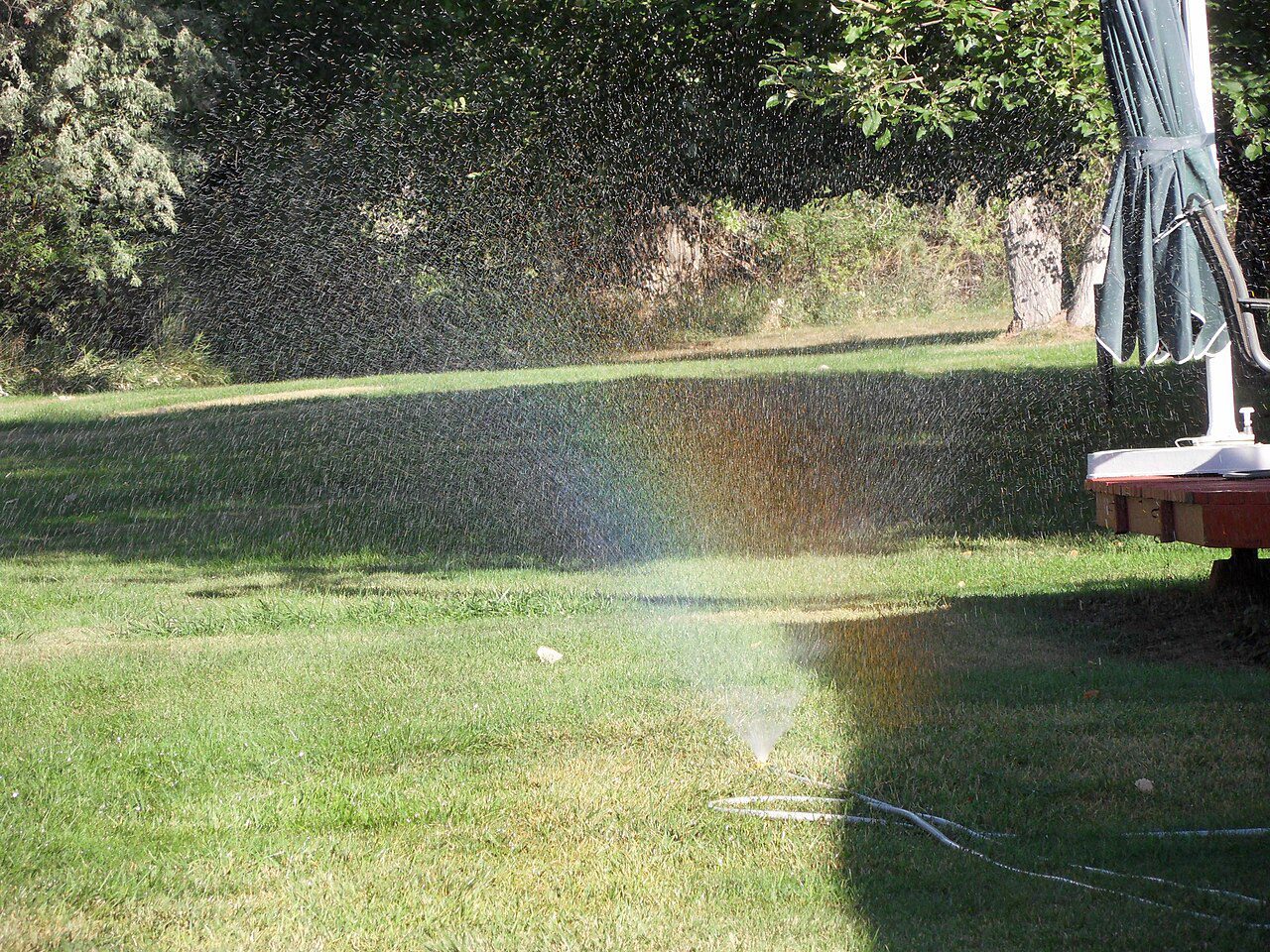
Most homeowners don’t know how much water their sprinkler puts down. A simple fix: place several shallow containers (tuna cans work well) across the lawn while running your sprinkler and time how long it takes to collect one inch of water. Do this once, note the run time, and use it consistently.
Mowing Height and Frequency Adjustments for Summer Stress
Raise your mowing height to 3.5 to 4 inches for most cool-season grasses during summer. Taller blades shade the soil surface, reduce evaporation at the root zone, and protect crown tissue from direct heat exposure.
Mow less often. In heat stress or near-dormancy, weekly mowing isn’t necessary and imposes unnecessary physical stress on the plant. Let growth guide your schedule — if it’s not growing, don’t mow.
The one-third rule applies more strictly in summer: never remove more than one-third of the blade height in a single mowing session. Keep mower blades sharp — dull blades tear grass rather than cutting cleanly, leaving ragged edges that lose moisture faster and invite fungal disease.
If the lawn is fully dormant and tan, hold the mower until you see active green growth returning.
What Not to Do: Mistakes That Make Summer Lawn Stress Worse
These are the most common errors homeowners make, and most cause damage that doesn’t show up until fall.
- Fertilizing in summer heat. Nitrogen pushes new shoot growth, but a heat-stressed plant can’t sustain it. Hold all nitrogen applications until late August at the earliest — ideally once daytime temperatures drop consistently below 80°F.
- Applying weed killer during stress. Broadleaf herbicides and post-emergent products stress the grass, and drought-stressed weeds often aren’t actively growing enough for the product to work effectively. Wait until fall when both grass and weeds are actively growing.
- Scalp mowing. Cutting very short exposes the soil surface to full sun, raises crown temperature, and accelerates stress. It does not stimulate summer recovery.
- Aerating or overseeding in mid-summer opens the soil profile and increases moisture loss. Grass seed sown in summer heat will fail before it germinates. Both tasks belong in fall.
- Cycling in and out of dormancy. Choose a watering path and hold to it. Forcing the lawn repeatedly in and out of dormancy depletes the plant’s energy reserves.
How to Bring Cool Season Grass Back After Summer Drought
Recovery from cool season grass heat and drought stress follows a natural timeline. When daytime temperatures drop below 75°F consistently and soil temperatures fall back to 65–70°F — typically late August through September — the lawn will begin greening up on its own.
Step 1: Resume deep watering. Rehydrate the root zone before doing anything else. Water deeply over several days to restore soil moisture through the full root profile.
Step 2: Wait for visible green-up. Don’t add fertilizer, seed, or any other input until you see active growth returning. Rushing this step stresses a plant still in recovery mode.
Step 3: Start fall tasks once growth resumes. This is the window for overseeding thin or bare areas, aerating compacted soil, and applying fall fertilizer. A fall lawn fertilizer like Scotts Turf Builder WinterGuard supports root development without the disease and burn risk of summer applications. A soil thermometer is useful here — once you confirm soil temps are back below 70°F, you can time these inputs with confidence rather than guessing by the calendar.
If areas haven’t shown recovery after two to three weeks of consistent post-heat watering, those spots likely need overseeding in fall. For spring prep context that sets up a lawn for summer resilience, the Spring Cool Season Lawn Care Checklist covers the inputs that matter most before summer heat arrives.
Conclusion
Summer is the hardest season for cool-season grass, but most of the damage homeowners experience comes from the wrong response to stress — not the stress itself.
Five things worth remembering when cool season grass heat and drought pressure hits:
- Heat shuts down roots before it kills blades. What you’re seeing is biology, not neglect.
- Cool season grass dormancy in summer is a survival strategy. Learn to identify it before doing anything. If you’re not sure what type of cool-season grass you have, the Complete Guide to Cool Season Grasses (Fescue, Bluegrass, Rye) covers how each species behaves differently under stress. If your lawn includes or borders warm-season turf, the Complete Guide to Warm Season Grasses explains how those species handle summer conditions differently.
- Choose a watering approach and stick to it. Inconsistency is the most damaging mistake.
- Mow higher, mow less often, and skip summer fertilizer and weed killer entirely.
- Recovery happens in fall. That’s when to overseed, aerate, and feed. For a month-by-month view of every task across the full year, the Lawn Care Tasks by Month: A 12-Month Homeowner Checklist is a useful reference for staying on schedule beyond the summer season. For everything that should happen before summer arrives, the Spring Lawn Wake-Up Checklist walks through what to do first when the grass starts growing again.
Subscribe to our Newsletter for Weekly updates!