Every time you mow, you face the same quiet decision: leave the clippings on the lawn or bag them up. Most homeowners have a default — but if you asked them why, many couldn’t give a clear answer. The mulching vs bagging grass clippings debate is one of those routine choices that turns out to matter more than it looks.
Here’s the short version: mulching is the better default for most lawns on most mow days. But there are specific situations where bagging is the right call — and knowing the difference is what this article is about.
Disclosure: This article contains affiliate links. If you purchase through these links, I may earn a small commission at no extra cost to you. As an Amazon Associate, I earn from qualifying purchases.
What Actually Happens When You Mulch Grass Clippings
Mulching isn’t just leaving clippings on the lawn. A dedicated mulching blade (or a mower set to mulch mode) chops clippings into fine pieces that fall down through the grass canopy and land on the soil surface — not sitting on top of the blades where they’d mat and block light.
Those fine clippings are mostly water — roughly 80–85% by weight. Under normal conditions, they break down within days to a couple of weeks. As they decompose, they release nitrogen, potassium, and other nutrients back into the soil. Think of it as a light, free fertilizer application every time you mow.
The nutrient return adds up. Some estimates suggest returning clippings can supply around 25% of a lawn’s annual nitrogen needs, though actual results vary based on grass type, mowing frequency, and soil conditions. It won’t replace your fertilizer schedule entirely, but it meaningfully reduces how much fertilizer you need to apply over the course of a season. In fall especially, you’ll still want to apply a dedicated fall fertilizer to prepare your lawn for winter, even if clipping return has reduced your overall nutrient needs. And when you do fertilize, a quick release nitrogen fertilizer like Andersons Professional DGL Dark Green Lawn™ can help you make up any nutrient gaps efficiently, and give your lawn a quick boost. For the rest of the season, pairing clipping return with a slow-release fertilizer helps maintain steady nutrient levels without the peaks and crashes of fast-release products.
One important caveat: a standard discharge blade won’t cut clippings finely enough for effective mulching. The clippings stay too long, sit on the surface, and can clump. A dedicated mulching mower blade is an inexpensive upgrade that makes the process work correctly.
The Case for Bagging: When It’s the Right Call
Bagging gets dismissed too quickly. There are real situations where it’s the smarter option — and being honest about those situations is what makes mulching a confident default rather than a blind one.
The grass is overgrown. The one-third rule — never cut more than one-third of the grass blade in a single mow — exists for a reason. When you’ve missed a mow and the grass is significantly taller than it should be, the clippings will be too long to fall through the canopy. They’ll sit on top, mat, and block light and airflow. Bag them.
Active disease is present. Fungal pathogens can travel in clippings. If you’re seeing signs of brown patch, dollar spot, or other active infections, mulching distributes those spores across your lawn with every pass. It’s also worth noting that overwatering can worsen disease pressure by keeping the turf surface wet and creating the humid conditions fungal diseases thrive in — so if you’re battling recurring outbreaks, your watering habits are worth reviewing alongside your mowing method. When disease is active, bag the clippings and dispose of them — don’t compost them either. For help identifying what you’re dealing with, see this guide to cool season lawn disease identification by visual symptom or, if you’re growing St. Augustine or zoysia, this resource on brown patch disease identification in St. Augustine and zoysia.
Heavy leaf debris in fall. If you’re mowing over a thick layer of wet leaves, the leaf-clipping mix can mat badly. Light, dry leaves are fine to mulch — your mower will chop them up and they’ll break down quickly. Heavy or wet leaf cover is a different situation.
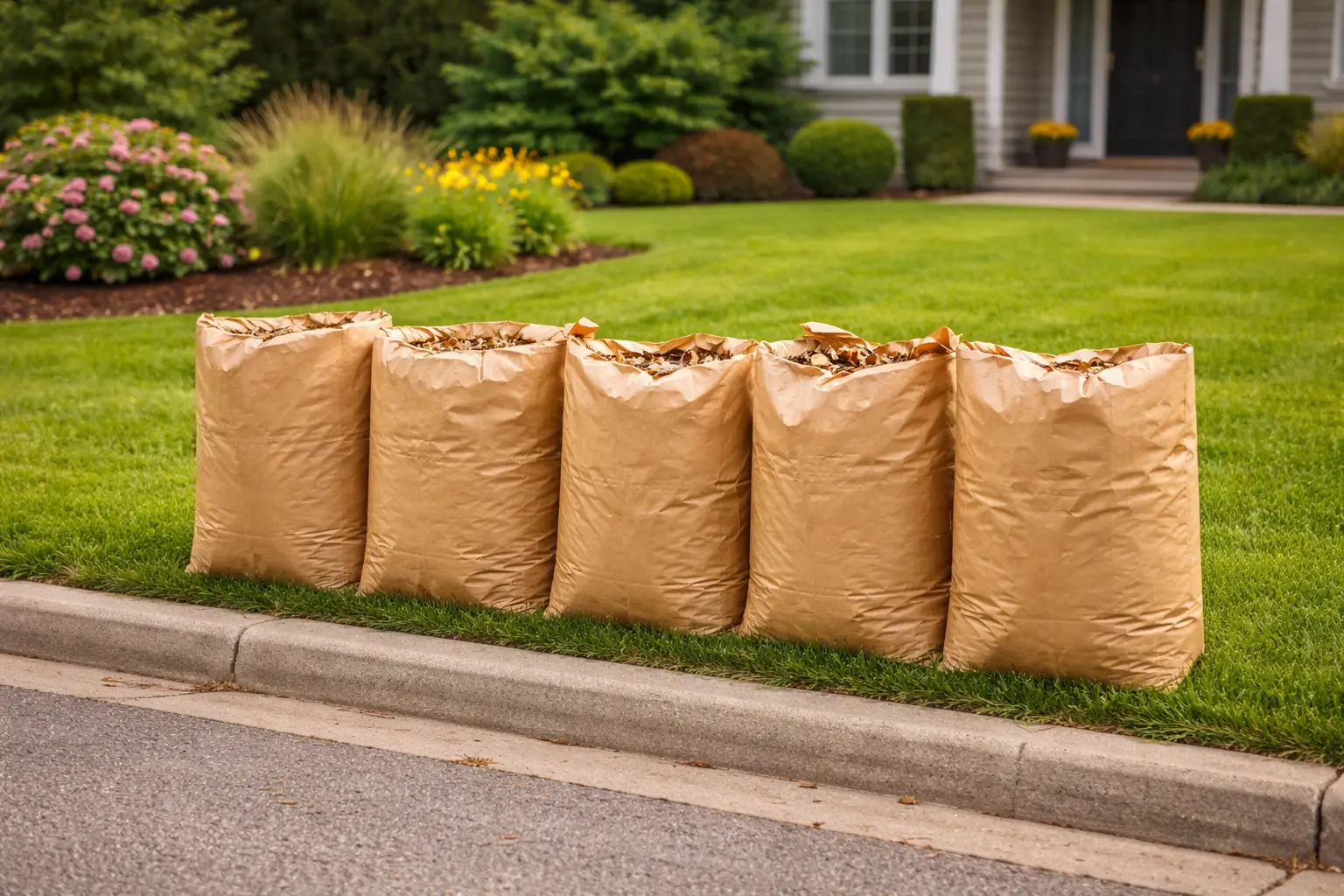
When you do bag, avoid sending organic material to the landfill unnecessarily. Bagged clippings are a valuable addition to a backyard compost bin, where they’ll break down into a useful soil amendment.
Does Mulching Grass Clippings Really Cause Thatch?
This is the single biggest reason homeowners avoid mulching — and it’s based on a misunderstanding worth clearing up directly.
Thatch is the layer of dead and partially decomposed organic matter that builds up between the soil surface and the living grass above it. It’s made up of stems, crowns, and roots — material that’s slow to decompose because it contains a lot of lignin. Grass clippings are not a significant component of thatch.
Here’s why: clippings are mostly water. They break down quickly under normal biological conditions. Thatch builds up when organic matter accumulates faster than soil microbes can break it down — and that’s driven by factors like excessive nitrogen applications, overly acidic soil, compaction, and aggressive grass growth. Not clipping return.
In fact, mulching can support the microbial activity that breaks thatch down. Returning organic matter to the soil feeds the biology that keeps decomposition happening efficiently.
The one scenario where clippings become a surface problem is when they’re too long — because you waited too long between mows. That’s a mowing frequency issue, not a mulching issue. The fix is mowing more regularly, not switching to bagging.
When someone tells you mulching causes thatch, they’re confusing the symptom (organic material on the surface) with the actual cause (slow decomposition from poor soil biology).
Mulching vs. Bagging Grass Clippings by Situation: A Quick Decision Guide
| Situation | Mulch | Bag | Notes |
|---|---|---|---|
| Regular mowing, one-third rule followed | ✓ | — | Default choice for most mow days |
| Grass overgrown — missed a mow | — | ✓ | Clippings too long to break down cleanly |
| Active fungal disease visible | — | ✓ | Prevents spreading fungal spores |
| Wet clippings clumping on discharge | — | ✓ | Wait until dry, or bag this session |
| Lawn recently seeded or thin | ✓ | — | Fine clippings add organic matter without smothering |
| Fall mowing with light, dry leaf debris | ✓ | — | Mower will chop leaves effectively |
| Fall mowing with heavy or wet leaf cover | — | ✓ | Leaf-clipping mat can smother grass |
| Healthy lawn, dry day, regular schedule | ✓ | — | Ideal mulching conditions |
How to Mulch Properly So Clippings Don’t Smother Your Lawn
Mulching done poorly looks like the worst-case scenario critics describe: clumps of grass sitting on your lawn, blocking light, and eventually dying in place. Done correctly, clippings disappear within days. Here’s what the difference comes down to.
Follow the one-third rule. This is the foundation. If your grass is at 4 inches and your target height is 3 inches, you’re cutting one-quarter of the blade — that’s fine. If you’re cutting from 5 inches down to 3, you’re cutting 40% and the clippings will be too long. When in doubt, mow at a higher setting first, then come back a few days later.
Mow dry. Morning dew makes clippings stick together. Wait until the grass has dried — typically mid-morning — before mowing. This one habit eliminates most clumping issues.
Use the right blade. A standard high-lift or side-discharge blade isn’t designed to recirculate and re-cut clippings. A mulching mower blade has a curved cutting edge that keeps clippings circulating inside the deck until they’re fine enough to fall through. If your mower supports a mulching plug or kit, install it — it blocks the discharge opening and forces clippings to be re-cut before exiting. Most mid-range push and self-propelled mowers from major brands include a mulching plug or sell one as an accessory, so check your manual before purchasing a separate kit.
Set the correct mowing height. Each grass type has an optimal height range. Mowing at the right height for your grass type means clippings are naturally the right size to fall through the canopy.
Mow on a consistent schedule. Weekly mowing during the growing season keeps clipping length manageable. Stretch it to every ten or twelve days and you’ll regularly be cutting too much in one pass, producing clippings that are too long to mulch effectively.
The Verdict: Should You Mulch or Bag Grass Clippings?
When you look at the full picture, the mulching vs bagging grass clippings decision has a clear default answer: mulch. Mulching grass clippings benefits the lawn in several practical ways — nutrient return, reduced fertilizer needs, support for soil biology, and no disposal hassle. It does not cause thatch when clippings are fine and the lawn is mowed regularly.
Bag only when one of these specific conditions applies:
- The grass is overgrown and clippings are too long
- Active fungal disease is visible on the lawn
- Clippings are too wet to fall cleanly
That’s the full list. If none of those apply on a given mow day, leave the clippings down.
On equipment: if your current mower only bags, a mulching blade is an inexpensive first step — typically under $30 and available at any hardware store. If you’re shopping for a new mower, look for one with a dedicated mulch mode and a mulching plug included. A mid-range self-propelled mulching mower in the $350–$500 range will handle most suburban lots well and make mulching the path of least resistance on every mow.
Build a simple habit around the three bag conditions above, and you’ll make the right call automatically — without having to think through it each time you start the engine.
Frequently Asked Questions
Will mulching grass clippings make my lawn smell? No — fine clippings dry and break down within days. Smell only develops if thick clumps sit on the surface, which is a mowing frequency problem, not a mulching problem.
Can I mulch if my lawn has weeds? Yes, with one caveat: if weeds are producing seed heads, mow before those seeds mature. You don’t want to chop mature weed seeds into the lawn with your mulching blade.
Does mulching work with all grass types? Yes. The mechanics are the same for cool-season grasses like fescue and bluegrass, and warm-season grasses like bermuda and St. Augustine. Mowing height and frequency differ by type, but the mulching principle applies across all of them.
How do I know if my mower is set up for mulching? Check whether the side discharge chute has a mulching plug blocking it, and whether you have a mulching blade installed. Consult your mower manual — most mid-range push and self-propelled mowers support mulching with the right blade and plug configuration.
Should I mulch in fall? Yes, through most of the fall season. Once growth slows in late fall, clippings are minimal anyway. For fall mowing over leaves, use the decision table above — light, dry leaves can be mulched effectively; heavy or wet leaf cover should be bagged.
Summary
The mulching vs bagging grass clippings decision is simpler than most homeowners make it. Mulching is the right default: it returns nutrients, reduces fertilizer demand, and doesn’t cause thatch. Bag when the grass is overgrown, disease is active, or clippings are too wet to fall cleanly. Get the right blade on your mower, follow the one-third rule, and mow dry — and mulching will take care of itself.