Your lawn watering schedule for summer heat needs to be fundamentally different from what worked in spring. When temperatures climb into the 90s, the schedule you calibrated in May is already falling short — and the gap between what your lawn needs and what it’s getting widens every week. Adjusting your watering schedule for summer heat requires specific changes to depth, frequency, and timing. Get this right and your lawn stays alive and recovers well — whether you keep it green through the season or make the deliberate choice to let it rest.
Disclosure: This article contains affiliate links. If you purchase through these links, I may earn a small commission at no extra cost to you. As an Amazon Associate, I earn from qualifying purchases.
Why Your Normal Watering Schedule Fails in Summer Heat
The core issue is evapotranspiration (ET) — the combined moisture lost from soil and grass blades through heat, wind, and direct sun. As temperatures rise in July and August, ET rates spike sharply compared to May. A schedule that delivered adequate moisture in spring can leave your lawn running a serious deficit by midsummer, even if you haven’t changed a single setting.
Shallow, frequent watering makes this worse. When you run short cycles daily, roots learn to stay near the surface where moisture is consistently available. That’s exactly where heat stress is most severe. Surface soil dries out within hours on a hot day, and roots that never had to push deeper have no reserve to draw from.
The fix isn’t simply running your system more often — it’s changing how you deliver water, not just how much you schedule.
How to Adjust Watering Frequency During a Heat Wave
Step 1: Check local ET conditions.
Many university extension services and weather platforms publish daily or weekly ET rates by region. When ET exceeds 0.25 inches per day — common during sustained heat — your standard schedule is already falling short. Knowing your local ET gives you a data point to work from rather than guessing.
Step 2: Shift to total weekly water delivery as your target.
Most lawns need 1–1.5 inches of water per week during moderate summer heat. When temperatures stay above 90°F for three or more consecutive days, push that target to 1.5–2 inches. Think in terms of weekly totals, not daily cycles.
Adding a third or fourth short watering cycle doesn’t solve the depth problem — it just keeps the surface wet. Running each zone longer on fewer days gets water deeper into the root zone where it stays cooler longer.
If you have sandy soil, you may need to split a single deep session into two shorter back-to-back cycles with a 30-minute pause between them to reduce runoff — but the total depth target stays the same.
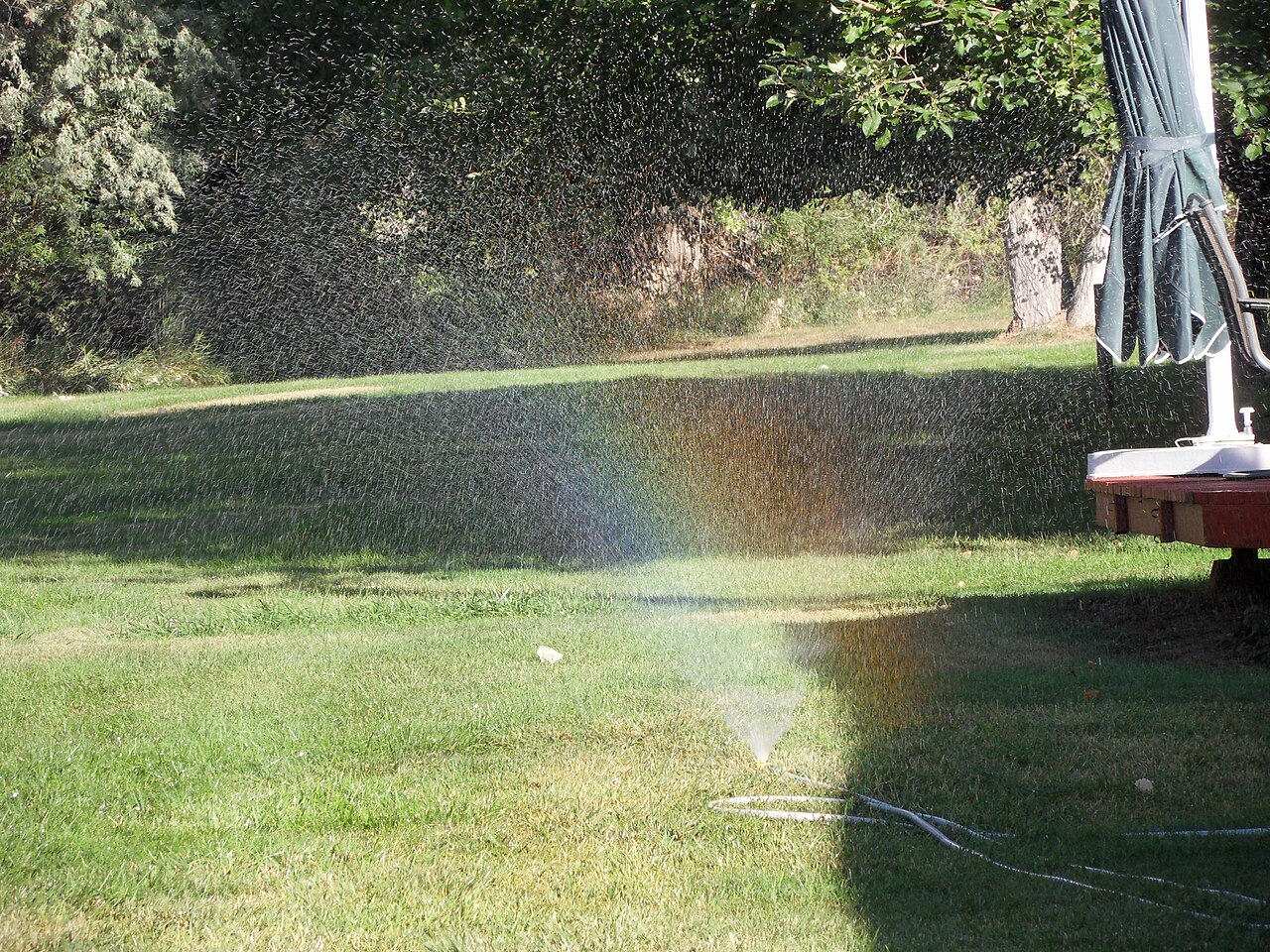
For homeowners without in-ground irrigation, a quality oscillating or rotary sprinkler with a built-in timer takes the guesswork out of run-time control. Models in the $20–50 range at most hardware stores let you set precise durations per session rather than relying on memory or rough estimates — a practical tool for managing your summer heat watering schedule without a full irrigation system.
Watering Depth Over Frequency: The Rule That Saves Lawns in Drought
The goal of every summer watering session is to push moisture down to at least 6 inches. At that depth, roots have an incentive to grow downward — away from the heat-stressed surface layer and into cooler, more stable soil. This is the single most important principle for watering grass in extreme heat.
Step 1: Run your zone and then test depth.
After running your sprinkler for a set time — say, 30 minutes — push a screwdriver or a simple soil probe into the ground in several spots within the zone. If it slides in easily to 6 inches, your run time is on target. If it meets resistance before that, the zone needs more time.
Step 2: Calibrate each zone individually.
Sprinkler head type, water pressure, and coverage area all affect output. A rotor head and a fixed spray head deliver very different amounts of water in the same amount of time. The screwdriver test gives you a zone-specific measurement rather than an assumed average.
Step 3: Confirm output with a tuna can or rain gauge.
Place several straight-sided containers — tuna cans work well — in the zone before you run it. After 30 minutes, measure the depth of water collected. That tells you your output rate per half-hour, and you can multiply to reach your target depth.
Shallow watering during drought doesn’t just fail to help — it actively concentrates roots at the surface, making the lawn more vulnerable to the next heat event. Deeper, less frequent sessions build drought resilience over time.
Once you’ve calibrated depth, you’ll also want a system for knowing when to skip a session after rain — How Rain Affects Your Watering Schedule (and When to Skip a Cycle) covers that logic in detail.
How to Read Your Lawn for Drought Stress Before It’s Too Late
Catching drought stress early means you can adjust your schedule before damage becomes permanent. These three signals are your cue to act — not signs that it’s already over.
The footprint test. Walk across your lawn and look back. Grass blades that don’t spring back within 30 minutes after being walked on are under moisture stress. Healthy, well-watered grass rebounds quickly.
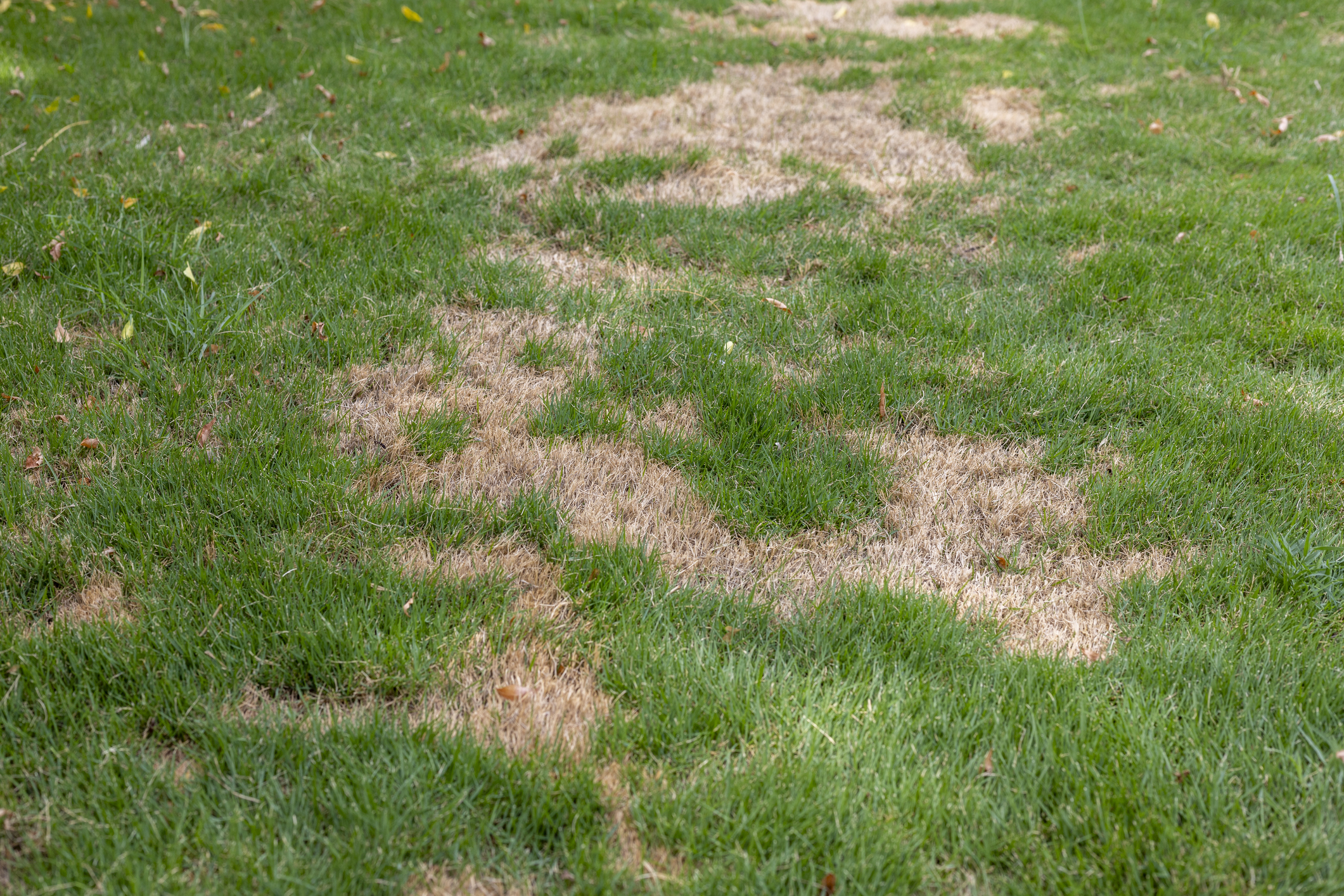
Blade color shift. Grass dulls from bright green to a blue-gray or gray-green color before it ever turns brown. If your lawn starts looking dull or slightly silvery, that’s a stress signal, not an aesthetic issue.
Wilting pattern. Heat stress shows up first in the most exposed areas — south-facing slopes, areas near pavement, and edges along driveways or sidewalks. If those spots look off while the rest of the lawn looks fine, increase your next session’s run time and reassess mid-week.
These are schedule adjustment triggers, not endpoints. If you want a full breakdown of how to distinguish underwatering from overwatering, see Underwatered vs. Overwatered Lawn: How to Tell the Difference and Fix It.
When to Let Your Lawn Go Dormant Instead of Fighting the Heat
Dormancy is not a failure. For many lawns in many climates, it’s the smartest summer strategy available.
Cool-season grasses — tall fescue, Kentucky bluegrass, perennial ryegrass — naturally go dormant when soil temperatures stay elevated above 90°F for extended periods. Warm-season grasses like Bermuda and zoysia are more heat-tolerant but will also slow down or go semi-dormant under prolonged drought. A Bermuda lawn, for example, can handle heat that would push a fescue lawn into full dormancy within days.
Maintain the minimum. A dormant lawn still needs approximately 0.5 inches of water every 2–3 weeks to keep crown tissue and root systems alive. Skip this entirely and the lawn may not recover in fall — the crowns desiccate and die.
What recovery looks like. Cool-season grasses typically return to green within 2–4 weeks of consistent fall temperatures and rainfall. Warm-season grasses break dormancy when sustained warmth returns the following season.
Avoid cycling. The most common mistake is going green, letting the lawn go brown, watering it back green, then letting it go brown again. Each transition costs the plant energy. Commit to one approach — active management or managed dormancy — and hold it.
Building a Lawn Watering Schedule for Summer Heat That Actually Holds Up
Here’s how to turn everything above into a practical weekly routine.
Step 1: Set your weekly water target.
- Moderate summer heat: 1–1.5 inches per week
- Heat waves above 90°F sustained over 3+ days: 1.5–2 inches per week
Step 2: Water in the early morning window — 4 to 9 a.m.
Morning watering reduces evaporation loss because temperatures are cooler and wind is typically lower. It also lets grass blades dry before evening, which reduces fungal disease risk. For the full rationale on timing, see Best Time of Day to Water Cool-Season Grass. Avoid watering in the middle of the day when evaporation is highest.
Step 3: Split your weekly target into two deep sessions.
Two sessions per week — for example, Tuesday and Friday — is more effective than daily shallow runs. Each session should be long enough to reach that 6-inch depth target you calibrated earlier.
Step 4: Do a mid-week check and adjust.
On Wednesday or Thursday, run the footprint test. If stress signs are showing, add a third session that week. If the lawn looks strong, hold the schedule.
Step 5: Skip after meaningful rain.
If rainfall delivers 0.5 inches or more, skip your next scheduled session and reassess at the end of the week. Running your system on schedule regardless of rain is one of the most common ways homeowners both waste water and promote surface root dependency.
For homeowners who want their lawn watering schedule to self-correct during summer heat automatically, a smart irrigation controller is worth considering. Wi-Fi enabled timers like the Orbit B-hyve or Rain Bird smart series connect to local weather data and skip or adjust cycles based on actual ET and rainfall. They’re available at most hardware stores and online in the $50–150 range, and they remove the need for manual adjustments during busy weeks.
A well-calibrated summer watering routine produces three clear results: grass blades spring back promptly after foot traffic, lawn color stays a consistent green without new stress patches appearing mid-week, and the lawn enters fall with deep, intact root structure ready to support strong recovery. You don’t need to water more — you need to water smarter. Two deep, well-timed sessions per week, calibrated to your actual soil depth and adjusted for heat and rainfall, will outperform daily shallow watering every time.
Frequently Asked Questions
How many minutes should I run my sprinkler in summer heat?
There’s no universal answer — run time depends on your sprinkler type, water pressure, and soil. The right approach is to run your zone for 30 minutes, then test depth with a screwdriver. If it slides in easily to 6 inches, your run time is calibrated. If not, add time in 10-minute increments and retest. Most zones land somewhere between 30 and 60 minutes per session.
Should I water every day during a heat wave?
No. Daily shallow watering keeps moisture near the surface and trains roots to stay there — exactly where heat stress is worst. During a heat wave, shift to two deep watering sessions per week, increasing total volume rather than frequency. This gets moisture down to the 6-inch root zone where it stays cooler and lasts longer.
Can I water at night if I missed the morning window?
It’s not ideal, but it’s better than skipping entirely if your lawn is showing stress. The main risk with evening watering is that wet grass blades stay damp overnight, which increases the likelihood of fungal disease — including brown patch disease. If you do water at night, aim to finish by 8–9 p.m. so blades have some drying time before full dark. Return to morning watering as soon as possible.
How do I know if my lawn is dormant vs. dead?
Tug on a handful of grass blades. Dormant grass has firm, intact crowns — the blades may be brown, but the base resists pulling. Dead grass pulls out easily, often bringing root material with it, and the crowns feel dry and brittle. You can also check a small inconspicuous patch: water it consistently for two weeks. Dormant grass will begin showing green growth; dead grass won’t respond.
Is it okay to fertilize during a summer drought?
Generally no. Applying nitrogen to a lawn that’s heat-stressed or drought-stressed increases burn risk and pushes growth the plant doesn’t have the water to support. Hold off on fertilizing until fall temperatures return and the lawn has recovered — cool-season grasses respond best to fall feeding anyway, and warm-season grasses benefit from late-summer applications only when they’re actively growing with adequate moisture. When conditions are right, a warm season fertilizer formulated for heat-tolerant grasses like Bermuda and zoysia will support recovery without the burn risk of a high-nitrogen product applied at the wrong time.
Does the type of grass change how much water I need in summer?
Yes, meaningfully. Warm-season grasses like Bermuda, zoysia, and St. Augustine are more drought-tolerant and heat-adapted, often getting by on 1–1.25 inches per week in moderate heat. Cool-season grasses like tall fescue and Kentucky bluegrass are more vulnerable and may need 1.5–2 inches per week during sustained heat above 90°F — or a managed transition into dormancy. Knowing your grass type is the starting point for calibrating any summer heat watering schedule.
How do I adjust my schedule if I have an in-ground sprinkler system vs. a hose-end sprinkler?
The depth and frequency targets are the same regardless of system type. With in-ground irrigation, focus on programming run times per zone individually — don’t apply a blanket run time across all zones, since head type and coverage vary. With a hose-end sprinkler, use the tuna can method to measure output per 30 minutes, then calculate how long to run each session to hit your weekly inch target. A timer attachment makes consistent scheduling practical without requiring you to monitor it manually. If you’re unsure about your soil’s composition and drainage characteristics, a soil test kit can also help you understand whether you’re working with sandy, loamy, or clay-heavy soil — all of which affect how quickly water moves through the root zone and how you should calibrate your run times.