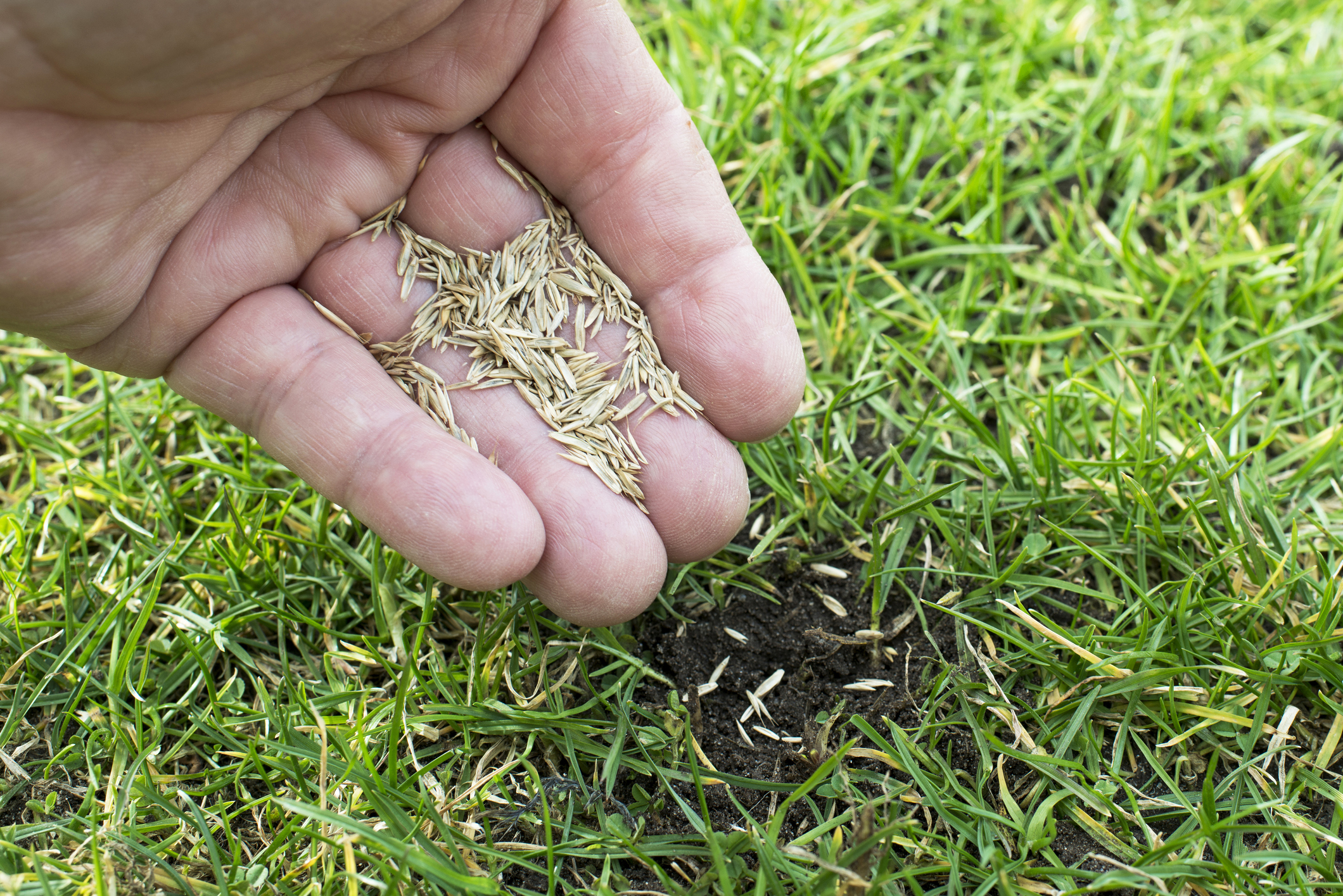
Choosing the best time to overseed cool season grass isn’t just a calendar decision — it’s a conditions decision. Germination, root establishment, and seedling survival all depend on what the grass encounters in those first critical weeks. Get the timing wrong, and the seed either fails to germinate, gets outcompeted by weeds, or runs out of runway before summer heat arrives.
Cool-season grasses — Kentucky bluegrass, tall fescue, fine fescue, and perennial ryegrass — germinate best when soil temperatures sit between 50°F and 65°F. That window occurs naturally twice a year: once as summer cools into fall, and once as winter thaws into spring. Both windows are real. But they are not equal.
Understanding the best time to overseed cool season grass means looking beyond the calendar. It means evaluating what each season actually delivers for germination, establishment, and survival. Use your monthly lawn care calendar as a planning reference, but let soil conditions drive the final call.
This article compares fall and spring overseeding head-to-head across four criteria that actually determine success:
- Soil temperature and germination reliability
- Weed competition and herbicide conflict
- Establishment time before seasonal stress
- Risk of failure and recovery options
Why Timing Is Everything When Overseeding Cool Season Grass
Grass seed doesn’t care about your schedule. It responds to soil temperature, moisture, and competition. A seedling that germinates in September has 16 or more weeks to develop roots before summer stress arrives. A seedling that germinates in April may have 8 to 10 weeks. Then it faces its first summer without a mature root system.
That gap is the core reason timing matters. The two windows both hit the right temperature range. But what happens after germination is completely different. Fall gives seedlings a long runway. Spring cuts it short.
Fall Overseeding Cool Season Grass: Why It’s the Default Choice
Fall overseeding is the right answer for the vast majority of cool-season lawns. Here’s why it wins across all four criteria.
Soil Temperature and Germination Reliability
In late summer and early fall, soil temperatures drop from peak summer heat into the ideal germination range. Daytime air temperatures are moderate. Nights are cooling. Seeds germinate reliably. Moisture stays consistent without the rapid evaporation of summer. This is the most stable germination environment cool-season grass gets all year.
Weed Competition and Herbicide Conflict
Summer annual weeds — crabgrass, goosegrass, spurge — are finishing their life cycle in fall. They’re dying off naturally. New seedlings face far less competition for light, water, and space. This is a significant advantage over spring, when crabgrass is just beginning to germinate.
Establishment Time Before Stress
This is fall’s biggest advantage. Seedlings that germinate in late August or September establish through fall. They enter semi-dormancy over winter. Then they resume active root development in early spring — all before summer heat arrives. That’s 16 or more weeks of development before the first real stress test.
Ideal Timing by Region
- Northern states (USDA Zones 5–6): Late August to mid-September
- Transitional zone (Zones 6–7): Mid-September to mid-October
What to Buy for Fall Overseeding
Choose a quality cool-season grass seed blend matched to your existing lawn — a tall fescue seed, Kentucky bluegrass, or KBG/fescue mix. Look for a weed-free label, a germination rate above 85%, and a blend composition that matches your sun exposure. Cheap seed with high crop content is a liability.
After seeding, apply a starter fertilizer with a phosphorus-forward analysis — something in the range of 10-18-10 (nitrogen-phosphorus-potassium). Phosphorus drives root development in young seedlings. Note that some states restrict phosphorus applications on established turf, but starter applications on bare or thin seedbeds are typically allowed — check your state’s guidelines. Look for “starter fertilizer” on the bag label specifically. Once seedlings reach mowing height and the lawn transitions to routine feeding, a cool season fertilizer with a balanced N-P-K profile like a 16-4-8 supports continued development through fall.
Spring Overseeding Cool Season Grass: When It Makes Sense and When It Doesn’t
Spring overseeding is a fallback for cool season lawns, not a first choice. That said, there are legitimate situations where it’s the right call.
Why Spring Is Second-Best for Cool Season Lawn Overseeding
Soil temperatures rise toward the germination range in March and April depending on your region — that part is fine. The problems start immediately after germination.
First problem: compressed establishment window. Seedlings that emerge in spring have 8 to 10 weeks before summer heat arrives. That’s not enough time for full root maturity in most cool-season species. The lawn enters summer drought stress as a teenager, not an adult.
Second problem: pre-emergent conflict. Applying a pre-emergent herbicide for crabgrass in spring — which most homeowners need to do — prevents grass seed from germinating at the same time. You cannot apply a premium pre-emergent herbicide and overseed simultaneously. If you skip the pre-emergent to seed, crabgrass will likely win. This is a real trade-off with no clean solution in most spring scenarios.
Understanding the full picture of spring overseeding trade-offs — including task sequencing and timing conflicts — helps you decide whether to push forward or wait until fall.
When Spring Overseeding Is Justified
- Winter kill or disease damage left bare patches too large and too visible to wait until fall
- Thin areas that need quick fill before a specific event — a home sale, a family gathering, an inspection
- Emergency repair where aesthetics matter more than perfect establishment
In these cases, perennial ryegrass is your best option. It germinates in 5 to 10 days — faster than any other cool-season species — which minimizes the risk window before heat arrives. Choose a fast-germinating perennial ryegrass seed for spring repair work. It outpaces summer stress better than bluegrass or fescue in short-window situations.
Even in spring, consistent watering is non-negotiable. Young seedlings will die before they establish if irrigation isn’t reliable as temperatures climb.
Spring vs. Fall Overseeding: Side-by-Side Comparison
The spring vs. fall overseeding debate comes down to a few key factors. The table below shows how each season performs.
| Factor | Fall | Spring |
|---|---|---|
| Soil temp window | Cooling toward ideal range | Rising toward ideal range |
| Germination reliability | High | Moderate |
| Weed competition | Low (summer annuals dying off) | High (crabgrass season begins) |
| Pre-emergent conflict | Manageable | Major obstacle |
| Establishment time before stress | 16+ weeks (roots develop into spring) | 8–10 weeks (heat arrives fast) |
| Risk of failure | Low if timed correctly | Moderate to high |
| Best use case | Routine overseeding, renovation | Emergency thin or bare patches only |
Bottom line: Fall wins for almost all routine overseeding and lawn renovation. Spring is a fallback for damage repair when waiting until fall isn’t realistic. If you can wait, wait.
When to Overseed Fescue and Bluegrass: Timing by Grass Type
Each cool-season grass species germinates at a different speed. That affects how tight your fall window needs to be — and which species to reach for in spring emergencies. Knowing when to overseed fescue and bluegrass specifically can save you from timing mistakes that cost you the whole seeding season.
Kentucky Bluegrass
Kentucky bluegrass is the slowest germinator: 14 to 21 days under good conditions. Seed it at the early end of your fall window. In northern zones, that means late August to early September. Don’t wait for the middle of the window. Bluegrass spreads by rhizomes and fills in over time, but only if it establishes before cold shuts growth down.
Tall Fescue
Tall fescue germinates in 7 to 14 days. It tolerates a wider fall window than bluegrass. This makes it the most forgiving choice for transitional-zone homeowners in Zones 6 and 7. It’s also deeper-rooted than most cool-season species, which helps it bridge the gap into summer.
Fine Fescue (Creeping Red, Chewings, Hard Fescue)
Fine fescues germinate in 7 to 14 days — similar to tall fescue. They excel in shade and low-input environments. If you’re overseeding a shaded area or a low-maintenance lawn, fine fescue blends are worth considering. Timing mirrors tall fescue.
Perennial Ryegrass
Perennial ryegrass is the fastest germinator: 5 to 10 days. It can be seeded later in the fall window than other species without losing establishment time. It’s also the right call for spring emergency repair, precisely because of that speed advantage.
Practical rule for seed blends: When mixing species, time the seeding window for the slowest germinator in the blend. In most KBG/fescue/ryegrass blends, that’s Kentucky bluegrass. Seed too late, and the bluegrass component may not establish before winter.
How to Pick Your Best Overseeding Window for Cool Season Grass by Region
The calendar is a starting point. Soil temperature at a 2-inch depth is the real trigger. Germination shuts down when soil temperatures drop below 50°F. You need enough of the right-temperature window remaining to establish the seedlings.
How to check: Use an inexpensive probe-style soil thermometer. Take the reading in the morning for the most accurate result — afternoon readings run warmer. A soil thermometer is one of the most useful and underused tools for timing overseeding correctly.
Regional Timing Guide
| Region | USDA Zone | Ideal Fall Overseeding Window |
|---|---|---|
| Upper Midwest / Northeast | Zone 5 | Late August to early September |
| Mid-Atlantic / Ohio Valley | Zone 6 | Mid-September to early October |
| Transitional zone (Virginia, Kansas, NC) | Zone 7 | Late September to mid-October |
Adjusting for Lawn Condition
- Heavy bare spots: Seed at the early end of your regional window. Bare soil has no buffer — you need maximum establishment time.
- Thin lawn (not bare): You have more flexibility. Seeding toward the middle of the window is low-risk when existing turf is still present to protect the seedbed.
- Disease-damaged areas: Identify and address the underlying disease before reseeding. Overseeding into active disease pressure is a waste of seed.
Pre-Seeding Checklist
Before you seed, prepare the seedbed. Check soil pH and seedbed preparation as part of this process — pH outside the 6.0–7.0 range can suppress germination even when timing is perfect. Then work through this list:
- Confirm soil temperature is 50–65°F at 2-inch depth
- Mow low (2 to 2.5 inches) before seeding
- Dethatch or core aerate if the lawn is compacted
- Apply a light topdressing with a compost-based soil amendment to improve seed-to-soil contact
- Seed at the recommended rate for your grass type
- Apply starter fertilizer at seeding
- Water daily until seedlings reach mowing height
The Clear Recommendation
Fall is the best time to overseed cool season grass for almost every homeowner in almost every situation. The germination conditions are reliable, weed pressure is low, and seedlings get a full season to establish before facing summer stress. Fall overseeding on a cool season lawn is simply the higher-percentage play.
Spring overseeding is a legitimate option only when you’re repairing significant damage that can’t wait. Even then, use fast-germinating perennial ryegrass to minimize risk, keep expectations realistic, and plan a proper fall overseeding cool season lawn program to follow up in autumn.
If you’re on the fence, buy a soil thermometer, take a reading, and let the ground tell you where you are in the window. That single step removes most of the guesswork.
Frequently Asked Questions
Can I overseed cool season grass in summer?
No — summer is the wrong time to overseed cool-season grass. Soil temperatures above 80°F inhibit germination for most cool-season species. Any seed that does germinate faces immediate heat and drought stress before it can develop roots. Wait until late summer when soil temps begin to drop toward the 65°F threshold.
How soon after overseeding can I apply pre-emergent in spring?
Most pre-emergent herbicides require the seedlings to go through two to four mowing cycles before application — typically 6 to 8 weeks after germination. Applying too soon will kill young seedlings. This timing conflict is one of the main reasons spring overseeding is difficult: crabgrass prevention and new grass establishment don’t coexist easily in the same spring window.
Does overseeding work without aerating first?
It can work, but aeration significantly improves results. Seed-to-soil contact is the biggest factor in germination success. In compacted lawns with thick thatch, seed sits on the surface and either dries out or fails to root. Core aeration opens up the seedbed and gives seed direct access to soil. For thin lawns in decent condition, a light raking may be enough. For compacted or heavily thatched lawns, aerate first.
How long does it take for overseeded grass to fill in?
It depends on the species. Perennial ryegrass shows visible coverage in 10 to 14 days. Tall fescue and fine fescue take 3 to 4 weeks to achieve solid coverage. Kentucky bluegrass takes 4 to 6 weeks to establish, and full fill-in — including lateral spread — can take a full growing season. Fall-overseeded lawns typically look significantly better by the following spring.
Can I mix grass types when overseeding, or should I match what’s already there?
Matching your existing grass type gives you the most uniform appearance. If your lawn is primarily tall fescue, overseed with tall fescue. That said, blends of KBG, fescue, and perennial ryegrass are widely used and work well in many regions. The key is to understand that Kentucky bluegrass will establish more slowly than the other species in any blend — time your seeding window accordingly.
What happens if I overseed too late in fall?
Seeds need roughly 6 to 8 weeks of soil temperatures above 50°F to establish before winter. If you seed too late, germination may be slow or incomplete, and seedlings that do emerge may not survive the winter without adequate root development. They’re vulnerable to frost heave and desiccation. If you miss the fall window, it’s better to wait until the following fall than to seed in winter and expect results.
Do I need to apply starter fertilizer every time I overseed?
Yes, starter fertilizer is worth applying every time you overseed. The phosphorus in starter fertilizer directly supports root development in young seedlings — a critical need in the first few weeks after germination. Established turf doesn’t need the same phosphorus load, which is why many states restrict phosphorus on existing lawns. But at seeding, on bare or thin soil, a starter application meaningfully improves establishment rates.
Subscribe to our Newsletter for Weekly updates!