A warm season lawn care schedule is not just a list of tasks — it’s a framework built around how your grass actually grows. Bermuda, zoysia, St. Augustine, and centipede all follow the same core rhythm: dormant in winter, active in heat, and sensitive to timing mistakes at every transition point. Follow the calendar correctly and your lawn stays ahead of weeds, recovers from stress, and builds density season after season. Get the timing wrong and you spend the year chasing problems that a well-timed application would have prevented.
This guide walks through the full annual cycle, from late-winter prep through fall dormancy, with specific guidance for each grass type where it matters.
Quick-Reference: Warm Season Lawn Care by Month
| Month | Key Tasks |
|---|---|
| January–February | Plan, order supplies, soil test review |
| March | Watch soil temps, scalp mow (bermuda/zoysia), pre-emergent |
| April | First fertilizer application (after full greenup) |
| May–June | Fertilize, aerate, dethatch, increase mowing frequency |
| July | Water deeply, spot-treat weeds, maintain mowing |
| August | Final nitrogen application, potassium, slow down inputs |
| September | Soil test, broadleaf weed control, reduce mowing |
| October–November | Fall pre-emergent, stop fertilizing, monitor dormancy |
| December | Minimal traffic, plan spring schedule |
Why Warm Season Grasses Need a Different Care Schedule
Warm season grasses are heat-driven plants. They grow actively when soil temperatures are between 70°F and 95°F, slow down once soil temps drop below 65°F, and go fully dormant when temperatures fall below 50°F. They break dormancy based on soil temperature — not the calendar date. A warm February in Georgia and a cold March in the same state can shift the greenup window by four to six weeks.
This is fundamentally different from tall fescue or Kentucky bluegrass, which thrive in cool weather and go semi-dormant during summer heat. If you’ve moved from a northern state or managed a mixed lawn, there’s a good chance you’ve been applying advice built around cool season timing — fall fertilizing, spring seeding windows, fall aeration. Most of that advice is wrong for warm season turf. Some of it actively damages it.
This guide covers bermuda, zoysia, St. Augustine, and centipede — the four grass types that dominate lawns across USDA Zones 7 through 10. Their seasonal rhythm is broadly shared, but some task-level details differ. Those differences are flagged throughout.
Timing alignment matters because the grass’s growth phase determines whether a task helps or hurts. Here’s a concrete example of what goes wrong: A homeowner who fertilizes on April 1st every year — because it worked back in Ohio — will consistently feed crabgrass and cool-season weeds for the first few weeks. The bermuda won’t even break dormancy until soil temps hit 65°F, which in Zone 7 may not happen until mid-April or later. The nitrogen goes straight to the weeds. Another common mistake: aerating in fall. On a cool season lawn, fall aeration makes sense because the grass is heading into peak growth. On bermuda or zoysia, fall aeration punches holes in a lawn that can’t repair itself before dormancy — the damage just sits there until spring.
A consistent, season-appropriate schedule eliminates most of these mistakes before they happen.
Early Spring Warm Season Lawn Care Schedule (March–April)
Wait for the Grass — Not the Calendar
The most important discipline in spring is patience. Greenup is triggered when soil temperatures consistently reach around 65°F. “Consistently” means sustained warmth — not a single warm day after a cold snap.
A basic soil thermometer probe is the most reliable way to time your spring tasks. Push it 2–3 inches into the soil and take readings at the same time of day for several days in a row. Many county cooperative extension offices also publish local soil temperature data online. That’s a free alternative if you’re not ready to buy a thermometer.
Acting too early is the most common spring mistake. Mowing a dormant lawn aggressively or spreading fertilizer on brown grass wastes product. It also opens the door to opportunistic weeds that are already active in cool soils. Wait until the majority of your lawn has returned to green — not a few patches here and there, but most of the surface showing active color.
Scalp Mowing to Jump-Start Growth
Once your lawn is at least 50% green, a scalp mow helps remove the dead material that built up over winter. For bermuda and zoysia, cut down to approximately 1 inch — lower than your normal mowing height. This exposes the soil surface to direct sunlight. That warms the root zone faster and accelerates full greenup.
After scalping, rake or bag the clippings. Don’t leave them on the lawn. That layer of dead material will slow the warmth reaching the soil if it stays in place.
St. Augustine is the exception here. Its stolons — the above-ground runners that spread the grass — are more fragile than bermuda or zoysia. Aggressive scalping can cause real damage. For St. Augustine, a standard mow to clean up dead tips is sufficient. Don’t try to cut it down to an inch.
Pre-Emergent Herbicide Application
This is the most time-sensitive task in your entire warm season lawn care schedule. Pre-emergent herbicides create a chemical barrier in the soil that prevents weed seeds from germinating. For crabgrass and other warm season annual weeds, you need that barrier in place before soil temperatures reach 55°F. That’s when those seeds start germinating.
Once you’ve passed 55°F, a pre-emergent won’t stop weeds that are already underway. The window is narrow and non-negotiable.
Granular pre-emergent is the most practical format for homeowners. Look for prodiamine or pendimethalin as the active ingredient — both are widely available and effective. Apply according to label rates, water it in, and leave the soil undisturbed. Aeration or heavy raking immediately after application breaks the chemical barrier and reduces effectiveness.
For a full breakdown of what weeds to expect and how to handle them beyond pre-emergent, see our guide to common warm season lawn weeds and how to control them.
First Fertilizer Application
Hold off on fertilizer until your lawn is fully and consistently green. Applying nitrogen to a lawn that’s still partially dormant feeds the weeds competing in your turf — not the grass itself.
When the timing is right, a balanced slow-release fertilizer is a sensible first application. It feeds steadily without pushing a flush of tender growth that a late cold snap could damage. If you ran a soil test the previous winter (more on that in the fall section), use those results to guide your fertilizer selection. Without a soil test, a balanced product with roughly equal nitrogen, phosphorus, and potassium is a reasonable default for the first round.
For guidance on choosing the right product, see our guide to the best fertilizer for warm season grass.
Your Month-by-Month Warm Season Lawn Care Plan: Summer Tasks (May–July)
Fertilizing on a Schedule
Late spring through midsummer is the core fertilizing window for warm season turf. The grass is in full active growth and can metabolize nitrogen efficiently. Apply nitrogen every six to eight weeks during this period. Follow label rates and adjust based on soil test results if you have them.
Centipede is the significant outlier. It’s a low-input grass that performs best with minimal fertilizer — typically no more than one or two light applications per year. Over-fertilizing centipede, especially with high-nitrogen products, leads to centipede decline. The grass thins out, becomes disease-prone, and can die in patches. If you have centipede, use a lighter hand with every fertilizer application. Consult your local extension office for region-specific rates.
For bermuda, zoysia, and St. Augustine, a quality slow-release nitrogen fertilizer during this window will drive the density and color most homeowners are after. For help selecting the right product, see our guide to the best fertilizer for warm season grass.
Mowing Frequency and Height
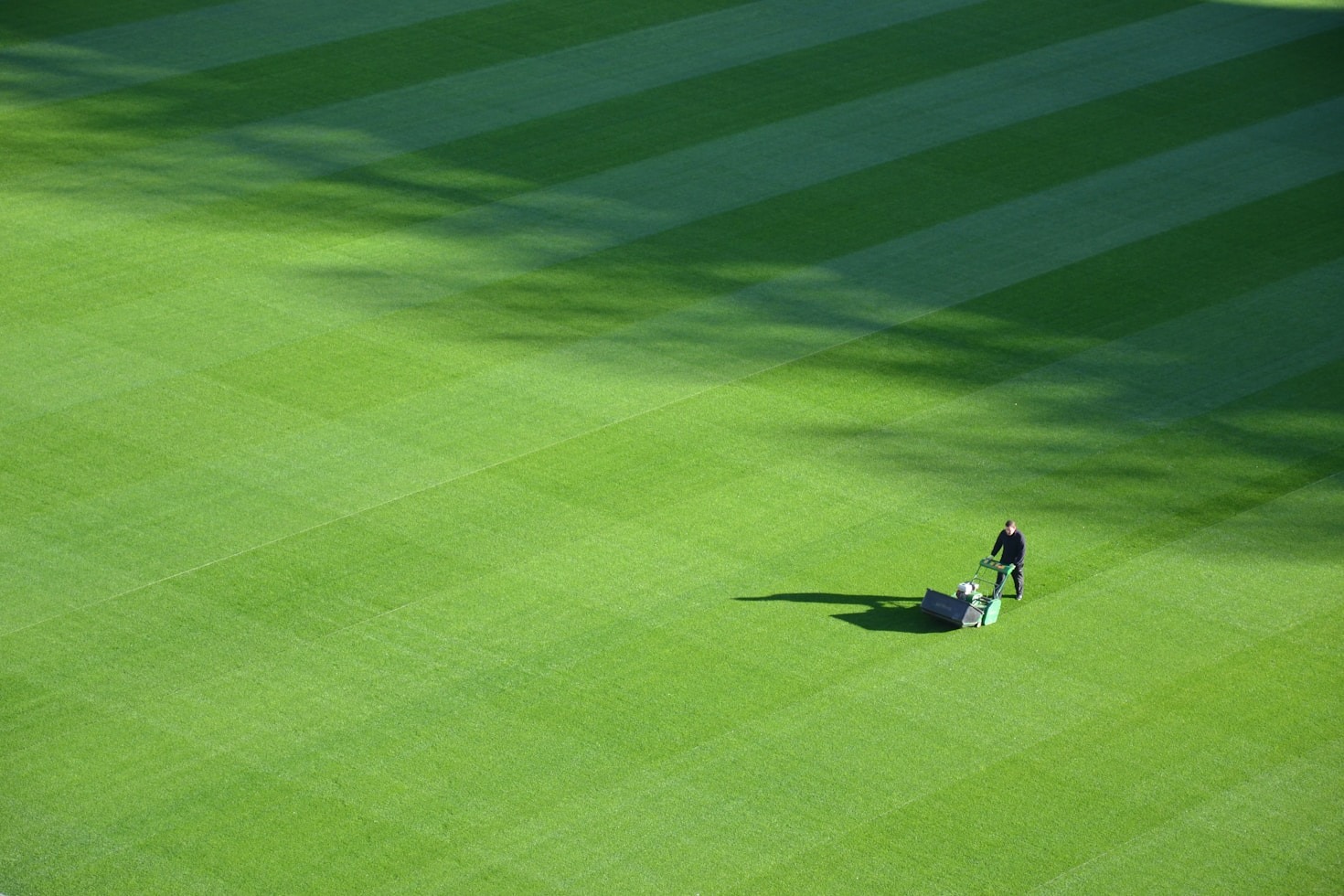
During peak growth, mowing frequency goes up. Bermuda in full summer growth may need cutting twice a week to stay at the right height. Zoysia and St. Augustine can typically be maintained with weekly mowing.
Target heights by grass type:
- Bermuda: 0.5–1.5 inches
- Zoysia: 1–2 inches
- St. Augustine: 2.5–4 inches
- Centipede: 1–2 inches
The one-third rule applies all season: never remove more than one-third of the blade in a single mow. Cutting off more than that in one pass — even during active growth — causes scalping stress and temporarily sets the lawn back.
Mower blade sharpness matters most during the heavy mowing months. A dull blade tears grass rather than cutting it cleanly. Ragged edges turn brown and increase vulnerability to fungal disease. Sharpen or replace blades at least once during the season.
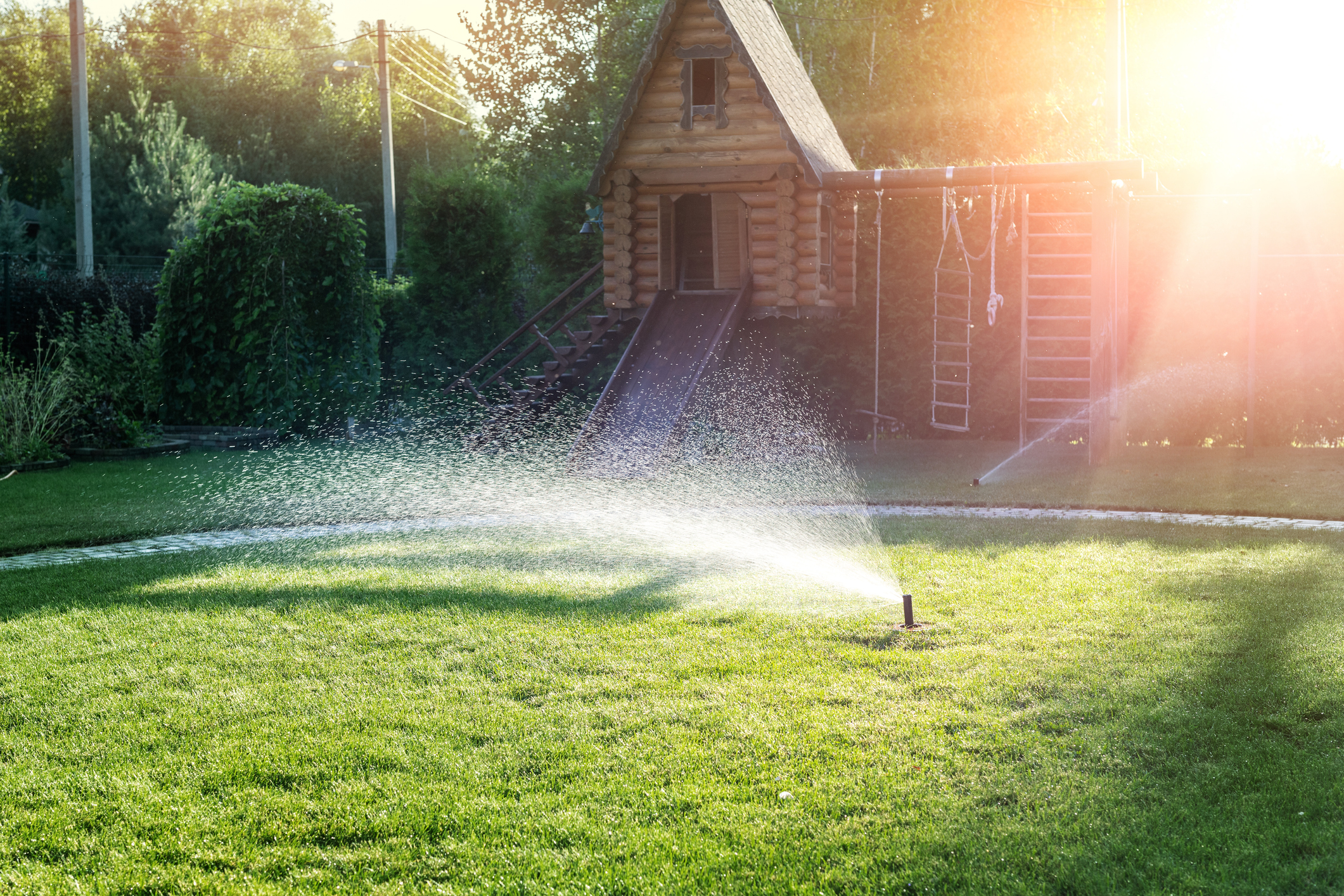
Watering Deeply and Infrequently
Summer heat drives higher water demand, but how you water matters as much as how much. Frequent shallow watering — running sprinklers for 10 minutes every day — trains grass roots to stay near the surface. Shallow roots are vulnerable to heat and drought stress.
Target 1 inch of water per week including rainfall, delivered in one or two longer sessions rather than daily light cycles. A simple rain gauge helps track actual output. For homeowners with in-ground systems, a programmable irrigation controller takes the guesswork out of this entirely.
Water in the early morning when possible. Blades dry off during the day, which reduces fungal disease pressure compared to evening irrigation.
Signs your lawn needs water: a blue-gray tint to the color, footprints that stay visible instead of springing back, and blades that fold lengthwise down the center.
Aeration and Dethatching Window
Late spring to early summer is the right window for mechanical lawn work on warm season turf. The grass is in active growth and recovers quickly from disturbance. Doing either task in fall puts stress on a lawn that’s heading into dormancy with no capacity to heal.
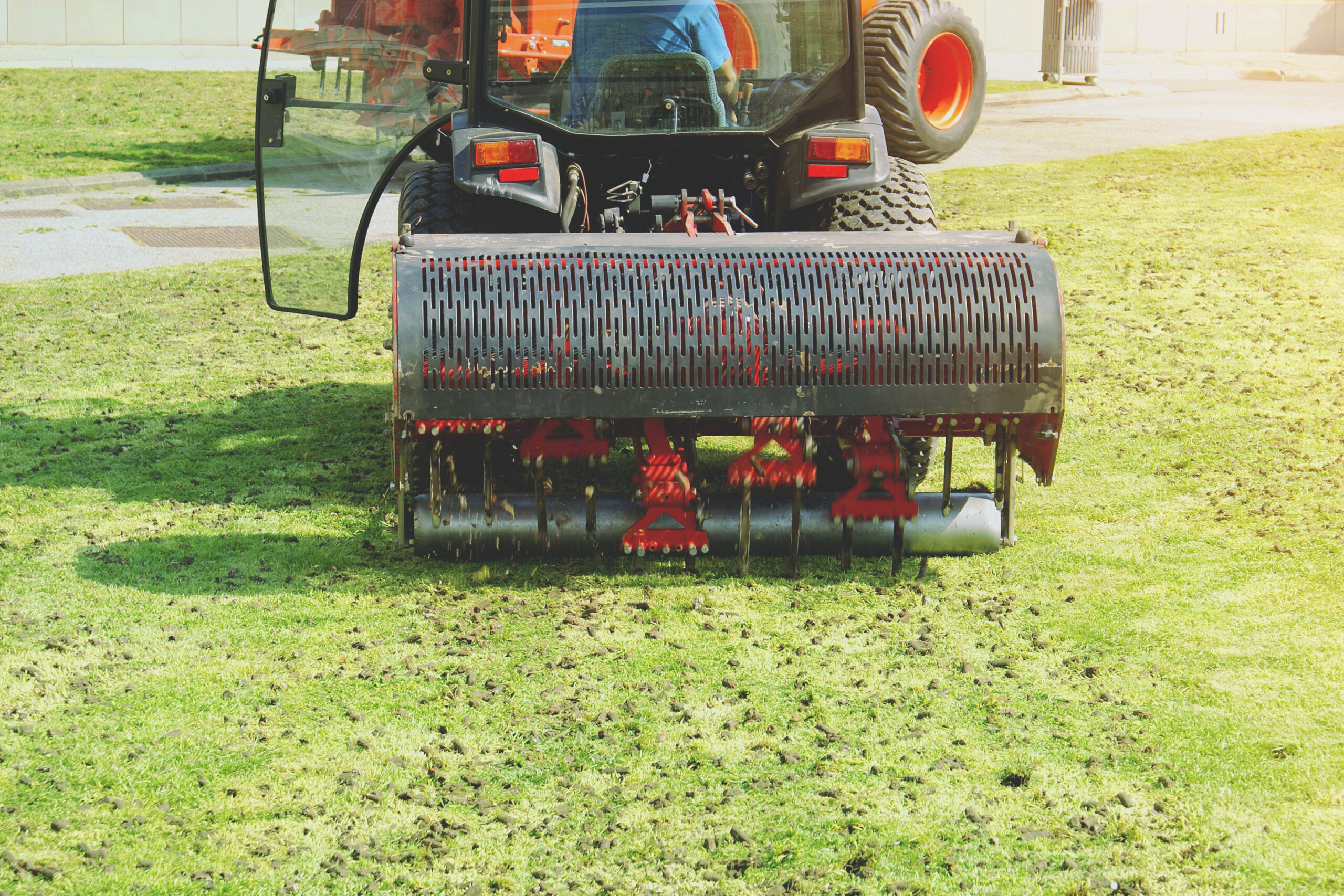
Core aeration removes small plugs of soil to reduce compaction and improve water infiltration. Spike aeration, which pushes a solid tine into the ground, is less effective for compacted soils. It displaces soil sideways rather than removing it.
Dethatching is most relevant for bermuda and zoysia. Both grasses accumulate thatch faster than other warm season types. Thatch is the layer of organic debris between the soil surface and the grass blades. When it builds up past about half an inch, it blocks water, fertilizer, and air from reaching the roots. For a step-by-step walkthrough, see our guide on how to dethatch a warm season lawn.
Post-Emergent Weed Control
Some weeds will slip through despite a well-timed pre-emergent. Spot-treating with a selective post-emergent herbicide is more effective than blanket applications — and less stressful on your lawn, especially during peak summer heat.
Apply herbicides in the early morning or on overcast days when temperatures are below 85°F. High heat makes herbicide applications riskier. Applying contact herbicides when it’s hot can cause turf burn even on properly labeled products. Always check the label to confirm the product is safe for your specific grass type. Some herbicides that are fine on bermuda will damage St. Augustine.
Late Summer Warm Season Lawn Maintenance (August–September): Maintenance Mode
By August, the goal shifts. You’re no longer pushing growth — you’re maintaining what you’ve built and preparing the lawn for a clean transition into dormancy.
Final Fertilizer Timing
Stop nitrogen applications six to eight weeks before your average first frost date. Late-season growth produces tender grass tissue that’s highly susceptible to early frost damage. It also pulls the plant’s energy away from root development at exactly the wrong time.
For most of Zone 8, the last nitrogen application lands in late August or early September. Zone 9 lawns have a bit more flexibility. Potassium is a useful addition in this window. It strengthens cell walls and improves cold hardiness. Unlike nitrogen, it doesn’t stimulate leaf growth — so it’s safe to apply as the season winds down.
Soil Testing
Late summer to early fall is the ideal time to run a soil test. Results take one to three weeks to return. You’ll have them in hand well before the next spring planning window. Most cooperative extension offices offer soil testing for $15–$25 — a modest investment that tells you exactly what your lawn is deficient in and removes guesswork from your fertilizer budget. Lime applications to correct pH need six months or more to take effect. Fall is exactly when to start if your soil is too acidic.
Fall Warm Season Lawn Care Schedule (October–November): Preparing for Dormancy
Reduce Mowing and Finalize Your Height
As growth slows, mowing frequency drops naturally. Don’t lower your mowing height in fall — this is a common mistake. Cutting the lawn short going into dormancy reduces the leaf surface available for photosynthesis during the last weeks of active growth. It also makes the lawn more vulnerable to winter weed pressure.
Continue mowing at your normal summer height until the grass stops actively growing. Once it does, you can do a final cleanup mow if needed, but don’t go shorter than your standard height for that grass type.
Weed Control Before Dormancy
Fall is prime time for broadleaf weeds like chickweed and henbit. These weeds establish during cool weather and thrive in dormant warm season turf. Apply a broadleaf herbicide in early fall — before the lawn fully goes dormant — to control them before they get established.
A second pre-emergent application in fall can also help block winter annual weeds. Apply it in early October for most of Zone 7–8, or in November for Zone 9 climates where winters are milder.
Equipment and Lawn Prep for Winter
Fall is also the right time to handle equipment maintenance before storing it for winter. Sharpen mower blades so they’re ready for spring scalping. Change the mower oil and clean the deck. Check your spreader for clogs or corrosion from fertilizer residue. These tasks take 30 minutes now and save a headache when soil temps hit 65°F and you’re ready to move.
Skip Fall Aeration
Fall aeration on warm season turf is a mistake. It’s advice borrowed from cool season lawn management, where fall aeration makes sense because the grass is heading into peak growth. On bermuda, zoysia, St. Augustine, or centipede, fall aeration damages roots that the plant has no capacity to repair before dormancy. Wait until late spring.
Winter Warm Season Lawn Care (December–February): Dormant Season Management
What to Do (and Not Do) During Dormancy
Dormancy isn’t death — warm season grass is conserving energy, not dying. The priorities in winter are protection and planning, not active lawn work.
Avoid heavy traffic on dormant turf. Frozen or semi-dormant grass crowns are brittle. Repeated foot traffic can damage them before the lawn has a chance to recover in spring. Try to keep foot traffic to established paths if possible.
Do not fertilize a dormant lawn. Nitrogen applied during dormancy won’t be used by the grass. It can contribute to late-winter weed growth and is essentially money wasted.
Plan your spring schedule. Review your soil test results if you ran one in fall. Order pre-emergent and fertilizer before the spring rush. Check your mower blades and replace them if needed. This is also a good time to review your irrigation system — check for broken heads, clogs, or leaks before you need it in May.
Dormant Overseeding With Ryegrass
Some homeowners overseed their warm season lawn with annual or perennial ryegrass in late fall to maintain green color through winter. This is most common in Zone 8b and Zone 9 climates, where winters are mild enough to support ryegrass without heavy frost damage.
It’s worth understanding what this does and doesn’t accomplish. Dormant overseeding keeps your yard green through the winter months, which is an appealing outcome. But ryegrass competes with your permanent grass in spring — it needs to die off or be managed out before your bermuda or zoysia fully breaks dormancy. If it doesn’t, it can delay greenup and create thin or uneven results in April and May.
If you’re interested in this approach, the timing, ryegrass selection, and transition management all matter. It’s a topic worth researching in depth before you commit to it — especially if you’re in Zone 7 where winters are cold enough to make ryegrass maintenance more difficult.
Conclusion
A sound warm season lawn care schedule comes down to one principle: match every task to the grass’s actual growth phase, not the calendar on your wall. Bermuda, zoysia, St. Augustine, and centipede operate on soil temperature — not dates — and the timing windows for pre-emergent, fertilizer, aeration, and weed control all exist for specific biological reasons.
Key takeaways from this monthly lawn care schedule for warm season grass:
- Spring tasks are triggered by soil temperature, not the date. Use a thermometer or your local extension service to time greenup correctly.
- Pre-emergent must go down before soil temps hit 55°F. This window is non-negotiable for crabgrass control.
- Peak fertilizing and aeration belong in late spring and summer, when the grass can recover and use the inputs effectively.
- Stop nitrogen six to eight weeks before first frost to avoid late-season frost damage and protect root development.
- Fall and winter are for protection and planning, not pushing growth.
- Centipede always gets less fertilizer than the other warm season grasses — treat it as a separate category.
Follow this warm season lawn care schedule consistently over two to three seasons and you’ll see the compounding benefits: denser turf, fewer weeds, lower water demand, and a lawn that recovers faster from stress. The goal isn’t perfection every week — it’s consistent alignment with the grass’s natural rhythm.