By James Whitfield
Potassium is a macronutrient — the “K” in NPK — that regulates critical internal functions in grass plants, including water retention, stress tolerance, and disease resistance. Unlike nitrogen, it does not make grass visibly greener, which is exactly why most homeowners overlook it until something goes wrong.
Understanding potassium for warm season grass is one of the most underrated gaps in home lawn care. Nitrogen gets all the attention because it produces visible results. Potassium works behind the scenes — and its absence only shows up when the lawn is under stress and can no longer hide the problem.
What Potassium Actually Does Inside Warm Season Grass
Potassium is not a growth driver. It is a systems regulator. That distinction matters a lot for how you think about it.
Nitrogen pushes visible growth — more blades, deeper green color. Potassium works on the processes that determine whether grass can survive stress in the first place.
Cell water pressure (turgor). Potassium controls the movement of water in and out of plant cells. When potassium is adequate, cells maintain proper internal pressure and the grass stays firm and upright. When it is low, cells lose pressure more quickly. That shows up as wilting faster than expected given your watering schedule.
Enzyme activation. Potassium activates enzymes involved in photosynthesis and carbohydrate movement through the plant. Without adequate K, grass cannot efficiently convert sunlight to energy. It also cannot move that energy where it needs to go.
Cell wall strength. Stronger cell walls mean more physical resistance to fungal penetration. Low potassium often shows up as increased disease pressure. The grass is literally less structurally capable of fighting off pathogens.
Nutrient uptake efficiency. Potassium helps roots take up other nutrients more effectively. A K-deficient lawn may underperform even when nitrogen and other inputs are correct. The root system is not functioning at full capacity.
Think of potassium as the nutrient that determines how well your grass handles stress — not how fast it grows.
Why Warm Season Grasses Like Bermuda and Zoysia Need More Potassium Than You Think
Sandy soils accelerate the problem. Much of the South and Gulf Coast sits on sandy or sandy-loam soils that drain quickly. Potassium leaches out of sandy soil with irrigation and rainfall. It does not accumulate the way phosphorus does. If you are in the Carolinas, Florida, Texas, or anywhere along the coastal plain, your soil is likely losing potassium faster than you think. It needs to be replaced through your fertilizer program.
Soil pH adds another layer here. Sandy southern soils that are acidic can reduce potassium uptake even when K is present in the soil. The grass cannot access what is there. This is one more reason that a soil test — which measures both nutrient levels and pH — is more useful than guessing.
High-nitrogen programs raise K demand. Bermuda and zoysia lawns often run aggressive nitrogen schedules to maintain density and color. A common mistake is applying heavy nitrogen without adjusting potassium to match. Nitrogen drives cell division and growth. That new growth requires potassium to support it. If K is not keeping pace with N, the lawn looks healthy on the surface but is running low on the systems support it needs heading into summer drought. Following a Best Fertilizer Schedule for Zoysia Grass by Season ensures your potassium applications stay aligned with nitrogen inputs throughout the year. For a broader view of how potassium fits into your overall turf management, a Warm Season Lawn Care Schedule Month by Month Guide can help you plan every application at the right time.
Centipede is the exception. Centipede is a low-input grass that requires far less of everything — nitrogen, potassium, and everything else. Applying bermuda-level nutrition to centipede is one of the most common ways homeowners damage it. If you have centipede, treat potassium with a much lighter hand and always confirm with a soil test before adding anything.
St. Augustine under heat stress. St. Augustine in high-heat, high-humidity climates carries a heavier stress load during summer. Adequate potassium supports the drought tolerance and disease resistance functions that matter most during those peak stress months.
Signs Your Warm Season Lawn May Be Low on Potassium
Potassium deficiency has some recognizable visual patterns, but visual diagnosis has real limits.
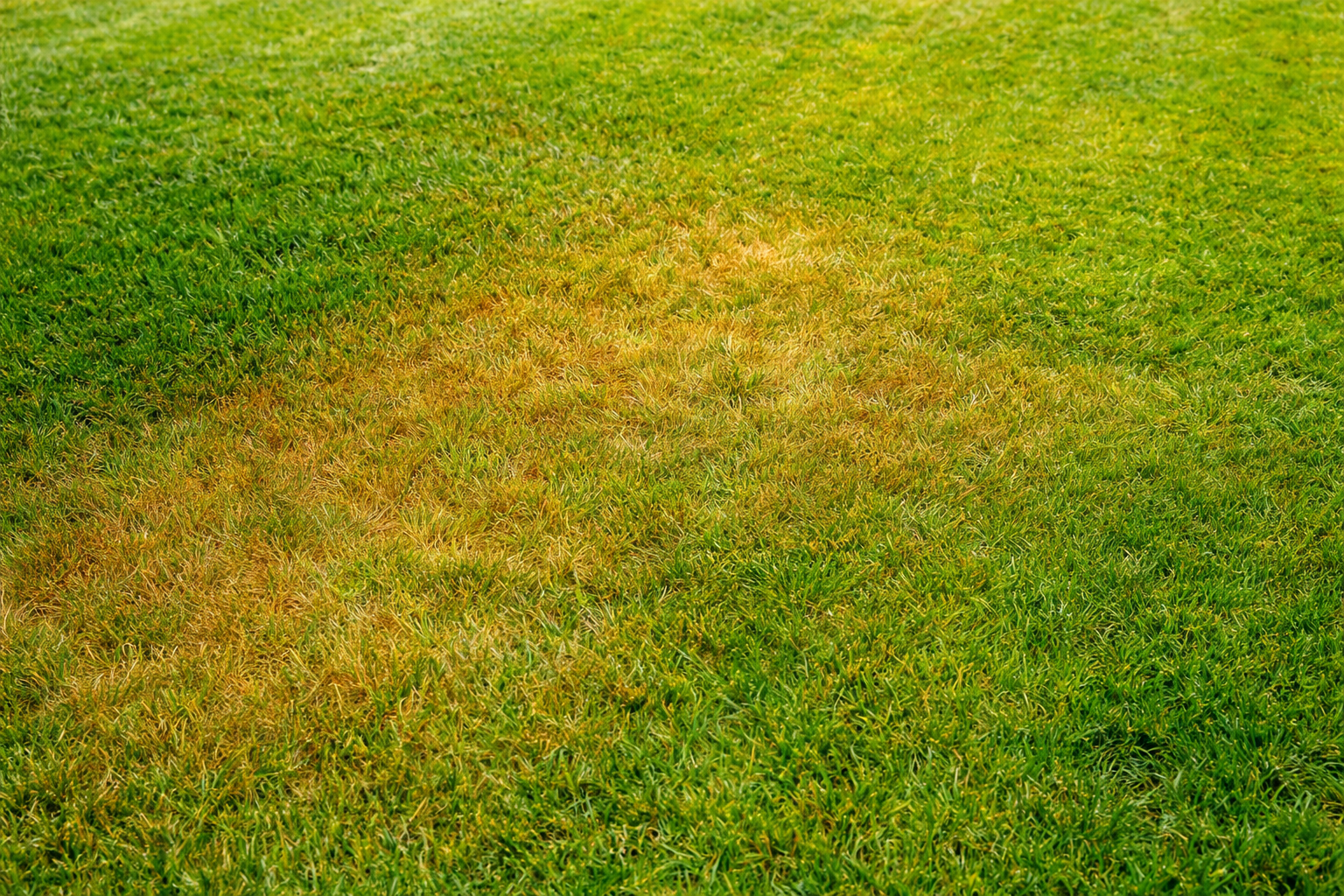
Marginal leaf scorch. The classic symptom is yellowing or browning that starts at the tips and outer edges of grass blades and works inward. This is called marginal scorch. It looks different from nitrogen deficiency, which tends to cause uniform yellowing across the whole blade. Tip and margin browning that is not explained by heat, drought, or mowing damage is worth investigating.
Faster-than-expected wilting. If your lawn wilts or turns grayish-blue well before your irrigation schedule would suggest it should, that is a cell turgor issue. Low potassium is one explanation.
Recurring fungal disease. If you are doing everything right with watering and fungal problems keep coming back, low K reducing cell wall integrity can be a contributing factor. It is not the only cause, but it is worth considering.
Weak, thin growth despite adequate nitrogen. If the lawn is not filling in and nitrogen applications have been consistent, potassium deficiency can be the bottleneck.
The critical qualifier: Visual symptoms alone cannot reliably confirm a potassium deficiency in warm season grass. Drought stress, iron deficiency, disease, and other issues can look similar. A soil test is the only way to know for certain. It also tells you whether potassium is already adequate — meaning you do not need to add any at all. Over-applying K is wasteful. It can also interfere with calcium and magnesium uptake. The goal is adequacy, not excess.
When to Apply Potassium to Warm Season Grass During the Growing Season
Timing matters because potassium only helps when grass can actually use it. When thinking about when to apply potassium to lawn areas planted with warm season grass, the growing season is your window.
Pre-stress application has real value. Applying potassium before heat peaks — late spring, as the lawn comes out of dormancy and growth accelerates — means the grass enters summer with its systems properly supported. Waiting until the lawn is already stressed means playing catch-up.
Late summer application helps with hardening off. For bermuda and zoysia in transitional climates — the mid-Atlantic, upper South, or anywhere that sees real winters — a late summer potassium application helps the grass store energy and strengthen cell walls before going dormant. This is a meaningful step for long-term stand health.
Do not apply during dormancy. Grass that is not actively growing cannot take up nutrients. Potassium applied to dormant bermuda or zoysia will leach out before the grass is ever in a position to use it.
The bottom line on timing: a soil test result should drive the decision more than a calendar date. If a test shows adequate potassium in early summer, you may not need to apply at all. If it shows deficiency, timing your application to the active growing season is where it does the most good.
How to Read Fertilizer Labels for Potassium Content and NPK Ratios
Every bag of lawn fertilizer has three numbers on it. Those numbers are the NPK ratio — nitrogen (N), phosphorus (P), and potassium (K), always in that order. Understanding what those numbers mean is where label literacy pays off for managing potassium for warm season grass.
Example 1: 15-0-15. Equal parts nitrogen and potassium, no phosphorus. This is a common warm season maintenance formula. The zero phosphorus is not an oversight — most U.S. soils are not deficient in phosphorus, and many states restrict its use on established lawns because of runoff concerns.
Example 2: 32-0-8. Very nitrogen-heavy with minimal potassium. This may be fine for a lawn with already-adequate K levels. It underserves a bermuda or zoysia lawn running a high-nitrogen program in sandy soil.
What ratio makes sense for warm season grass? For bermuda in particular, a 2:1 nitrogen-to-potassium ratio — or something close to it, like a 3:2 ratio — is a reasonable general target. The reasoning is straightforward: you are pushing growth with nitrogen, and you need potassium to support that growth and maintain stress tolerance. Soil test results should still anchor that decision. If your soil already has high potassium, a high-K fertilizer is money you do not need to spend.
Many southern lawn fertilizers are formulated with higher K ratios than northern equivalents. That is not accidental. Regional soil conditions and grass types demand it. If you want a reliable starting point, a warm season lawn fertilizer with a balanced NPK ratio gives you more consistent nutrient delivery across the growing season than fast-release alternatives.
Potassium Sources for Home Lawns: Muriate of Potash, Sulfate of Potash, and Blended Fertilizers
When people say “potash for bermuda” or “potash for zoysia,” they typically mean one of two straight potassium products — or potassium as part of a blended fertilizer.
Muriate of Potash (KCl). This is the most common and least expensive source of potassium for lawns. It typically runs a 0-0-60 analysis, meaning 60% available potassium. It works well in most warm season situations. The one thing to know: it contains chloride. At normal application rates, chloride is not a problem for bermuda or zoysia. At high rates on sensitive grasses like centipede or St. Augustine, it can cause turf injury. Apply according to label directions and do not exceed recommended rates.
Sulfate of Potash (K₂SO₄). This is the gentler option. Lower chloride content means less salt stress risk on sensitive turf. It also adds sulfur as a secondary benefit, which matters in some southern soils. The tradeoff is cost — sulfate of potash runs more expensive than muriate. If you have centipede or St. Augustine and want to apply straight potassium, this is the safer choice.
Blended fertilizers. Most homeowners will not buy straight potash. They will pick up a complete fertilizer at the garden center that contains all three macronutrients. That is completely fine. The label math still applies: look at the K value, compare it to what a soil test recommends, and choose a product whose ratio fits your lawn’s actual needs.
One thing that does not change based on potassium source: the delivery method. Whether you use granular vs. liquid fertilizer affects application speed and coverage, but not which type of potassium is in the product.
If you are exploring Organic Lawn Fertilizer Options and wondering how potassium fits into that approach, that article gives you context on what organic sources actually deliver in terms of K content.
If you are running a high-nitrogen program and want to understand how nitrogen release timing affects how quickly your K demand changes, Slow-Release vs. Fast-Release Nitrogen gives you the framework — even though it is framed around cool season grass.
Frequently Asked Questions About Potassium for Warm Season Grass
Does potassium make grass greener?
No. Nitrogen is responsible for the green color in grass. Potassium supports internal plant functions — water regulation, enzyme activity, cell wall strength — that are not visible until they break down under stress. A lawn adequate in potassium does not look different from the outside. It just survives summer better.
Can I apply too much potassium to my lawn?
Yes. Excess potassium does not improve turf quality. It can also interfere with calcium and magnesium uptake by competing for the same absorption pathways in the root zone. A soil test prevents over-application and tells you whether you actually need to add potassium at all.
Is potash the same as potassium?
Potash is the common name for potassium-containing fertilizers. When people say “potash for bermuda” or “potash for zoysia,” they mean fertilizer products with a high K value — usually muriate of potash or sulfate of potash. The term comes from historical production methods but now refers broadly to potassium fertilizer products.
Do I need a soil test before adding potassium to warm season grass?
Technically no, but it is the right call. Without a test, you are guessing. Many warm season lawns in the South already have adequate potassium. A soil test costs $15–$25 through a university extension lab and tells you exactly what is needed — and what is not. It is the only way to make a confident decision about potassium for warm season grass without risking over-application.
Does centipede grass need less potassium than bermuda?
Yes. Centipede is a low-maintenance, low-input grass. It requires far less of all nutrients including potassium. Applying bermuda-level fertilizer programs to centipede is a common cause of centipede decline. If you have centipede, use a lighter hand with all macronutrients and let soil test results guide every application decision.
What is the difference between muriate of potash and sulfate of potash for lawns?
Muriate of potash is higher concentration and less expensive but contains chloride. Sulfate of potash is gentler with lower chloride and adds sulfur as a secondary benefit. For most bermuda and zoysia applications, muriate of potash works fine. For centipede and St. Augustine, sulfate of potash is the safer choice given those grasses’ sensitivity to salt stress.
The Bottom Line on Potassium for Warm Season Grass
Potassium for warm season grass is the nutrient that determines how well your lawn survives summer — not just how green it looks in spring. For warm season grasses growing in hot climates on sandy soils, potassium is depleted faster and overlooked more often than any other macronutrient.
The common mistake is fixating on nitrogen because nitrogen produces visible results. Potassium works where you cannot see it — in cell walls, enzyme systems, and water regulation. Its absence shows up only when the lawn is under stress and can no longer hide the gap.
Get a soil test before adding potassium for warm season grass care. If you are deficient, time your applications to the active growing season. Read the NPK label on whatever bag you are holding and make sure the K value actually matches your lawn’s needs. If you have centipede grass, treat all of this with a much lighter touch than you would for bermuda or zoysia.
That is what understanding potassium comes down to — knowing what the grass actually needs, not just defaulting to more.

Lawn Care Enthusiast & Homeowner
Subscribe to our Newsletter for Weekly updates!