It’s March or April, you walk outside, and there are bare patches staring back at you. The instinct is immediate: throw down some seed and fix it now. That instinct isn’t wrong — but spring overseeding cool season grass is more complicated than it looks, and whether it works depends heavily on timing, grass type, and what else you have planned for your lawn. This guide walks through the full picture so you can make a real decision, not just guess.
Disclosure: This article contains affiliate links. If you purchase through these links, I may earn a small commission at no extra cost to you. As an Amazon Associate, I earn from qualifying purchases.
Why Fall Beats Spring for Cool Season Grass Overseeding
There’s a biological reason fall is always recommended — it’s not just convention.
Cool season grasses, including Kentucky bluegrass, tall fescue, fine fescue, and perennial ryegrass, grow most actively when soil temperatures are in the 50–65°F range. That window happens twice a year: once in fall and once in spring. Fall overseeding captures the better half of that window.
Here’s why fall wins:
- Soil is still warm from summer, which speeds germination
- Seedlings establish through autumn, go semi-dormant over winter, then resume growth in early spring
- By the time the following summer arrives, the grass has had an entire growing season to build root depth
Spring overseeding cool season grass compresses that same establishment window dramatically. Seeds germinate, seedlings begin developing — and then summer arrives. In most of the northern U.S., soil temperatures climb above 80°F by June or July. Cool season grass growth slows or stops. Seedlings that haven’t built deep roots yet are suddenly dealing with heat and drought stress they’re not equipped to handle.
When Spring Overseeding Cool Season Lawns Actually Makes Sense
That said, spring overseeding cool season grass isn’t always wrong. There are real scenarios where it’s the right call.
Severe Winter Damage
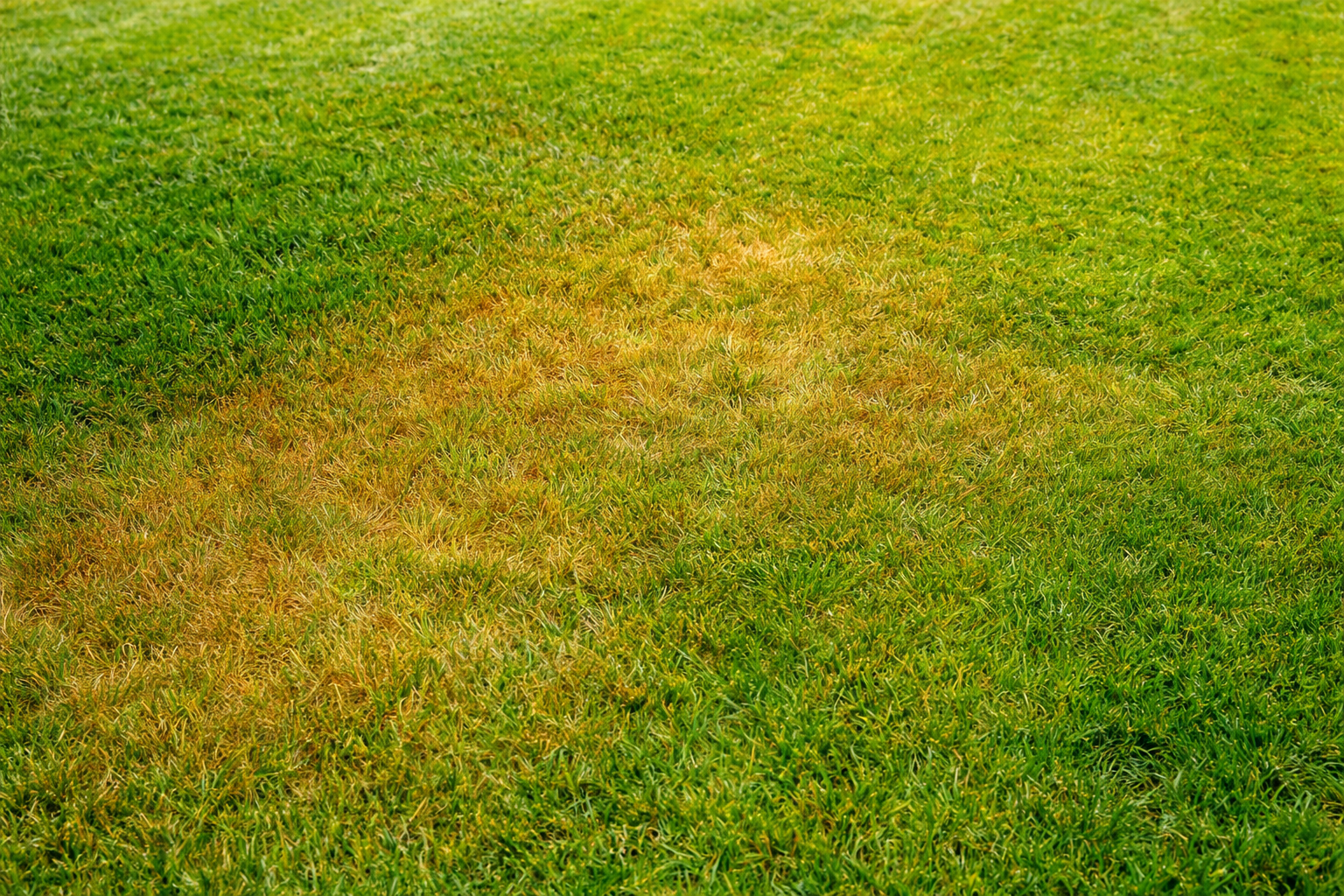
If you’ve lost more than 30–40% of your lawn to winter damage, waiting until fall is genuinely risky. Bare soil invites erosion, weed colonization, and a lawn that looks terrible all summer. Getting some grass established — even imperfectly — is better than bare dirt for six months. Imperfect cover beats no cover. The same logic applies when damage comes from pests or dry spells — Overseeding After Grub or Drought Damage: Timing and Repair Steps covers how to assess those situations and sequence your repair correctly.
Transition Zone and Northern Edge Lawns
In areas where cool falls arrive late or winters are mild, fall overseeding windows can be shorter and less reliable than the textbook suggests. For some homeowners in these climates, a well-timed spring seeding may be roughly comparable in outcome.
Perennial Ryegrass as Quick Cover
Perennial ryegrass germinates fast — often in 5–7 days under good conditions. If you seed early enough (late February to mid-March in many northern zones), ryegrass can get enough root depth before summer arrives to serve as a functional cover. This works best as a temporary or nurse-crop strategy, not a permanent fix.
No Pre-Emergent Planned
If you’re skipping crabgrass preventer this year, one of the biggest conflicts in spring overseeding cool season lawns is removed entirely. More on that in the next section.
Spring Overseeding Cool Season Lawns: The Biggest Risks
These aren’t reasons to never overseed in spring — they’re variables you need to weigh before committing seed to ground.
Short establishment window. From late March germination to June heat, you’re working with roughly 8–10 weeks. That’s a tight timeline for roots to develop enough resilience to handle summer. Spring overseeding cool season grass puts every seedling on a compressed clock from the moment it sprouts.
Weed competition. Bare spring soil is exactly where crabgrass and broadleaf weeds want to be. Young grass seedlings compete poorly against fast-growing annual weeds that thrive in the same warm conditions.
Moisture inconsistency. Spring weather swings. Seedlings need consistent surface moisture — something fall tends to deliver more reliably than the unpredictable wet-and-dry cycles of spring.
Disease pressure. Warm, wet spring conditions can bring fungal issues like pythium and damping off that hit young seedlings particularly hard. Mature grass can fight these off. Three-week-old seedlings often can’t.
How Pre-Emergent Herbicides Affect Spring Overseeding Timing
This is the detail most homeowners miss, and it matters more than almost anything else in this guide.
Pre-emergent herbicides — crabgrass preventers — work by creating a chemical barrier in the upper soil layer that prevents seeds from germinating or establishing roots. Here’s the problem: they don’t distinguish between crabgrass seeds and grass seeds. They block both.
The conflict is straightforward: crabgrass control or overseeding — pick one. You can’t reliably do both in the same spring window with standard products.
One exception worth knowing about: products containing siduron (sold under the brand name Tupersan) are formulated to prevent annual weed germination without inhibiting grass seed germination. These are less common and more expensive, but they’re worth looking into if you’re dealing with severe bare areas where crabgrass pressure is also high.
Practical guidance: If your lawn needs overseeding in spring, skip the spring pre-emergent this year. Address any crabgrass that appears later with post-emergent spot treatment. Commit to a full pre-emergent program in fall for the following spring.
Before you make either decision, know what your soil temperature actually is. Timing spring overseeding for cool season grass correctly starts with a real soil temperature reading, not a guess based on the date. A soil thermometer takes the guesswork out of that decision — both for seeding and for pre-emergent application. It’s a $10–15 tool that directly informs a call that can cost you an entire season.
Spring Overseeding by Cool Season Grass Type: Fescue, Bluegrass, and Ryegrass
Not all cool season grasses respond to spring seeding the same way. Here’s the practical breakdown for each.
Tall Fescue
Tall fescue is the best candidate for spring overseeding among the common cool season grasses. It germinates in 7–14 days at 50–65°F and has better drought and heat tolerance than bluegrass or ryegrass once it’s established — which gives it a fighting chance through summer.
A few things to know:
- Tall fescue is a bunch-type grass — it doesn’t spread by rhizomes to fill gaps. Every bare spot needs direct seed coverage.
- Seed by mid-March in most northern zones (earlier in transition zones) to maximize establishment time.
- If you get 8+ weeks of establishment before summer heat arrives, tall fescue has a reasonable survival rate.
- Summer dormancy and survival risk are real for spring-seeded tall fescue — understanding what happens to these seedlings in July and August is worth reading up on before you commit. See the tall fescue summer survival guide for what to expect and how to protect seedlings through peak heat.
Seed quality matters more in marginal conditions like spring overseeding cool season lawns. Look for turf-type tall fescue varieties with endophyte enhancement — these offer improved stress tolerance and pest resistance compared to older varieties.
Kentucky Bluegrass
Kentucky bluegrass is the most difficult cool season grass to establish in spring. It’s a slow germinator — 14–30 days under good conditions — which eats directly into your already-compressed establishment window. By the time bluegrass seedlings are actively growing, summer may be weeks away.
Bluegrass does spread by rhizomes, which means it can eventually fill gaps on its own — but only after it has built the capability to do so. Spring seedlings often don’t get there before heat stress arrives. They end up isolated and shallow-rooted when they most need to be established.
For Kentucky bluegrass, fall overseeding is strongly preferred. Spring is only appropriate when winter damage is large enough that you can’t reasonably leave it bare. If you do attempt spring overseeding with bluegrass, invest in quality seed — it’s the one variable you can control when conditions are already working against you.
Perennial Ryegrass
Perennial ryegrass is the spring overseeding option with the most upside — and the most important caveats. It germinates in 5–7 days, establishes aggressively early, and can build reasonable root depth in a short window.
The catch: ryegrass is less heat and drought tolerant than tall fescue. In transition zones or warmer northern climates, summer heat can kill ryegrass seedlings even after establishment. It often works well as temporary cover or a nurse crop, but homeowners in hotter regions should set realistic expectations — significant thinning over summer is possible, and a fall follow-up seeding may be needed.
How to Give Your Spring Cool Season Grass Overseeding the Best Chance
If you’ve decided spring is the right move for your cool season lawn, execution matters. Here’s the framework.
- Check soil temperature first. You want at least 50°F at 2-inch depth. Below that, germination is slow and inconsistent. A soil thermometer gives you a real number, not a guess based on the calendar.
- Seed as early as conditions allow. The earlier in spring you seed cool season grass, the more establishment time you have before summer. Mid-March to mid-April is the target window for most northern lawns. Don’t wait until the ground “looks ready” — track soil temp and move when conditions are met.
- Prepare the seedbed. Scratch thin or bare areas with a thatch rake or stiff-tine rake to improve seed-to-soil contact. Seed sitting on thatch germinates poorly. Direct contact with soil is what drives germination rates up. How you distribute that seed also affects results — understanding Slit Seeding vs. Broadcast Seeding for Cool Season Lawns: Which Method Works Better can help you choose the right approach for your specific conditions.
- Use the right seeding rate. Overseeding rates differ from new lawn seeding. Follow the label’s overseeding rate — typically around half the new lawn rate. More seed doesn’t mean better results if the seedbed isn’t prepared.
- Apply a starter fertilizer. Phosphorus supports root development in new seedlings, which is exactly what you need in a compressed establishment window. Look for a balanced starter fertilizer where the middle number in the NPK (nitrogen-phosphorus-potassium) ratio is higher than the other two — that phosphorus number drives early root growth. Once seedlings are established and you’re ready to transition into a maintenance program, a cool season fertilizer like the Andersons PGF Complete 16-4-8 gives you a well-rounded NPK ratio suited for ongoing cool season turf health. If you prefer a more natural approach, organic lawn fertilizer options that provide phosphorus and organic matter can also support new seedling development.
- Water consistently. The top half-inch of soil needs to stay moist until germination — that often means light, frequent watering twice daily in dry conditions. Once seedlings are up, reduce frequency and increase watering depth to push roots down.
- Mow carefully. Don’t mow new seedlings until they reach the height of the surrounding established grass. When you do mow, keep the blade high — 3.5 to 4 inches — for the first several cuts to reduce stress on young plants.
- Set realistic expectations. Spring overseeding cool season grass may produce seedlings that look good into early summer and then thin or struggle under heat stress. That’s not necessarily failure — it’s the reality of the compressed window. Plan a fall follow-up if coverage isn’t where you want it.
Frequently Asked Questions
Can I overseed cool season grass in March?
Yes, if soil temperatures are at or approaching 50°F at a 2-inch depth. Earlier is generally better for spring overseeding cool season lawns — more establishment time before summer heat arrives. But don’t seed into frozen or near-frozen ground. Track soil temp, not the calendar date.
Will pre-emergent kill grass seed I just put down?
Yes. Most pre-emergent herbicides prevent germination of all seeds, including desirable grass seed. If you’ve applied a standard crabgrass preventer, plan on waiting 8–12 weeks before seeding — and understand that delay often kills the viable spring overseeding window entirely.
What if I already applied pre-emergent — can I still overseed in spring?
Not safely in most cases. The inhibition window for standard products is 8–12 weeks or longer depending on the product and application rate. If you’ve already applied, plan for fall overseeding instead. That’s the better window anyway — use the time to prepare your seedbed and select the right grass seed.
Is spring overseeding worth it if I only have a few thin spots?
Probably not. Small thin spots can be patched more successfully in fall when cool season grass overseeding conditions are at their best. Spring overseeding makes the most sense for large bare areas — 30% or more of the lawn — where leaving the ground uncovered until fall creates real erosion and weed pressure risks.
Will spring-seeded cool season grass survive summer?
It depends on grass type and how hot your summer gets. Tall fescue has the best odds among common cool season grasses — its drought tolerance gives it a fighting chance if it gets 8+ weeks of establishment. Ryegrass is a wildcard — it establishes fast but handles heat poorly. Kentucky bluegrass is the hardest to get through summer from a spring seeding. Expect some thinning regardless of grass type, and plan for a fall follow-up if needed.
Should I aerate before spring overseeding cool season grass?
Full core aeration in spring isn’t recommended for cool season lawns. Aeration stresses the turf and is better saved for fall, when cool season grass can recover through its prime growing season. For spring overseeding, light surface disruption — scratching bare or thin areas with a thatch rake — is enough to improve seed-to-soil contact without putting additional stress on the lawn heading into summer.
Conclusion
Fall remains the default overseeding window for cool season grass because it gives seedlings the longest establishment period before stress arrives. That’s not convention — it’s biology.
Spring overseeding cool season grass is legitimate when winter damage is severe enough that you can’t wait, when ryegrass quick-cover is the goal, or when your climate makes spring and fall windows roughly equivalent. It’s not a great option for Kentucky bluegrass, a reasonable one for tall fescue seeded early, and the best bet with perennial ryegrass.
The pre-emergent conflict is the most important practical detail: you can’t apply a standard crabgrass preventer and overseed in the same spring window. Understand that tradeoff before you commit to either.
And if spring overseeding doesn’t fully succeed — if those seedlings thin under summer heat — fall is the correction, not the consolation. A solid fall overseeding program can rescue a lawn that limped through summer on thin coverage.
For readers who overseed in spring, knowing how to protect those young seedlings through July and August is the natural next step. Understanding how slow-release versus fast-release nitrogen affects a new seeding program is worth exploring as you plan your fertilizer approach alongside overseeding. And if you’re in a borderline climate weighing whether cool season grass is worth maintaining at all, the question of transition zone cool season grass survival is worth reading through before you invest in another seeding cycle.

Lawn Care Enthusiast & Homeowner
Subscribe to our Newsletter for Weekly updates!