This article contains affiliate links. If you purchase through these links we may earn a small commission at no extra cost to you.
Zoysia grass is one of the most popular lawn choices across the U.S. South and transition zone — but following a generic warm season fertilizer schedule with it is a mistake. A proper zoysia grass fertilizer schedule accounts for this grass’s slower green-up, lower nitrogen demand, and high sensitivity to late-season feeding. This guide walks through a full calendar year of fertilizing: when to start, what to apply each season, when to stop, and how to avoid the timing errors that set zoysia lawns back. It’s written for homeowners managing their own zoysia in warm season or transition zone climates.
Why Zoysia Grass Has Different Fertilizer Timing Than Other Warm Season Grasses
Before building a fertilizer schedule, it helps to understand how zoysia actually grows — because it doesn’t behave like bermuda, and treating it that way is the source of most mistakes.
Slower growth, denser turf. Zoysia spreads by stolons and rhizomes and forms a thick, dense canopy over time. It doesn’t need as much nitrogen as bermuda. Bermuda grows aggressively and needs constant replenishment. Zoysia does not.
Later spring green-up. Even when temperatures rise in early spring, zoysia tends to hold dormancy longer than bermuda. You’ll often see bermuda greening up next door while a zoysia lawn still looks straw-colored. This matters because many homeowners fertilize by what they see in the neighborhood — not by what their grass is actually doing.
Tighter nitrogen requirements. Zoysia typically needs 2–4 lbs of actual nitrogen per 1,000 sq ft annually, depending on variety. Bermuda can use 4–6 lbs. Pushing zoysia with bermuda-level feeding causes excessive thatch buildup and soft growth — not more density.
Variety differences matter. Emerald zoysia is a finer-bladed, moderate-maintenance variety. Zeon and Empire can handle slightly more nitrogen but still fall well below bermuda rates. If you’re not sure which variety you have, lean toward the conservative end of the range.
Cold sensitivity and late-season risk. Zoysia stays green longer in fall than bermuda. That tricks homeowners into feeding it later than they should. Late nitrogen applications push soft new growth right before frost — and that growth is vulnerable to cold damage.
Transition zone note: If you’re in Virginia, Tennessee, North Carolina, or similar transitional climates, your window compresses at both ends. Spring green-up comes later, and the fall frost cutoff arrives earlier. The schedule below applies, but your dates shift tighter than those in Georgia or Texas.
Spring Zoysia Grass Fertilizer Schedule: When to Start and What to Apply
When to Start Feeding
Use soil temperature, not the calendar. The trigger for your first spring application is a consistent soil temperature of 65–70°F at 2–4 inches depth — not a warm week in March, and not what the date says.
How to check: a basic soil thermometer costs under $15 and gives you an accurate reading in minutes. Your local cooperative extension service often publishes regional soil temperature maps updated weekly in spring.
In practical terms:
- Georgia, Alabama, Florida panhandle: late March to mid-April
- Texas and Louisiana: mid-April
- Carolinas and Virginia: late April to mid-May
Scenario: You’re in Charlotte, NC, and you get a stretch of 70°F days in mid-March. The grass still looks brown. Soil temps are 54°F. Fertilizing now wastes nitrogen — it’ll leach before roots can absorb it, and it may stimulate winter annual weeds instead of your zoysia. Wait until the soil hits 65°F consistently.
What to Apply in Spring
For the first spring application, aim for 0.5 to 1 lb of actual nitrogen per 1,000 sq ft. This isn’t the time to push heavy feeding — the grass is waking up and doesn’t need to be overwhelmed.
A slow-release granular fertilizer is the right tool here. It delivers nitrogen gradually over 6–10 weeks, which matches the pace of early-season growth and reduces the risk of runoff from a single rain event. For more on how to read release type on the label, see Slow-Release vs Fast-Release Fertilizer for Warm Season Lawns.
Target NPK range for spring: something in the 16-4-8 or 15-5-10 range works well — nitrogen-forward with moderate potassium and low phosphorus. A well-regarded option for this is the Andersons Professional PGF Complete 16-4-8 warm season fertilizer, which fits the NPK profile zoysia needs in spring and uses a controlled-release nitrogen source.
On phosphorus: Unless a soil test shows a deficiency, established zoysia lawns rarely need phosphorus boosting. Skip high-phosphorus starter fertilizers unless you have data supporting it.
If your lawn had visible problems last year — thin areas, yellowing, unusual die-off — pull a soil test before applying anything. A $15–$25 test through your local extension office tells you exactly what the soil needs. It’s more useful than guessing at NPK ratios.
Transition zone note: In Virginia, Tennessee, and northern North Carolina, wait until late April or early May. Soil temps stay cooler longer, and an early application will miss its target entirely.
Summer Zoysia Fertilizer Schedule: How to Feed Without Burning
Zoysia’s peak growth window runs from late spring through early summer. This is when it responds best to feeding — and when burn risk is also highest if you get the application wrong.
Summer Application Schedule
Time your second application roughly 6–8 weeks after the first, which typically falls in late May through June depending on your region. This aligns with active growth and gives the grass the fuel it needs during its most productive period.
When summer heat peaks — consistent daytime temperatures above 90°F — slow down. Heat-stressed zoysia doesn’t absorb nitrogen efficiently. Applying it during a heat wave increases burn risk without meaningful benefit. In much of the Deep South, this means backing off from mid-July through August.
Total nitrogen target across spring and summer: stay in the 2–3 lb range for most zoysia varieties. If you have Zeon or a high-maintenance variety and you’re actively managing for a dense show lawn, you can push toward 4 lbs — but most home lawns don’t need it.
Following a consistent zoysia grass fertilizer schedule through spring and summer — rather than applying heavy doses all at once — gives the grass a steady supply of nutrients without overwhelming it during heat stress.
Burn Risk and How to Avoid It
Fast-release fertilizers on hot, dry zoysia can cause fertilizer burn — brown scorched patches that take weeks to recover. To reduce this risk:
- Choose granular slow-release products with at least 50% WIN (water-insoluble nitrogen) listed on the label. WIN is the fraction that breaks down slowly and won’t spike nitrogen delivery.
- Water in granular fertilizer immediately after application. This dissolves the coating and moves nitrogen into the root zone where it belongs. For guidance on irrigation timing that complements your fertilizer routine, see Best Time of Day to Water Warm Season Grass.
- Never apply to wet grass. Granules stick to wet blades and concentrate nitrogen in one spot instead of distributing evenly.
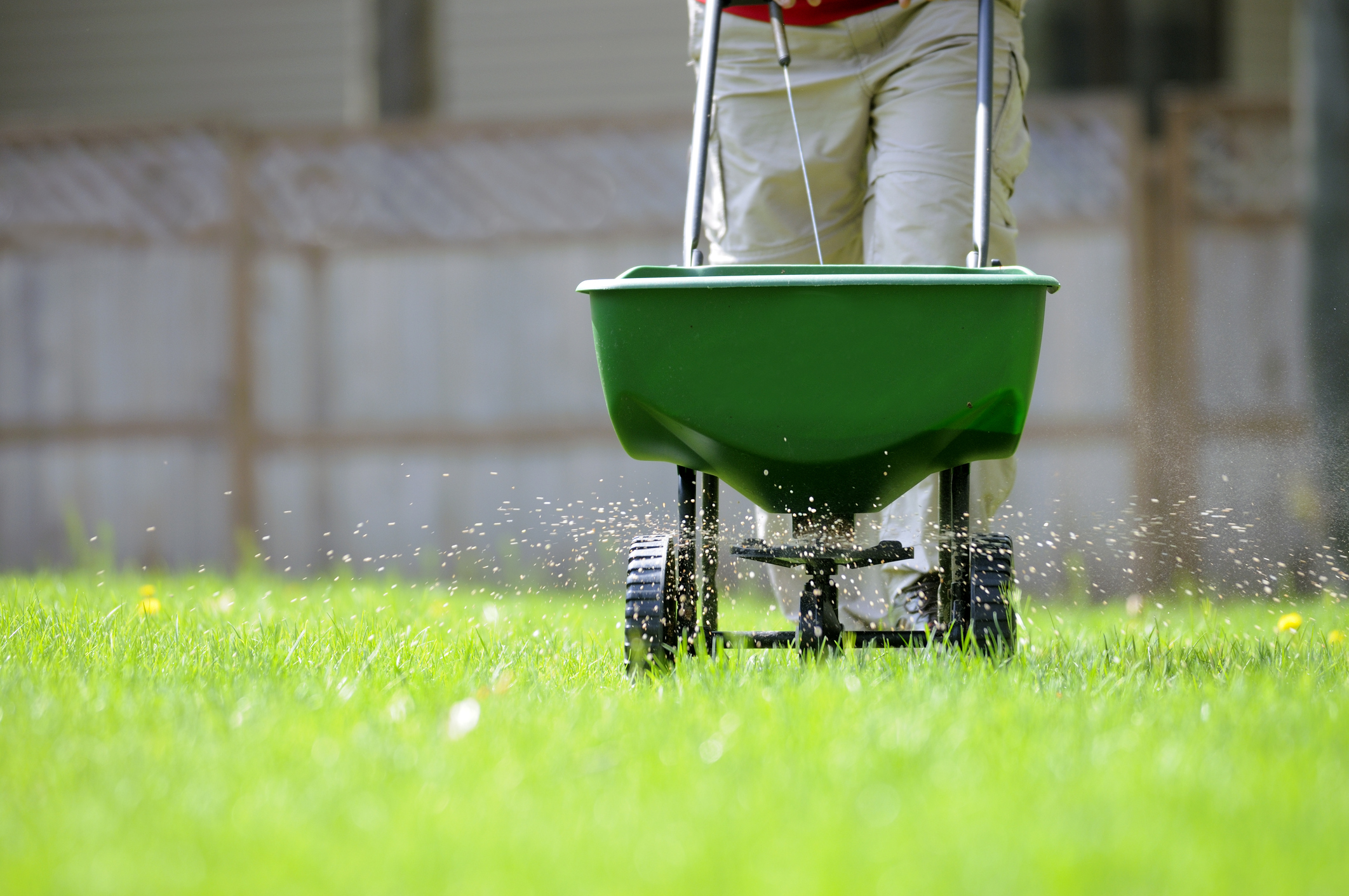
- Apply evenly with a calibrated broadcast spreader — not a drop spreader, which can leave striped application patterns. Setting the spreader at the rate listed on the fertilizer bag and making consistent overlapping passes prevents hot spots. If you need help selecting the right equipment, see our guide to best lawn care tools for homeowners.
Iron and Micronutrient Applications
If your zoysia looks pale green or yellowish in summer even though you’ve been fertilizing consistently, iron deficiency may be the cause — not a lack of nitrogen.
Chelated iron supplements address this without pushing excess top growth. Apply it separately from your regular nitrogen applications, not as a replacement. Adding more nitrogen to a lawn with an iron deficiency won’t fix the color. It just creates more weak, pale-green growth.
Your Fall Zoysia Grass Fertilizer Schedule and When to Stop
Fall is where the most consequential zoysia fertilizing mistakes happen. The grass still looks green, so it feels like you should keep feeding it. That instinct is wrong.
Why late nitrogen is risky. Late-season nitrogen pushes new, soft growth right before dormancy. That growth has low cold tolerance. A frost event after a late application can cause dieback that wouldn’t have happened otherwise.
The cutoff rule: Stop nitrogen applications 6–8 weeks before your average first frost date. In most of the South:
- Georgia, Alabama, Mississippi: stop nitrogen by mid-September
- Carolinas, Tennessee: stop by early-to-mid September
- Virginia, northern transition zone: stop by late August
To find your first frost date, check with your local extension service or use the USDA’s frost date tool by zip code.
What to apply instead of nitrogen: Shift to a low-nitrogen, high-potassium fertilizer in early fall. Products labeled 0-0-50 (straight potassium sulfate) or blends with a low N number and a high K number accomplish this. Potassium helps the plant store carbohydrates, strengthens cell walls, and improves cold hardiness going into dormancy — all without pushing growth. A purpose-built option for this transition is Scotts Turf Builder WinterGuard Fall Lawn Fertilizer, which is formulated specifically to build root strength and cold hardiness heading into dormancy.
This is a product type many homeowners don’t know exists. If you’ve never used a 0-0-50 or similar potassium-focused fertilizer before, look for it at garden centers or online under “sulfate of potash” or “potassium sulfate.” Applied 4–6 weeks before expected dormancy, it gives the grass time to harden off properly.
Transition zone note: In Virginia, Tennessee, and northern North Carolina, tighten this window and stop nitrogen by late August. The frost arrives earlier, and zoysia in these regions has less time to harden off.
Choosing the Right Fertilizer for Your Zoysia Grass Schedule (NPK and Release Type)
When you’re standing in the fertilizer aisle trying to pick a product, here’s how to read the label for zoysia specifically.
Reading NPK for Zoysia
Every fertilizer label shows three numbers: N-P-K (nitrogen, phosphorus, potassium).
- N (nitrogen): Drives green color and density. Zoysia needs it, but in moderation — especially compared to bermuda.
- P (phosphorus): Rarely needed in established zoysia. Excess phosphorus can lock out micronutrients and may be restricted by local regulations in some states.
- K (potassium): Supports root strength, stress tolerance, and cold hardiness. Particularly valuable in fall applications.
Practical targets by season:
| Season | NPK Target | Notes |
|---|---|---|
| Spring | 15-0-15 to 20-4-10 | Nitrogen-forward, low phosphorus |
| Summer | 15-0-15 to 20-0-10 | Avoid high-P; watch nitrogen rate |
| Early Fall | 5-0-20 or 0-0-50 | Low or zero nitrogen, high potassium |
Slow-Release vs. Fast-Release
Slow-release is the default choice for nearly all zoysia applications. It reduces burn risk, feeds over 6–10 weeks, and matches the moderate growth pattern of this grass.
Fast-release has a narrow use case: correcting a visible deficiency quickly, or helping break dormancy when soil temps are already stable and the lawn is coming in very slowly. Outside those situations, it’s not the right tool.
Look for the WIN (water-insoluble nitrogen) percentage on the label — a higher WIN percentage means slower, more controlled release. For a detailed breakdown of how to interpret these numbers, see Slow-Release vs Fast-Release Fertilizer for Warm Season Lawns.
Soil Testing Before You Spend
A soil test from your county extension service costs $15–$25 and removes the guesswork entirely. It tells you your soil’s pH, phosphorus level, potassium level, and what amendments are actually needed.
Zoysia prefers a soil pH of 5.8–7.0. Outside that range, nutrients become chemically unavailable regardless of how much fertilizer you apply. If your lawn is yellowing and not responding to feeding, soil pH is often the first thing to check.
Test every 2–3 years for an established lawn. It’s the highest-value $20 you can spend on your lawn.
Common Zoysia Fertilizing Mistakes That Set Your Lawn Back
Sticking to a consistent zoysia grass fertilizer schedule is easier when you know the failure modes in advance. Use this as a quick checklist before each application:
- Fertilizing before green-up. Soil below 65°F means the grass isn’t actively growing. Nitrogen goes to waste or feeds weeds.
- Following a bermuda schedule. Zoysia needs less nitrogen and has a narrower application window — bermuda rates cause thatch and weak growth in zoysia.
- Applying nitrogen in late fall. Soft, frost-vulnerable growth right before dormancy. This is the most damaging mistake on this list.
- Skipping potassium in fall. The lawn enters winter without adequate cold hardiness, making it more vulnerable to freeze damage.
- Over-applying in peak summer heat. Stressed grass doesn’t absorb nitrogen efficiently — you get burn, not growth.
- Not watering in granular fertilizer. Granules sitting on dry grass can scorch blades. Always water in after application.
- Applying before heavy rain. Nitrogen runs off the surface before it can reach roots — and pollutes local waterways.
- Ignoring soil pH. At pH below 5.5 or above 7.5, zoysia can’t efficiently take up nutrients even if they’re present.
If you’re already dealing with visible problems and aren’t sure what’s causing them, What’s Wrong With My Lawn? A Complete Diagnosis Guide for Homeowners can help you sort out what’s a nutrient issue versus a pest, disease, or watering problem.
Frequently Asked Questions About Fertilizing Zoysia Grass
When should I start fertilizing my zoysia grass in spring?
Wait until soil temperatures reach 65–70°F consistently at 2–4 inches depth. Don’t go by calendar date or air temperature. In Georgia and Texas, this often happens in late March to mid-April. In the Carolinas and Virginia, it’s typically late April to mid-May. Starting before this threshold wastes nitrogen and may feed weeds instead of your lawn.
How much nitrogen does zoysia grass need per year?
Most zoysia varieties need 2–4 lbs of actual nitrogen per 1,000 sq ft annually. Higher-maintenance varieties like Zeon can handle up to 4 lbs, while moderate varieties like Emerald do fine at 2–3 lbs. This is significantly less than bermuda, which typically requires 4–6 lbs per year.
Can I use the same fertilizer schedule for zoysia and bermuda?
No. Bermuda grows faster, needs more nitrogen, and has a wider application window. Using a bermuda schedule on zoysia leads to excessive thatch, soft weak growth, and a higher risk of winter damage from late-fall applications. Zoysia needs its own schedule based on its slower growth rate and tighter seasonal window.
What happens if I fertilize zoysia too late in the fall?
Late nitrogen pushes new, tender growth right before the grass goes dormant. That growth has low cold tolerance. A frost event following a late application can damage or kill tissue that would otherwise have survived the winter. Always stop nitrogen 6–8 weeks before your average first frost date.
Should I fertilize zoysia before it turns green?
No. Dormant or barely-active zoysia cannot take up nitrogen. Fertilizing before green-up means nitrogen leaches through the soil or sits on the surface where it can feed weeds and run off into waterways. Wait for consistent 65–70°F soil temperatures and visible signs of active growth before applying.
What NPK ratio is best for zoysia grass?
For spring and summer, look for products in the 15-0-15 to 20-4-10 range — nitrogen-forward with low phosphorus. For fall, shift to a low-nitrogen, high-potassium product like 5-0-20 or 0-0-50. Phosphorus is rarely needed in established zoysia unless a soil test shows a deficiency.
How do I know if my zoysia needs iron vs. nitrogen?
Both iron deficiency and nitrogen deficiency cause pale or yellowish color, but the growth pattern differs. Nitrogen deficiency typically shows as slow, thin growth across the whole lawn. Iron deficiency shows as yellowing (chlorosis) between the leaf veins, often in isolated patches, even when the lawn has been regularly fertilized. Apply chelated iron to address iron deficiency — adding more nitrogen won’t fix it.
Do I need to do a soil test before fertilizing zoysia?
Not every year, but every 2–3 years for an established lawn. A soil test tells you your pH, phosphorus, and potassium levels — so you’re applying what the lawn actually needs rather than guessing. It’s especially useful if your lawn isn’t responding to feeding, since nutrient lockout from pH imbalance is a common and overlooked cause of poor zoysia performance. Tests through your county extension service cost $15–$25.
Conclusion
The zoysia grass fertilizer schedule comes down to a few core principles: wait for 65–70°F soil temperatures before the first spring application, feed moderately through late spring and early summer, ease off during peak heat, shift to potassium in early fall, and stop nitrogen 6–8 weeks before your first frost date. In spring and summer, target a 15-0-15 to 20-4-10 NPK range; as fall approaches, shift to a low-nitrogen, high-potassium product like 5-0-20 or 0-0-50 to harden the grass before dormancy.
Zoysia rewards restraint. It’s not a grass that responds well to aggressive feeding — it’s a grass that builds density and strength through consistent, well-timed care. Pushing it with too much nitrogen or feeding it too late does more harm than skipping an application.
For more on selecting the right fertilizer product type for your approach, see Slow-Release vs Fast-Release Fertilizer for Warm Season Lawns. For watering guidance that complements your fertilizer timing, see Best Time of Day to Water Warm Season Grass. And if your lawn has existing damage that goes beyond a fertilizer fix, How to Fix a Bad Lawn: A Step-by-Step Renovation Guide covers where to go from there.