Knowing when to lime your lawn starts with one thing: a soil test. Without it, you’re guessing — and guessing wrong with lime can cause as many problems as it solves. This guide walks you through how to read your soil test results, what pH levels actually require lime, when to apply it, and how much to use. Whether you’ve just received your first soil test report or you’re trying to make sense of numbers you’ve been ignoring for a season, this is the decision framework you need.
Disclosure: This article contains affiliate links. If you purchase through these links, I may earn a small commission at no extra cost to you. As an Amazon Associate, I earn from qualifying purchases.
What Your Soil Test Is Actually Telling You About pH
Soil pH is a measure of acidity or alkalinity on a scale from 0 to 14. A pH of 7.0 is neutral. Below 7.0 is acidic; above 7.0 is alkaline. Most lawn grasses thrive in a range of 6.0 to 7.0 — slightly acidic to neutral.
Why does this range matter so much? Because soil pH controls nutrient availability. When pH drops below 6.0, essential nutrients — nitrogen, phosphorus, and iron in particular — become chemically bound to soil particles and unavailable to grass roots. You can apply cool season fertilizer all season and still see a struggling lawn because the nutrients never reach the plant. Correcting pH is what unlocks them.
What’s Actually on Your Soil Test Report
A soil test report shows more than just pH. Most university extension lab reports include:
- Soil pH — the current acidity/alkalinity level
- Buffer pH — a secondary measurement used to calculate how much lime your soil needs to reach the target pH
- Organic matter percentage — relevant to lime response rate
- Nutrient levels — phosphorus, potassium, and sometimes magnesium and calcium
- Yellowing grass despite regular fertilizing
- Moss or clover spreading into thin areas
- Fertilizer applications that seem to do nothing
- Applying after fall aeration allows lime particles to reach the root zone through the open cores
- It works through fall and winter moisture before the spring growing season
- It doesn’t compete with summer heat stress
- pH 5.5–6.0 (moderately acidic): 50 lbs per 1,000 sq ft is a reasonable starting point
- Clay soils hold more acid and require more lime than sandy soils
- Sandy soils respond faster to smaller applications
- Pelletized lime flows cleanly through a broadcast spreader, is less dusty, and easier to store. This is the right choice for most homeowners.
- Powdered lime dissolves and reacts slightly faster but is difficult to spread evenly and creates significant dust when applying.
- Get a soil test first — never lime based on symptoms or guesswork
- If pH is below 6.0, lime is needed; use the report’s rate recommendation
- Time it to fall for cool-season lawns, late winter for warm-season lawns
- Choose calcitic or dolomitic lime based on your magnesium levels
- Use pelletized lime with a broadcast spreader for even, manageable application
- Split large applications across fall and spring — never exceed 50 lbs per 1,000 sq ft in a single pass
- Retest after 6–12 months before applying again
For the purpose of deciding whether and how much to lime, focus on the soil pH and the buffer pH. The raw pH tells you whether your soil is acidic. The buffer pH tells the lab how resistant your soil is to change — which determines the lime rate.
One critical point: the raw pH number alone does not tell you how much lime to apply. The lime recommendation on your report accounts for your soil’s buffering capacity. If your report doesn’t include a lime recommendation, look for the buffer pH value and contact your testing lab — they can calculate the rate from that number.
If you haven’t sent a sample to a lab yet, a basic soil pH meter can give you a quick read to decide whether testing is worth prioritizing. Extension lab tests typically cost $10–$20 and provide far more actionable detail than a home kit alone. If you’re just getting started and building out your lawn care toolkit, What to Buy First: The Essential Lawn Care Starter Kit for New Homeowners covers the foundational equipment worth having on hand.
The pH Range That Triggers a Lime Application
Not every acidic lawn needs lime. Here’s how to interpret your pH reading:
| pH Range | What It Means | Action |
|---|---|---|
| Below 6.0 | Acidic — lime almost certainly needed | Apply lime per soil test recommendation |
| 6.0–6.5 | Borderline | Cool-season grasses are fine; warm-season grasses tolerate this range |
| 6.5–7.0 | Ideal for most grass types | Lime not needed |
| Above 7.0 | Alkaline — do not apply lime | Use sulfur to lower pH |
Cool-season grasses — Kentucky bluegrass, tall fescue, perennial ryegrass — perform well down to about pH 6.0. Warm-season grasses — bermudagrass, zoysiagrass, St. Augustinegrass — tolerate slightly lower pH but still benefit from correction if the reading falls well below 6.0.
Lawn pH Too Low: Symptoms to Watch For
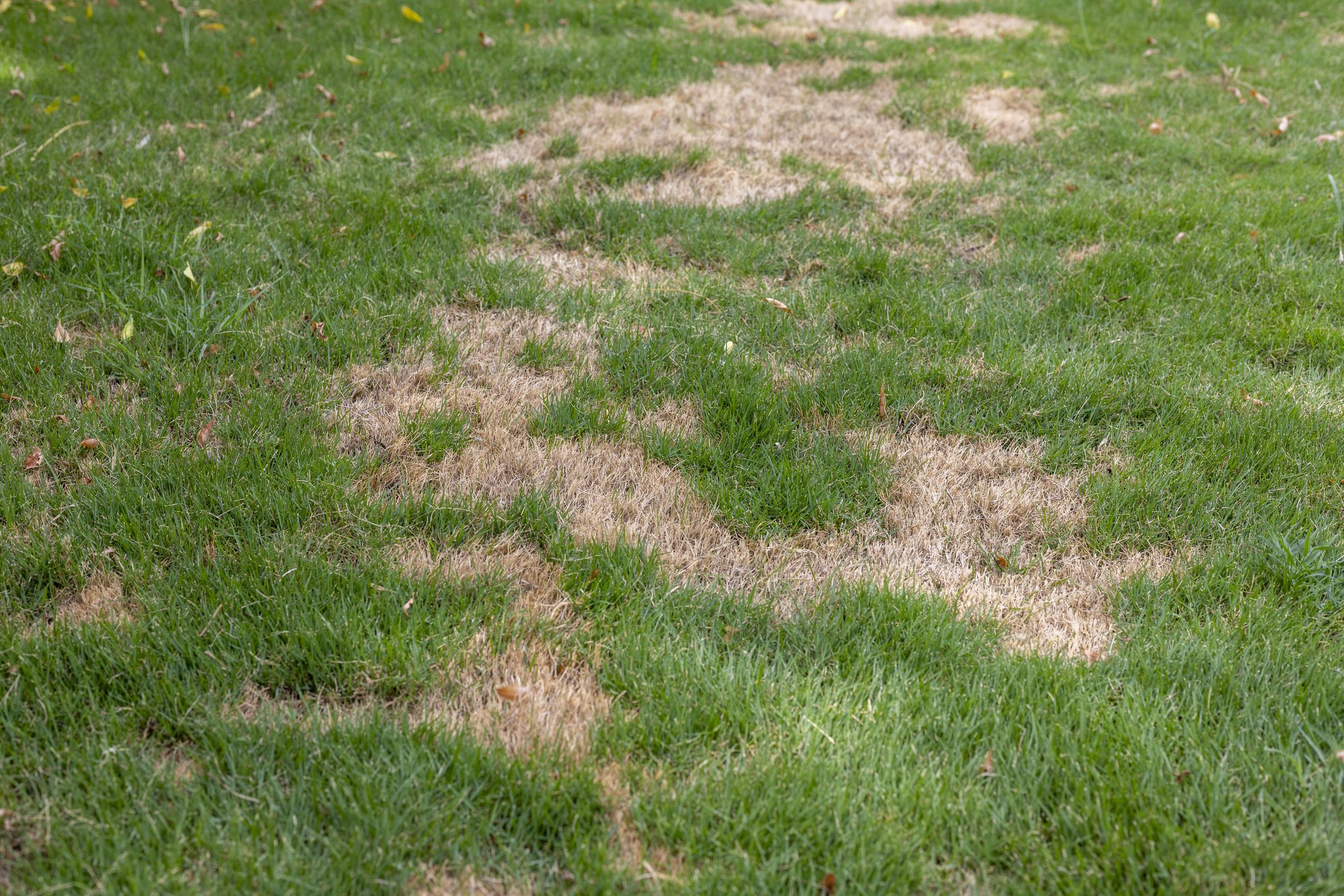
Low soil pH produces recognizable symptoms, though none of them are definitive on their own:
These symptoms point toward a pH problem, but they can also result from compaction, disease, iron deficiency, or drought. Don’t lime based on symptoms alone. Treat the symptoms as a signal to test — the soil test confirms the cause.
When to Lime Your Lawn: Timing by Season and Grass Type
Lime works slowly. It takes two to three months minimum to produce a measurable shift in pH, and in heavy clay soils, the full effect can take up to a year. This means lime application timing matters more for planning than for urgency.
Cool-Season Lawns (Bluegrass, Fescue, Ryegrass)
Fall is the best time to apply lime on cool-season lawns. The reasons:
Early spring — before green-up — is the second-best window. Avoid applying during summer when soil is dry and grass is already under stress.
Warm-Season Lawns (Bermuda, Zoysia, St. Augustine)
Late winter to early spring — before green-up — is the ideal window for warm-season grasses. This allows lime to begin working before the grass enters active growth. Once pH is corrected, following up with a quality warm season fertilizer ensures your grass can actually take up the nutrients that have been unlocked. Avoid applying lime during peak summer unless soil test results show the pH drop is severe enough to justify it. For timing lime within your full seasonal routine, the Fall Warm Season Lawn Care Checklist Before Dormancy outlines where pH correction fits alongside other pre-dormancy tasks.
Can You Lime Any Time of Year?
Yes, with some caveats. Unlike nitrogen fertilizer, lime won’t burn grass. However, applying during drought reduces effectiveness because moisture is what activates lime and carries it into the soil profile. If you can, apply lime before a rain event.
Frozen ground is acceptable for pelletized lime — it will sit on the surface and activate once the soil thaws and moisture returns. This makes late fall and early winter applications viable if you missed the ideal window.
How Much Lime to Apply Based on Your Soil Test Results
Always start with the rate on your soil test report. University extension labs calculate lime recommendations based on your specific pH, buffer pH, and soil type — this is the most accurate guidance available.
If no rate is provided, general benchmarks:
The Split Application Rule
Never apply more than 50 lbs of pelletized lime per 1,000 sq ft in a single pass. If your soil test calls for a heavy correction — 100 lbs or more per 1,000 sq ft — split it between fall and spring applications. Applying too much at once doesn’t work faster; it just risks uneven distribution.
Getting Even Coverage
Uneven lime application creates patchy pH correction, which shows up as inconsistent turf quality across your lawn. A calibrated broadcast spreader ensures uniform distribution. Calibrate the spreader to the setting recommended on your lime product’s label, and make overlapping passes at half-rate in opposite directions for best results.
Lime Types Explained: Calcitic vs. Dolomitic
Calcitic Lime
Made from calcium carbonate. It raises pH and adds calcium. This is the right choice when your soil test shows adequate or high magnesium levels.
Dolomitic Lime
Made from calcium and magnesium carbonate. It raises pH and adds both minerals. Use dolomitic lime when your soil test shows low magnesium — common in sandy soils and areas with heavy rainfall that leaches magnesium over time.
If your soil test doesn’t include a magnesium reading and you don’t have a known history of deficiency in your region, calcitic lime is the safer default.
Pelletized vs. Powdered Lime
Both forms are effective at equivalent rates. The practical difference:
When buying pelletized lime, check the bag’s guaranteed analysis panel for the calcium carbonate equivalent (CCE). A higher CCE means more neutralizing power per pound. Two bags at the same weight can vary significantly in effectiveness based on this number.
Hydrated Lime (Quick Lime)
Hydrated lime acts faster than agricultural lime but is caustic and can burn grass if misapplied. It’s not recommended for homeowners — the risk-to-benefit ratio doesn’t favor it when pelletized lime is widely available.
Common Mistakes Homeowners Make When Liming a Lawn
Liming without a soil test. If your pH is already at 6.5 and you add lime, you’ll push it above 7.0 — which restricts nutrient uptake just as severely as acidic soil does. Don’t assume your lawn needs lime because it looks unhealthy.
Applying lime and fertilizer at the same time. This isn’t harmful, but it’s inefficient. Fertilizer performs poorly in low-pH soil. Correct the pH first, then fertilize once the lime has had four to eight weeks to begin working.
Expecting fast results. Lime takes two to three months to produce a measurable pH shift. Reapplying after a few weeks because you haven’t seen improvement is how homeowners end up with pH 8.0 soil.
Spot-treating only the problem areas. Soil pH tends to be consistent across a lawn. If one area looks bad due to pH, the surrounding areas likely share the same issue. Liming only the visible problem area creates uneven correction.
Mistaking other problems for pH issues. Iron deficiency, disease, drought stress, and soil compaction all produce yellowing that looks similar to pH-related deficiency. Always confirm with a soil test before liming.
Conclusion
The decision to lime your lawn should follow a clear sequence:
Liming is one of the highest-return investments you can make in your lawn — but only when the soil actually needs it. A $15 soil test from your university extension lab removes all the guesswork and tells you exactly what to do.
To slot liming into your full seasonal routine, the Spring Cool Season Lawn Care Checklist: What to Do in March, April, and May covers where lime fits alongside aeration, overseeding, and fertilizing tasks for cool-season homeowners.
Subscribe to our Newsletter for Weekly updates!