You just got the keys. You’ve looked out at the lawn. Now you’re standing in the garden center aisle wondering what you actually need. A lawn care starter kit for new homeowners doesn’t have to be complicated — but it does need to be the right things in the right order.
The most common mistake new homeowners make is treating that hardware store aisle like a shopping list. They grab products that look useful, spend $200 on things they don’t need yet, and skip the one or two items that would have made a real difference. The result: a garage shelf full of half-used bags and a lawn that still looks rough.
This guide covers the essential tools, the right first-year products, what to skip for now, and how to put it all together into a simple routine that actually works. Think of it as your lawn care starter kit, new homeowners edition — built around what you need first, not everything at once.
Disclosure: This article contains affiliate links. If you purchase through these links, I may earn a small commission at no extra cost to you. As an Amazon Associate, I earn from qualifying purchases.
Why New Homeowners Overbuy — And How to Avoid It
The lawn care aisle is engineered to create doubt. There are products for grubs, fungus, pH imbalance, iron deficiency, drought stress, and a dozen other problems — most of which you probably don’t have. When you don’t know what’s normal and what’s a problem, it’s easy to buy reactively.
The smarter approach: build a foundation first, diagnose problems later. Think of your starter kit as a system with two parts. Tools are one-time purchases you’ll use for years. Products are consumables you replenish as needed. Tools enable the work. Products do the work. A routine ties them together.
You don’t need everything in year one. A simple kit used consistently will outperform an elaborate program used once in a while.
The Lawn Care Starter Kit New Homeowners Actually Need
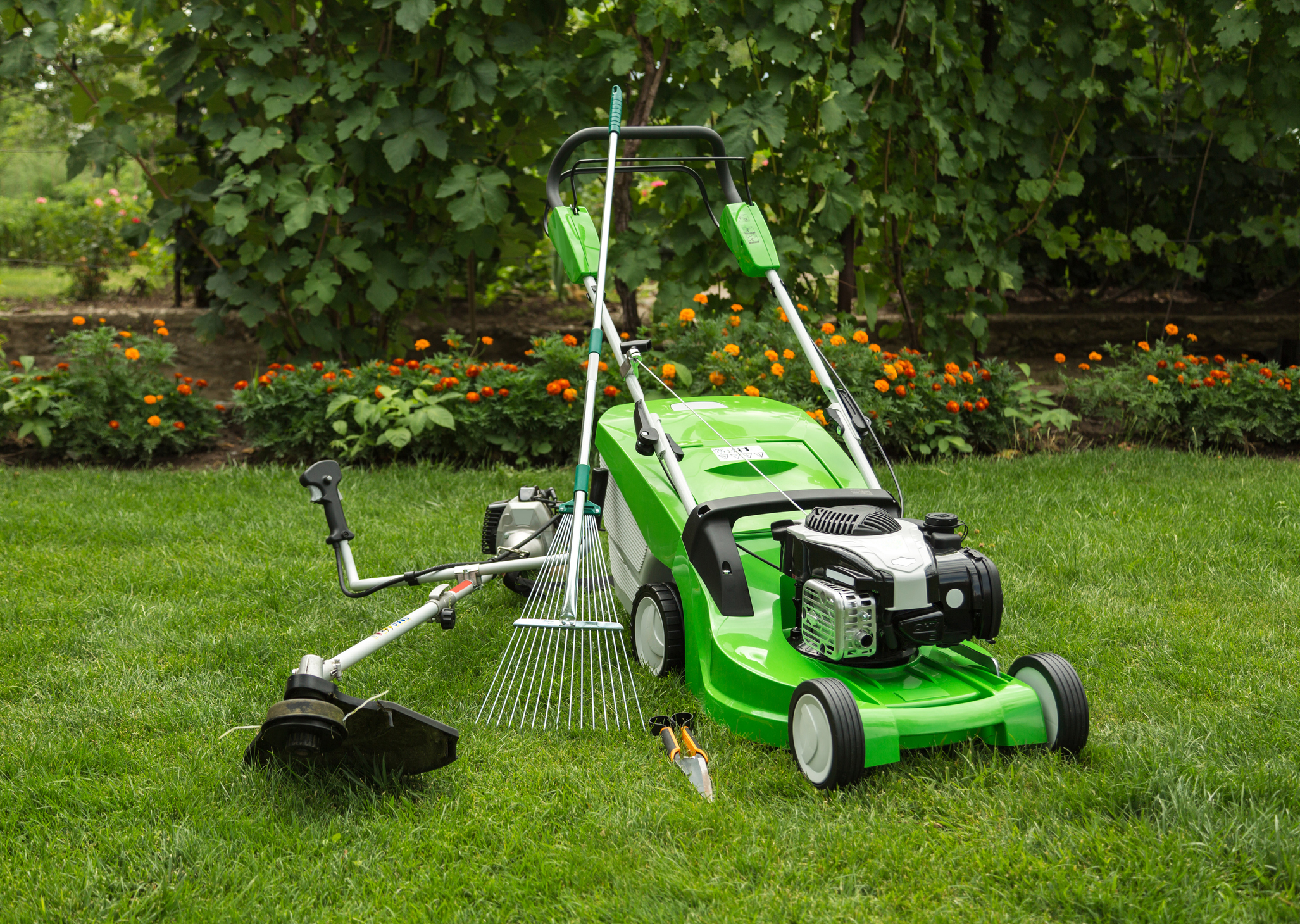
Here’s what belongs in your first-year kit — two categories, five items:
Tools (buy once):
- Lawn mower with bag or mulch capability
- 1–2 gallon pump sprayer or refillable hose end sprayer
Products (replenish as needed):
- Balanced granular lawn fertilizer (slow-release)
- Broadleaf weed control (liquid concentrate)
- Grass seed matched to your grass type
This assumes you have an existing lawn that needs maintaining. If you’re starting from bare dirt, seeding a new lawn is a different process with different priorities.
Essential Tools for Your New Homeowner Lawn Care Starter Kit
Lawn Mower
Most new homeowners already put the mower first — and they’re right to. But the mower matters for more than appearance. Cutting height affects weed competition, root depth, and how quickly your lawn recovers from stress. A mower you can’t adjust reliably is a problem.
What to look for:
-
- Self-propelled if your lawn is over 5,000 sq ft or has any slope
- Rear-wheel drive for better traction on inclines
- 21-inch deck minimum — anything smaller takes too long on a full yard
- Reliable deck height adjustment with clear settings
- Both bag and mulch options
Once your mower is in hand, set your mower deck to the correct height for your grass type before you cut. Getting that wrong from the start affects everything downstream.
Brand matters less than build quality. Gas mowers from Honda and Toro have strong reputations for longevity. Battery-powered options from EGO work well for most residential lawns and skip the fuel and maintenance hassle. Either is a solid first mower. The right choice depends on your yard size and personal preference.
Broadcast Spreader
A broadcast spreader distributes granular materials — fertilizer, seed, lime — evenly across your lawn as you walk. This is one of the most underrated items on any beginner lawn care equipment list. It’s worth getting right.
Get a push broadcast spreader, not a handheld “whirly” spreader. Handheld spreaders work for small touch-up areas but can’t cover a full lawn evenly. Look for:
-
-
- Stainless steel or rust-resistant hardware (granular fertilizer corrodes cheap metal fast)
- A reliable shut-off gate so product doesn’t leak when you stop
- At least 50 lb capacity for efficiency
-
The Scotts Turf Builder EdgeGuard spreader is a widely available mid-range option that covers these basics. Drop spreaders are more precise but slower — useful later once you’re dialing in application rates, but not necessary to start.
Pump or Hose-End Sprayer
You need a sprayer for liquid weed control and liquid fertilizer applications. A 1–2 gallon pump sprayer is the right starting point. It gives you precise control for spot-treating weeds without soaking the whole lawn.
A hose-end sprayer is faster for full-lawn applications, but it’s harder to calibrate and easier to over-apply. Start with the pump sprayer and upgrade later if needed.
Important: Clean your sprayer thoroughly after every use. Herbicide residue left in the tank can damage or kill grass the next time you spray. Rinse it out — every time.
The Right Lawn Care Products to Buy First
Lawn Fertilizer
For an established lawn, buy a balanced granular fertilizer with slow-release nitrogen. Look for a ratio in the 24-0-10 to 32-0-10 range — moderate nitrogen to feed growth, low phosphorus, and some potassium for stress tolerance.
Avoid high-phosphorus fertilizers unless you’re establishing new seed. Most established lawns already have adequate phosphorus, and adding excess can cause runoff issues.
Slow-release formulas feed your lawn steadily over 6–8 weeks. That’s better than one big flush that can burn turf or push excessive growth. Scotts Turf Builder slow-release lawn food and Pennington UltraGreen are widely available options at most hardware stores. If you have a warm-season lawn, a warm season fertilizer like Andersons PGF Complete 16-4-8 is a well-regarded all-around option worth considering instead.
Understanding the three numbers on the bag — the N-P-K ratio will help you compare products confidently when you’re standing in the aisle.
Broadleaf Weed Control
In year one, broadleaf weeds are almost guaranteed. Dandelions, clover, and plantain are the most common culprits. A liquid broadleaf herbicide concentrate mixed in your pump sprayer is the most practical solution. You spot-treat where the problem is, rather than blanketing the whole lawn.
Look for a product with 2,4-D or a 3-way herbicide blend (2,4-D + MCPP + dicamba). This covers the broadest range of common broadleaf weeds and is available at any hardware store.
Two rules to follow:
- Don’t apply when temperatures are above 85°F — heat can stress or damage turf
- Follow label rates exactly — over-applying doesn’t kill weeds faster, it just injures your grass
Grass Seed
Keep a bag of grass seed matched to your existing lawn for patching thin spots and bare areas. Cool-season grasses — tall fescue, Kentucky bluegrass, perennial ryegrass — are standard in northern states. Warm-season grasses — bermuda, zoysia, St. Augustine — are common in the south.
One timing rule that prevents a common first-year mistake: don’t apply a pre-emergent herbicide and overseed in the same window. Pre-emergents stop germination — they can’t tell the difference between a weed seed and your grass seed. Seeding guidance goes deeper than this article covers, but that one rule matters now.
What to Skip Until Year Two (And Why It Can Wait)
These aren’t bad products. They’re just products that need context you won’t have yet.
- Pre-emergent herbicide — timing depends on soil temperature; applying it wrong or during an overseeding window creates more problems than it solves
- Lime or sulfur — both adjust soil pH, but you need a soil test result first; applying without one is a guess
- Aerator or dethatcher — useful tools, but you won’t know whether your soil is compacted or your thatch is excessive until you’ve watched the lawn through a full season
- Grub control, fungicide, iron supplements — each solves a specific diagnosed problem; buying them without a diagnosis adds cost and complexity with no clear benefit
- Riding mower — unless your lawn exceeds an acre, a self-propelled push mower handles the job with more maneuverability
How to Use Your Starter Kit: A Simple First-Year Lawn Routine
This isn’t a full seasonal plan. For full timing by month and grass type, the dedicated monthly checklist covers everything in detail. But here’s the seasonal rhythm that makes your starter kit work as a system.
Spring
- Set your mower deck to the correct height for your grass type before the first cut
- Start mowing when grass is actively growing, not just because it’s April
- Apply fertilizer once soil temperature hits the right threshold (around 55°F for cool-season grass, 65°F for warm-season)
- Spot-treat broadleaf weeds as they emerge using your pump sprayer
Summer
- Mow consistently — never remove more than one-third of the blade height in a single cut
- Water deeply and infrequently; 1 inch per week in two sessions beats daily shallow watering
- Avoid fertilizing cool-season grass during summer heat stress
Fall
- Best window for cool-season lawn recovery: overseed thin spots, apply fall fertilizer
- Warm-season lawns shift toward dormancy prep — a final mow and a light potassium application supports winter hardiness
- Take stock of what problems appeared this season; your observations now shape what you add to your kit next spring
Conclusion
Your first-year lawn care starter kit comes down to six items: a mower, a broadcast spreader, a pump sprayer, a slow-release granular fertilizer, a broadleaf herbicide concentrate, and a bag of grass seed matched to your lawn type. That’s it.
Year one is about building a foundation and learning how your lawn behaves — not perfecting it. Consistent basic care with the right tools will always outperform an elaborate program used sporadically.
As you get comfortable with the basics, go deeper on the specifics: understanding fertilizer numbers helps you compare products, knowing the right mowing height improves everything downstream, and following a dedicated monthly checklist makes seasonal timing second nature. Each topic is worth its own deep dive once the foundation is in place.
Subscribe to our Newsletter for Weekly updates!