Most homeowners either over-invest in gear they’ll rarely use or struggle through basic maintenance with the wrong tools. A mower, a spreader, and a string trimmer will cover roughly 80% of what a well-maintained lawn requires. But the details — which type, in what order, and what’s genuinely worth skipping — make a real difference in results and budget. This guide builds a practical toolkit by priority. You’ll know what to buy now and what to add as your lawn care routine develops — no wasted money, no cluttered garage.
Disclosure: This article contains affiliate links. If you purchase through these links, I may earn a small commission at no extra cost to you. As an Amazon Associate, I earn from qualifying purchases.
Core Lawn Care Tools Every Homeowner Needs First
These are the non-negotiables. Regardless of grass type, yard size, or climate, this set of tools earns its place every single season. If you’re figuring out the best lawn care tools for homeowners starting from scratch, this section is where to begin.
Hand Tools
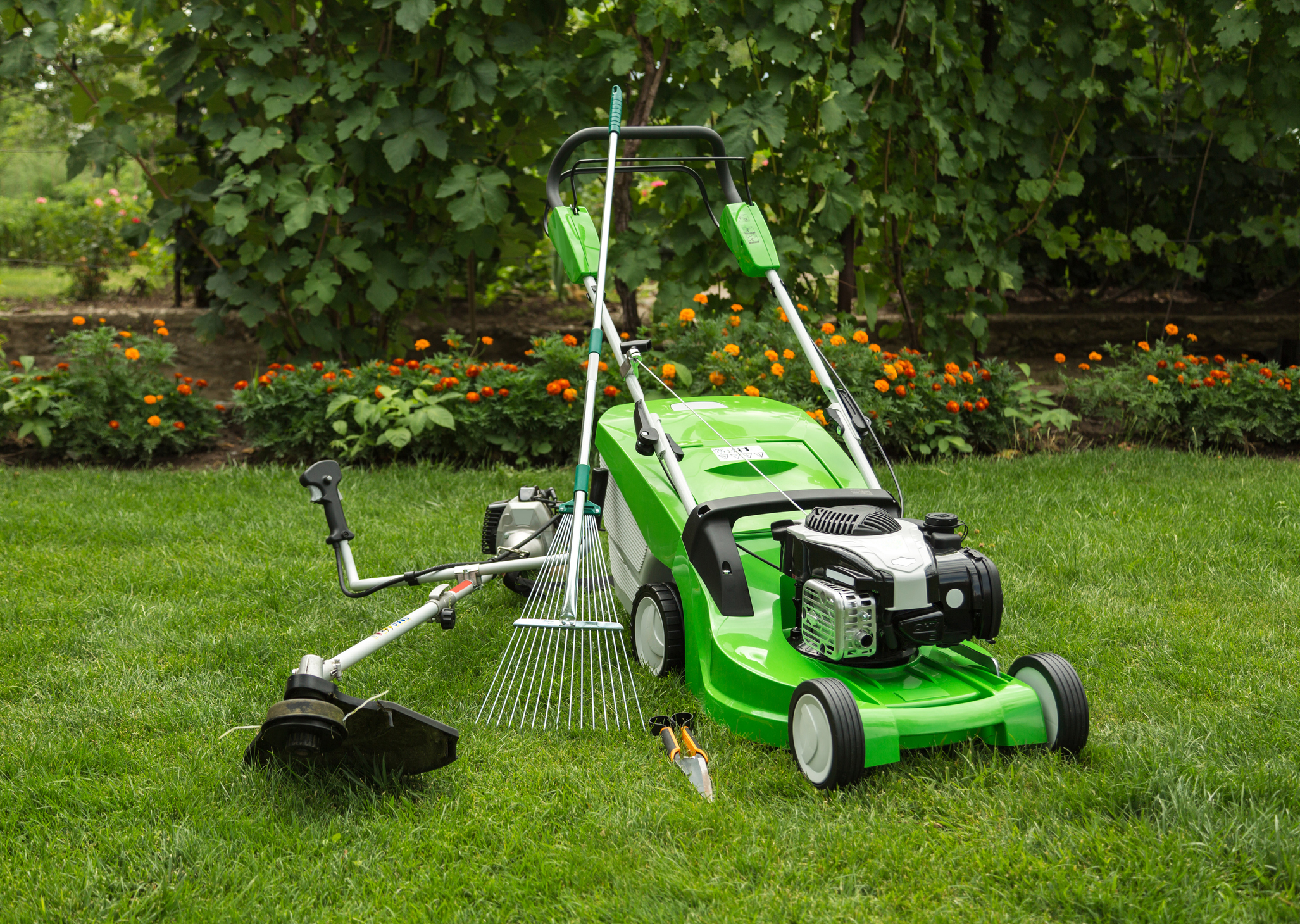
Lawn rake (thatching rake) A thatching rake is not a leaf rake. It has rigid, closely spaced tines designed to pull dead grass and surface debris out of the turf canopy — not shuffle leaves around. It’s essential prep work before overseeding because seed needs direct soil contact to germinate. It’s also useful for loosening minor thatch buildup before it becomes a problem requiring power equipment. A leaf rake, with its flexible fan tines, does not substitute for this task.
Garden spade or edging spade You need this for clean bed borders, digging out persistent weeds, and manual edging along driveways or walkways. The defining feature is a flat, square blade — not the rounded point of a digging shovel. A round-point shovel is for moving loose material. A flat spade is for cutting into turf and defining clean edges. If you only own one of them, make it the flat spade.
Hand weeder or dandelion puller For targeted removal of broadleaf weeds without chemicals, a hand weeder is indispensable. A dandelion puller has a forked tip that levers the root out cleanly when the soil is moist, reducing the chance of regrowth. Worth keeping even if you use herbicides occasionally — not every stray weed warrants a full spray application.
Spreader
A spreader is not optional if you plan to fertilize, apply pre-emergent weed control, or overseed. Hand-broadcasting product leads to patchy results, burned spots, and inconsistent germination. These are the problems that frustrate homeowners every spring — and they’re almost entirely avoidable with the right equipment.
Drop spreader vs. rotary (broadcast) spreader — know the difference:
- A drop spreader releases product straight down through openings in the hopper, directly below where you walk. Slower, but precise. Better for narrow strips, tight edges, or areas where you can’t afford product drift.
For most homeowners with a standard residential lot, a rotary spreader is the more practical starting point. The Scotts Turf Builder EdgeGuard Broadcast Spreader is a widely available mid-range option with a side-shield feature that prevents product from scattering into beds — a practical design detail that justifies the slight price premium over basic models. Understanding whether lime or sulfur is needed before you spend money on fertilizer also helps you get the most from every spreader application.
Lawn Edger
A string trimmer handles most edge work, but a dedicated edger creates a sharp, vertical cut along sidewalks and driveways that a trimmer can’t fully replicate. The difference is visible: a trimmer cuts at an angle and can leave a ragged edge; a dedicated edger slices straight down with a rotating blade, producing a clean, defined line.
For homeowners with small yards or only occasional edging needs, a manual half-moon edger is a low-cost, zero-maintenance alternative. You step on it, rock it forward, and it removes a clean plug of turf along any hard edge. Slower than a powered edger, but effective and simple.
Mowing Equipment: Choosing the Right Lawn Care Tools for Your Yard Size
Mowing is the highest-frequency task in any lawn care routine. Getting this right has more impact on weekly effort and long-term turf health than any other single equipment choice. The wrong mower makes every session harder than it should be. best time of day to water cool-season grass to minimize disease pressure and maximize absorption
Push Mowers — Manual, Gas, and Electric
Manual reel mower Practical for small, flat yards under approximately 2,000 square feet. No engine, no fuel, no oil changes. It performs well on cool-season grasses kept at lower cutting heights — fine fescue, Kentucky bluegrass — but struggles with tall, coarse, or overgrown grass. If you let mowing lapse for two weeks in peak growing season, a reel mower becomes nearly unusable until the grass is cut back down. Know that limitation before you buy one.
Gas push mower The most versatile option for yards up to about one-third of an acre. Wide availability, strong performance in all grass conditions, and easy to service locally. Self-propelled models are worth the upgrade if your yard has any meaningful slope — the extra cost pays off in reduced fatigue quickly.
Battery-electric push mower A strong alternative to gas for yards under one-half acre. Lower noise, no fuel storage, and minimal maintenance. Look at 40V or 60V platforms — lower voltages often lack the runtime for larger yards. If you already own cordless tools in a brand’s battery ecosystem (EGO, Greenworks, DeWalt, Ryobi), expanding within that platform means sharing batteries across tools and reducing long-term cost.
One spec that buyers often overlook: cutting height range. Most grass types have a recommended mowing height. Bermuda at 1–2 inches, tall fescue at 3–4 inches, St. Augustine at 3.5–4 inches — a mower that won’t cut at the right height limits your results no matter how much it cost. Always check the deck height range before purchasing.
Pairing a timer with the right schedule also means knowing the best time of day to water cool-season grass to minimize disease pressure and maximize absorption.
If you’re growing Bermuda, Zoysia, or another warm-season variety, knowing the best time of day to water warm season grass helps you get the most out of every watering session.
Riding Mowers and Zero-Turn Mowers
A riding mower begins to make practical sense at around one-half acre, particularly on mostly open, flat ground. Below that threshold, the cost and storage footprint rarely justify the purchase. how much water does a lawn need per week by season
Zero-turn mowers are faster around obstacles and excellent on large, open areas — but they cost significantly more and handle slopes poorly. On a hill, a zero-turn can lose traction in ways a traditional riding mower with rear-wheel drive manages better. If your yard has any real grade, factor that into the comparison.
Required for areas a mower deck can’t reach: fences, tree bases, flower beds, and foundation edges. Gas-powered string trimmers handle heavy or overgrown vegetation better and work without concern for battery life on large properties. Battery-powered models are quieter, sufficient for regular maintenance trimming on established yards, and increasingly capable.
Dual-function trimmer/edger models that pivot 90 degrees for edging are a practical budget option. You get two functions in one tool. The trade-off: edging performance is functional but not as precise as a dedicated edger. Fine for homeowners who edge a few times a season — limiting for those who want a sharp edge every week.
Lawn Watering, Feeding, and Soil Health Tools for Homeowners
Getting the best lawn care tools for homeowners right isn’t only about cutting and spreading. Watering and soil health equipment play a direct role in how well everything else works.
Watering Equipment
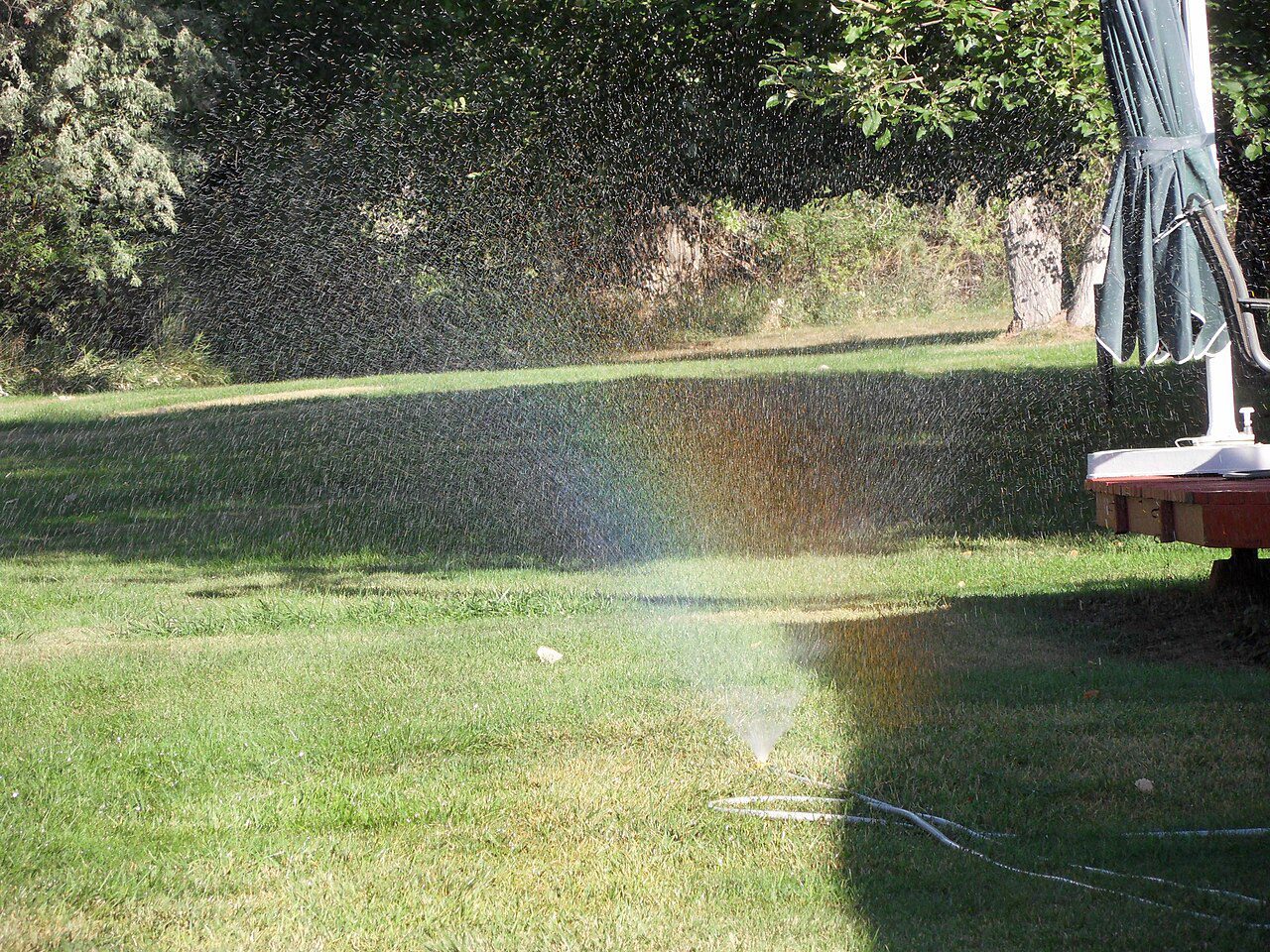
Oscillating sprinkler An inexpensive starting point for most homeowners. It covers rectangular areas in a back-and-forth fan pattern and works well on standard suburban lots. Before investing in an in-ground irrigation system, an oscillating sprinkler paired with a timer is a capable setup.
Impact or rotary sprinkler Better suited for larger or irregularly shaped areas. More mechanically durable than oscillating models under regular use, and coverage radius is adjustable on most designs. Sod cutter: Needed only for major renovation projects.
Hose-end timer One of the best small investments on this entire list. A digital hose timer automates watering duration without a full irrigation controller. This matters most during seed establishment, when consistent short-interval watering is critical and missing a session can set germination back by days. A basic two-outlet digital hose timer costs under $30 and removes the need to remember to shut off the water.
Rain gauge Cheap, simple, and genuinely useful. A rain gauge mounted in an open area of the yard gives you an accurate reading of actual rainfall so you know whether to supplement or hold off. Guessing based on how rain “looked” leads to both under-watering and wasteful overwatering.
Soil Health Tools
Soil probe Compacted soil is a common cause of poor lawn performance — and one of the least visible. A soil probe lets you push into the ground to check how far moisture is penetrating. It also tells you whether the soil structure feels tight and hard or loose and workable. If you can only push the probe a few inches before hitting resistance, your lawn needs aeration.
Core aerator A core aerator pulls small plugs of soil from the ground. This opens channels for water, air, and nutrients to reach the root zone. For most homeowners, renting a walk-behind core aerator once a year is more practical than buying one. Purchase makes more sense for larger properties or homeowners who aerate frequently.
What to Skip (or Rent Instead of Buy)
Not every tool deserves a place in your garage. Some are situational enough that buying makes no financial sense for a typical residential homeowner.
Dethatcher or power rake: Useful for heavy thatch removal, but most homeowners only need this every few years at most. Rent one when the situation calls for it rather than storing it indefinitely.
Lawn roller: Sometimes marketed as a post-overseeding essential. It isn’t. On clay-heavy soils, rolling wet ground compresses pore space and makes compaction worse, not better. On sandy soils, it adds no structural benefit. Skip it.
Leaf blower (optional, not essential): Useful for cleanup and clearing clippings from hard surfaces, but not a lawn health tool. If your yard is heavily treed, it becomes more practical. For open lawns, a thatching rake handles cleanup adequately.
Sod cutter: Needed only for major renovation projects. Rent it when you need it — a quality sod cutter rents for $60–$100 per day, which is far more practical than owning one that collects dust between projects.
Building Your Toolkit Over Time: A Practical Buying Order
When assembling the best lawn care tools for homeowners, sequence matters. Buying in the right order prevents overspending early and ensures the highest-impact tools are in place first.
Start with:
Add next, as your routine develops:
- Dedicated edger (if curb appeal matters and you have defined hard edges)
- Soil pH test kit
- Soil probe
- Rain gauge
Rent, don’t buy:
- Core aerator
- Dethatcher
- Sod cutter
This order reflects both frequency of use and impact on results. Spreader, mower, and trimmer are every-season tools. Soil health equipment improves your outcomes but doesn’t need to be in place on day one.
Conclusion
The best lawn care tools for homeowners aren’t a long list — they’re the right tools, bought in a logical order, matched to your actual yard. A rotary spreader, a mower that fits your lot size, a string trimmer, and a few basic hand tools will handle the majority of what your lawn requires season to season. Layer in watering equipment, soil health tools, and a dedicated edger as your routine matures. Rent specialized equipment like core aerators and dethatchers when the need arises rather than buying tools that sit unused.
This essential lawn care equipment pairs directly with how you schedule watering, when you fertilize, and how you approach seasonal prep — those practices determine what each tool is actually doing for your lawn. Getting the equipment right removes the friction that keeps most homeowners from maintaining a consistent routine. Consistency is what separates a well-maintained lawn from a struggling one — and having the right lawn care tools for homeowners as a foundation is what makes consistency achievable.
Subscribe to our Newsletter for Weekly updates!