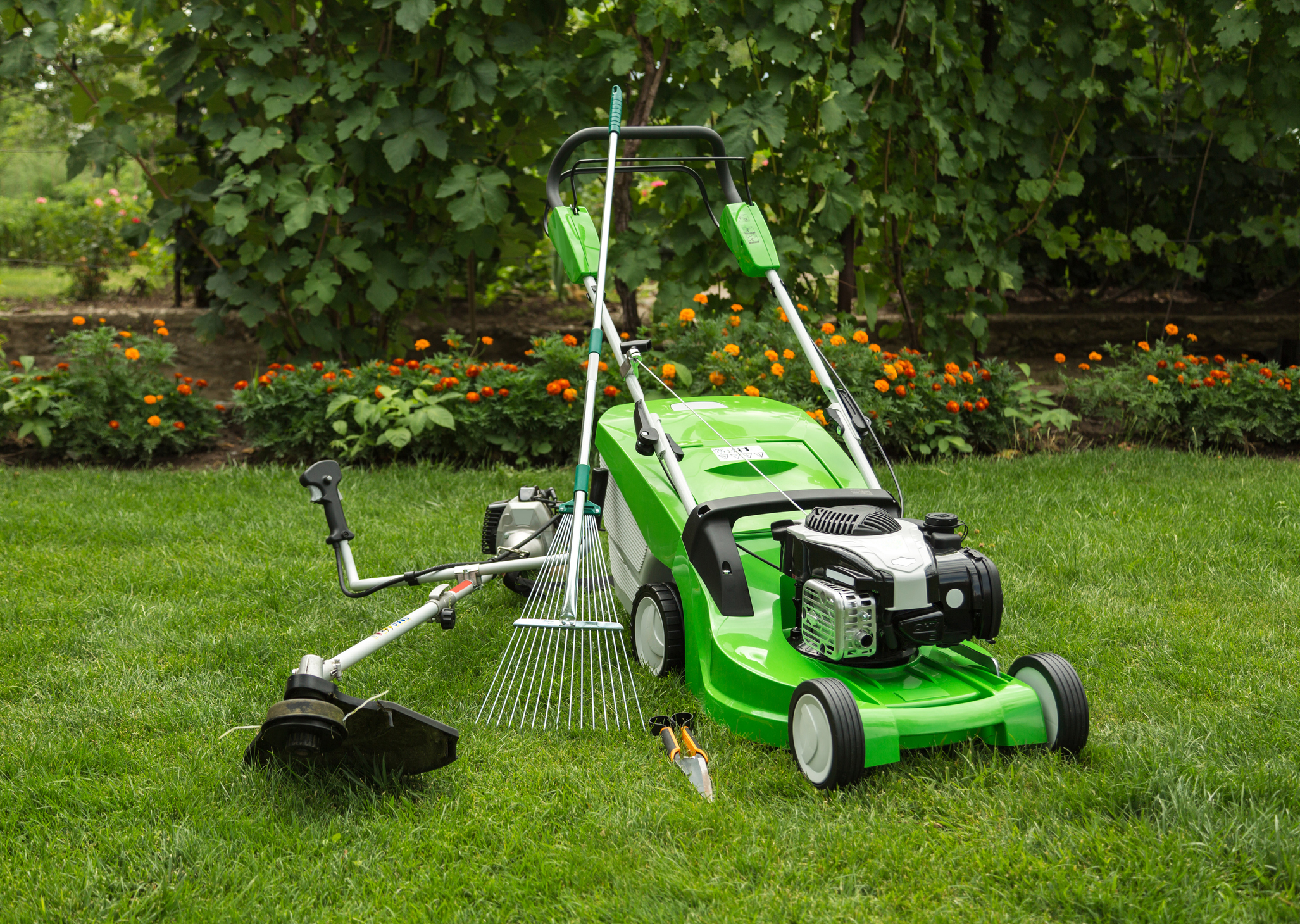
Most homeowners land in one of two places with their lawn care tools: they buy too much too fast and end up with gear collecting dust in the garage, or they get by with a mower and a rake and wonder why their lawn never looks quite right. This guide to the best lawn care tools for homeowners cuts through both problems. Every item here earns its place based on how often it gets used, how much it affects results, and whether owning makes more sense than renting — because that distinction is one of the most useful frameworks for building a kit that doesn’t waste money. The list is ordered by priority: start at the top, add items as your lawn routine matures, and skip anything that doesn’t match your situation.
Disclosure: This article contains affiliate links. We may earn a commission on qualifying purchases at no additional cost to you.
The Core Lawn Care Tools Every Homeowner Needs First (Non-Negotiables)
These are non-negotiable. No matter your grass type, lot size, or climate, this is the baseline essential lawn care equipment every homeowner should have. If you’re starting from scratch with the best lawn care tools for homeowners, this section is where your budget goes first.
A Quality Mower
The single highest-impact tool you own. Mowing frequency, cutting height, and deck quality all affect turf health more directly than almost any other factor. Covered in detail in the next section — the choice comes down to lot size and terrain, not brand loyalty.
A String Trimmer (Weed Eater)
A mower alone leaves ragged edges along fence lines, walkways, and foundation beds. Those edges matter — they’re often the first thing anyone notices about a lawn. A string trimmer handles anything the mower deck can’t reach.
-
- Corded models are cheapest but restrict range
- Battery-powered is the best fit for lots under half an acre — convenient, quiet, no fuel management
- Gas handles larger areas and extended run times without recharging
A Leaf Blower or Lawn Vacuum
This isn’t just a fall tool. After every mow, clippings scatter onto driveways, sidewalks, and patios. A blower clears them in minutes. Battery-powered blowers have closed the performance gap with gas significantly and are now the practical choice for most residential lots.
A Sturdy Garden Rake
Used for leveling topdressing, spreading grass seed, and clearing light debris. A garden rake has flat, flexible tines — it’s not the same as a dethatching rake, which has rigid, hooked tines designed to pull thatch out of the turf canopy. Don’t confuse the two; they do different jobs.
A Flat-Head Spade
Underrated on most lawn care tools lists. A flat-head spade cuts clean sod lines, edges planting beds, and handles general digging. The flat blade gives you control that a rounded shovel doesn’t. You’ll reach for it more than you expect.
Mowing Equipment: Choosing the Right Lawn Mower — A Key Tool for Every Homeowner
For any homeowner lawn tools guide, the mower conversation is a sizing decision first. Brand loyalty and feature lists come second. The wrong size mower creates real problems — fatigue on large yards causes uneven cutting, and an oversized machine on a small property is harder to maneuver and wastes money.
Under ¼ Acre — Battery-Powered Push Mower
A battery-powered push mower handles this range well. No gas storage, quieter operation, and minimal maintenance. Battery technology has improved to the point where a single charge covers most small yards comfortably. Brands like EGO and Greenworks offer well-reviewed battery-powered push mowers in this category that are worth a close look.
¼ to ½ Acre — Self-Propelled Push Mower
At this size, self-propulsion matters — especially on slopes or thick turf where pushing a mower becomes tiring and results suffer. Look for a 21-inch cutting deck minimum. Gas or battery both work here; the self-propelled drive system is what actually changes the experience.
½ to 1 Acre — Entry-Level Riding Mower or Zero-Turn
Push mowing half an acre consistently and correctly is harder than it sounds. Fatigue leads to cutting too low, missing passes, and losing consistency. An entry-level riding mower or a compact zero-turn rider solves this without requiring a commercial-grade investment.
Over 1 Acre — Zero-Turn Rider
At this size, a zero-turn mower pays for itself in time savings and stripe quality. The tighter turning radius eliminates the wide arcing turns that leave uncut patches, and cutting time drops significantly versus a standard riding mower.
If you’re also planning a renovation alongside your mowing setup, the sequencing matters — see the How to Fix a Bad Lawn: A Step-by-Step Renovation Guide That Actually Works for the full prep process.
Aeration, Dethatching, and Soil Care Tools — What’s Worth Owning vs. Renting
This is where the own-vs-rent question becomes most important for homeowners building out their lawn care tools. Be honest about how often you’ll actually use each tool before spending money on it.
Core Aerator — Rent It
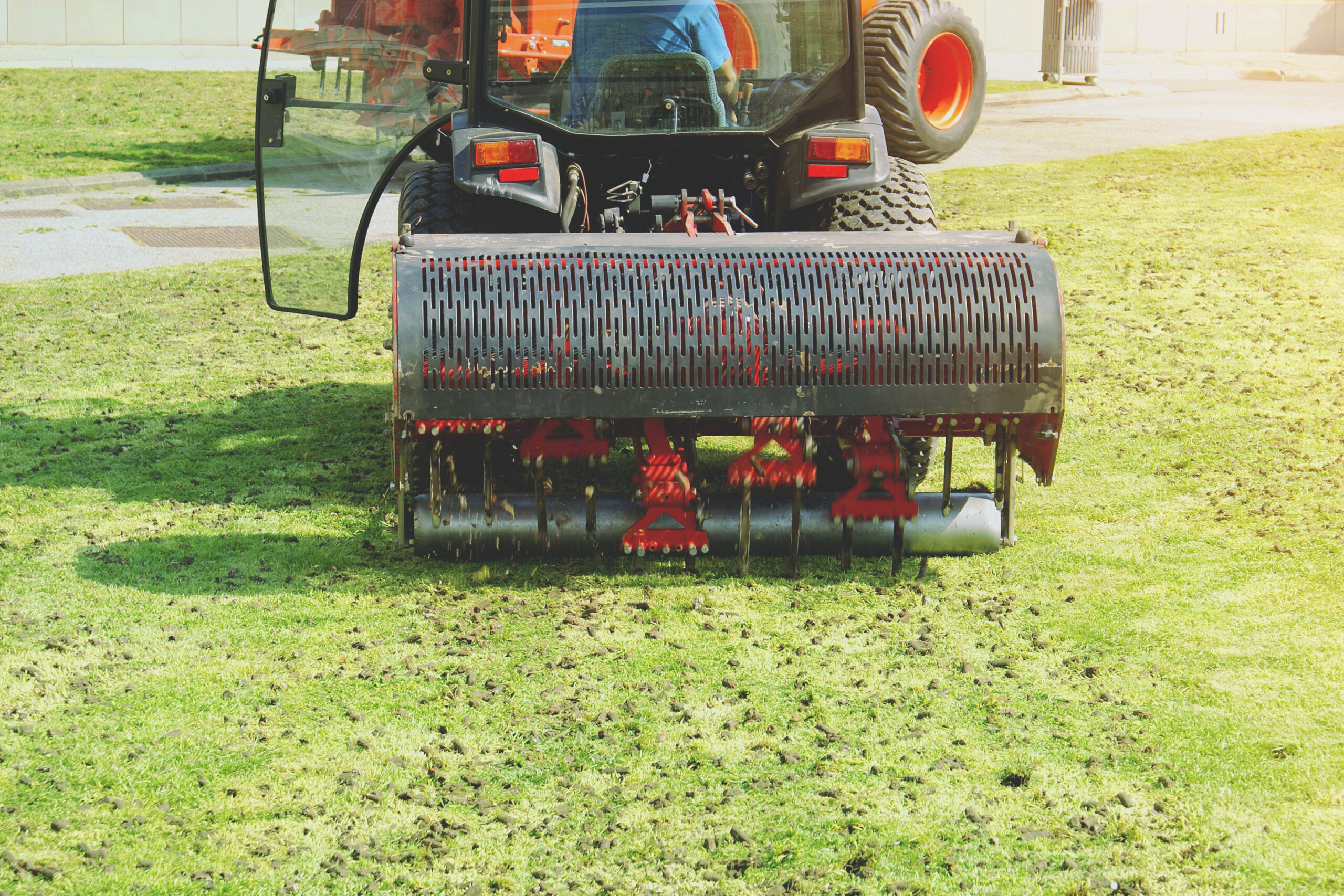
Core aerators pull actual plugs from the soil, which relieves compaction and improves water and nutrient penetration. Spike aerators, by comparison, push soil sideways and can actually increase compaction over time — avoid them regardless of price.
Most homeowners should rent a core aerator for $60–$90 per day rather than buy. The tool is used once or twice a year at most. Purchasing only makes financial sense if you have more than half an acre or plan to share the machine with neighbors.
Dethatching Rake — Worth Owning for Small Lawns
For lawns under 3,000 square feet, a dethatching rake is worth owning. The stiff, curved tines pull thatch — the layer of dead organic matter between the soil and grass blades — out of the turf without requiring a machine. This is not a garden rake. The tines are rigid and angled specifically for this job.
Power Dethatcher / Scarifier — Rent It
More aggressive than a hand rake and faster on large areas, but it can thin turf significantly if misused. Rent one when thatch buildup is severe, or when a hand rake isn’t keeping pace with a large lawn. Not a tool most homeowners need to own.
Hand Tamper or Lawn Roller — Rent Unless You Renovate Regularly
Soil Test Kit or Mail-In Test — Non-Negotiable Before Fertilizing
This isn’t a traditional tool, but it belongs on any serious lawn care tools list. No fertilizer or soil amendment decision should happen before you know your soil’s pH and nutrient levels. Basic test kits from hardware stores are accurate enough for home use. Mail-in tests from your state’s cooperative extension office are often free or very low cost and give more detailed results. If your lawn isn’t responding to fertilizer the way you’d expect, a soil test often explains why — the What’s Wrong With My Lawn? A Complete Diagnosis Guide for Homeowners covers this and other common issues in depth.
Watering and Irrigation Tools That Actually Save Time for Homeowners
Watering decisions — how much, how often, what time of day — affect turf health as much as any other factor. The right lawn maintenance tools in this category reduce guesswork and eliminate the manual oversight that causes most homeowners to underwater or overwater without realizing it.
Oscillating Sprinkler
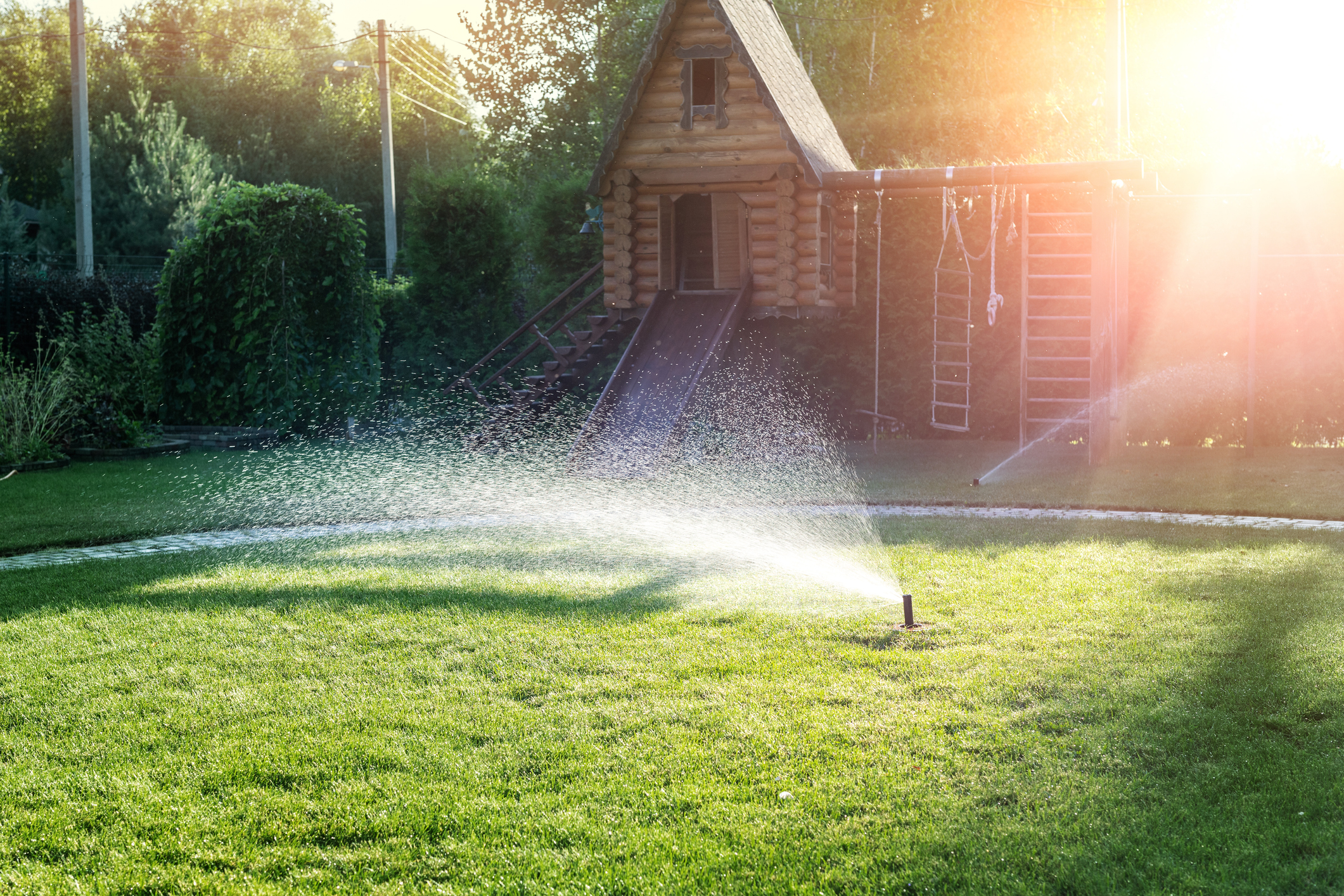
The standard starting point for most homeowners. Covers rectangular lawn sections up to roughly 3,500 square feet per pass. Affordable and easy to move. Start here before committing to a full irrigation system.
Rotary or Impact Sprinkler
Better suited to irregular lawn shapes and larger areas. More wind-resistant than oscillating models, which tend to drift in even moderate breeze. The rotating head distributes water more evenly across uneven ground.
Soaker Hose
More useful in planting beds than on open turf. One exception: newly seeded areas where overhead watering from a sprinkler can wash seed before it germinates. A soaker hose delivers moisture gently at soil level.
Smart Hose Timer — Buy This Early
One of the most underused tools in any homeowner lawn tools guide. A programmable hose timer connects between your spigot and sprinkler hose, runs on batteries or solar, and lets you set watering start times and durations automatically. For anyone without an in-ground irrigation system, this eliminates the manual step that most homeowners skip — which is why lawns get inconsistent watering. Watering frequency and timing vary significantly by grass type and season; the How Often to Water Bermuda Grass in Summer (And How Much It Actually Needs) gives the specific targets a timer can help you hit consistently.
Most homeowners don’t know their water pressure, and it matters. If pressure is too low, sprinklers won’t distribute water evenly — you’ll get wet spots near the sprinkler and dry areas at the edge of its range. A basic spigot pressure gauge costs around $10 and gives you a baseline reading to work from.
Rain Gauge
Inexpensive, simple, and genuinely changes how you water. Place it in the lawn and check it after rain events. Knowing that your lawn received three-quarters of an inch of rain this week means you can skip supplemental watering and avoid overwatering — one of the most common causes of lawn disease. A simple rain gauge costs under $15 and pays for itself in water savings. For cool-season lawns, the Cool Season Lawn Care Schedule: Month-by-Month Guide for a Healthier Yard outlines how to adjust watering throughout the season.
Spreaders, Edgers, and the Lawn Care Tools Homeowners Most Often Overlook
These tools don’t get talked about as much as mowers, but they’re responsible for some of the most visible results — even coverage of fertilizer and seed, and clean edges that frame the whole lawn. They belong on any complete list of essential lawn care equipment.
Walk-Behind Broadcast Spreader
Essential for any homeowner applying fertilizer, pre-emergent herbicide, or grass seed to areas larger than 2,000 square feet. The rotary mechanism throws product in a wide arc, covering ground quickly. Look for an adjustable gate opening and a consistent spread pattern — cheap broadcast spreaders clog and skip, which creates uneven fertilization you’ll see in the turf within weeks. A quality walk-behind broadcast spreader is worth spending mid-range money on. Tow-behind versions attach to riding mowers for larger properties.
Drop Spreader
Slower than a broadcast spreader, but more precise. Use one near water features, planting beds, or sidewalk edges where overspray from a broadcast spreader would land product where you don’t want it. A good second tool once your application routine is established.
Dedicated Lawn Edger
A string trimmer tilted sideways can edge in a pinch, but a dedicated lawn edger produces consistently cleaner lines along driveways and sidewalks. If curb appeal is a priority and your edges are long, it’s worth owning. Battery-powered edgers have improved enough that gas is no longer the only practical option. For a versatile option, we suggest this EGO Multi-Head kit that allows for quick changes between string trimmer, edger, trimmer, and more!
Hand Trowel and Hand Cultivator
Overlooked on most lists, but constantly useful. Spot treatments for bare areas, transplanting grass plugs, loosening soil around thin patches — these small jobs come up regularly and are frustrating to handle without the right small-scale tools.
Kneeling Pad
Not glamorous, but worth mentioning. Close-up lawn work — weeding, transplanting, inspecting turf closely — creates real back and knee strain over time. A foam kneeling pad weighs nothing and costs under $15. It’s the kind of thing you skip buying and then wish you had.
Budget vs. Premium: Where to Spend on Lawn Care Tools for Homeowners
This isn’t a “buy quality, not quantity” platitude. It’s a specific allocation decision — and one of the most practical parts of any lawn maintenance tools conversation.
Spend More On
-
-
- Mower — This tool gets used every week during the growing season. Deck quality, blade thickness, and drive system all affect turf health directly. A cheap mower is a long-term liability.
- String trimmer — Inexpensive trimmers vibrate excessively, wear out faster, and leave frayed cuts on grass blades. Spend mid-range minimum.
- Broadcast spreader — Inconsistent spread patterns create visible streaks in your lawn within a week of fertilizer application. A calibrated, well-built spreader is worth the extra $30–$50.
-
Save On
-
-
- Hand tools — A $20 garden rake from a hardware store lasts years with basic care. There’s no meaningful performance difference between a budget and premium rake.
- Hose timers — Mid-range programmable timers ($25–$45) perform as well as premium models for the vast majority of homeowners.
- Soil test kits — Basic kits are accurate enough for home use. State extension office mail-in tests are often free or under $20.
-
Rent Instead of Buy
Core aerator, power dethatcher, and lawn roller. These tools are used once or twice per year at most. The math rarely works out in favor of buying for most homeowners.
Avoid Entirely
-
-
- Spike aerators marketed as soil aerators — they compact soil more than they relieve it
- Cheap battery mowers with proprietary battery systems — when the battery dies (usually within two seasons), the tool becomes obsolete
- Uncalibratable hose-end sprayers for fertilizer application — inconsistent concentration makes them unreliable for anything beyond general watering
-
How to Build Your Homeowner Lawn Care Tool Kit Without Overspending
A well-stocked kit of lawn care tools for homeowners doesn’t mean owning everything on this list. Start with a mower, a string trimmer, and a broadcast spreader — those three tools cover the majority of your regular maintenance. Add watering tools once you’re on a consistent schedule. Rent the aerator and dethatcher when the time comes.
Once your tool kit is in place, the next step is knowing when to use each one. The Warm Season Lawn Care Schedule: A Month-by-Month Guide for a Healthier Yard maps out exactly when each task — and each tool — comes into play across the season. The goal is consistent results each season, not a full garage.
Frequently Asked Questions About Lawn Care Tools for Homeowners
Do I need both a broadcast spreader and a drop spreader?
For most homeowners, a broadcast spreader alone is enough. A drop spreader is worth adding only if you have areas near water features, garden beds, or sidewalks where you need precise application control. If your lawn is straightforward open turf, start with a broadcast spreader and skip the drop spreader until you have a specific reason for it.
Is a zero-turn mower worth it for a half-acre yard?
It depends on the layout. If your half-acre is mostly open turf with few obstacles, a zero-turn will save meaningful time and produce cleaner stripes. If the yard has tight corners, trees, and beds to navigate, a self-propelled push mower or standard riding mower may actually be more practical. The zero-turn advantage grows as the lot size and open run distance increase.
Can I use a string trimmer instead of a dedicated lawn edger?
Yes, but results are less consistent. A string trimmer held at an angle can create a visible edge line, but maintaining a straight, clean cut along a long driveway or sidewalk takes skill and a steady hand. A dedicated edger does the job more reliably and faster. For short edge runs, a trimmer is fine. For long edges where curb appeal matters, an edger is worth having.
How often does a core aerator actually need to be used?
For most homeowners, once a year is sufficient — either in early fall for cool-season grasses or late spring for warm-season grasses. Lawns under heavy foot traffic or with significant compaction may benefit from twice-yearly aeration, but this is the exception rather than the rule. The rent-don’t-buy logic holds even at twice per year.
What’s the difference between a dethatching rake and a garden rake?
A garden rake has flat, flexible tines designed for leveling and light surface work. A dethatching rake has stiff, curved tines that dig into the turf canopy and pull out the layer of dead organic material — thatch — that builds up between the soil surface and the grass blades. Using a garden rake for dethatching won’t produce meaningful results. They’re different tools for different jobs.
Is a smart hose timer compatible with all spigot types?
Most programmable hose timers use a standard ¾-inch garden hose thread, which fits the vast majority of outdoor spigots in North America. Before purchasing, confirm your spigot has a standard threaded connection — older homes occasionally have non-standard fittings that require an adapter. Check the timer’s product specs for thread size and look for models that include a rubber washer seal, which prevents slow leaks at the connection point.