If you have Kentucky bluegrass, tall fescue, fine fescue, or perennial ryegrass, following a cool season lawn care schedule — not a generic lawn calendar — is what separates a thriving yard from a frustrating one. Cool season grasses have two active growth windows (spring and fall), one stress period (summer), and a dormant winter phase. Timing your tasks to match those windows drives better results than any single product choice. If you’re not yet sure which grass you have, identify your cool season grass type before building your schedule — the care timing is the same, but the seed selection and mowing heights vary.
Cool Season Grass Monthly Maintenance: Quick Reference Schedule
| Month | Priority Tasks |
|---|---|
| March | Rake, soil temp check, soil test, prepare for pre-emergent |
| March–April | Pre-emergent herbicide (before soil hits 55°F); overseed patches once soil tops 50°F |
| May | Light fertilizer (if needed), mowing cadence, broadleaf weed control |
| June | Deep watering, mow at 3–4 inches, monitor for weed pressure |
| July | Raise mow height to 3.5–4.5 inches, reduce frequency, maintain watering, watch for disease |
| August | Protect, don’t improve; maintain water; monitor dormancy |
| September | Core aeration, overseed, early fall fertilizer |
| October | Winterizer fertilizer, post-emergent weed control, lower mow height |
| November | Final mow, remove leaf debris, equipment service |
| December–February | No turf tasks; soil test prep; equipment maintenance |
Why Cool Season Lawns Need a Different Care Schedule Than Warm Season Grass
Cool season grasses grow most actively when soil temperatures sit between 50°F and 65°F. In most northern states, that window falls in spring and again in fall. Once summer soil temps push past 85°F to 90°F, these grasses slow down dramatically or enter semi-dormancy.
This is the opposite of warm season grasses like Bermuda and Zoysia, which peak in July and August. Applying the kind of summer feeding and renovation advice written for warm season lawns to a Kentucky bluegrass or tall fescue lawn causes real damage — you end up pushing growth the lawn cannot sustain and increasing stress and disease risk.
The other important variable is location. A homeowner in the Pacific Northwest and one in the upper Midwest both have cool season lawns, but their timing can differ by two to four weeks. The mid-Atlantic and transitional zones add another layer of nuance. This is why soil temperature matters more than the calendar date. A basic soil thermometer removes the guesswork — push it 2 to 3 inches into the ground and let the reading, not the date on the wall, guide your cool season lawn care schedule.
Early Spring Cool Season Lawn Care Schedule (March–April): Wake-Up Tasks That Set the Season
What’s Happening With the Grass
Soil temps are climbing from the mid-30s toward 50°F. The grass is breaking dormancy and beginning root development before it pushes much visible top growth. The lawn may look thin, matted, and tired — that’s normal. Resist the urge to immediately fertilize or overseed.
Tasks for This Window
Rake and dethatch lightly. Start by removing winter debris, matted leaves, and dead material. This improves airflow and lets light reach the soil surface. A stiff rake is sufficient for most lawns; a dethatching rake or power dethatcher is worth using if you have more than half an inch of thatch buildup.
Check soil temperature before doing anything else. Don’t apply seed, fertilizer, or herbicide until soil consistently reads 45°F to 50°F at a 2-inch depth. Applying too early wastes product and produces poor results. An inexpensive soil thermometer, available at most hardware stores, pays for itself the first season you use it — and it becomes the real engine behind a reliable cool season lawn care schedule year after year.
Run a soil test if you skipped fall. Fall is the ideal time, but early spring is the next best option. Results tell you whether you need lime to adjust pH, how much nitrogen your lawn actually needs, and whether phosphorus or potassium is deficient. Guessing at fertilizer rates is one of the most common homeowner mistakes.
Overseed thin or bare patches once soil temps are reliably above 50°F. Below that threshold, germination stalls and seed sits vulnerable to washout or being eaten. Look for a grass seed blend with a high germination rate and low weed seed percentage on the label — those two numbers are printed on every seed bag by law.
Apply pre-emergent herbicide for crabgrass control before soil temps reach 55°F. A useful natural timing indicator: forsythia shrubs blooming is a rough sign you’re in the right window. Keep in mind that pre-emergent herbicides prevent germination broadly — including new grass seed. You cannot overseed and apply pre-emergent in the same pass. Choose one based on what your lawn needs more.
First mow of the season should happen once the soil is firm (not soft or saturated) and the grass has reached 3 to 3.5 inches. Mowing wet or soft ground compacts soil and can tear grass crowns.
What to Skip in Early Spring
Hold off on heavy fertilization. A light starter fertilizer on newly seeded areas is fine, but a full nitrogen application in early spring pushes leaf growth before roots have had time to develop. You end up with a lawn that looks temporarily green but has a shallow root system heading into summer. Also skip aeration — it belongs in the fall phase of your cool season lawn care schedule.
Late Spring Cool Season Lawn Care (May–June): Mowing, Fertilizing, and Weed Control Before Summer Heat
What’s Happening
Soil temps are in the 55°F to 70°F range. This is the first real growth surge of the year. Weeds are also peaking — dandelion, chickweed, and henbit are highly visible and actively growing. This window is productive but short; summer heat is approaching.
Tasks for This Window
Fertilize lightly if the lawn needs it. If your soil test showed nitrogen deficiency, or if the lawn lost significant color coming out of winter, a modest late-spring feeding makes sense. Use a slow-release nitrogen fertilizer at 0.5 to 0.75 pounds of nitrogen per 1,000 square feet. Slow-release formulas — look for “SCU” (sulfur-coated urea) or “polymer-coated” on the label — feed steadily over several weeks and reduce the risk of burning or pushing a flush of growth you’ll regret in August. Avoid this step entirely if the lawn looks healthy and you plan to fertilize well in fall.
Follow the one-third mowing rule. Never remove more than one-third of the blade height in a single mow. For tall fescue and Kentucky bluegrass, maintain a height of 3 to 4 inches during this window. Mowing too short going into summer is one of the most damaging things you can do to a cool season lawn.
Apply post-emergent broadleaf herbicide while weeds are actively growing. Timing matters: spray when temperatures are below 85°F and no rain is forecast for 24 hours after application. Products containing 2,4-D, MCPP, and dicamba (often sold as three-way herbicide blends) handle most common broadleaf weeds. Always follow label directions on rate and reapplication intervals.
Shift your watering approach. If spring rainfall becomes inconsistent, begin deep and infrequent watering — about 1 inch per week, delivered in two or three sessions rather than daily light sprinkles. This trains roots to grow deeper, which matters enormously once summer heat arrives.
What to Skip in Late Spring
Don’t seed in late spring. Soil is warming, germination success drops, and any pre-emergent applied earlier may still be active in the soil. Skip heavy aeration or dethatching too — those are fall tasks. You want the lawn to enter summer as undisturbed and as deep-rooted as possible.
Summer Cool Season Lawn Care (July–August): Protecting Grass Through Dormancy Risk
What’s Happening
Soil temps often exceed 85°F. Cool season grasses stop growing aggressively or enter semi-dormancy. Kentucky bluegrass and fine fescue are most prone to going dormant; tall fescue is more heat-tolerant but still visibly stressed. This is when homeowners most often make expensive mistakes — by trying to fix or improve a lawn that simply needs to be protected.
Tasks for This Window
Raise your mowing height. Set the deck to 3.5 to 4.5 inches. Taller grass shades the soil surface, which reduces soil temperature and slows moisture loss. It also means the plant retains more leaf area for photosynthesis during a period when it’s already stressed.
Mow less frequently. Growth slows, so mowing frequency drops naturally. Don’t force a rigid weekly schedule — mow when the grass actually needs it.
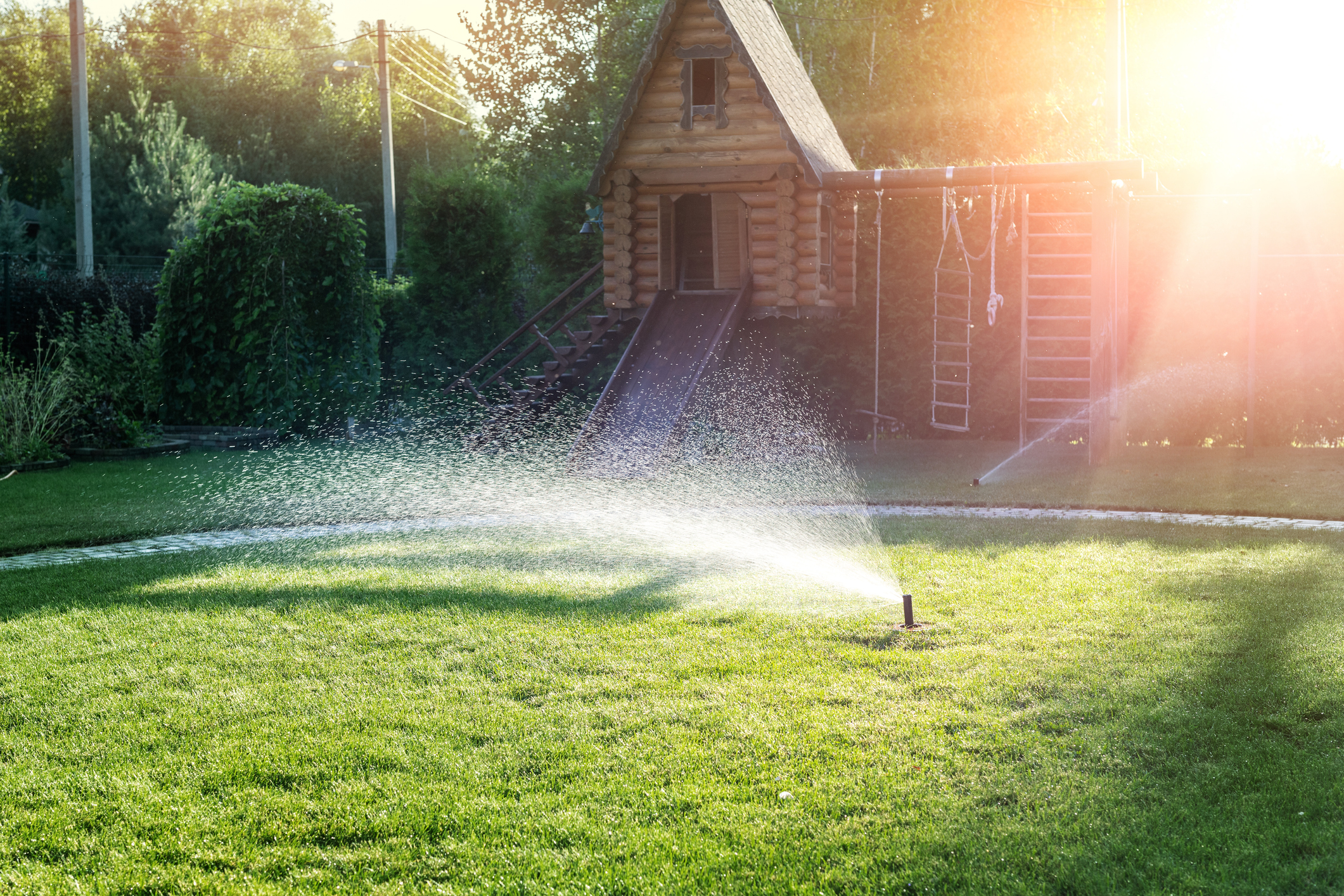
Water correctly. Maintain roughly 1 to 1.25 inches of water per week, applied in two or three deep sessions. Early morning watering is best: less evaporation loss, and the turf dries before evening, which reduces fungal disease risk. For homeowners without an in-ground irrigation system, a quality oscillating sprinkler paired with a simple hose-end timer is a practical and affordable setup that automates the schedule without a major installation.
Allow dormancy if water is scarce. A brief dormancy of two to four weeks is survivable for most cool season grasses. What damages lawns more is inconsistent shallow watering — wetting the top inch, then letting it dry out, then wetting it again. If you can’t water consistently at the right volume, managed dormancy is the better choice.
Watch for fungal disease. Summer heat combined with humidity and wet turf creates ideal conditions for dollar spot (small bleached spots 2 to 4 inches across) and brown patch (larger circular tan patches, often with a darker border). If you see these symptoms, identify the disease first, then apply a lawn fungicide labeled for that specific pathogen. Treating the wrong disease with the wrong product wastes money and time.
What to Skip in Summer
Do not apply nitrogen fertilizer in summer heat. It stimulates leaf growth the plant cannot support, increases water demand, and creates conditions where fungal disease explodes. Do not seed — germination rates are poor and seedling survival is low. Do not aerate — you’re adding stress to already struggling roots.
Your Fall Cool Season Lawn Care Schedule: The Highest-ROI Window (September–October)
Why Fall Matters Most
Soil temperatures drop back into the 50°F to 65°F sweet spot. Grass is coming out of summer stress and actively building root reserves for winter. This is the highest-return window in your entire cool season lawn care schedule — improvements made in fall compound into the following spring.
If you only have bandwidth for one intensive lawn care season, make it fall.
Tasks in Order of Priority
1. Aeration (early September)
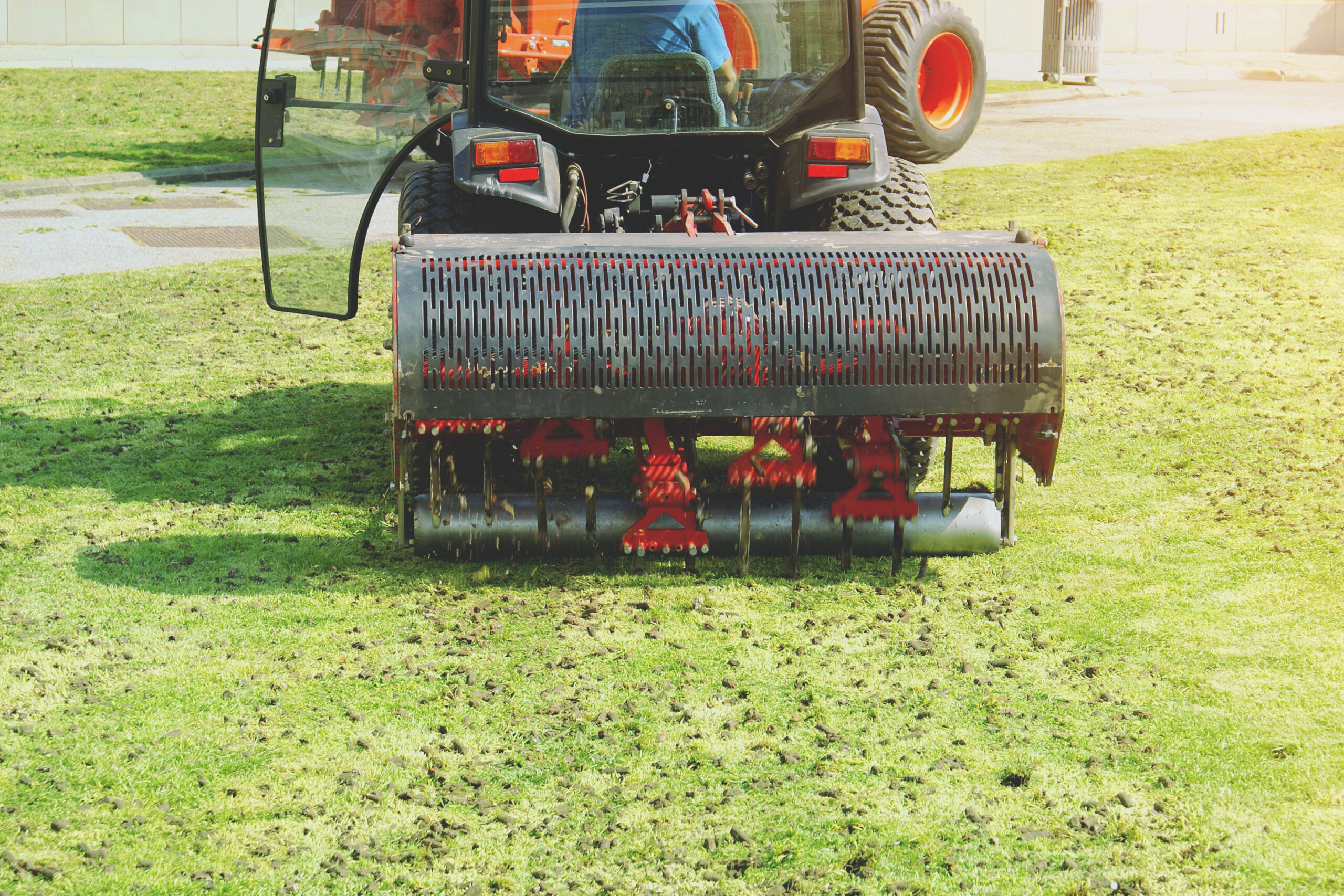
Core aeration — where a machine pulls actual plugs of soil out of the ground, as opposed to spike aeration, which just pushes holes — relieves compaction, improves water and nutrient infiltration, and prepares a natural seedbed. Do this when soil is slightly moist but not waterlogged. For large lawns, a gas-powered core aerator rented from a hardware store for a half-day is the practical choice. Small lawns can be handled with a manual plug aerator.
2. Overseeding (within a week of aeration)
The holes left by core aeration create excellent seed-to-soil contact, which is the single biggest factor in germination success. Use species-appropriate seed: pure tall fescue for fescue lawns, Kentucky bluegrass blend for bluegrass lawns, or a compatible cool season blend if you’re working with a mixed lawn. Soil temperatures should be between 50°F and 65°F. Keep the seedbed consistently moist — light, frequent watering — until germination occurs, which takes 7 to 21 days depending on species.
Do not apply pre-emergent herbicide in a fall where you’ve overseeded. Pre-emergents prevent germination across the board. Choose overseeding or pre-emergent, not both.
3. Fertilization — the most important feeding of the year
Plan for two applications if possible:
- Early fall (September): A balanced nitrogen fertilizer to support recovery and root development. Target around 1 pound of nitrogen per 1,000 square feet using a slow-release formula. Look for SCU or polymer-coated nitrogen on the label — these release steadily over 6 to 12 weeks rather than all at once.
- Late fall (October–November): A “winterizer” fertilizer, which is higher in potassium and phosphorus. This hardens the grass tissue, improves winter survivability, and sets the lawn up for a strong spring green-up.
If you only do one fertilizer application all year, make it one of these two. The fall feeding matters more than any spring or summer feeding.
4. Broadleaf Weed Control
Post-emergent herbicides work well in fall on broadleaf weeds like dandelion and clover, which are still actively growing and translocating nutrients to their roots. This makes them more susceptible to herbicide uptake than they are in spring. Apply before nighttime temps consistently drop below 50°F.
5. Mowing Adjustments
Continue mowing through fall as the lawn needs it. Gradually lower the cutting height to 2.5 to 3 inches as growth slows in October and November. Going into winter with shorter grass reduces the risk of matting and snow mold — a fungal condition that develops under snow when grass is too long and wet.
Winter Tasks in Your Cool Season Lawn Care Schedule (November–February): What to Do and What to Skip
What’s Happening
The lawn is dormant or near-dormant. Roots remain viable beneath the surface, but top growth has stopped. In northern zones, the ground may be frozen for weeks at a time. In transitional zones (mid-Atlantic, upper South, Pacific Northwest), grass may stay partially green through winter.
Minimal Tasks in This Window
Final mow in late November. Before hard frost sets in, cut the lawn to 2.5 to 3 inches. Remove clippings if leaf debris is heavy — leaves matted on top of dormant turf over winter create disease conditions and block light from reaching crowns in early spring.
Stay off frozen turf. Foot traffic or equipment on frozen grass physically breaks the cell walls in the grass blades. The damage is visible in spring as dead streaks following foot traffic paths. This is preventable.
Service your equipment. Winter is the right time to sharpen mower blades, change oil, clean out your fertilizer spreader, and replace any worn parts. Dull blades tear grass rather than cut it cleanly, which increases stress and disease susceptibility. Getting this done in December means you’re ready to restart your cool season lawn care schedule in March without delay.
Run a soil test if you skipped fall. Mail-in soil tests can be processed during winter, and results are typically ready within a few weeks. Having those results before spring arrives lets you plan lime, fertilizer, and amendment applications without guessing.
What to Skip Entirely
Don’t fertilize dormant grass. The lawn can’t use the nutrients, and nitrogen sitting in soil over winter can run off with snowmelt or contribute to winter weed pressure. Don’t seed — too cold for germination in most northern zones, and seed sitting in frozen ground may wash away before spring. Don’t aerate or dethatch frozen or waterlogged soil.
The Transitional Zone Exception
If you’re in the mid-Atlantic, upper South, or Pacific Northwest, your lawn may remain partially active through winter. If the grass is green and growing and you’re more than three weeks past your last meaningful rainfall, a single deep watering during a mild stretch is worthwhile. A light application of a balanced, slow-release fertilizer in late February is also appropriate if the lawn is actively growing — treat it as early spring rather than winter.
FAQ
When should I fertilize cool season grass? The most important feeding in your cool season lawn care schedule is in fall — September for a balanced nitrogen feed, and October through November for a winterizer. A light optional feed in late spring (0.5–0.75 lb nitrogen per 1,000 sq ft) is acceptable if the lawn needs it. Never fertilize during summer heat.
Can I aerate and overseed in spring instead of fall? Yes, but it’s second-best. Fall timing gives seed a longer runway to establish before summer stress hits. If spring is your only option, aim for late April when soil has been consistently above 50°F for at least a week.
How do I know if my lawn has gone dormant or is dead? Dormant cool season grass is tan or straw-colored, but the crowns — the white base of the plant at soil level — stay firm and slightly springy. Dead grass pulls out easily with no resistance. Do the tug test before assuming the worst.
My cool season lawn looks terrible in August — is something wrong? Probably not. Summer dormancy or semi-dormancy is normal for Kentucky bluegrass and fine fescue. Tall fescue will look stressed but rarely goes fully dormant. Follow the managed dormancy approach in this cool season lawn care schedule and the lawn should recover once soil temps drop below 70°F in September. If discoloration is patchy, circular, or has a distinct border, check for fungal disease rather than assuming dormancy.
Should I water cool season grass in winter? In most northern zones, no — frozen or near-frozen soil cannot absorb water meaningfully. In the transitional zone, if the lawn is green and you’ve had more than three weeks without rain, a single deep watering during a mild spell is worthwhile. Avoid watering when the ground is frozen solid or when overnight temps will refreeze the surface immediately after.
What’s the difference between overseeding and reseeding? Overseeding means broadcasting seed over an existing lawn to thicken thin areas. Reseeding (or renovation seeding) means starting from scratch after killing or removing the existing grass. This guide covers overseeding. Full renovation is a separate, more involved process with different prep steps and timing considerations.
Can I apply pre-emergent herbicide and overseed in the same fall? No. Pre-emergent herbicides prevent germination — including new grass seed. Choose one or the other per season. If weed pressure is severe, prioritize the herbicide and plan to overseed the following fall.
What mowing height is best for cool season grass? 3 to 4 inches during the growing season; raise to 3.5 to 4.5 inches in summer; lower to 2.5 to 3 inches before winter. Never remove more than one-third of the blade in a single mow.
Conclusion
A well-timed cool season lawn care schedule comes down to two principles: invest in fall, protect in summer.
Spring tasks are about reestablishing what winter took — raking, patching bare spots, early weed control, and a light feed if the lawn genuinely needs it. Fall tasks are where the real return on investment happens: aeration, overseeding, and the most important fertilizer applications of the year build the root system that carries your lawn through winter and powers the following spring.
Summer is not a growth window — it’s a survival window. Adjusting mowing height, watering correctly, and resisting the urge to fertilize or renovate during heat stress will protect the investment you made in fall and spring.
Throughout all of it, let soil temperature drive your decisions more than the date. A $10 soil thermometer will pay for itself many times over by keeping you from applying seed, fertilizer, or herbicide at the wrong time — which is the most common reason a cool season lawn care schedule breaks down.
For readers who aren’t yet sure which cool season grass they have, identify your cool season grass type before applying this calendar to your yard. And if you’re managing a transitional zone yard with both cool and warm season grasses, understanding how the warm season care calendar diverges from this one will help you avoid applying the wrong timing framework to the wrong grass.