Knowing when to fertilize your lawn by season is more important than which fertilizer you buy. Grass absorbs nutrients most efficiently when it’s actively growing. Apply too early, too late, or during dormancy, and you’re either wasting product or stressing the lawn. Get the timing right, and even a basic fertilizer does its job well.
This guide covers both major grass categories — cool-season and warm-season — and walks through each season in order. You’ll find clear guidance on when to feed, when to hold off, and why.
Disclosure: This article contains affiliate links. If you purchase through these links we may earn a small commission at no extra cost to you.
Why Timing Matters More Than the Fertilizer You Choose
There are two broad categories of lawn grass in the U.S., and they grow on completely different schedules.
Cool-season grasses — including Kentucky bluegrass, tall fescue, and perennial ryegrass — thrive in soil temperatures between 50–65°F. They grow most aggressively in spring and fall. They slow down or go semi-dormant during hot summers. These grasses are common in the northern half of the country.
Warm-season grasses — including Bermuda, zoysia, St. Augustine, and centipede — peak when soil temperatures hit 65–70°F and above. Their primary growing season runs from late spring through summer. They go fully dormant in winter and are common across the South and transition zone.
Every fertilizing recommendation in this guide ties back to that distinction. Feeding grass outside its active growth window is the most common lawn care mistake homeowners make. Where timing differs significantly between the two types, this guide calls it out.
When to Fertilize Your Lawn in Spring (And What to Avoid Early On)
Spring feels like an obvious time to fertilize, but the timing within spring matters a lot. Jumping the gun is one of the most common mistakes.
Cool-Season Grasses in Spring
The productive window for cool-season grasses in spring is when soil temperatures reach 50–65°F. That’s typically March through May depending on your region. The northern plains and New England may not hit that range until late April.
A better cue than the calendar: wait until your lawn has greened up fully and you’ve mowed it two or three times. That signals active growth. At that point, a balanced fertilizer or lightly nitrogen-forward fertilizer is appropriate — but keep the nitrogen rate moderate. For cool-season grasses, fall is the high-impact season, so spring doesn’t need to be a heavy feeding.
If you overseeded in fall, a starter fertilizer applied then may have provided phosphorus through the winter. No need to double-feed in early spring.
Warm-Season Grasses in Spring
For warm-season grasses, the spring feeding window opens later. Soil temps need to reach 65–70°F, which typically means April through June depending on latitude. In Florida or South Texas, that comes earlier. In the transition zone — Virginia, Tennessee, the Carolinas — you may be waiting until late May.
The key rule: wait until the lawn has fully greened up. Fertilizing a lawn that’s still transitioning out of dormancy wastes product and can burn the grass. Once it’s visibly active and growing, spring is one of the two most important feeding windows of the year for warm-season grasses.
For this application, a cool season fertilizer formulated for balanced, steady feeding is a practical choice. Slow-release formulations feed steadily over six to eight weeks. They avoid the nitrogen spike that can cause uneven growth or burn risk. Look for the words “slow-release” or “controlled-release” on the bag. These typically contain coated urea or natural organic nitrogen sources.
Summer Fertilizing: When to Feed, When to Hold Off
Summer is where the two grass types diverge most sharply in their fertilizing needs.
Cool-Season Grasses in Summer
Cool-season grasses struggle in summer heat. When soil temperatures climb above 85°F, these grasses enter a stress state. Growth slows, root systems pull back, and disease pressure increases. Applying high nitrogen during this window makes things worse. It pushes soft growth the plant can’t support and raises the risk of fungal disease.
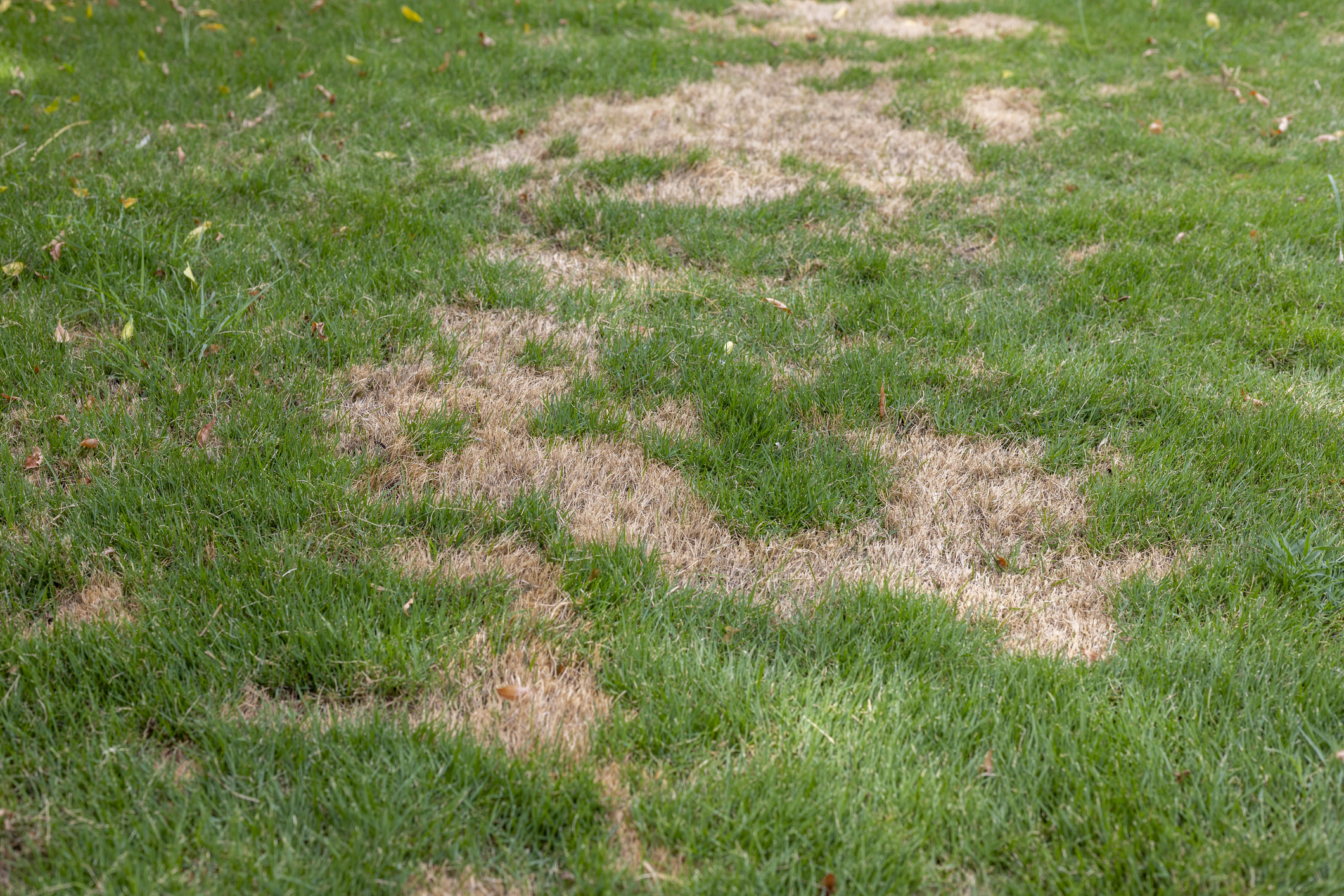
The practical rule: skip summer fertilizing for cool-season lawns, or go very light if the lawn is heavily irrigated and visibly growing through the heat. Peak summer — July through August in most of the country — is the lowest-priority feeding window of the year for these grasses. If the lawn looks rough in August, that’s usually heat stress, not a nutrient deficiency. Fertilizing won’t fix it.
Warm-Season Grasses in Summer
Summer is peak growing season for warm-season grasses, and the fertilizing schedule reflects that. Early summer applications — May through June — and midsummer feeding are both appropriate. Light-to-moderate applications every six to eight weeks during the growing season work better than one heavy feeding.
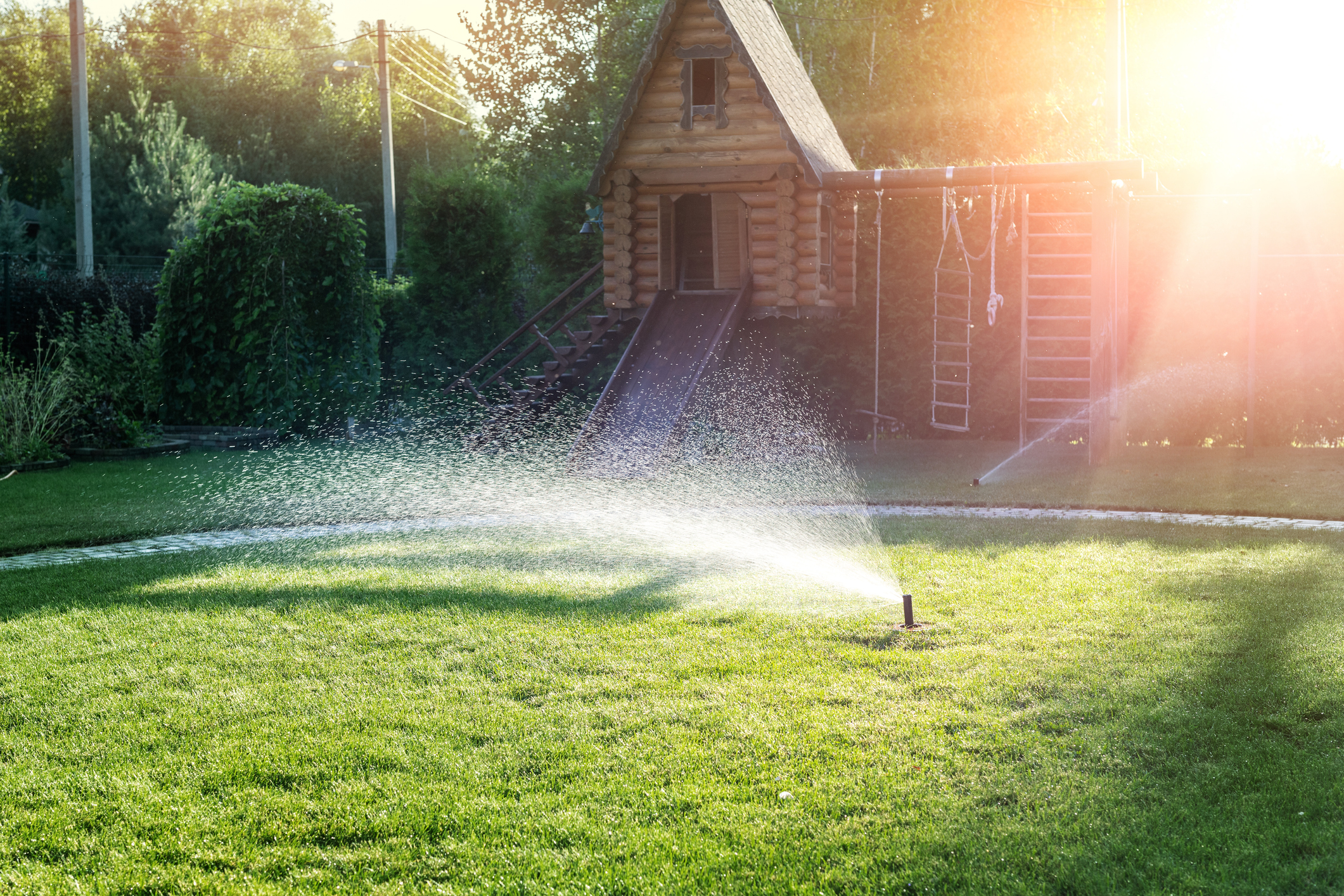
Irrigation timing also matters during this peak period. Applying water at the right time of day supports fertilizer uptake and reduces disease risk. For guidance on that, see best time of day to water your lawn.
The key cutoff: stop applying nitrogen six to eight weeks before your expected first frost. For most of the South, that means no nitrogen after early August. Late-season nitrogen pushes soft, tender growth that is vulnerable to early frost damage.
Fall is the single most valuable fertilizing window for cool-season grasses, and it’s worth understanding why.
As soil temperatures drop back into the 50–65°F range, cool-season grasses shift from producing leaf tissue to storing nutrients in their root systems. The nutrients stored now fuel spring green-up and support roots through winter. A well-fed cool-season lawn in fall is noticeably healthier come March compared to one that missed fall fertilization.
The main fall application for cool-season grasses typically falls in September through October across most of the country. A second application — often called a winterizer — can follow four to six weeks later. Winterizer fertilizers are specifically formulated for this window, typically with higher potassium content to support root hardening. For a deeper look at late-fall timing cutoffs by region, see How Late Can You Fertilize Cool Season Grass in Fall.
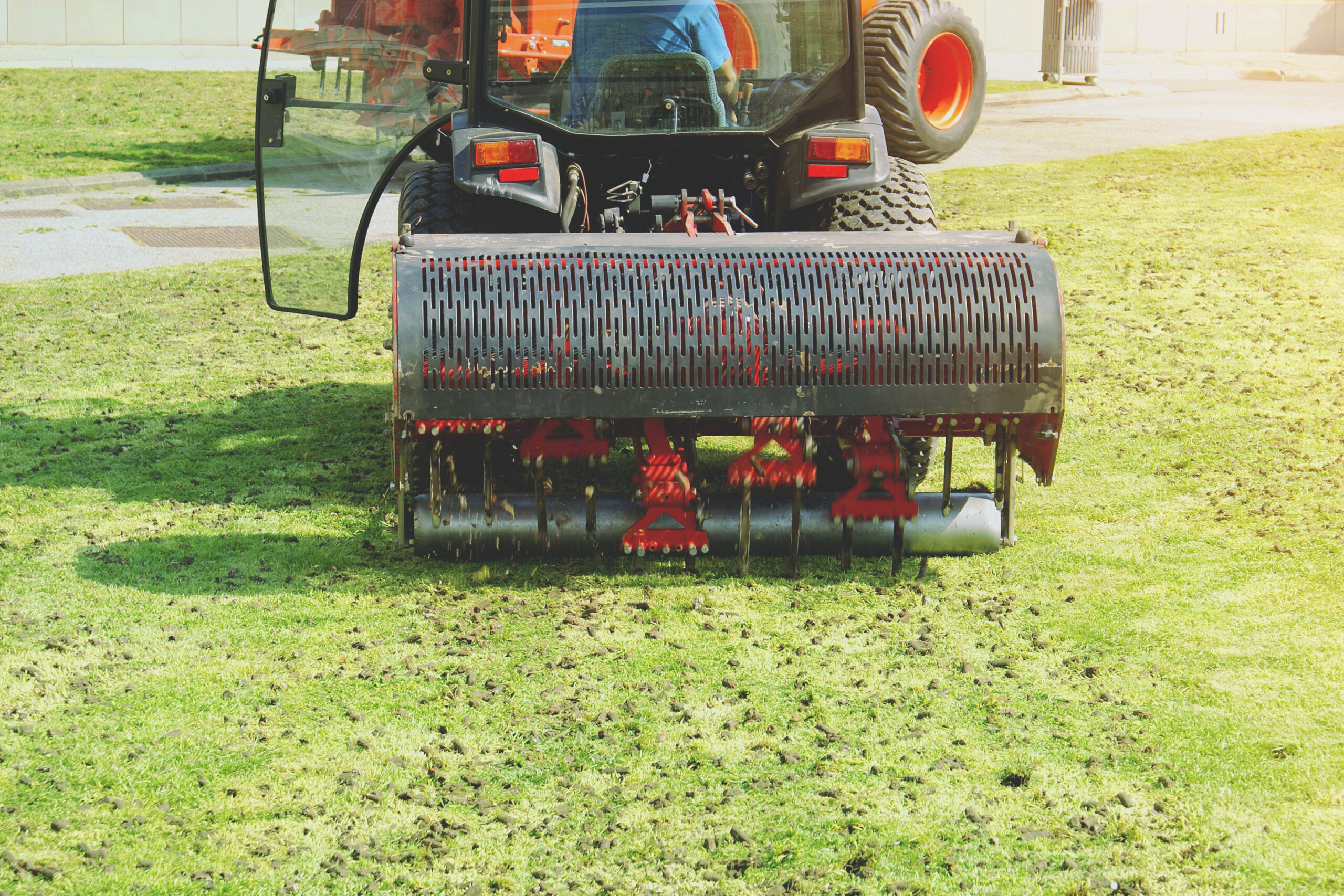
If you’re also aerating and overseeding your cool-season lawn in fall — which many homeowners do — fertilizer placement within that workflow matters. The Fall Aeration and Overseeding Sequence covers how to order those steps correctly.
For warm-season grasses, fall feeding is lower priority and requires more care. A light application in early fall — September for most regions — before the lawn heads toward dormancy is acceptable. Once the lawn is visibly slowing down or beginning to change color, stop. Feeding a warm-season lawn that’s entering dormancy does nothing useful and can leave soluble nutrients in the soil through winter.
Winter Fertilizing: What to Do When Grass Goes Dormant
For most lawns, winter is not a feeding window. Dormant grass does not absorb or use nutrients effectively. Applying fertilizer to dormant turf is wasteful, and unused nitrogen can leach into groundwater.
Cool-season lawns: if you made a late-fall winterizer application before dormancy, nothing further is needed until spring green-up.
Warm-season lawns: these grasses are fully dormant across most of the U.S. in winter. No fertilizing.
One exception: warm-season lawns overseeded with annual ryegrass for winter color. The ryegrass is actively growing and can receive a light feeding. The dormant base grass underneath does not benefit, but the ryegrass does.
The practical takeaway for winter: store your spreader, review your records from the past year, and plan your spring applications before you need them.
How to Build Your Lawn Fertilizing Schedule by Season
A lawn fertilizing schedule doesn’t need to be complicated. Three inputs determine yours:
- Grass type — cool-season or warm-season
- Geographic region — a rough proxy for when your grass enters and exits active growth
- Local soil temperature — the most accurate trigger; a basic soil thermometer costs under $15, or check your local university extension service’s website for soil temp data by county
Use those inputs to match your applications to active growth periods — not the calendar month. A homeowner in Tennessee and a homeowner in Minnesota both have cool-season lawns but operate on meaningfully different schedules. Understanding when to fertilize your lawn by season means letting the grass tell you when it’s ready, not defaulting to a fixed date.
Here’s a plain-language seasonal reference for both grass types:
| Season | Cool-Season Grasses | Warm-Season Grasses |
|---|---|---|
| Early Spring | Wait for full green-up + 2–3 mows; light balanced feed | Hold until soil hits 65–70°F and lawn fully greens |
| Late Spring | Optional light feed if growth is strong | Primary feeding window — high-impact |
| Summer | Skip or go very light; avoid high nitrogen in heat | Active feeding season; every 6–8 weeks until early August |
| Early Fall | Primary feeding window — highest impact | Light feed before dormancy begins |
| Late Fall | Winterizer application; see timing guide for cutoffs | No feeding once dormancy starts |
| Winter | No feeding | No feeding (exception: ryegrass overseeded on dormant turf) |
For most homeowners, a three-to-four application model works well for cool-season grasses — early spring, early fall, and late fall. Warm-season grasses typically need two to four applications during the growing season, spaced every six to eight weeks.
Even coverage matters as much as timing. Uneven application creates streaking — visible stripes where grass was over- or under-fed. A quality broadcast spreader ensures consistent distribution. The Best Lawn Care Tools for Homeowners covers spreader selection in detail.
One final principle: if you’re uncertain, under-feeding slightly is less damaging than over-feeding at the wrong time. A slightly hungry lawn recovers. A burned or stressed lawn from untimely heavy nitrogen takes much longer to come back.
Frequently Asked Questions About Fertilizing Your Lawn by Season
What happens if I fertilize my lawn at the wrong time of year? Fertilizing outside the active growth window is either wasteful or harmful. Applying nitrogen to dormant or semi-dormant grass pushes weak growth that can’t be sustained. In summer, heavy nitrogen on cool-season grass increases disease risk. In fall, late nitrogen on warm-season grass makes it vulnerable to frost. Timing your applications to match active growth avoids all of these problems.
How many times a year should I fertilize my lawn? Most lawns do well with three to four applications per year. Cool-season grasses benefit most from early spring, early fall, and late fall feeding. Warm-season grasses typically need two to four applications spaced across the growing season — late spring through midsummer. More applications are not always better, especially if they fall outside active growth periods.
Can I fertilize and water on the same day? Yes, and in most cases it’s recommended. Watering after a granular fertilizer application helps move the nutrients into the soil and reduces the risk of fertilizer burn on leaf blades. Avoid fertilizing right before a heavy rainstorm, which can wash product off the lawn before it’s absorbed.
Should I fertilize before or after rain? Light rain after fertilizing is fine and can help activate granular products. Heavy rain before the fertilizer is watered in can wash it off the lawn entirely. The safest approach: apply fertilizer when no significant rain is forecast for 24 hours, then water lightly yourself.
What’s the difference between spring and fall fertilizer formulas? Spring fertilizers tend to be slightly higher in nitrogen to support leaf and shoot growth coming out of dormancy. Fall fertilizers — especially winterizers — often carry higher potassium levels to support root hardening and cold tolerance. The difference isn’t dramatic, but matching the formula to the season gives your lawn a small but meaningful advantage.
Can I skip summer fertilizing on my cool-season lawn? Yes — and in most cases, you should. Cool-season grasses are under heat stress in midsummer and don’t need or benefit from fertilization during that period. Skipping summer feeding is not neglect; it’s the correct call. Resume feeding in early fall when the grass is actively recovering.
Does fertilizer timing change if my lawn is mostly shaded? Somewhat. Shaded lawns grow more slowly and need less nitrogen overall. The seasonal timing windows are the same, but shaded areas generally benefit from lighter application rates. Avoid pushing growth in shade with heavy feeding — shaded grass is already under light stress and heavy nitrogen can make it more disease-prone.
Conclusion
The seasonal lawn fertilizing schedule comes down to one core rule: feed grass when it’s growing, not when it’s dormant or stressed.
Cool-season grasses have two high-value windows — fall and spring, with fall being the most important. Warm-season grasses peak in late spring and summer, with feeding tapering off before the first frost threat. Winter is a rest period for almost all U.S. lawns, and summer is a rest period for cool-season types.
Understanding when to fertilize your lawn by season means working with your grass’s natural growth cycle, not against it. Build your schedule around grass type and soil temperature. Three to four well-timed applications per year is enough for most lawns — and far more effective than more frequent applications applied at the wrong time.
For deeper reference on related topics:
- Late-fall application cutoffs by region: How Late Can You Fertilize Cool Season Grass in Fall
- What winterizer fertilizer is and whether it’s worth it: winterizer fertilizers
- Sequencing fall renovation work: Fall Aeration and Overseeding Sequence
- If your lawn isn’t responding to fertilization as expected: What’s Wrong With My Lawn: Diagnosis Guide