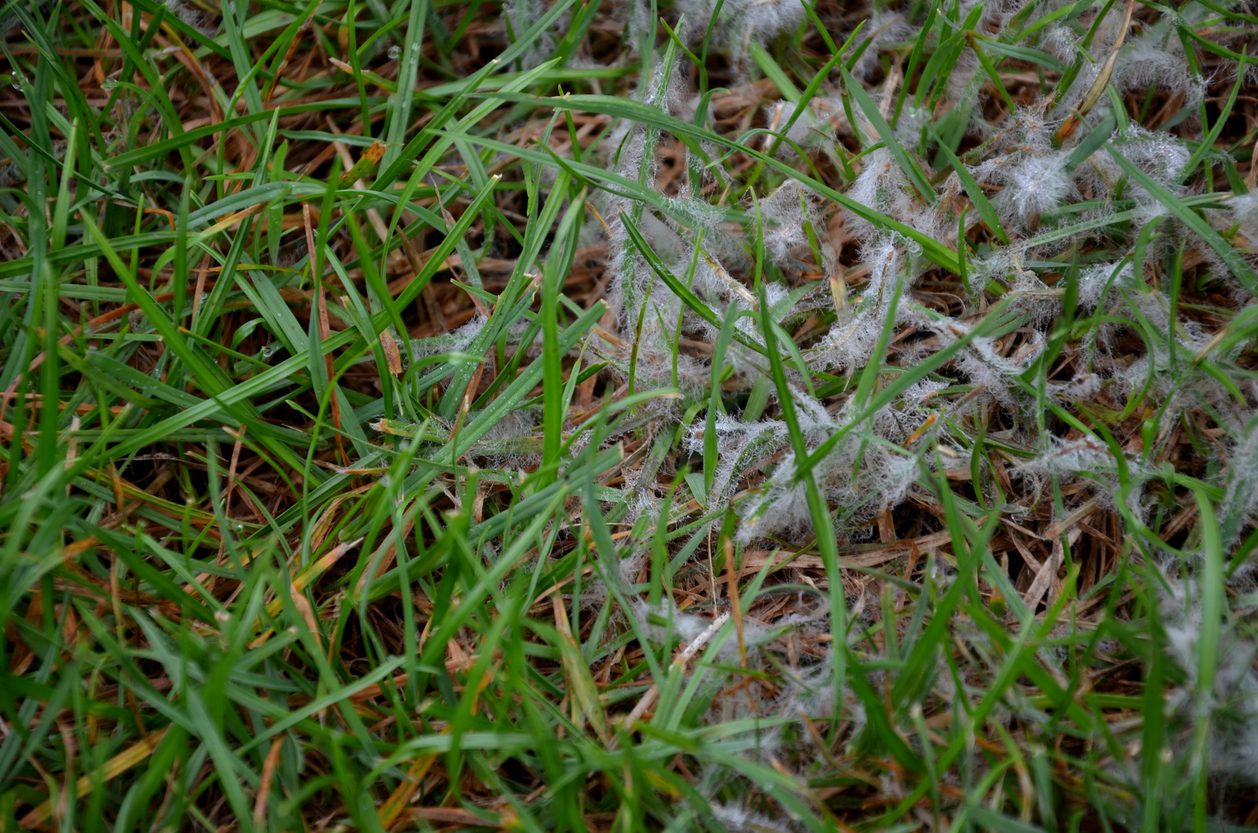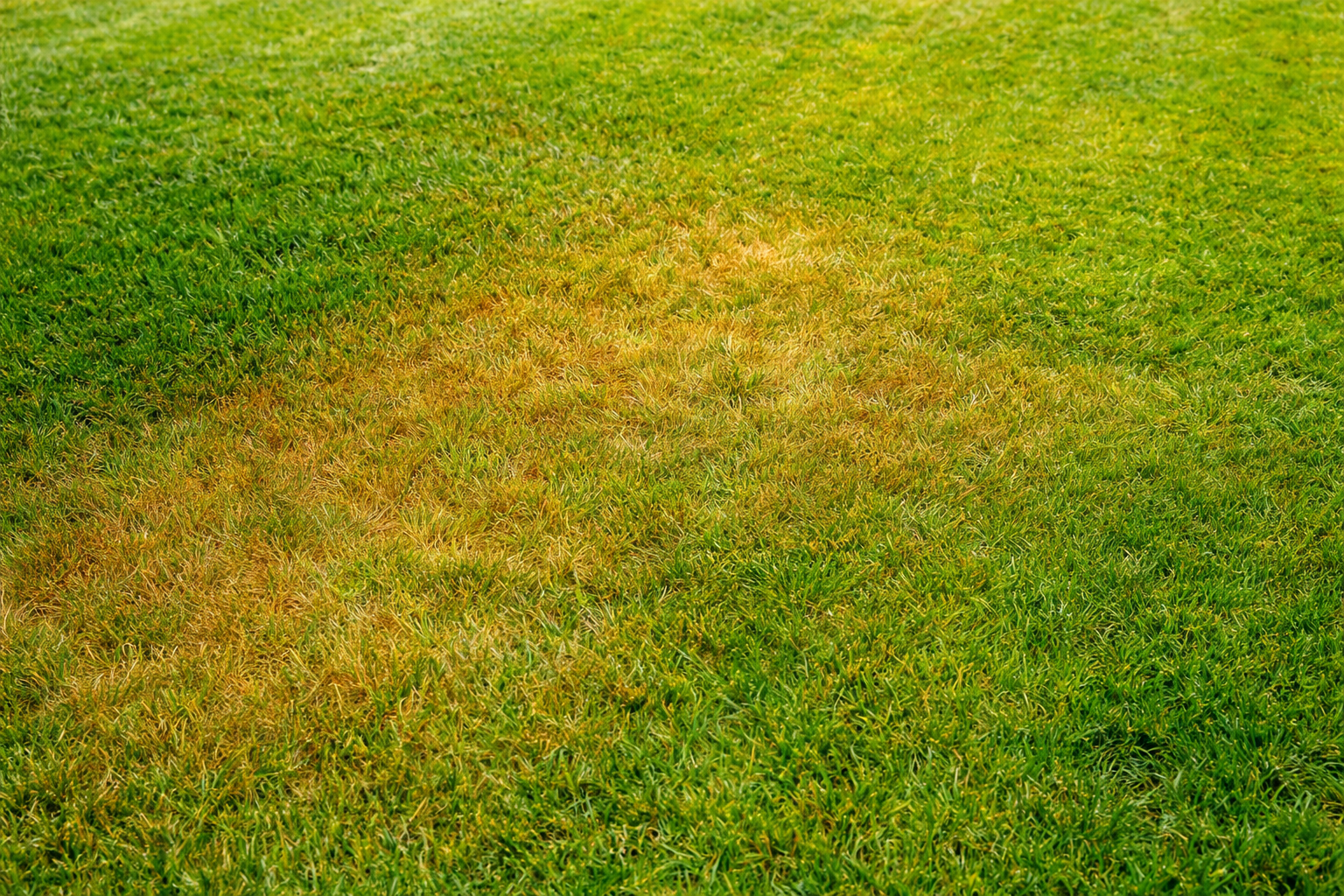
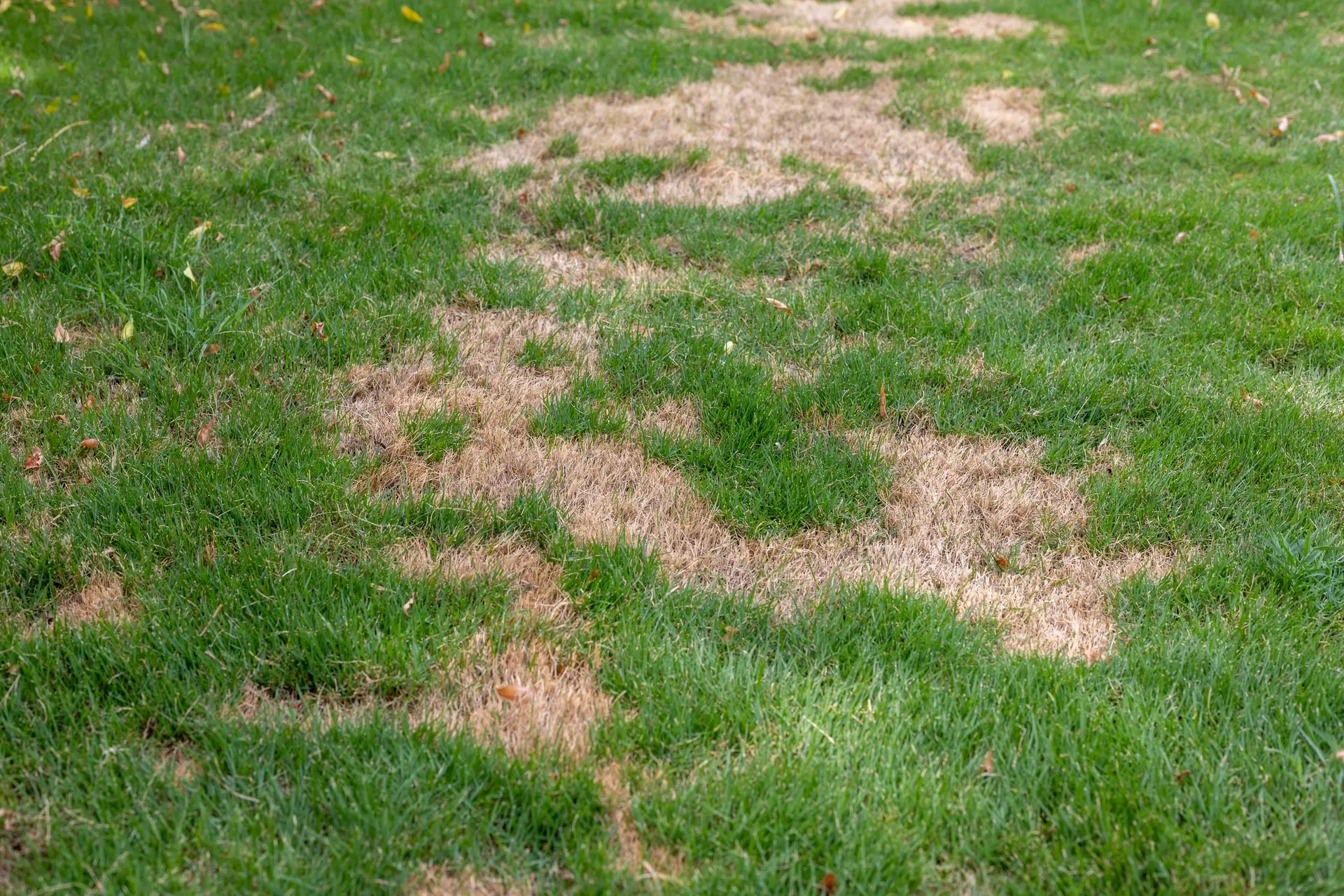
Centipede grass turning yellow after fertilizing is one of the most common — and most mishandled — lawn problems in the South. The frustrating part is that the fertilizer itself often isn’t the only problem. The type, the rate, or the timing usually is. Before you apply anything else to your lawn, you need to identify exactly which cause you’re dealing with. The fixes are completely different. The wrong one can make the yellowing worse.
This guide walks you through the most likely causes of centipede grass turning yellow after fertilizing, how to tell them apart, and what to do for each one.
Disclosure: This article contains affiliate links. If you purchase through these links, I may earn a small commission at no extra cost to you. As an Amazon Associate, I earn from qualifying purchases.
Why Centipede Grass Reacts Differently to Fertilizer
Centipede evolved in nutrient-poor, acidic soils. It’s a low-fertility grass by design. That’s part of what makes it appealing — low maintenance, slow growth, spreads on its own. But it also means it has very little tolerance for fertilizer inputs that Bermuda or St. Augustine handle without issue.
The nitrogen threshold for centipede is roughly 1–2 lbs of actual nitrogen per 1,000 sq ft per year total — not per application. Most standard lawn fertilizers are formulated for high-demand grasses like Bermuda, which needs 4–6 lbs per year. Apply a Bermuda-rate product to centipede and you’ll see a brief flush of green followed by rapid yellowing and decline.
Centipede also has an unusual sensitivity to phosphorus. It absorbs phosphorus aggressively from the soil. When phosphorus levels get too high — often from a “complete” fertilizer with a high middle number in the N-P-K ratio — iron uptake gets blocked. The result is yellowing that looks like nitrogen deficiency but won’t respond to nitrogen at all.
Push this too far with repeated applications and you can trigger centipede decline — a condition where the grass progressively weakens, thins, and dies back in patches despite appearing to get adequate care.
The key point before you do anything: You need to identify which cause is behind your centipede grass turning yellow after fertilizing. There are four distinct causes. Each one requires a different response.
Why Centipede Grass Turns Yellow After Fertilizing: The 4 Most Common Causes
Cause 1: Nitrogen Overload (Most Common)
Excess nitrogen forces a rapid surge of top growth. The root system can’t keep up. The grass looks lush for a few days, then exhausts its resources and yellows across the whole lawn.
- Pattern: Uniform yellowing across the whole lawn
- Timing: Appears 5–10 days after application as the growth flush fades
- Feel: Grass may feel soft initially
Cause 2: Fertilizer Burn
Fertilizer burn happens when concentrated product contacts the grass without enough water to dilute the salts. This occurs when you skip watering after application, apply to wet grass, or over-apply in one area.
- Pattern: Streaks, geometric shapes, or irregular patches that follow your spreader path
- Timing: Appears within 2–5 days of application
- Feel: Affected areas feel dry and stiff
Switching to a slow-release fertilizer reduces burn risk significantly. Products with polymer-coated or sulfur-coated urea on the label release nutrients gradually instead of all at once. That said, product choice is a prevention strategy — if you’re already seeing burn, skip ahead to the fix section below.
Cause 3: Iron Deficiency Triggered by High Phosphorus
This is the most commonly misdiagnosed cause of centipede grass yellowing after fertilizer. A high-phosphorus fertilizer blocks iron uptake even when iron is present in the soil.
- Pattern: Yellow leaf tissue with green veins still visible — this is called interveinal chlorosis
- Timing: Appears 1–2 weeks after application
- Common mistake: Homeowners read it as nitrogen deficiency and add more nitrogen. That makes the problem significantly worse.
If you used a fertilizer with a notable middle number (e.g., 15-15-15 or 10-10-10), iron deficiency from phosphorus lockout is a strong possibility.
Cause 4: Soil pH Disruption
Centipede prefers a soil pH of 5.0–6.0. Outside that range, nutrients become unavailable even when they’re present in the soil. Repeated fertilizer applications can shift pH over time.
- Pattern: Slow, diffuse yellowing — not sudden
- Timing: Develops gradually. May be aggravated by a recent application rather than caused by it.
- Note: If yellowing appeared within a week of fertilizing, pH probably isn’t the primary cause — but it’s still worth checking.
How to Diagnose Centipede Grass Yellowing After Fertilizing
Work through these steps before doing anything to the lawn.
Step 1: Look at the Pattern of Yellowing
| Pattern | Likely Cause |
|---|---|
| Streaks or geometric patches | Fertilizer burn |
| Whole lawn yellowing uniformly | Nitrogen overload |
| Yellow between veins, green veins intact | Iron deficiency |
| Slow, diffuse yellowing that predates this application | pH disruption |
Step 2: Review Your Application
-
- Did you water in within 24 hours of applying? If not, burn is likely.
- Did you use a high-phosphorus “complete” fertilizer? Iron deficiency risk is elevated.
- Did you exceed the label rate or apply more often than recommended? Nitrogen overload is the likely culprit.
- Did you apply to wet or damp grass on a hot day? Burn risk increases significantly.
Step 3: Test Your Soil
A simple soil test kit — available at hardware stores for under $20 — will confirm your pH and give you a baseline for phosphorus and nitrogen levels. This removes the guesswork. Testing takes about 10 minutes and is worth doing before any corrective action.
Step 4: Consider the Timing
-
-
- Yellowing within 2–5 days: Points to burn or acute nitrogen surge
- Yellowing at 1–2 weeks: Points to iron deficiency or phosphorus lockout
- Yellowing that existed before and worsened after fertilizing: Likely a pre-existing problem — pH imbalance, compaction, or drought stress — that the fertilizer aggravated
-
How to Fix Centipede Grass Turning Yellow After Fertilizing
Match the fix to your diagnosed cause. Do not combine treatments.
Fix for Fertilizer Burn
-
-
- Water deeply and immediately. The goal is to dilute and flush excess salts below the root zone.
- Water 30–60 minutes per affected area on 3–4 consecutive days.
- Do not apply anything else — no iron, no fertilizer, no amendments — until you see recovery signs.
- Evaluate after 2–3 weeks. Grass where the crown has gone dry and brown may not recover.
-
What not to do: Do not apply more fertilizer to “green it back up.” Adding nitrogen to burned grass makes the damage worse.
-
-
- Water deeply to push excess nitrogen below the active root zone.
- Hold all fertilizer for the rest of the growing season. To build a proper schedule going forward, see apply only in late spring through mid-summer in the timing guide.
- Mow at your normal height — do not scalp the lawn to remove the growth flush.
- Recovery typically takes 3–6 weeks depending on how much was applied.
-
What not to do: Do not interpret slow growth as hunger. Centipede is supposed to grow slowly. Slow growth after recovery is normal.
Fix for Iron Deficiency
-
-
- Apply a chelated iron foliar spray directly to the grass blades. Chelated iron absorbs through the leaf. This bypasses the phosphorus blockade in the soil. Look for “chelated iron” on the label — iron sulfate is slower-acting and less effective as a foliar treatment.
- Do not apply any additional phosphorus-containing fertilizer.
- If you used a high-phosphorus product, switch going forward to a fertilizer labeled specifically for centipede. These are typically low- or no-phosphorus formulations.
- Expect visible improvement within 7–14 days of applying chelated iron.
-
Fix for pH Disruption
-
-
- Confirm pH with a soil test before taking any action.
- If pH is below 5.0, your soil is too acidic. Apply lime gradually to raise it back into the 5.0–6.0 range. Do not apply sulfur — that would make the problem worse.
- If pH is above 6.5, an alkaline fertilizer or lime application has pushed it too high. Use elemental sulfur to bring it back down gradually.
- Do not guess at amendment rates. Use your soil test results to calculate the correct amount.
- pH correction takes several weeks to show results in the grass. This is a long-term fix, not an immediate one.
-
How to Prevent Centipede Grass Turning Yellow After Fertilizing
Most cases of centipede grass turning yellow after fertilizing are preventable. These adjustments make a significant difference.
-
-
- Use a fertilizer formulated for centipede. These are labeled specifically for low-fertility grasses. They have low or zero phosphorus in the N-P-K ratio. Avoid anything with an equal or high middle number.
- Stick to 1–2 lbs of actual nitrogen per 1,000 sq ft per year, split across one or two applications at most. Less is genuinely better with this grass.
- Always water in granular fertilizer within 24 hours. Do not apply before an unpredictable rain event. Too much water too fast can move the product inconsistently.
- Apply only in late spring through mid-summer — roughly May through July in most of the South. Never fertilize in fall, and never when the grass is drought-stressed or in peak summer heat.
- Test soil pH every 1–2 years. It costs under $20 and tells you exactly what your soil needs instead of guessing.
- For a complete fertilization calendar, When to Fertilize Your Lawn: A Season-by-Season Timing Guide That Actually Works walks through the timing decisions in detail.
-
Frequently Asked Questions
Can centipede grass recover from fertilizer burn?
Yes, in many cases. If the crown of the grass plant is still alive, the grass can recover. Water deeply for 3–4 consecutive days to flush the excess salts. Evaluate after 2–3 weeks. Areas that remain brown and dry at the crown may not come back and could need reseeding or patching.
How long does it take yellow centipede grass to turn green again?
It depends on the cause. Fertilizer burn and nitrogen overload typically show improvement in 3–6 weeks once you stop adding product and water correctly. Iron deficiency responds faster — chelated iron foliar spray can show visible results in 7–14 days. pH correction takes the longest, often several weeks to months.
What kind of fertilizer is safe for centipede grass?
Use a fertilizer labeled specifically for centipede or low-fertility grasses. Look for a low or zero middle number in the N-P-K ratio. Avoid high-phosphorus “complete” fertilizers. Slow-release formulations with polymer-coated or sulfur-coated urea are safer than quick-release nitrogen fertilizers because they reduce the risk of salt burn and nitrogen surge.
Is iron deficiency the same as nitrogen deficiency in centipede?
No, and confusing the two is one of the most common mistakes with centipede grass yellowing after fertilizer. Nitrogen deficiency causes uniform pale yellowing across the whole blade. Iron deficiency causes interveinal chlorosis — the tissue between the veins turns yellow while the veins themselves stay green. Adding nitrogen to iron-deficient grass makes the problem worse.
Should I add lime if my centipede grass is yellow?
Only if a soil test confirms your pH is above 6.0–6.5. Centipede prefers a pH of 5.0–6.0. If pH is already in that range, lime will raise it too high and cause nutrient lockout. Never apply lime without testing first.
Can I use Scotts Turf Builder on centipede grass?
Most Scotts Turf Builder products are formulated for high-nitrogen-demand grasses like Bermuda and Kentucky Bluegrass. Applying them at full label rate to centipede commonly causes nitrogen overload and yellowing. If you use a product like this on centipede, apply it at a significantly reduced rate — or choose a product specifically labeled for centipede instead. If you’re looking for a fall option for other grass types in your yard, Scotts Turf Builder WinterGuard fall lawn fertilizer is a popular choice for preparing cool-season areas for winter — just keep it away from your centipede.
Why does centipede grass turn yellow in summer even without fertilizing?
Centipede grass yellowing without a recent fertilizer application is usually caused by drought stress, iron deficiency from naturally high soil phosphorus, or a pH that has drifted outside the preferred range. Heat stress can also trigger temporary yellowing in peak summer. A soil test will usually identify the underlying cause.
Summary
Centipede grass turning yellow after fertilizing comes down to four causes: nitrogen overload, fertilizer burn, iron deficiency from high phosphorus, and pH disruption. Each one looks different and needs a different response. Use the pattern of yellowing, your application details, and the timing since fertilizing to narrow down the cause. Fix only what your diagnosis confirms, water correctly, and avoid the temptation to add more product when the lawn looks stressed. Centipede grass rewards restraint — and it recovers well once you stop working against it.
Subscribe to our Newsletter for Weekly updates!