Warm season grasses like bermuda, zoysia, and St. Augustine have a serious appetite for nitrogen during peak summer growth — but how you deliver that nitrogen matters as much as how much you use. The slow release vs fast release fertilizer decision for your lawn isn’t just chemistry trivia. It directly affects how green your grass gets, whether you burn it, and how often you need to reapply. This article breaks down both options using the same criteria so you can make a confident call before you buy.
Disclosure: This article contains affiliate links. If you purchase through these links we may earn a small commission at no extra cost to you.
What’s the Difference Between Slow-Release and Fast-Release Fertilizer?
Fast-release fertilizer — also called quick-release or water-soluble nitrogen — makes nitrogen available to your grass almost immediately after watering. Results are visible within 3–5 days. The trade-off is a short feeding window, typically 2–4 weeks, after which nitrogen is gone and growth slows again.
Slow-release fertilizer — also called controlled-release — uses coated or formulated nitrogen that breaks down gradually over 6–12 weeks. Grass feeds at a steady rate without a spike. Common forms include sulfur-coated urea, polymer-coated urea, and IBDU (isobutylidene diurea, a slow-dissolving nitrogen compound).
Most bags homeowners buy at hardware stores are blended — part fast, part slow. To know what you’re actually getting, read the guaranteed analysis label on the back of the bag. Look for two numbers:
- Water-soluble nitrogen (WSN): The fast-release portion
- Water-insoluble nitrogen (WIN): The slow-release portion
A bag listing 6% WIN out of 10% total nitrogen is 60% slow-release. That ratio tells you how the product will behave on your lawn.
If you want a dedicated slow-release option, Scotts Turf Builder Slow-Release Lawn Food is a widely available granular product formulated for consistent feeding. Most homeowners buying for warm season grass are well-served by a blended granular that combines both release types for initial green-up plus extended feeding.
How Each Fertilizer Type Behaves on Warm Season Grass
The release type matters more on warm season grass than most homeowners realize. Here’s why.
Bermuda, zoysia, St. Augustine, and centipede grow most aggressively from late spring through early fall. That aggressive growth cycle amplifies both the benefits and risks of nitrogen delivery speed.
Fast-release triggers rapid green-up — but that same speed creates real fertilizer burn risk, especially if you apply it during drought stress or high heat. Nitrogen salts pull moisture out of grass blades when concentrations are high. In July on bermuda, that can mean brown streaks within days.
Slow-release feeds steadily through peak growth without creating a nitrogen spike. Burn risk is significantly lower, which is why it’s the default choice in most seasonal programs.
Grass type also interacts with release type:
- Bermuda can handle higher nitrogen rates than most warm season grasses, making it more tolerant of fast-release applications — but it still needs care in extreme heat
- Centipede and St. Augustine are sensitive to nitrogen over-application; fast-release applied too heavily causes real damage
- Zoysia sits in the middle — moderate nitrogen needs, lower burn risk than bermuda, but still more forgiving than centipede
One more variable: soil temperature affects how quickly slow-release coatings break down. Below 50°F, they barely activate. This matters less in South Florida or Houston, but if you’re in a transitional zone (zone 7–8a), don’t expect slow-release to do much in early spring before soils warm.
When to Use Fast-Release Fertilizer on Bermuda, Zoysia, or St. Augustine
Fast-release isn’t a bad product — it’s just a precision tool. Here are the situations where it’s the right call:
- Breaking dormancy in spring: When soil temps hit 65°F and grass is starting to green up, fast-release delivers nitrogen quickly when the lawn needs it most. Slow-release coating breakdown may still be sluggish at that temperature.
- Correcting a visible deficiency fast: Yellowing grass mid-season that needs a fix in days, not weeks, calls for quick-release nitrogen.
- Short-term appearance boost: If you’re hosting an outdoor event in two weeks and want a green-up, a conservative fast-release application gets the job done.
- Budget situations: Fast-release products are cheaper per pound of nitrogen. Ammonium sulfate 21-0-0 is one of the most common fast-release nitrogen sources at hardware stores and is especially popular for bermuda because it mildly acidifies soil — which bermuda tolerates well and benefits from in alkaline conditions. Similar products like Anderson Dark Green Lawnalso offer a quick nitrogen boost for your lawn with great results.
Key caveats every time you use fast-release:
- Never apply during drought stress or when temps are above 90°F
- Water it in immediately after application
- Don’t exceed label rates — ever
Granular urea (46-0-0) and ammonium sulfate (21-0-0) are the two fast-release forms you’ll encounter most often in stores.
When Slow-Release Fertilizer Is the Smarter Choice for Warm Season Lawns
For most warm season homeowners, slow-release is the workhorse of the fertilizer program. Here’s when it clearly wins:
- Feeding through peak summer heat: July and August are the highest-risk months for fertilizer burn. Slow-release dramatically reduces that risk because nitrogen releases gradually rather than all at once.
- Irregular watering schedules: If you’re not on a tight irrigation schedule, fast-release nitrogen can sit concentrated in the soil and cause problems. Slow-release is more forgiving.
- Centipede and St. Augustine lawns: Both grasses are sensitive to nitrogen overload. Slow-release gives you a wide margin for error.
- Sandy soils: Sand doesn’t hold nutrients well — nitrogen leaches through quickly. Slow-release holds in the root zone longer, which is a real advantage across much of the Gulf Coast and Southeast.
- Late spring bulk feeding: One slow-release application in late spring can carry bermuda or zoysia through 8–10 weeks of active growth without follow-up.
Polymer-coated urea is the standard slow-release form for most consumer products and offers consistent breakdown rates. Milorganite Slow-Release Nitrogen Fertilizer is one of the most widely used options for warm season lawns — it’s low-burn, widely available, and works well on all the major grass types.
Slow-release does cost more per bag, but fewer applications per season often offset that difference.
This release type is also what most structured fertilizing programs are designed around. If you want to map your applications to specific growth windows, the Warm Season Lawn Care Schedule: A Month-by-Month Guide for a Healthier Yard shows exactly when to apply and at what growth stage — and it’s built around slow-release intervals.
Slow-Release vs Fast-Release: Side-by-Side Comparison for Warm Season Lawns
| Criteria | Fast-Release | Slow-Release |
|---|---|---|
| Speed of green-up | 3–5 days | 2–3 weeks |
| Feeding duration | 2–4 weeks | 6–12 weeks |
| Burn risk | Higher | Lower |
| Cost per bag | Lower | Higher |
| Applications per season | More frequent | Fewer |
| Best for sandy soils | No | Yes |
| Best for centipede / St. Augustine | Use with caution | Yes |
| Best for bermuda / zoysia | Situational | Yes (peak season) |
| Ease of use | Requires precise timing | More forgiving |
The pattern here is clear: fast-release is a precision tool that rewards careful application. Slow-release is the workhorse of a reliable seasonal program. If you’re managing a warm season lawn through a full summer, slow-release carries more of the load with less risk.
How to Choose the Right Fertilizer Release Type for Your Lawn
Use this framework based on your grass type and situation — not generic advice.
Bermuda or zoysia with a normal schedule: Use slow-release as your base fertilizer through peak season. Add fast-release only at dormancy break in spring or when you need a targeted quick green-up. This combination gives you consistent feeding with strategic boosts.
St. Augustine or centipede: Default to slow-release all season. If you use fast-release in early spring to kick off green-up, apply it at conservative rates — half to two-thirds of the label recommendation — to avoid pushing these sensitive grasses too hard.
Sandy soil in any warm season region: Always lean toward slow-release. Nitrogen leaches through sandy profiles fast enough that fast-release feeding windows shrink significantly. You’re essentially wasting product and feeding inconsistently.
Transitional zone (zone 7–8a): Be patient with slow-release in spring. If soil temperatures haven’t reached 55–60°F consistently, slow-release coatings won’t break down effectively. Use a small fast-release application to bridge the gap during dormancy break, then switch to slow-release once soil temps are stable.
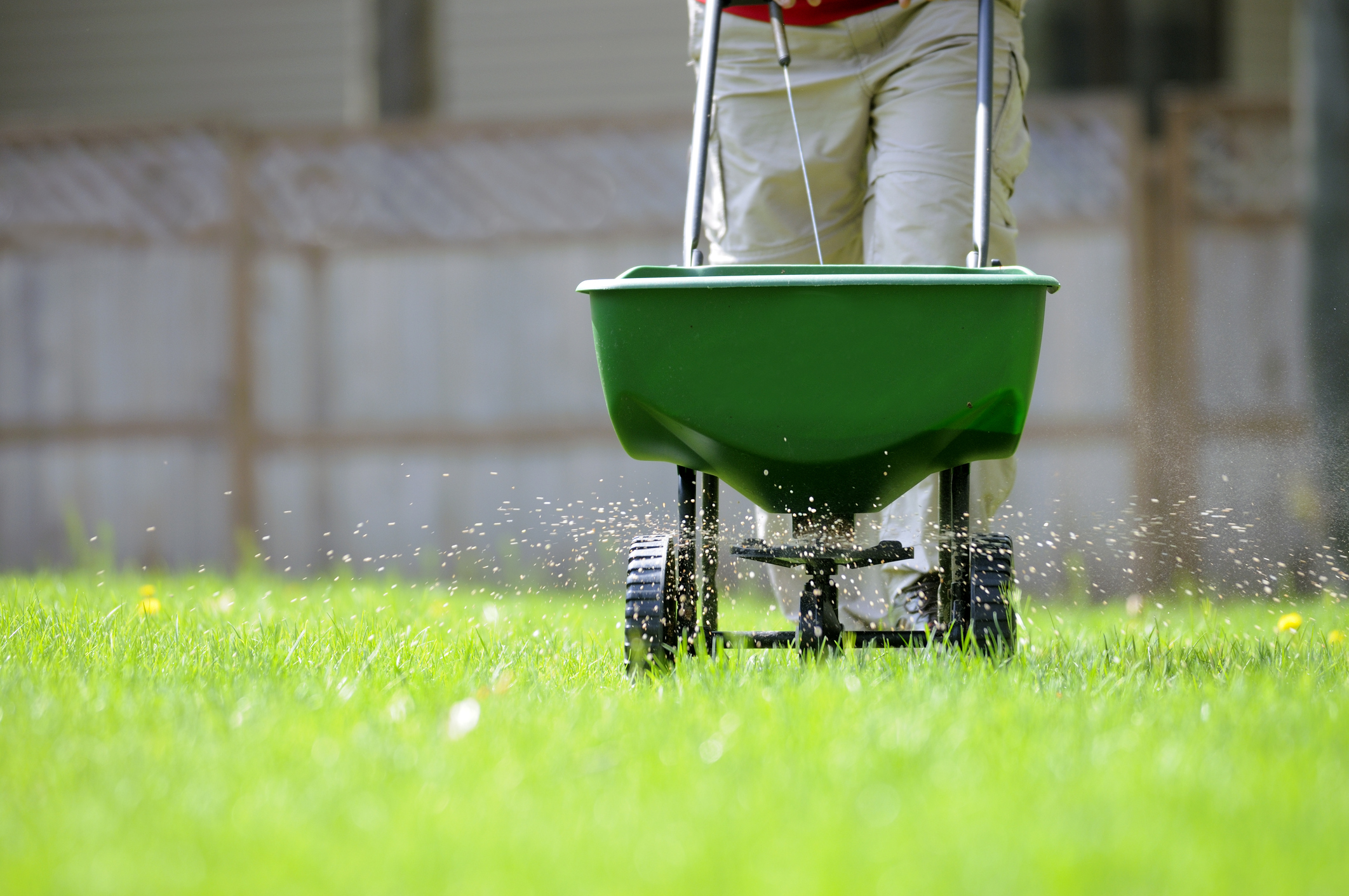
A quick note on granular vs. liquid fertilizer: Liquid fertilizers are almost always fast-release — nitrogen is already dissolved and immediately available to the plant. If you want the control and longevity of slow-release, you need granular. This is a common point of confusion when homeowners consider liquid feeding as a “gentler” option. It’s faster, not slower. For granular application to work evenly, a quality broadcast spreader — like the Scotts Turf Builder EdgeGuard Broadcast Spreader — makes a real difference in preventing streaking and uneven feeding.
Before committing to an aggressive fertilizer program, it also helps to know your actual soil nutrient levels. An at-home soil test kit tells you whether your nitrogen baseline is already adequate, which helps you decide how much to apply and how aggressive the release type needs to be.
Finally, the most common warm season fertilizer mistake isn’t using the wrong release type — it’s applying too much nitrogen too fast. Choosing slow-release and following label rates solves most of that problem. If you’ve already burned your lawn or stressed it through over-application, the How to Fix a Bad Lawn: A Step-by-Step Renovation Guide That Actually Works walks through how to assess the damage and rebuild from there.
Conclusion
For most warm season homeowners, slow-release granular fertilizer is the right default — it’s safer in summer heat, more forgiving on application timing, and better suited to sensitive grasses like St. Augustine and centipede. Fast-release has legitimate uses at dormancy break and for quick deficiency correction, but it requires more precision and carries more risk. If you’re choosing one product type for your season, slow-release granular wins on consistency, safety, and ease of use. Match the release type to your grass, your soil, and your schedule — and you’ll get better results with less risk all season long.