Diagnosing St. Augustine grass underwatered vs overwatered is one of the trickiest calls in warm-season lawn care — both conditions cause similar symptoms, and treating the wrong one accelerates the damage. St. Augustine wilts, folds its blades, and shifts color under both drought stress and excess moisture. If you water a waterlogged lawn or withhold water from a drought-stressed one, you deepen the problem instead of solving it. This guide walks you through how to tell them apart, confirm which problem you’re actually dealing with, and fix it correctly.
Disclosure: This article contains affiliate links. If you purchase through these links we may earn a small commission at no extra cost to you.
Why St. Augustine Grass Is Hard to Read: Both Problems Look Similar
St. Augustine responds to stress by wilting, folding its blades, and shifting from bright green to a dull or off-color hue — and it does this under both drought and excess moisture. The grass has no mechanism to signal which direction the problem is coming from.
This confusion between underwatered vs overwatered St. Augustine is especially common in humid southern climates — Florida, the Gulf Coast, and the Southeast — where homeowners default to “it needs more water” when the lawn looks bad. In reality, overwatering is just as common as underwatering in these regions, and fungal disease triggered by excess moisture is routinely misread as drought stress.
Getting this wrong doesn’t just delay recovery. Watering a waterlogged lawn accelerates root rot. Withholding water from a drought-stressed lawn deepens the damage. If you’re also noticing other unexplained issues alongside watering problems, it helps to understand what’s wrong with your lawn before narrowing in on irrigation as the cause.
Signs Your St. Augustine Grass Is Underwatered
The most reliable early indicator is blade folding. When St. Augustine lacks water, the blades curl or cup lengthwise along the midrib — a stress response that reduces surface area and slows water loss.
Other drought stress symptoms to look for:
- Footprint test: Walk across the lawn and look back. Underwatered St. Augustine doesn’t spring back. Footprints stay visible for several minutes because the turf lacks the turgidity to recover.
- Pattern: Drought stress appears first in full-sun areas, along pavement edges, near curbs, and on slopes — anywhere the soil dries fastest.
- Soil confirmation: Push a standard screwdriver 6 inches into the soil. Dry soil resists penetration and comes out powdery or crumbly. If it barely goes in, the lawn is thirsty.
- Timing: Symptoms typically appear after several consecutive days without rain or irrigation during peak summer heat.
Recognizing these St. Augustine grass drought stress symptoms early makes a significant difference — mild drought stress recovers quickly, while extended drought can take weeks to resolve and may leave permanent thinning.
Signs Your St. Augustine Grass Is Overwatered
Overwatering symptoms overlap with drought in appearance, but the details differ once you know what to look for. These overwatered St. Augustine lawn signs are distinct from drought if you check the right indicators.
-
- Surface texture: An overwatered lawn feels spongy or soft underfoot. The thatch layer retains water and stays saturated.
- Yellowing pattern: Blades yellow from the base upward, not from the tip. Tip dieback suggests drought or nutrient deficiency. Base yellowing suggests root suffocation from excess moisture.
- Pattern on the lawn: Overwatering symptoms cluster in low spots, shaded areas, and zones under tree canopies where drainage is naturally slower.
- Fungal indicators: Circular patches, brown ring patterns, or a gray or greasy appearance on the leaf surface are signs of fungal disease. These do not appear with drought stress alone — their presence strongly suggests excess moisture.
- Soil confirmation: Run the same 6-inch screwdriver test. Overwatered soil comes out dark, clumped, or muddy — and may smell earthy or slightly sour from anaerobic activity.
- Moss or algae on the soil surface is a reliable secondary sign of chronic excess moisture.
- Root check: Pull a small plug with a trowel and look at the roots. Shallow, dark brown, or mushy roots indicate waterlogging. Healthy roots are white or light tan and firm.
A soil moisture meter removes the guesswork from the soil check. Basic analog models available at most hardware stores work well and cost under $15. If you’re regularly unsure whether to water or skip, it pays for itself quickly.
St. Augustine Grass Underwatered vs Overwatered: Side-by-Side Symptom Comparison
Use this table to cross-reference what you’re seeing before taking any action. The distinction between underwatered and overwatered St. Augustine grass is most visible when you compare multiple symptoms together rather than relying on one sign alone.
| Symptom | Underwatered | Overwatered |
|---|---|---|
| Blade appearance | Folded, cupped, blue-gray tint | Yellowing from base upward, soft |
| Footprint test | Impressions stay visible | Springs back (or stays matted) |
| Soil at 6 inches | Dry, crumbly, resists probe | Wet, clumped, possibly odorous |
| Pattern on lawn | Sun-exposed areas, edges, slopes | Low spots, shaded areas, drainage zones |
| Fungal signs | None | Rings, circular patches, gray sheen |
| Moss or algae | No | Possible |
| Root condition | Intact but may be shallow | Soft, dark, possibly rotted |
Still not certain? Run the full confirmation process in the next section before you do anything.
How to Confirm Which Problem You Actually Have
Don’t skip this step. Acting on a guess is how minor St. Augustine grass watering problems turn into full recovery projects.
Step 1: Run the footprint test across multiple areas. Check a sunny area, a shaded area, and a transition zone. If impressions stay only in full-sun spots, that points to drought. If the lawn feels spongy everywhere, lean toward overwatering.
Step 2: Do the screwdriver probe in 2–3 locations. Test areas with different sun exposure and drainage characteristics. Consistent dry resistance points to underwatering. Consistent dark, wet, clumped soil points to overwatering.
Step 3: Look at the distribution pattern. Drought stress is diffuse and follows slope and sun exposure. Overwatering damage clusters where water collects or drainage is poor.
Step 4: Pull a small plug and check the roots. White, firm roots are healthy. Dark, soft, or foul-smelling roots indicate waterlogging and possible root rot.
Step 5: Review your watering history. How many minutes per zone, how many days per week, and how much rain fell recently? If you’ve been running the system every day in a humid climate, overwatering is the more likely culprit — even if the lawn looks stressed.
Critical caution: Do not assume fungal disease is drought stress just because the lawn has brown patches. Fungal patches have defined edges, often circular shapes, and sometimes a gray or greasy sheen on the blades. Drought stress is diffuse and follows sun and slope. Treating fungal disease by increasing water is one of the most damaging mistakes you can make with St. Augustine grass watering problems.
How to Fix Underwatered or Overwatered St. Augustine Grass
If Underwatered
-
-
- Water deeply, not frequently. St. Augustine needs 1 to 1.5 inches of water per week from irrigation plus rainfall combined. One deep session beats three shallow ones — deeper watering encourages roots to grow down, improving drought resistance over time.
- Water in the early morning. This reduces evaporation and lowers fungal risk compared to evening watering.
- Measure actual delivery. Sprinkler run times are unreliable because output varies with water pressure and head type. Place a rain gauge or catch-cup set in the irrigated zone and measure what’s actually hitting the ground — available at most hardware stores.
- Recovery timeline: Mild drought stress typically resolves within 1–2 days of deep watering. Prolonged drought with visible browning can take a week or more. Browned blades will not turn green again — new growth emerges from the stolons.
- Do not fertilize a drought-stressed lawn. The root system is compromised and cannot process nutrients effectively. You risk burn without any benefit. When the lawn has recovered and you’re ready to feed, a warm season fertilizer like Andersons PGF Complete 16-4-8 is the safer choice — it delivers nutrients gradually and reduces the risk of burning stressed turf.
-
If Overwatered
-
-
- Stop watering immediately and let the soil drain. Do not resume irrigation until the 6-inch probe test shows drier conditions.
- Adjust your sprinkler schedule. Reduce frequency before reducing duration. Running the system every other day instead of daily is often enough to correct St. Augustine grass watering problems caused by overwatering.
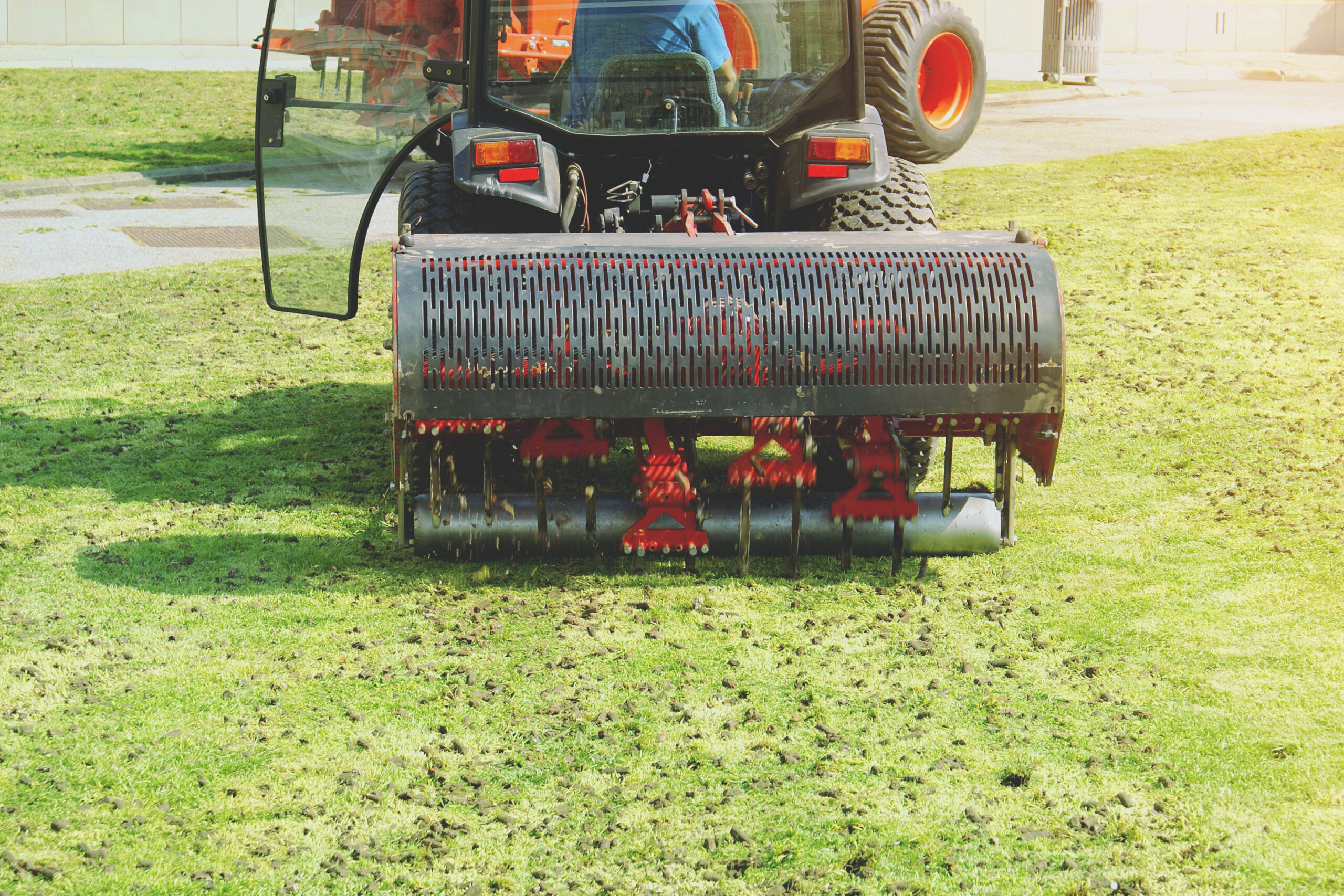
- Check for compaction. Compacted soil holds surface water longer and forces moisture to stay in the root zone. Core aeration improves drainage and oxygen movement to roots.
- If fungal disease is visible, reducing water alone won’t clear the infection. A fungicide labeled for warm-season turf is needed. Look for active ingredients like azoxystrobin or propiconazole — both are effective against take-all root rot and gray leaf spot, the two most common overwatering-related diseases in St. Augustine. Confirm the label includes St. Augustine before purchasing.
- Recovery timeline: Root stress from waterlogging takes 2–4 weeks to resolve once drainage improves. Fungal damage may leave permanent thinning that requires plugging or sod patches once the moisture problem is corrected.
-
Prevention: How to Water St. Augustine Without Guessing
-
-
- Know your baseline. Target 1 to 1.5 inches of water per week total. Reduce slightly in fall, increase during heat waves above 95°F.
- Use cycle and soak for clay or compacted soil. Split one 20-minute run into two 10-minute cycles 30–60 minutes apart to reduce runoff while delivering the full volume.
- Run the footprint test weekly as a routine check — not just when you suspect underwatered or overwatered conditions in your St. Augustine lawn.
- Calibrate your sprinkler system at least once per season. Verify actual delivery with a catch cup rather than assuming run time equals volume.
- Respond to weather, not the calendar. Skip irrigation after significant rainfall. A fixed schedule applied without adjustment is the most common cause of both underwatering and overwatering in automated systems.
-
Frequently Asked Questions
Can St. Augustine recover from severe drought stress? Yes, if the crown and stolons are still intact. Browned blades won’t recover, but new growth will emerge within 1–2 weeks of proper watering resuming. The key is whether the growing points survived — not whether the blades look green.
How often should I water St. Augustine in summer? Typically 2–3 times per week depending on soil type and heat. Volume matters more than frequency — target 1 to 1.5 inches total per week and adjust based on rainfall and temperature. For a full seasonal breakdown, a dedicated St. Augustine watering schedule by season covers this in more detail.
Can overwatering cause yellowing that looks like a nutrient deficiency? Yes, and this is a common misdiagnosis. Root stress from waterlogging limits nutrient uptake, so the lawn yellows even when soil fertility is adequate. Fix drainage before applying any fertilizer — adding nutrients to an overwatered St. Augustine lawn won’t solve the problem and may make it worse.
What does take-all root rot look like compared to drought stress? Take-all root rot produces irregular but somewhat circular patches with yellowing blades, dark or rotted roots, and a sour soil smell. Drought stress is more diffuse, follows sun and slope, and the soil is dry — not wet and foul-smelling. When you’re unsure, the soil probe test is the fastest way to separate overwatered from underwatered St. Augustine grass symptoms.
Does St. Augustine need more water than bermuda or zoysia? Yes. St. Augustine has a shallower root system and less drought tolerance than bermuda, making it more reactive to missed irrigation — and more susceptible to root suffocation when overwatered. Understanding the underwatered vs overwatered distinction matters more with St. Augustine than with most other warm-season grasses.