Identifying grubs in a warm season lawn starts with ruling out drought and other look-alikes before you spend anything on treatment. Dead patches show up in July or August and don’t recover after watering. Grubs feed underground. By the time patches appear on the surface, the population has usually been building for weeks. The lawn looks drought-stressed even when it’s been getting water. Before you treat, you need to confirm grubs are actually the problem. This article walks you through diagnosis, look-alike ruling, treatment timing, and repair — in that order.
Disclosure: This article contains affiliate links. If you purchase through these links, I may earn a small commission at no extra cost to you. As an Amazon Associate, I earn from qualifying purchases.
What Grub Damage Looks Like on Warm Season Grass
Grub damage on warm season turf follows a recognizable pattern, but it’s easy to confuse with other problems. Here’s what to look for:
- Irregular brown patches appearing between July and September — not uniform browning across the whole lawn
- Spongy turf underfoot — you’re feeling the loss of root structure beneath the surface
- Rapidly expanding patches — grubs move together as they exhaust food in one area and migrate toward healthy roots
- Wildlife digging — birds, armadillos, and raccoons tearing up turf is a strong behavioral signal; they’re hunting grubs they can smell underground
Grass type matters for how fast damage shows:
- Bermuda — may mask early infestations longer. Its deep, aggressive root system gives it more buffer before visible symptoms appear.
- Zoysia — falls between the two. Moderate tolerance, but slow to recover once damaged.
Important: Drought stress looks almost identical to grub damage from a distance. Do not skip the confirmation step below.
How to Confirm Grubs in a Warm Season Lawn Before You Treat
Lawn grub identification requires a hands-in-the-soil approach. A visual inspection from the surface isn’t enough. Follow these steps in sequence.
Step 1: Choose the right sampling zone
Don’t dig in the center of dead turf — grubs have already moved on from there. Sample at the edge where damaged and healthy turf meet. That’s where active feeding is happening.
Step 2: Do the pull test
Grab a handful of turf at the edge of the damage and pull firmly. If it lifts like loose carpet with little resistance, significant root loss has occurred. Bermuda mats are dense and may need more force even when damaged. St. Augustine peels more easily even when healthy. If roots are intact and the turf doesn’t lift, grubs are less likely the cause.
Step 3: Dig a soil sample
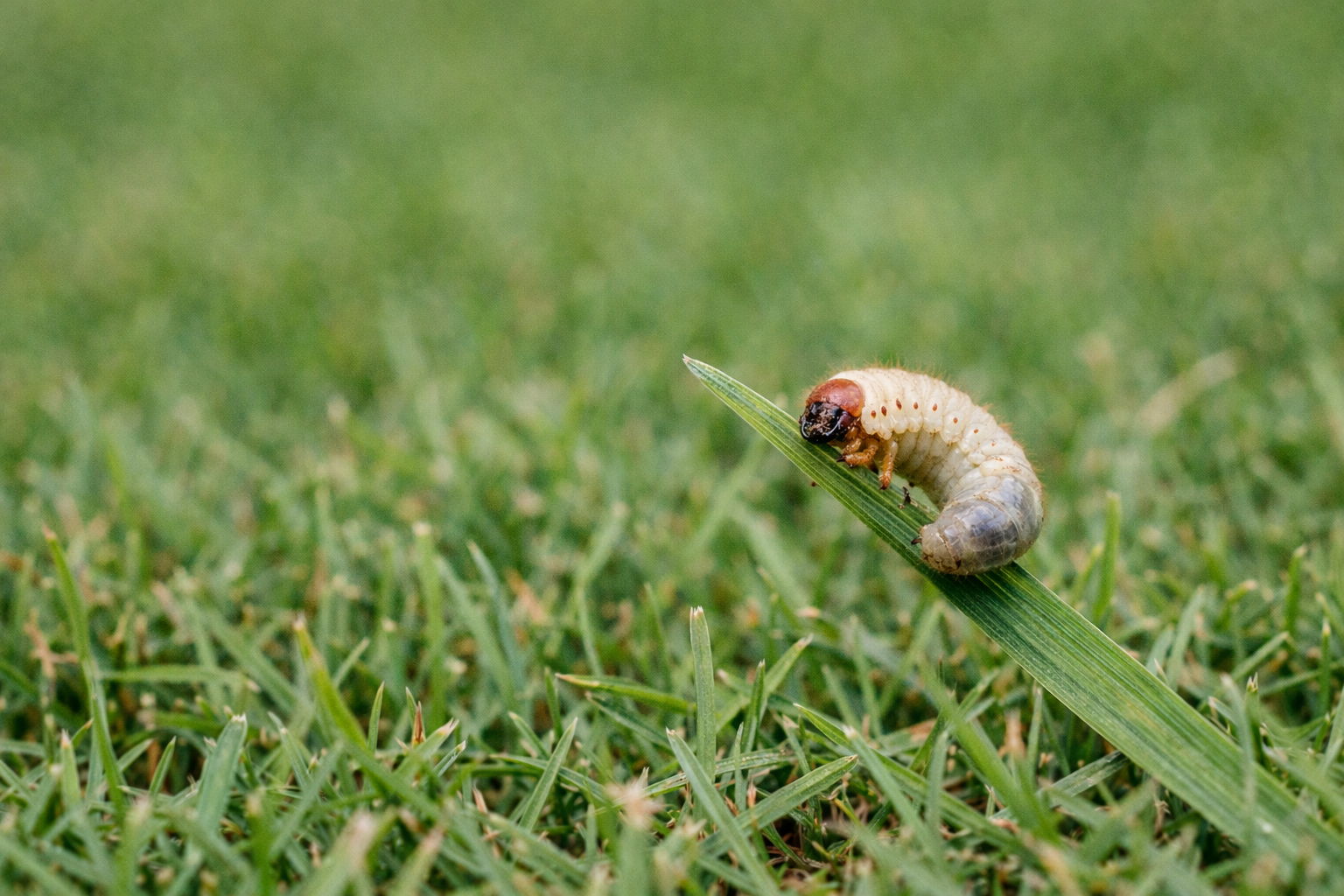
Using a flat spade, cut a 1-square-foot section of sod about 3 inches deep. Flip the soil onto a hard surface and count any white, C-shaped larvae you find. A flat spade or half-moon edger makes clean cuts and is a worthwhile tool to have on hand for any soil diagnostic work.
Step 4: Apply treatment thresholds by grass type
- Bermuda: 5 or more per square foot is a reasonable threshold given its stronger recovery ability
- Zoysia: treat at 3–5 depending on how healthy the lawn is and how late in the season you’re sampling
Step 5: Identify what you’re looking at
True white grubs are C-shaped and cream-colored with a tan or brown head capsule. They have three pairs of legs near the head. Common species in warm-season regions include Japanese beetle larvae and June bugs, also called masked chafers.
One important distinction: fall armyworm larvae are sometimes mistaken for grubs. They’re caterpillar-shaped — elongated and dark-striped — not C-shaped. They feed on grass blades from the surface, not on roots from below. The treatment is completely different, so correct identification matters.
Ruling Out Look-Alikes: Drought Stress, Chinch Bugs, and Fungal Disease
This step is critical. Misdiagnosis is the most common and most expensive mistake homeowners make with summer turf problems. If you’re unsure what’s affecting your lawn, the What’s Wrong With My Lawn? Complete Diagnosis Guide can help you work through the possibilities systematically before you commit to any treatment.
Drought Stress
- Browning is widespread and relatively uniform — not isolated patches
- Turf does not lift when pulled; roots are intact
- Grass recovers within a few days of deep, thorough watering
- Grub-damaged turf will not recover from watering — that’s the key test
Chinch Bugs (Especially in St. Augustine)
- Damage starts at lawn edges, along sidewalks, and near hot pavement
- Turf stays firmly rooted — it does not peel up
- Part the grass at the edge of damage and look for tiny black insects with white wings (adults) or small reddish nymphs moving near the soil surface
- Chinch bugs operate above the soil; grubs operate below it
Fungal Disease
Fungal disease presents differently from grub damage in several ways:
- Damage often appears in defined circular or arc-shaped patterns
- Individual grass blades may show lesion marks or discoloration
- Look for mycelium — a white, thread-like coating — at patch edges in early morning
- Fungal damage does not cause turf to peel up
Take-All Root Rot (Common in St. Augustine)
Take-all root rot (TARR) is frequently misdiagnosed as grub damage because it also causes root deterioration.
- Roots appear brown and rotted when you pull a sample — but no grubs are present
- Damage typically worsens in spring or early summer, not mid-summer like grubs
- Responds to soil pH adjustment and fungicide treatment — grub products will have no effect
Don’t apply a grub control product until you’ve ruled these out with a soil sample.
Grub Life Cycle and Why Timing Matters for Warm Season Turf
You don’t need a biology lesson — you need to know when the window opens and closes.
- June–July: Adult beetles lay eggs in the top inch or two of soil
- Mid-to-late July: Eggs hatch; larvae are small and feeding near the surface
- August–September: Young larvae feed aggressively near the root zone — this is when damage peaks and when treatment is most effective
- October and later: Larvae burrow deeper and stop feeding — curative treatments can no longer reach them effectively
- Spring: Larvae pupate and emerge as adult beetles — no feeding occurs at this stage
If you’re diagnosing grubs in a warm season lawn in July or early August, you still have a good treatment window. If it’s late September and the damage is already done, curative treatments are mostly ineffective and you’re now managing repair, not infestation.
Preventive vs. Curative Grub Treatments for Warm Season Turf
Dealing with grubs in a warm season lawn means choosing between two different strategies. Treatment choice depends entirely on timing. These strategies use different active ingredients and have different application windows.
Preventive Treatments
- When to apply: Late May through early July — before damage appears
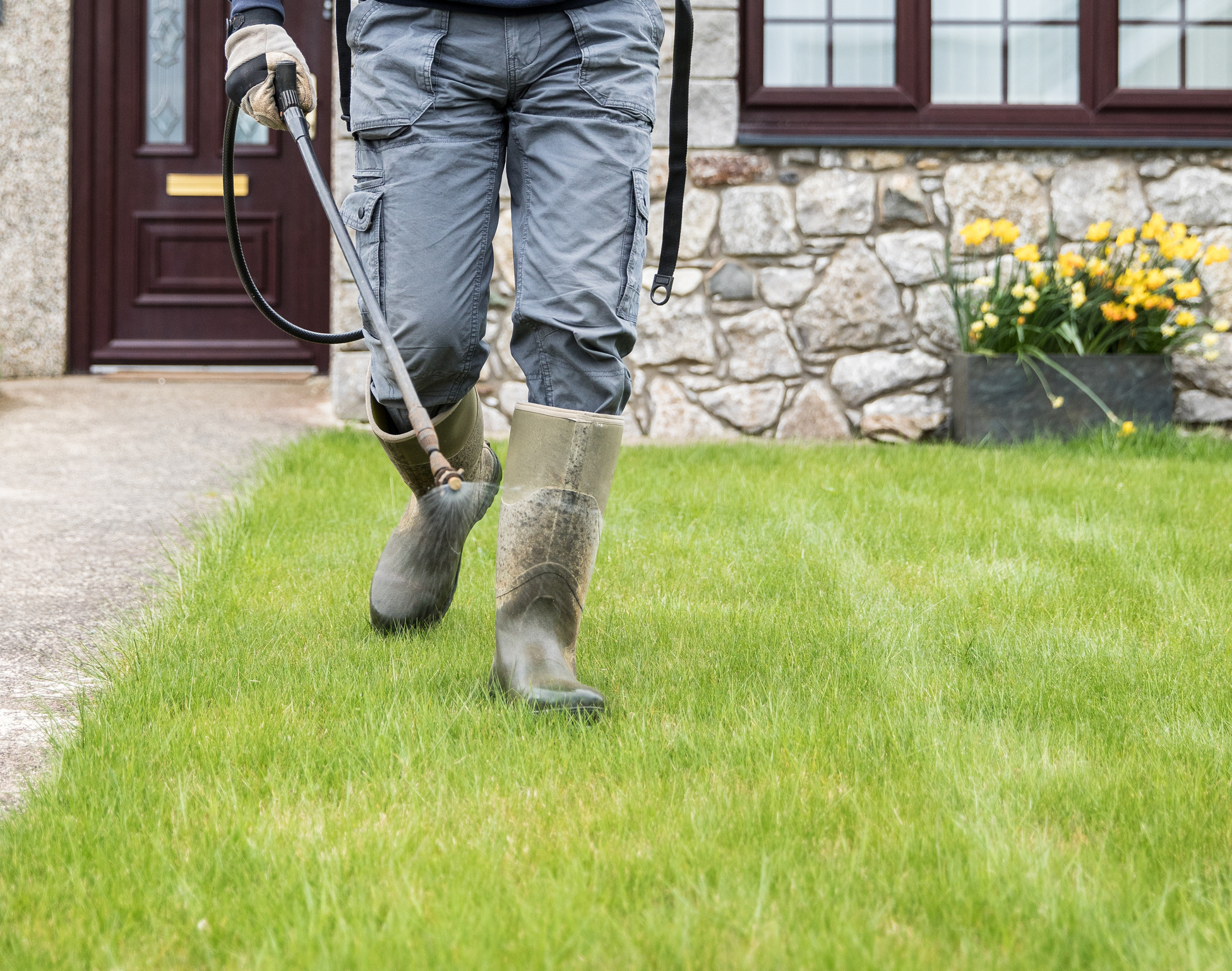
- How they work: Systemic products are absorbed by grass roots. Grubs ingest the active ingredient while feeding.
- Active ingredients to look for: Imidacloprid, clothianidin, thiamethoxam
- Imidacloprid is the most widely available option at hardware stores and home improvement retailers
- Must be watered in with at least ½ inch of irrigation after application to move the product into the root zone
- Applied after August, these products provide no meaningful benefit — larvae are already established and deep
When shopping for a grub preventer, check the front label for the active ingredient. Products listing imidacloprid are the most common consumer option and are generally labeled for bermuda, St. Augustine, zoysia, and other warm-season turf types.
Curative Treatments
- When to apply: July through August, when small grubs are actively feeding near the surface
- Active ingredients: Trichlorfon or zeta-cypermethrin
- These work on contact, so timing is tighter than preventive options
- Apply in late afternoon and water in immediately with ½ to ¾ inch of irrigation — this moves the product down into the soil where grubs are feeding
- Effectiveness drops significantly on mature larvae in late season
Trichlorfon-based products are less commonly stocked at general hardware stores — check specialty garden centers or online retailers if your local store doesn’t carry them.
What Doesn’t Work
- Dish soap flushes — anecdotal at best; not reliable for subsurface grubs
- Milky spore — only targets Japanese beetle larvae, takes years to establish, and is not reliably effective across most warm-season regions
- Beneficial nematodes — inconsistent results in warm-season turf; the soil temperature and moisture conditions required are difficult to maintain reliably in the South
How to Repair Warm Season Grass After a Grub Infestation
Warm-season grass repair works differently than cool-season repair. These grasses spread laterally through stolons and rhizomes — overseeding is not the standard approach. Before you start, make sure you can identify what type of grass you have, because the repair method depends on it. For a broader overview of how these grasses grow and behave, the Complete Guide to Warm Season Grasses is a useful reference.
Before repairing, confirm the grubs are gone or have been treated. Replanting into an active infestation wastes time and money.
Step 1: Remove dead turf
Rake out the dead material. It will not recover on its own and needs to be cleared before new growth can establish.
Step 2: Let healthy turf fill in naturally — when the gaps are small
Bermuda and zoysia both spread aggressively via lateral growth. For bare patches under roughly 12 inches wide, consistent watering and reduced foot traffic may be all you need. The surrounding healthy turf will creep in.
Step 3: Plug or sprig larger bare spots
For bare areas larger than 12 inches across:
- St. Augustine and zoysia: use plugs or sprigs from healthy turf nearby or purchased from a sod supplier
- Bermuda: can be sprigged or seeded using hulled bermuda seed, which has better germination than coated varieties
Step 4: Fertilize carefully
Avoid heavy nitrogen immediately after damage. The root system is compromised. Stressed turf can’t use a strong fertilizer push effectively. Wait 2–3 weeks after treatment, then apply a light balanced fertilizer to support recovery without forcing excessive top growth.
Best repair window: Late summer through early fall, while soil temperatures are still warm enough to support root development. If damage occurred late in the season, wait until spring green-up to see what recovers naturally before deciding how much replanting is needed.
Prevention Going Forward
Once you’ve dealt with grubs in a warm season lawn, the goal is to avoid repeating it. These steps reduce the likelihood of a serious problem next season.
Inspect every July. Do a test cut in any area that looks soft or slightly off before symptoms spread. Early detection means more treatment options.
Apply preventive treatment if you’ve had grubs twice. One season can be an isolated event. Two consecutive years means adult beetles are returning to lay eggs in your lawn — a preventive product applied in late May or June is worth the cost. For a full picture of what to do and when throughout the year, the Warm Season Lawn Care Schedule Month by Month Guide is a useful reference for staying ahead of pests and other seasonal issues.
Reduce thatch. Thick thatch — more than ½ inch — provides ideal egg-laying conditions for adult beetles. Dethatching warm-season turf in late spring removes that preferred habitat.
Adjust your watering habits. Frequent shallow watering keeps the top inch of soil moist throughout early summer. That’s exactly the condition that attracts egg-laying beetles. Water less frequently but more deeply to let the surface dry between cycles.
If you have a mixed lawn or live in a transitional zone, understanding grub damage in cool season lawns is also worth your time — the timing, thresholds, and repair approach differ significantly from warm-season turf.
Frequently Asked Questions
When is it too late to treat grubs in my warm season lawn?
For curative treatments, late September is roughly the cutoff. By October, larvae have burrowed deeper into the soil and stopped feeding near the root zone — contact products can’t reach them effectively. The preventive window closes even earlier, around late July or early August. If you miss both windows, focus on damage assessment and plan for prevention the following spring.
Do grubs kill warm season grass permanently?
Not usually. Bermuda and zoysia both spread through stolons and rhizomes, so they can recover naturally from moderate damage if conditions are right. St. Augustine has a shallower root system and less lateral spread, so it may need plugging or sprigging to fill bare areas. The key is treating the infestation before attempting repair.
How many grubs is too many?
It depends on your grass type. St. Augustine shows significant damage at 3 or more grubs per square foot. Bermuda can tolerate up to 5 per square foot before treatment is warranted, given its stronger recovery ability. Zoysia falls in between — treat at 3 to 5 depending on lawn health and time of season.
Can I use the same grub treatment on St. Augustine and bermuda?
Yes. Most consumer grub products are labeled for multiple warm-season grass types, including St. Augustine, bermuda, and zoysia. Always read the label before applying to confirm your grass type is listed and that you’re applying at the correct rate.
My lawn has birds digging everywhere — does that mean I have grubs?
It’s a strong indicator. Birds, armadillos, and raccoons actively hunt grubs by smell. If wildlife is tearing up your turf and the damage follows the pattern described above, that’s a meaningful clue. Combine the behavioral signal with a pull test and a soil sample to confirm before treating.
Will grub damage come back next year?
Yes, if adult beetles return to lay eggs. Beetles often return to the same lawns year after year. If you’ve had a confirmed infestation, apply a preventive treatment the following late May or June. Reducing thatch and adjusting watering habits also makes your lawn less attractive as an egg-laying site.
Summary
Grubs in a warm season lawn are a real problem — but they’re also one of the most commonly misdiagnosed causes of summer turf loss. Look for the right symptoms, confirm with a soil sample before spending anything, rule out drought, chinch bugs, and disease, and choose your treatment based on where you are in the season. Bermuda and zoysia have strong natural recovery ability. St. Augustine is more vulnerable and may need active repair. Acting early in the summer gives you the best options. Getting ahead of grubs in a warm season lawn means digging one sample in July — everything else follows from that.