
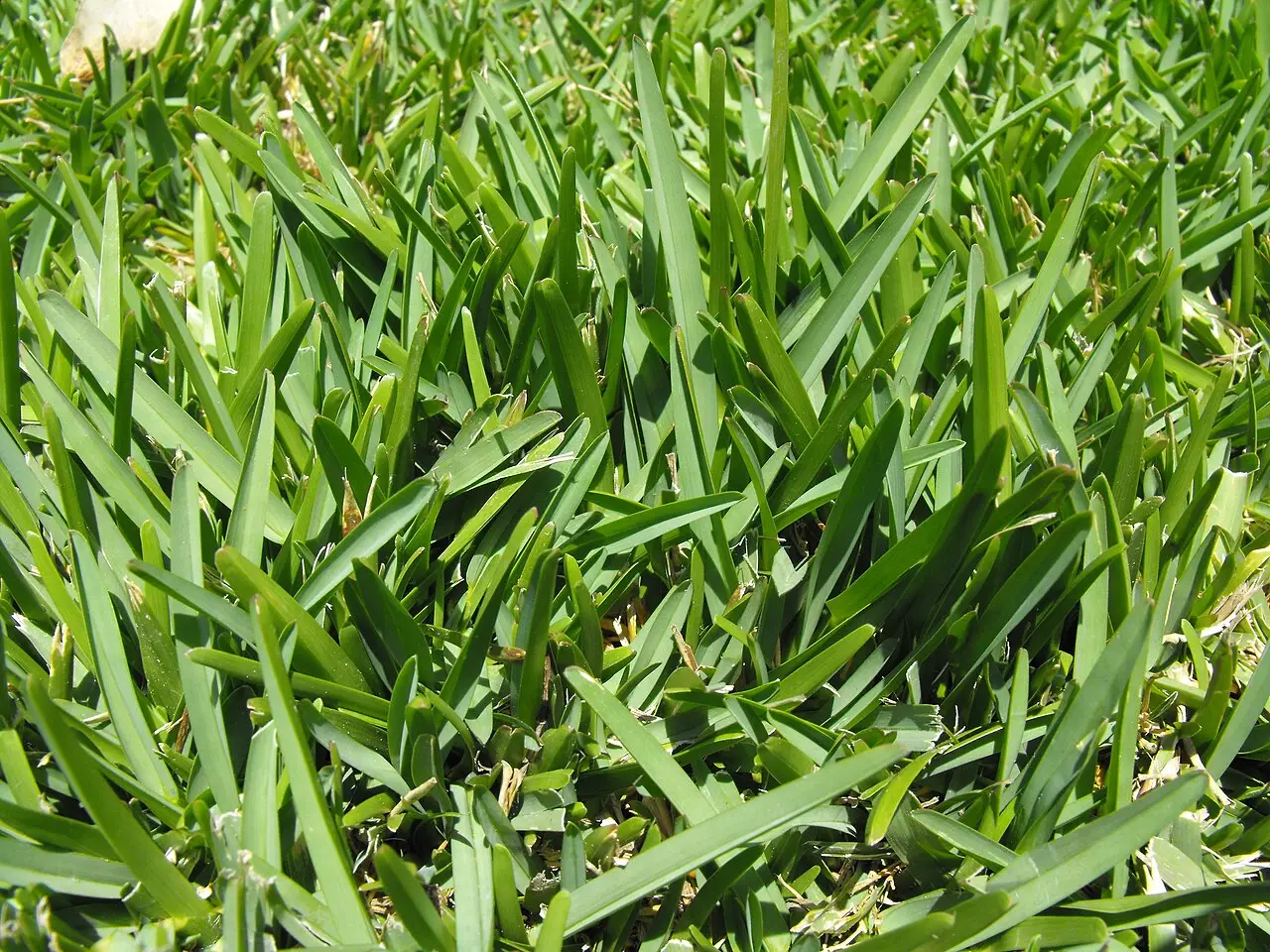
Learning how to identify type of grass in your lawn takes about 10 minutes and a pair of sharp eyes. If you’re in the South or a transitional climate, you’re almost certainly dealing with one of four warm-season grass types: bermuda, zoysia, St. Augustine, or centipede. This guide walks you through a repeatable visual process to confirm which one is growing in your yard — so every care decision you make from here is grounded in accurate information.
Disclosure: This article contains affiliate links. If you purchase through these links, I may earn a small commission at no extra cost to you. As an Amazon Associate, I earn from qualifying purchases.
Why Knowing Your Grass Type Actually Matters for Lawn Care
Every significant lawn care decision is grass-specific. Mowing height, fertilizer timing, herbicide selection, and pest treatment all depend on what’s actually growing in your yard. Use the wrong pre-emergent herbicide on centipede and you can damage it. Apply a broadleaf herbicide labeled safe for bermuda to St. Augustine and you risk serious turf injury. St. Augustine lawns also face unique pest pressure — chinch bug damage is a prime example of a problem that’s completely grass-specific in how it’s diagnosed and treated. Knowing your grass type isn’t a nice-to-have — it’s the prerequisite for getting anything else right.
How to Identify Your Grass Type by Leaf Blade and Texture
This section covers the most reliable starting point for identifying your grass type: the individual blade. Pull a few blades from different areas of your lawn before starting — consistency across samples matters.
Step 1: Pull a Single Blade and Measure Its Width
Blade width is the fastest separator among the four common warm-season grasses.
- St. Augustine has the widest blade of any common warm-season grass — flat, broad, and rounded at the tip. If it looks obviously wide compared to what you’d expect from grass, it’s probably St. Augustine.
- Centipede sits in the middle — medium width with a slightly boat-shaped tip and a lighter green color than St. Augustine.
- Bermuda has the narrowest blade of the four — very fine texture with a pointed tip. If the blade looks almost delicate, you’re likely looking at bermuda.
Step 2: Run Your Fingers Across the Blade Surface
Texture tells you a lot, and it’s immediately noticeable once you know what to feel for.
- Bermuda feels smooth and almost paper-thin between your fingers.
- Zoysia is noticeably stiff and scratchy — most homeowners describe it as dense and wiry. It’s harder to pull up than it looks.
- St. Augustine feels soft and thick, almost spongy underfoot when you walk across it.
- Centipede sits in between — coarser than St. Augustine but nowhere near as stiff as zoysia.
Step 3: Check the Blade Edges Under Light
Hold a blade up to bright light and examine its margins and surface closely.
- Zoysia and bermuda both have fine hairs along the blade edges — visible under good light, but not immediately obvious.
- St. Augustine blades have clean, smooth edges with no visible hairs — the width makes them look almost leaf-like.
- Centipede blades have slight indentations or scalloping along the edges.
This step is easier with magnification. A 10x jeweler’s loupe — available for under $15 on Amazon — makes edge detail and blade hairs clearly visible and removes guesswork. It’s optional, but worth it if you want a confident answer.
Identifying Your Grass Type by Growth Habit, Spread, and Feel
Once you’ve examined the blade, step back and look at how the grass grows and moves across your yard. Growth habit is often the tie-breaker when blades look similar.
Step 4: Observe How the Grass Spreads
Look at the edges of your lawn — near beds, driveways, or walkways. This is where spread patterns show up clearly.
- Bermuda is an aggressive spreader that uses both stolons (above-ground runners) and rhizomes (below-ground runners). It pushes into garden beds, sidewalk cracks, and neighboring lawn areas.
- St. Augustine spreads by stolons only, but produces thick, chunky runners that are clearly visible on the surface — almost like thick stems lying on top of the soil.
- Zoysia spreads slowly using both stolons and rhizomes. It forms a tight, dense carpet and doesn’t push into adjacent areas aggressively.
- Centipede spreads by stolons alone, growing low and creeping along the surface — which is exactly how it earned its name.
Color is useful during the active growing season (late spring through summer), but not during dormancy.
- Bermuda ranges from medium green to dark green depending on nitrogen levels.
- St. Augustine holds a deep, rich green through the growing season.
- Centipede is notably lighter — almost lime-green or yellow-green. New owners frequently mistake this natural coloring for a nitrogen deficiency and over-fertilize, which damages centipede.
- Zoysia stays medium green in summer but goes straw-yellow earlier and stays dormant longer than the other three.
Step 6: Look at the Stolon (Runner) Size
Bend down and pull back some grass near the edge of your lawn. Find a runner and check its thickness.
- St. Augustine stolons are thick and obvious — roughly finger-width, sometimes wider, with clear nodes.
- Bermuda stolons are thin and wiry, almost like coarse string.
- Centipede runners are medium thickness and sit very low to the ground.
- Zoysia runners are short and tight, staying close to the surface with a dense mat-like structure.
Grass Type Identification at a Glance: Bermuda vs. Zoysia vs. St. Augustine vs. Centipede
Use this table to cross-check your findings from Steps 1–6. If your visual checks point to the same grass type across two or more rows, you have a confident identification.
| Feature | Bermuda | Zoysia | St. Augustine | Centipede |
|---|---|---|---|---|
| Blade width | Narrowest | Narrow to medium | Widest | Medium |
| Texture (feel) | Smooth, fine | Stiff, scratchy | Soft, spongy | Medium, slightly coarse |
| Spread method | Stolons + rhizomes | Stolons + rhizomes | Stolons only | Stolons only |
| Color (growing season) | Medium to dark green | Medium green | Dark, rich green | Light/lime green |
| Shade tolerance | Lowest | Moderate | Highest | Low to moderate |
| Dormancy (browning) | Browns quickly | Browns early, stays brown longest | Browns last | Browns at moderate temps |
What to Do If You Have a Mixed Lawn or Can’t Confirm Your Grass Type
Mixed lawns are more common than most homeowners expect, especially in yards that have been patched over the years or inherited from a previous owner. Knowing how to identify type of grass in each zone separately is the key to managing a mixed lawn correctly.
Signs you have a mixed lawn:
- Inconsistent texture across the yard — some areas feel soft, others stiff
- Visible color patches in summer (a lime-green zone next to a dark green zone)
If your lawn shows these signs, run through the identification steps above for each distinct zone. Treat each area by its own grass type when it comes to herbicide or fertilizer decisions.
If you still can’t confirm your grass type, take a small sample — including blade, stolon, and a bit of root — to your local cooperative extension office. Most states offer free turf identification, and results are often same-day. This is the most reliable identification method available and costs nothing.
Smartphone apps like iNaturalist or PictureThis can help narrow things down, but they aren’t consistently accurate for turf grasses. Use them as a starting point, not a final answer.
If you’re in a transitional zone (the band of states running roughly from Virginia through Kansas), you may also have cool-season grasses like tall fescue mixed in. Cool-season grasses stay green through winter and go thin or patchy in peak summer heat. Tall fescue blades are wider and coarser than bermuda but lack the distinctive thickness and rounded tip of St. Augustine. If your lawn greens up in November and struggles in July, you’re likely looking at a cool-season grass — or a mix.
Frequently Asked Questions About Grass Type Identification
Can I have more than one type of warm season grass in my lawn? Yes, and it’s more common than most homeowners realize. Lawns that have been patched multiple times or inherited from a previous owner frequently contain two or more grass types. Bermuda encroaching into a centipede or St. Augustine lawn is one of the most common mixed-lawn scenarios in the South. The key is identifying each zone separately and making care decisions accordingly.
Does the identification method change if my grass is dormant and brown? Partially. Color becomes useless once grass goes dormant, so skip Step 5 entirely during winter months. However, blade width, blade texture, and stolon size all remain visible and diagnostic — the grass is brown, but its structure doesn’t change. Focus on Steps 1, 2, and 6 for a reliable dormant-season identification.
How do I tell warm season grass from cool season grass? The quickest indicator is seasonal behavior: cool-season grasses like tall fescue and Kentucky bluegrass stay green through winter and go thin or patchy during peak summer heat, while warm-season grasses do the opposite. On a blade level, tall fescue has a noticeably wide, coarse blade — wider than bermuda, though it lacks the broad flat width and rounded tip of St. Augustine. If your lawn is green in January, you’re likely looking at a cool-season species.
Is there a free way to get my grass type confirmed by an expert? Yes. Local cooperative extension offices in most states offer free plant and turf identification. Bring a sample that includes a blade, a stolon or runner, and a small amount of root system. Results are often same-day, and the identification is authoritative — far more reliable than any smartphone app. Search your state’s name plus “cooperative extension office” to find the nearest location.
What’s the most commonly misidentified warm season grass? Centipede. Its natural lime-green or yellow-green color leads many new homeowners to assume the lawn is nutrient-deficient. They apply nitrogen fertilizer to correct what they think is a problem — and end up damaging a lawn that was healthy to begin with. If your grass is consistently lighter green than you’d expect, and the blade width and texture match centipede, the color is normal. Don’t fertilize it into poor health.
Once You Know Your Grass Type: Next Steps for Care
With your grass type confirmed using at least two of the visual checks above, you’re ready to make accurate care decisions. For a deeper look at the characteristics, care requirements, and regional considerations for each species, see the Complete Guide to Warm Season Grasses. Here’s how the care path splits by grass type:
- Mowing height: Bermuda is mowed low (0.5–1.5 inches); St. Augustine higher (3–4 inches); zoysia and centipede in between.
- Fertilizer schedule: Centipede needs far less nitrogen than bermuda. Over-fertilizing centipede causes long-term damage. For bermuda and zoysia, a warm season fertilizer like Andersons PGF Complete 16-4-8 is a reliable all-around choice for the growing season.
- Herbicide selection: Some herbicides safe for bermuda will injure or kill St. Augustine. Always verify label compatibility with your confirmed grass type before applying any post-emergent or pre-emergent product. For weed prevention, a granular pre-emergent herbicide like Andersons Barricade is a widely used prodiamine-based option — but always confirm it’s labeled for your specific grass type before applying.
- Pest awareness: Knowing your grass type narrows your pest risk significantly. St. Augustine lawns are the primary target for chinch bug damage — a pest that causes rapidly spreading brown patches in summer heat and is often misread as drought stress.
- Watering: Overwatering and underwatering produce similar symptoms in warm-season lawns, and the correct response differs by grass type. Learning to read your lawn’s moisture signals is a foundational skill for any grass type.
If you’re filling in bare patches, use seed that matches your confirmed grass type. Bermuda grass seed is widely available and straightforward to apply. Centipede seed is also sold in bags for spot repair. St. Augustine, however, is almost always sold as plugs or sod — not seed — so plan accordingly.
What Success Looks Like
If you’ve worked through the steps above and matched your lawn to one of the four grass types — confirming it with at least two independent visual checks such as blade width, texture, stolon size, or color — you now know how to identify type of grass well enough to make accurate decisions. You’re no longer guessing at fertilizer rates, mowing heights, or herbicide labels. If your lawn has larger structural problems beyond grass type, the How to Fix a Bad Lawn Step by Step Renovation Guide covers the full repair process.
Every care decision from here connects back to a grass type you’ve actually verified. That’s the foundation of a lawn you can manage predictably, season after season.