Understanding dollar spot vs brown patch warm season grass symptoms is the critical first step before reaching for a fungicide. Both diseases create brown, damaged areas across the lawn. Both are fungal. Both peak during warm, humid months. But they respond to different treatments, thrive under opposite fertilization conditions, and attack warm season grasses in distinct ways. Treating one when you have the other wastes money and lets the real disease keep spreading.
This article walks you through a step-by-step diagnosis so you can confirm which disease you have before buying anything. If your lawn is tall fescue, bluegrass, or ryegrass rather than a warm season grass, the symptom patterns differ — see our guide to [brown patch vs. dollar spot on cool-season lawns] for that audience instead.
Disclosure: This article contains affiliate links. If you purchase through these links, I may earn a small commission at no extra cost to you. As an Amazon Associate, I earn from qualifying purchases.
Why Dollar Spot vs Brown Patch on Warm Season Grass Is So Easy to Confuse
At first glance, both diseases look like the same problem: patches of dead, brown grass scattered across an otherwise green lawn. Both are fungal diseases. Both are extremely common in the South and in transitional climates where warm season grasses like bermuda, zoysia, St. Augustine, and centipede thrive. Both tend to flare up during summer humidity.
The key differences come down to patch size, blade-level symptoms, and the conditions that trigger each disease. Dollar spot patches are small and circular with a very specific lesion pattern on individual blades. Brown patch patches are larger, less defined, and the blade damage looks different up close.
Grass type also matters significantly. St. Augustine has wide, flat blades — lesions appear as broad bands. Bermuda and zoysia have fine, narrow blades — the same lesion is smaller but the pattern is still visible if you look closely. A symptom that looks obvious on one grass type can be subtle on another, which is why generic disease descriptions sometimes fall short. If you are not certain what type of grass you have, identify what type of grass you have before working through the diagnosis steps below — the grass type affects which disease is more likely and how symptoms present. For a broader overview of the turf types discussed throughout this article, see the Complete Guide to Warm Season Grasses.
The sections below break down each disease separately before bringing them together for a direct comparison.
How to Identify Dollar Spot on Bermuda, Zoysia, and St. Augustine
Patch Appearance
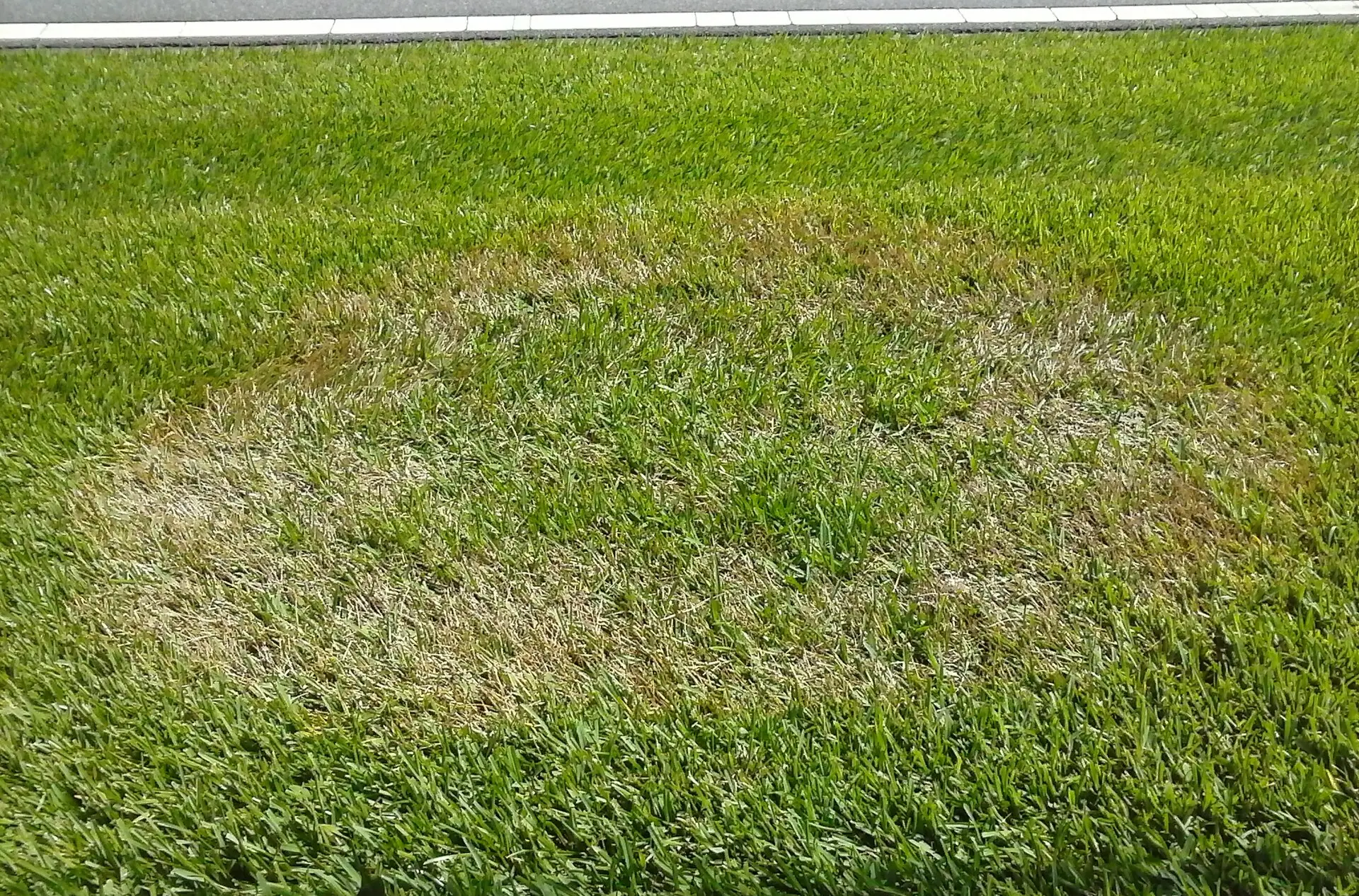
Dollar spot patches are small — roughly the size of a silver dollar to a softball. This is where the disease gets its name. Individual patches are roughly circular and well-defined when the disease is in its early stages.
In advanced cases, neighboring patches merge into larger irregular brown areas that can look like something else entirely. If you are seeing large irregular damage, check the edges carefully for smaller satellite spots — those are the tell.
This is the most reliable diagnostic clue for dollar spot. Pull several blades from the active margin of a damaged patch (the edge where green meets brown, not the dead center) and examine them closely.
You are looking for:
- A tan or straw-colored lesion with a reddish-brown or purple border crossing the blade
- A bleached, hourglass-shaped center to the lesion
- The lesion crosses the full width of the blade — it is not just an edge burn
On bermuda grass, the blades are narrow, so the lesion is small but the color contrast is clear. Dollar spot bermuda grass symptoms are among the most common fungal problems affecting bermuda lawns, and the disease is particularly aggressive on this turf type.
On St. Augustine, the wider blade makes the lesion look like a broad tan band with darker borders. Dollar spot is less common in St. Augustine than brown patch, but it does occur.
On zoysia, symptoms mirror bermuda but spread slightly more slowly.
Morning Confirmation
Check the affected area before 9 a.m. while dew is still on the grass. Dollar spot produces white, cobweb-like mycelium (the thread-like fungal growth) on affected areas in early morning humidity. If you see a white, spider-web appearance across damaged spots at dawn, dollar spot is very likely your diagnosis.
This mycelium disappears once the dew burns off, so timing matters.
Treatment Direction
If your diagnosis points to dollar spot, look for a fungicide containing propiconazole as the active ingredient. Consumer formulations are available on Amazon and at most hardware stores — Bonide Infuse Systemic Disease Control is one widely available option labeled for dollar spot on home lawns.
How to Identify Brown Patch on Warm Season Grass
Patch Appearance
Brown patch patches are significantly larger than dollar spot — ranging from several inches to several feet across. The edges are irregular and less defined. As the disease progresses, patches expand outward rather than staying contained.
In cooler or transitional weather, you may see a “smoke ring” — a darker, water-soaked-looking band around the outer edge of the patch. This is easier to observe in the morning and more visible in certain conditions. On warm season lawns in peak summer heat, this ring may be faint or absent.
Blade Symptoms
Brown patch lesions are irregular tan-to-brown patches on the blade with a darker brown border. Unlike dollar spot, there is no consistent banding or hourglass shape. The lesion pattern is messier. In severe cases, the center of the lesion rots through completely.
St. Augustine Specifics
Brown patch St. Augustine grass infections are the primary fungal disease concern for this turf type. Brown patch is more common and more damaging in St. Augustine than in any other warm season grass.
On St. Augustine, look for:
- Large, expanding patches that look waterlogged at the edges
- Surface blades that appear dead while the stolons (runners) beneath remain green and firm
Checking the stolons is important. Push aside the dead surface blades and examine the horizontal runners. If they are green and intact, the turf has a strong chance of recovery — brown patch typically kills the blades but leaves the stolons alive.
Brown Patch vs. Chinch Bug Damage
In St. Augustine lawns specifically, brown patch damage is frequently mistaken for chinch bug damage. Both create expanding dead patches in summer. The key difference: chinch bug damage does not show fungal blade lesions, and the stolons are usually damaged or dead in chinch bug infestations. If you are unsure whether you are dealing with a disease or a pest, check our article on [chinch bug damage in St. Augustine grass] before treating for fungus — applying a fungicide when the real culprit is an insect will not stop the damage.
Timing Note
Brown patch is most active when nighttime temperatures stay above 70°F and the lawn stays wet overnight. Overwatering and poor drainage are the most common contributors in residential lawns.
Dollar Spot vs Brown Patch Symptoms on Warm Season Grass: Side-by-Side Comparison
When working through a dollar spot vs brown patch warm season grass diagnosis, this table gives you the key distinctions at a glance.
| Feature | Dollar Spot | Brown Patch |
|---|---|---|
| Patch size | Silver dollar to softball | Softball to several feet |
| Patch shape | Circular, distinct edges | Irregular, spreading |
| Blade lesion | Tan, bleached center, reddish border | Irregular tan/brown, may rot through |
| Morning mycelium | Yes — white, cobweb-like | Rare or absent |
| Most at-risk grass | Bermuda | St. Augustine |
| Stolon damage | Can girdle crowns in severe cases | Stolons usually survive |
| Smoke ring | No | Sometimes visible |
If both diseases still look possible after reviewing this table, use the environmental conditions in the next section to narrow it down further.
Environmental Triggers That Help Distinguish Dollar Spot vs Brown Patch on Warm Season Grass
Conditions at the time of outbreak are a strong secondary diagnostic tool for warm season lawn disease diagnosis. Use these alongside the visual symptoms to cross-reference your diagnosis.
Dollar Spot Conditions
- Low soil nitrogen is the biggest risk factor. Dollar spot thrives when turf is underfed.
- Heavy dew, high humidity, and morning moisture
- Drought stress combined with humidity swings
If your lawn has been skipping fertilizer applications or is going into summer hungry, dollar spot is more likely.
Brown Patch Conditions
- High nitrogen actually increases brown patch risk — a well-fed, lush lawn is more vulnerable
- Hot, humid nights with temperatures above 70°F
- Overwatering, poor drainage, or irrigation running at night
- Prolonged leaf wetness
If your lawn is lush, recently fertilized, and staying wet overnight, brown patch is more likely.
These are not guarantees, but they narrow the field significantly before you spend money on a product.
How to Confirm Your Diagnosis Before Buying a Fungicide
Work through these steps in order before purchasing anything.
Step 1: Pull blades from the active margin. Sample from the edge of the damaged area where green grass meets brown. Examine the blade lesion pattern against the descriptions above. Do not sample from the dead center — those blades have already been destroyed and will not show useful lesion detail.
Step 2: Check for morning mycelium. Inspect the damaged area before 9 a.m. while dew is still present. White, cobweb-like growth across the patch surface is a strong indicator of dollar spot.
Step 3: Check the stolons. Push aside surface debris and inspect the runners. Green, firm stolons point toward brown patch. Damaged or girdled crowns suggest severe dollar spot.
Step 4: Cross-check environmental conditions. Review recent fertilizer timing, watering schedule, and nighttime temperatures against the trigger profiles above.
Step 5: If still uncertain, send a sample to your county extension office. Most county extension offices — part of the U.S. Cooperative Extension System — offer lawn disease identification through local labs, often at low or no cost. This is especially worth doing before treating a large area.
What Not to Do
Do not buy a broad-spectrum fungicide and apply without a diagnosis. Some products perform better against one disease than the other, and applying the wrong one wastes money while the real disease continues spreading.
Do not apply fungicide during the heat of the day. Midday application in summer heat can stress already-damaged turf. Apply in the early morning or evening when temperatures are lower.
If You Need Broader Coverage
If you have completed the steps above and are still 80% certain but not fully confirmed, a systemic fungicide containing azoxystrobin covers both dollar spot and brown patch and is appropriate when the diagnosis is close but unclear. BioAdvanced Fungus Control for Lawns contains azoxystrobin and is available in consumer formulations at major hardware retailers and online.
Prevention: Reducing the Risk of Both Diseases Returning
Water in the early morning. This single habit reduces disease pressure more than almost anything else. Blades dry out during the day instead of staying wet overnight. Avoid evening and nighttime irrigation entirely.
Keep nitrogen levels appropriate for the season. Dollar spot risk rises when nitrogen is low; brown patch risk rises when nitrogen is excessive. A soil test is the most accurate way to stay in the right range — an inexpensive soil test kit like MySoil is available at garden centers and online, or you can send samples through your county extension office. When it is time to feed, a balanced warm season fertilizer like Andersons Professional PGF Complete 16-4-8 helps maintain the nitrogen levels that discourage dollar spot without the excess that invites brown patch. For a complete overview of when and how to apply these preventive measures throughout the growing season, the Warm Season Lawn Care Schedule Month by Month Guide provides a detailed timeline for bermuda, zoysia, St. Augustine, and centipede lawns.
Never scalp the lawn. Remove no more than one-third of the blade height per mowing session. Scalping stresses the turf and opens it up to fungal infection.
Manage thatch. Thick thatch traps moisture against the crown and increases fungal pressure. Dethatch bermuda annually and aerate St. Augustine regularly to keep the crown zone open and dry.
Improve air circulation in low spots. Fungal disease returns first in areas that drain poorly or stay shaded from air movement. Trimming nearby shrubs and addressing drainage issues in low-lying areas reduces recurrence.
Frequently Asked Questions
What does dollar spot look like on bermuda grass specifically?
Dollar spot bermuda grass symptoms appear as small, roughly circular patches roughly the size of a silver dollar to a softball. On bermuda’s narrow blades, the individual lesion is small but shows a distinctive tan center with a reddish-brown border crossing the full blade width. In early morning, white cobweb-like mycelium across the affected area is the clearest confirmation.
Can dollar spot and brown patch appear in the same lawn at the same time?
Yes. Warm season lawns under mixed stress — areas that are both underfed in some spots and overwatered in others — can develop both diseases simultaneously. If you are seeing small circular spots in some areas and large irregular patches in others, examine the blade lesions in each zone separately rather than assuming a single cause.
Is brown patch dangerous to St. Augustine stolons?
Brown patch typically damages or kills the surface blades while leaving the stolons (runners) alive and intact beneath. This is one of the key distinctions in a dollar spot vs brown patch warm season grass diagnosis. As long as the stolons survive, St. Augustine lawns can recover once the disease is controlled and conditions improve. Severe dollar spot can damage or girdle crowns in extreme cases, which is a more serious recovery challenge.
Should I fertilize if I think I have dollar spot?
Carefully, yes. Low nitrogen is a primary risk factor for dollar spot, so a light, appropriate nitrogen application can help the turf recover and resist further spread. However, avoid heavy fertilization — if you have misidentified the disease and are actually dealing with brown patch, excess nitrogen will worsen it significantly. A modest, balanced application based on your grass type and soil test results is the safest approach.
How long does it take for a lawn to recover from dollar spot or brown patch?
Recovery time depends on disease severity, grass type, and how quickly you bring the right treatment to bear. Minor dollar spot damage on bermuda can fill in within two to four weeks once fungicide is applied and nitrogen is corrected. Brown patch damage in St. Augustine may take longer — the blades are slower to regrow from stolons — but lawns with intact stolons typically recover within four to eight weeks under good growing conditions.
What fungicide works on both dollar spot and brown patch?
Azoxystrobin is the most accessible consumer active ingredient that covers both diseases. Products like BioAdvanced Fungus Control for Lawns are labeled for both. Propiconazole is highly effective against dollar spot and many other fungal diseases in warm season turf. If you are confident in your diagnosis, target the appropriate active ingredient; if you are still uncertain, azoxystrobin gives broader coverage.
Can I treat dollar spot or brown patch without fungicide?
Mild cases of dollar spot sometimes respond to cultural corrections alone — correcting nitrogen deficiency, improving morning irrigation timing, and reducing dew duration. Brown patch can also be slowed by reducing nighttime moisture and avoiding heavy fertilization. However, active disease spreading across the lawn rarely resolves without fungicide once it is established. Cultural controls work best as prevention and as a complement to treatment, not as a substitute.
Is the white fuzzy growth in my lawn dollar spot or something else?
White, cobweb-like growth appearing in the early morning across small brown patches is almost always dollar spot mycelium. It disappears once the dew burns off, so you need to check before 9 a.m. Slime mold, another common lawn phenomenon, produces a more pronounced, crusty gray or white coating that persists longer and does not follow the same small-patch pattern. If the white growth appears alongside the circular patch and blade lesion pattern described above, dollar spot is the correct diagnosis.
Summary
For any homeowner working through a dollar spot vs brown patch warm season grass diagnosis, the blade lesion pattern and stolon check are the two steps that matter most. Dollar spot produces a distinctive tan lesion with a reddish border and bleached center on individual blades, appears as small circular patches, and shows white mycelium at dawn. Brown patch creates larger, irregular patches with messier blade damage and typically leaves the stolons alive beneath apparently dead surface grass.
The environmental conditions — low nitrogen and mild temperatures for dollar spot; high nitrogen, heat, and overwatering for brown patch — give you a strong secondary filter before you confirm the diagnosis by examining blades and stolons directly. On warm season grasses like bermuda and St. Augustine, getting this identification right before treating is worth the extra time. If you are dealing with symptoms that still do not fit neatly into either category, the What’s Wrong With My Lawn? Complete Diagnosis Guide can help you rule out other causes before committing to a treatment plan. Apply the right fungicide for the right disease, adjust the cultural conditions that allowed it to develop, and the lawn has a clear path to recovery.