If you’ve been researching winterizer fertilizer for lawns, you’ve probably seen the bags stacked near the entrance of every hardware store in September and October. The marketing is confident: protect your lawn, guarantee a better spring, don’t skip this step. But what does winterizer fertilizer actually do — and is it meaningfully different from any other fall product on the shelf?
This guide breaks down what’s inside a winterizer, what it does for cool season grasses at a physiological level, when to apply it, which grasses benefit most, and when skipping it is the smarter move.
Disclosure: This article contains affiliate links. If you purchase through these links we may earn a small commission at no extra cost to you.
What Is Winterizer Fertilizer and How Is It Different From Regular Fertilizer?
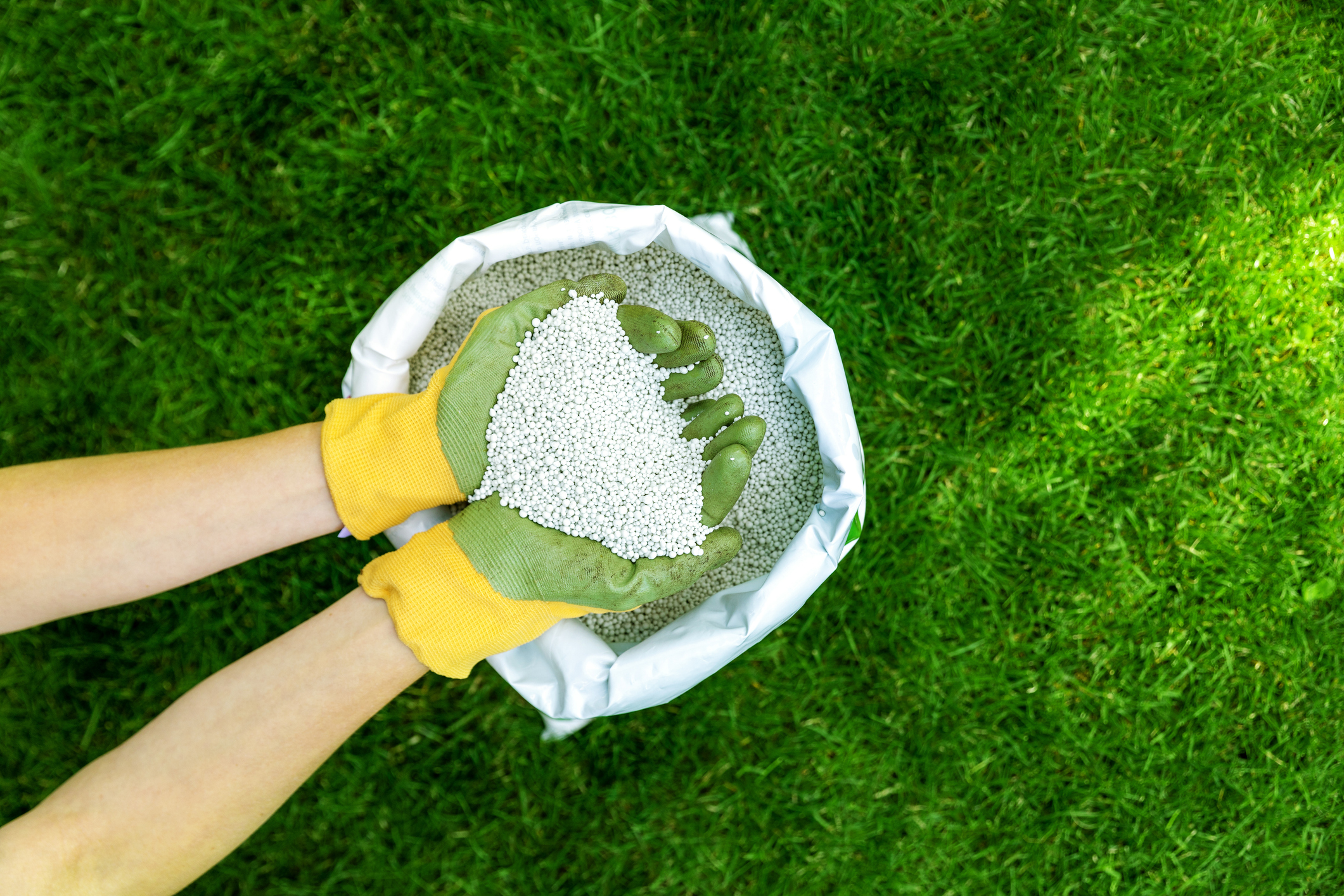
Winterizer fertilizer is a fall-applied granular fertilizer formulated with a specific nutrient ratio. It’s designed to support root development and carbohydrate storage before grass goes dormant. The formula is intentionally different from what you’d apply in spring or summer. It uses lower nitrogen (or slow-release nitrogen), higher potassium, and sometimes moderate phosphorus.
The important thing to understand: “winterizer” is a marketing category, not a regulated product standard. No government body defines what a bag must contain to carry that label. Formulas vary significantly between brands — one company’s winterizer might be 24-0-12, another’s might be 13-2-13 or 22-0-14. The common thread is an emphasis on potassium and a reduced reliance on fast-release nitrogen.
This matters because some standard fall fertilizers achieve the exact same outcome if the NPK (nitrogen-phosphorus-potassium) ratio is right. A bag labeled “fall fertilizer” with a similar potassium-forward formula is functionally identical to many winterizers. The label is worth understanding, but it shouldn’t be treated as a guarantee of quality or appropriateness.
What the NPK Numbers on a Winterizer Fertilizer for Lawns Actually Mean
NPK stands for nitrogen (N), phosphorus (P), and potassium (K) — the three primary macronutrients in any fertilizer. The numbers on a bag represent the percentage by weight of each nutrient in that order. A 24-0-12 product is 24% nitrogen, 0% phosphorus, and 12% potassium.
Here’s what each one does in a fall lawn context:
Nitrogen (N)
Nitrogen drives blade growth and chlorophyll production. In fall, your grass still needs some nitrogen. It supports late-season color and helps the plant store energy. But too much fast-release nitrogen in fall is counterproductive. It pushes soft, tender top growth right before frost arrives, which increases winter damage risk. This is why most quality fall fertilizer for cool season grass uses slow-release nitrogen sources. These feed the plant gradually rather than all at once.
Phosphorus supports root development. You’ll notice many winterizers list 0 in the middle number. That’s because most established lawns in the U.S. already have adequate or excess phosphorus in the soil. Adding more without knowing your soil’s baseline is unnecessary and can contribute to runoff. If you’re not sure whether your lawn needs phosphorus, a basic mail-in soil test kit is the honest answer before buying any fertilizer.
Potassium (K)
Potassium is the key nutrient in most winterizers and the main reason the category exists. It supports cold hardiness, drought stress resistance, and disease resistance. In fall, cool season grasses use potassium to regulate their internal chemistry as temperatures drop. A lawn with adequate potassium going into winter has better cell integrity. It handles freeze-thaw cycles more effectively. It also tends to green up earlier and more evenly in spring.
Typical winterizer formulas — 24-0-12, 22-0-14, 13-2-13 — are all designed to deliver this potassium boost alongside a measured nitrogen application. A well-known option like Scotts Turf Builder WinterGuard Fall Lawn Food (32-0-10) is widely available at hardware stores and online. Note that its nitrogen is primarily slow-release, which reduces the frost-damage risk that a high fast-release nitrogen number would otherwise create. If you prefer a formula with a higher potassium-to-nitrogen ratio, look for products closer to 24-0-12 or 13-2-13.
When to Apply Winterizer Fertilizer for Lawns for the Best Results
Timing is the single most important variable with a late fall lawn fertilizer. Apply it too early and you risk pushing soft growth before frost. Apply it too late and the nutrients sit on frozen ground with nowhere to go.
The target window: after the lawn stops actively growing but before the ground freezes. That typically falls between late September and early November depending on your climate zone.
A more reliable cue than the calendar is soil temperature. Once soil temperature at the surface drops below 50°F, top growth slows significantly — but the root zone stays active longer. That’s your window. The grass blades should still be green, growth should be visibly slowing, and you should be approaching your last or second-to-last mow of the season.
By zone:
- Northern zones (Zone 4–5): Target late September through mid-October. Soil freezes earlier; don’t wait.
- Mid-range zones (Zone 6): Mid-October through early November is typically the sweet spot.
- Transition zone (Zone 7): More flexibility — late October through mid-November often still works.
If applied too early — mid-September when grass is still actively growing — a high-nitrogen winterizer drives the kind of lush blade growth you’re trying to avoid before cold sets in. If applied too late, after repeated hard freezes have locked the top few inches of soil, the nutrients can’t be absorbed and runoff risk increases.
For a complete picture of how winterizer fits into your fall lawn task sequence, see the cool season lawn care schedule by month.
Does Winterizer Fertilizer for Lawns Actually Work — What the Research Says
The short answer is yes — with appropriate expectations.
Turfgrass research from university extension programs generally supports late-season potassium and slow-release nitrogen applications for cool season grasses. The mechanism is straightforward. Cool season grasses store carbohydrates — primarily in the form of fructans — in their roots and crown tissue as fall progresses. These stored carbohydrates fuel spring green-up and early growth before photosynthesis ramps up again. Adequate potassium and a measured nitrogen supply in fall supports this carbohydrate storage process.
The practical result is a lawn that breaks dormancy faster and more uniformly in spring. It also handles winter stress — freeze-thaw cycles, ice cover, desiccation — somewhat better.
Where the returns are highest: a lawn that missed earlier fall fertilization, is recovering from summer stress, or grows in a climate with real winter cold will see more noticeable benefit. A well-maintained lawn in a mild climate will see more modest improvement.
Where returns are modest: a lawn that was properly fertilized through summer and received a good September application may show only marginal improvement from an additional winterizer. It’s unlikely to hurt, but the impact will be smaller.
The biggest factor is always timing and lawn condition going in — not which brand of winterizer fertilizer you chose.
Which Cool Season Grasses Benefit Most From Winterizer Fertilizer
Kentucky Bluegrass
High benefit. Kentucky bluegrass spreads via rhizomes — underground stems that form a dense, self-repairing root network. Potassium directly supports this root-zone tissue going into winter. Lawns with strong rhizome health typically show noticeably faster spring green-up after a proper fall potassium application. If your yard is primarily Kentucky bluegrass, winterizer fertilizer for lawns is one of the higher-value fall inputs you can make.
Tall Fescue
Moderate benefit. Tall fescue has a deep root system that provides natural resilience through winter. It doesn’t need as much support as Kentucky bluegrass. That said, in the transition zone — where winters are variable and cold stress is real — a fall potassium application still reduces stress and supports disease resistance through wet, cold months. Worth doing, but don’t expect dramatic results on a healthy tall fescue lawn in a mild climate.
For a detailed comparison of how these two grasses differ in care needs, see this Kentucky bluegrass vs tall fescue comparison.
Fine Fescue
Fine fescue varieties — creeping red, chewings, hard fescue — are lower-input grasses that are sensitive to excess nitrogen. If you’re applying a winterizer to a fine fescue lawn, formulation matters more than with other species. Avoid high-nitrogen winterizers. Stick with low-N, high-K options. The potassium is still useful; the nitrogen is the variable to watch.
Perennial Ryegrass
Perennial ryegrass benefits from winterizer fertilizer when it’s part of a mixed cool season blend — which it usually is, since it’s commonly used in overseeding mixes alongside bluegrass or fescue. As a standalone grass, ryegrass is the least winter-hardy of the cool season species. Winterizer will support it through a normal winter in its appropriate zone, but no fertilizer will compensate for planting ryegrass in a climate it’s not suited for.
For a broader look at all cool season grass types and how their care needs differ, see the complete guide to cool season grasses.
When You Can Skip Winterizer Fertilizer for Lawns (And What to Do Instead)
Winterizer fertilizer is a worthwhile input in most situations — but not every situation. Here’s when skipping it makes sense:
You already applied a fall fertilizer with potassium in late September or October. If the timing was right and the formula included potassium, a second application probably won’t add meaningful benefit. You’d be paying for a marginal return.
The ground is already frozen. If repeated hard freezes have locked your soil and you missed the window, skip it entirely. Nutrients applied to frozen ground can’t reach the root zone and carry runoff risk into storm drains and waterways.
You’re working with a new fall seeding. A starter fertilizer applied at seeding already provided phosphorus and some nitrogen. Adding a high-potassium winterizer may be redundant unless a soil test shows a specific deficiency.
Budget constraints are real. If you’re forced to choose between winterizer and fall aeration or overseeding, prioritize the physical lawn improvements. Aeration improves root zone access to water, air, and nutrients all season long. That benefit outweighs a single fertilizer application on a struggling lawn. If your lawn has deeper issues that fertilizer alone won’t solve, start with the fundamentals — see this guide on how to fix a bad lawn before spending on inputs.
If you still want potassium support without the cost of a branded winterizer blend, muriate of potash (0-0-60) is available in small bags at most garden centers. Applied at a low rate, it delivers targeted potassium without paying for the full blended product. It’s a practical option for homeowners who already have nitrogen covered and just need to top up potassium levels.
Frequently Asked Questions About Winterizer Fertilizer for Lawns
Is winterizer fertilizer the same as fall fertilizer?
Not exactly. “Winterizer” is a marketing term for fall fertilizers with a specific NPK profile — lower nitrogen, higher potassium. Some standard fall fertilizers have identical or very similar formulations. The label matters less than the actual nutrient ratio on the bag.
Can I apply winterizer fertilizer too late?
Yes. Once the ground is frozen or close to it, nutrients can’t be absorbed. Aim for application while the soil is still workable and the grass is still green but slowing down. Late October through early November is the outer edge of the window for most cool season regions.
What NPK ratio should I look for in a winterizer?
Look for moderate to low nitrogen — ideally slow-release — and a potassium number at least as high as the nitrogen. Formulas like 24-0-12, 13-2-13, or 22-0-14 are good examples. Avoid fast-release, high-nitrogen products in late fall.
Do I need winterizer fertilizer if I already fertilized in September?
It depends on what you applied. If your September fertilizer included potassium and the timing was late enough in the month, a second application may not add much. If you used a balanced spring-type fertilizer earlier in fall, a light winterizer application still has value going into winter.
Will winterizer help my lawn green up faster in spring?
Yes — that’s one of the documented benefits. Carbohydrate storage supported by fall potassium and nitrogen helps cool season grasses break dormancy earlier and more uniformly. Lawns that received a proper fall potassium application typically show faster, more even green-up than those that didn’t.
Is winterizer fertilizer worth it for tall fescue?
Generally yes, especially in the transition zone where winter stress is real. The benefit is somewhat smaller than for Kentucky bluegrass due to tall fescue’s deeper roots and natural resilience. But in climates with variable winters, the cold hardiness and disease resistance support from potassium is still worth the application.
Conclusion
Winterizer fertilizer for lawns isn’t a gimmick — but it’s also not magic. For cool season grasses, fall is the highest-return fertilization window of the year. The potassium-forward formulas that define most winterizer products do support cold hardiness, carbohydrate storage, and faster spring green-up.
The key takeaways:
- “Winterizer” is a marketing label, not a regulated standard. Evaluate the NPK, not the name on the bag.
- Potassium is the active ingredient that makes fall fertilizers worth applying. Nitrogen matters too, but slow-release formulas reduce frost risk.
- Timing is everything. Apply when the grass is still green but slowing, before the ground freezes — typically late September through early November depending on your zone.
- Kentucky bluegrass benefits most. Tall fescue and fine fescue still benefit, but the impact is more pronounced for rhizome-based grasses.
- Skipping it is fine in specific scenarios — particularly if you’ve already applied a potassium-inclusive fall fertilizer at the right time.
For a full picture of how winterizer fertilizer fits into your fall lawn routine, the cool season lawn care schedule by month covers the complete sequence from late summer through the last mow of the year.