Choosing between Kentucky bluegrass vs tall fescue isn’t a matter of one being better than the other — it’s a matter of which one fits your yard, your climate, and how much work you’re willing to do. Both are cool season grasses that thrive in northern and transitional climates across the U.S., but they behave very differently in practice. By the end of this article, you’ll know exactly which one belongs in your lawn.
Disclosure: This article contains affiliate links. If you purchase through these links we may earn a small commission at no extra cost to you.
Kentucky Bluegrass vs Tall Fescue: How They Grow Differently
Understanding how each grass grows is the foundation for every other comparison in this article.
Kentucky bluegrass spreads through rhizomes — underground stems that send up new shoots and fill in bare areas over time. This gives it a self-repairing quality that few grasses can match. The trade-off is establishment speed: bluegrass is slow to germinate, often taking 14–30 days from seed to visible growth.
Tall fescue is a bunch-type grass. It germinates fast (typically 7–14 days), but it doesn’t spread. Every blade grows where it was planted and stays there. If you get a bare patch from dog damage, foot traffic, or disease, that spot won’t fill in on its own — you have to reseed it.
Visually, the two grasses look different as well. Bluegrass has narrow, fine-textured blades with a distinctive boat-shaped tip and a rich blue-green color. Tall fescue has coarser, wider blades and a darker green appearance. These aren’t just aesthetic differences — they affect how each lawn feels underfoot and how it recovers from damage.
Climate and Geography: Which Grass Fits Your Region
Where you live should be one of the first factors you weigh in this decision.
Kentucky bluegrass is best suited to the northern tier of the country — the upper Midwest (Minnesota, Wisconsin, Iowa), the Pacific Northwest, and New England. In these regions, summer temperatures stay relatively cool and winters are consistently cold, which is exactly what bluegrass is built for.
Tall fescue is the better choice for the transition zone — states like Virginia, Missouri, Kansas, North Carolina, and northern Georgia — where summers are hot and winters are mild but not extreme. Bluegrass struggles in this zone. It often thins dramatically in July and August as heat stress accumulates, leaving homeowners with patchy, struggling turf. Tall fescue holds its color and density through that same heat far more reliably.
The key rule of thumb: if your region regularly sees summer temperatures above 90°F for extended periods, tall fescue is the safer bet. If your summers are mild and your winters are cold, Kentucky bluegrass is a strong contender.
For a broader look at how both grasses fit into the wider cool season grass landscape, see the Complete Guide to Cool Season Grasses (Fescue, Bluegrass, Rye).
Drought Tolerance and Watering Needs Compared
This is one of the most practical differences between these two grasses, especially if you live somewhere with summer dry spells or water restrictions.
Tall fescue drought tolerance is genuinely strong. Its root system can reach 2–3 feet deep in well-prepared soil, which means it can access soil moisture that shallow-rooted grasses can’t reach. During dry periods, tall fescue stays greener longer and bounces back faster when rain returns.
Kentucky bluegrass handles drought differently. It goes dormant — turning brown — rather than dying. When water returns, it typically recovers. The problem is that most homeowners don’t want a brown lawn all summer. Keeping bluegrass green through dry summers requires consistent, frequent irrigation.
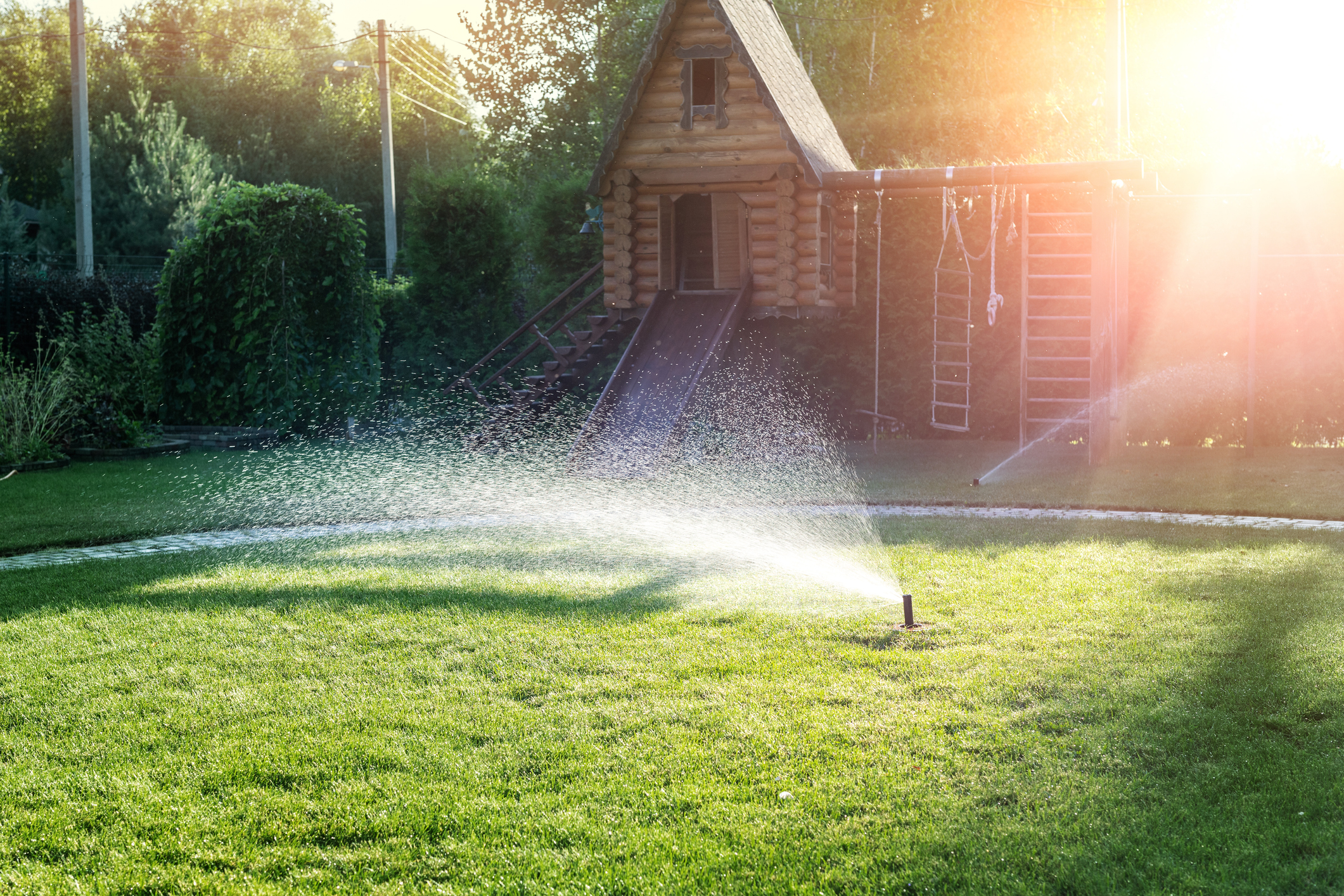
If you’re committed to Kentucky bluegrass and want to maintain summer color without relying on rainfall, a quality in-ground sprinkler system or a programmable irrigation timer paired with lawn sprinklers makes that goal realistic. Without consistent water, bluegrass will go dormant — and repeated dormancy cycles can weaken the stand over several seasons.
The bottom line: tall fescue forgives missed watering. Kentucky bluegrass does not.
Shade, Traffic, and Soil: Where Each Grass Wins
Shade
Neither grass thrives in heavy shade. If shade is your primary challenge, fine fescue (a separate species from tall fescue) is worth considering instead.
That said, tall fescue handles moderate shade better than Kentucky bluegrass. Bluegrass needs a minimum of 6 hours of direct sun per day to perform well. In part-shade conditions — under the canopy of large trees or along a fence line — tall fescue is the more practical choice.
Traffic
Kentucky bluegrass has the edge here, but there’s a catch. Once established, a thick bluegrass lawn recovers from wear better than fescue because its rhizomes continuously regenerate the turf. For families with kids or dogs, that self-healing quality is genuinely valuable.
The catch is the timeline. Getting a bluegrass lawn to that established, dense state takes one to two full growing seasons. Tall fescue, by contrast, establishes quickly and handles traffic adequately — it just doesn’t recover on its own when bare spots develop.
Soil
Tall fescue is more adaptable. It tolerates clay soils and performs across a wider soil pH range than bluegrass.
Kentucky bluegrass is more particular. It prefers well-drained, fertile soil with a pH between 6.0 and 7.0. If you’re planting bluegrass in unknown soil conditions, run a soil test first. A home soil test kit can confirm your pH within a day, and the results will tell you whether you need to add lime (to raise pH) or sulfur (to lower it) before seeding.
Maintenance Requirements: Kentucky Bluegrass vs Tall Fescue Side by Side
| Criteria | Kentucky Bluegrass | Tall Fescue |
|---|---|---|
| Establishment speed | Slow (14–30 days) | Fast (7–14 days) |
| Spreading ability | Yes (rhizomes) | No (bunch-type) |
| Watering needs | High | Moderate |
| Fertilizer needs | High | Moderate |
| Mowing height | 2.5–3.5 inches | 3–4 inches |
| Shade tolerance | Low | Moderate |
| Drought tolerance | Low–Moderate (dormancy) | Moderate–High |
| Repair ability | Self-repairs over time | Must reseed bare spots |
| Best region | North (zones 3–5) | Transition zone + North |
Kentucky bluegrass demands more from the homeowner across the board — more water, more fertilizer, and stricter attention to timing. Kentucky bluegrass maintenance requirements include a heavier fertilization schedule, typically 3–4 applications per year at higher nitrogen rates. A slow-release granular fertilizer formulated for cool season grasses is the right tool here — it feeds bluegrass steadily without the flush growth that leads to disease pressure. In return for that investment, you get a dense, fine-textured, self-repairing lawn that looks exceptional.
Tall fescue is more forgiving. It runs on a simpler fertilizer schedule (typically 2–3 applications per year), tolerates drier conditions, and adapts to more soil types. The downside is that its coarser texture doesn’t look quite as refined, and bare spots require active reseeding with a broadcast spreader for even coverage.
For grass-specific timing on fertilizing, aerating, and overseeding, the Cool Season Lawn Care Schedule: Month-by-Month Guide for a Healthier Yard breaks it down by month.
Which One Should You Actually Plant in Your Yard
Here’s a direct framework to make the call.
Choose Kentucky Bluegrass If:
- You’re in USDA hardiness zones 3–5 with reliably cool summers
- Your lawn gets full sun (6+ hours daily) and has well-drained soil
- You want a lawn that builds density and self-repairs over time
- You’re prepared to water regularly and fertilize on a structured schedule
- You have an irrigation system or plan to install one
Choose Tall Fescue If:
- You’re in the transition zone or anywhere summers regularly exceed 90°F
- Your lawn has partial shade or clay soil
- You want a lower-maintenance grass that handles dry spells without browning out
- You’re doing a lawn renovation and need fast establishment — tall fescue’s quick germination is a real advantage in renovation scenarios (see How to Fix a Bad Lawn: A Step-by-Step Renovation Guide That Actually Works)
- You’d rather reseed bare spots manually than manage a high-input irrigation and fertilizer program
A Note on Seed Quality
Whichever grass you choose, buy a named variety from a reputable seed supplier. Avoid generic “contractor mix” or uncertified bulk seed — these often contain off-type grasses, low germination rates, and no disease resistance data. Certified Kentucky bluegrass seed or certified tall fescue seed carries labeling that tells you germination percentage and variety name. That information matters when you’re investing time, water, and fertilizer into a new lawn.
One final note for homeowners in the northern transition zone: some people plant bluegrass and tall fescue in a blend, hoping to get the best of both. This can work in areas where climate genuinely supports bluegrass. But in hotter parts of the transition zone, fescue will dominate over time and the bluegrass thins out, leaving an uneven, inconsistent lawn. If your climate is marginal for bluegrass, commit to fescue — it will serve you better than a blend that slowly loses its bluegrass component.
Summary
Kentucky bluegrass and tall fescue are both solid cool season grasses, but they suit very different situations. Bluegrass delivers a finer, denser lawn with self-repairing capability — at the cost of higher water, fertilizer, and sun requirements. Tall fescue is tougher under heat and drought, more adaptable to difficult soils, and faster to establish, but it needs manual help to recover from bare spots.
Match the grass to your climate, your soil, and how much maintenance you’re realistically willing to do. Make that choice clearly, buy quality seed, and you’ll be set up for a lawn that actually performs.