Watering newly sodded warm season grass correctly during the first few weeks means the difference between a lawn that roots and thrives and one that fails before it ever gets started. Get it right, and your sod establishes in 2–4 weeks and transitions into a normal lawn you can maintain like any other warm season turf. Get it wrong — either too much or too little — and the damage happens fast, often within 24–48 hours during summer heat.
This article gives you a phase-based plan for watering newly sodded warm season grass built around two distinct stages: the establishment phase (Days 1–14) and the transition to normal irrigation (Weeks 3–6). The schedule, timing, and quantities are different in each phase. Understanding why helps you make better decisions when conditions change — because they will.
Disclosure: This article contains affiliate links. If you purchase through these links we may earn a small commission at no extra cost to you.
Why Watering Newly Sodded Warm Season Grass Is Different From Established Lawn Care
Newly laid sod has no root contact with the soil beneath it. Until roots anchor in — typically 10–21 days depending on grass type and conditions — the sod depends entirely on surface moisture to survive.
This is the opposite of how you water a mature lawn. Established warm season grass benefits from deep, infrequent watering that trains roots to grow downward. New sod needs frequent, shallow moisture to keep the interface between the sod and the soil from drying out. Running your established lawn schedule on new sod will kill it.
Warm season grasses — bermuda, zoysia, St. Augustine, centipede — root faster in heat than cool season grasses, which is an advantage. But they also dry out faster in full sun and high temperatures, which means frequency and timing are critical, especially in the first week.
One note on species differences: centipede and St. Augustine have shallower root systems and are more drought-sensitive during establishment than bermuda or zoysia. If you’ve laid either of those, build in extra attentiveness during the first two weeks and don’t rush the transition.
How Much Water New Warm Season Sod Actually Needs in the First Two Weeks
The target is simple: keep the top 1–1.5 inches of soil consistently moist. Not saturated, not dry — moist.
Each watering session during the first week should deliver roughly ¼ to ½ inch of water. The frequency (covered in the schedule below) keeps the soil from drying out between sessions.
Use the screwdriver test to verify moisture. Push a standard screwdriver through the sod and into the soil. If it penetrates 2–3 inches without resistance, moisture is adequate. If it resists or the soil feels hard, the sod is too dry and needs water immediately. For a more precise read, a basic soil test kit — available for under $15 at most hardware stores — removes the guesswork entirely.
After each watering session, walk the perimeter of the sod. Edges and corners dry out faster than the center and are the first to fail.
Week-by-Week Watering Schedule for Newly Sodded Warm Season Grass
This is the core of your sod establishment watering guide. Follow it sequentially — the timing and quantities shift as the sod roots in.
Days 1–3: Immediate Establishment
- Water within 30 minutes of installation. Sod is a living product that’s already been through harvest, transport, and possibly time on a pallet. Every hour without moisture counts against you. Don’t wait until evening.
- Soak through the sod and 1–2 inches into the soil below. After the first watering, lift a corner of the sod to confirm moisture has reached the soil underneath. If the soil is dry, you haven’t applied enough.
Days 4–14: Active Rooting Phase
- Reduce to 1–2 waterings per day and shift entirely to morning sessions. Keep each session at ¼ to ½ inch. Morning watering gives the grass time to dry before evening, which matters for disease prevention. This timing shift is one of the most important adjustments in the warm season sod watering frequency plan — morning sessions protect against the fungal pressure that wet overnight turf invites.
- Check rooting progress at Day 7. Grab a corner of the sod and tug firmly. If it lifts with little resistance, roots have not anchored — continue the establishment schedule. If it resists, rooting has begun and you can start reducing frequency.
- Begin pulling back frequency in Week 2 if rooting is confirmed. Move toward once-daily watering and let the surface dry slightly between sessions. The slight drying encourages roots to reach downward into the soil.
Weeks 3–4: Transition to Normal Irrigation
- Shift to deep, less frequent watering once rooting is confirmed. Aim for ½ to ¾ inch every other day rather than daily shallow sessions. This begins training roots for mature lawn behavior.
- By the end of Week 4 in ideal conditions, most warm season grasses in warm weather with full sun and properly prepared soil will be rooting strongly and ready to move to a standard irrigation schedule.
Important: Shaded areas, cooler weather, and compacted subsoil all extend the timeline. Don’t rush the transition based on weeks alone — use the tug test and visual cues. Premature cutback causes sod to fail from the edges inward.
How to Tell If Your New Sod Is Getting Enough Water
Knowing what to look for saves you before problems become permanent. These signals apply any time you’re watering newly sodded warm season grass and aren’t sure whether your schedule is working.
Signs of adequate moisture:
- Sod stays green and lies flat
- Edges of sod sections remain tight against the ground
- Soil feels damp (not wet) when you press it with a finger
Signs of underwatering:
- Visible gaps open between pieces as the sod shrinks
- The sod feels spongy but dry underneath when you press it
- Act immediately — warm season sod can fail within 24–48 hours without moisture in peak summer heat
Signs of overwatering:
- The sod surface stays waterlogged or mushy after sessions
- A sour or rotten smell develops in the turf
- Yellowing sets in across sections
- Fungal spots appear within the first week
If overwatering symptoms appear, stop watering for 24 hours and then reassess. Reduce frequency first — dropping a session per day — before reducing the volume of each session.
Common New Sod Watering Mistakes to Avoid
These are the most common mistakes when watering newly sodded warm season grass, each one correctable.
- Watering only once a day from Day 1 in high heat. One session is not enough in the first 72 hours when temperatures are above 85°F. Add a midday session if needed.
- Watering at night after Day 3. Warm season grasses are highly susceptible to fungal disease when wet overnight. Once you’re past the emergency establishment window, morning watering only after Day 3 — this is one of the few rules in the new sod watering schedule that has no exceptions.
- Running your established lawn’s irrigation schedule. Standard mature lawn cycles are too infrequent for new sod. The schedule must be dialed up for establishment — this is temporary and intentional.
- Ignoring the edges and corners. These areas dry out faster than the center. Check them specifically after every session and hand-water if needed.
- Mowing before the sod is rooted. First mow should happen at 3–4 weeks, once the sod resists a firm tug. Mowing before that pulls roots out of the soil before they’ve anchored. If the sod is disturbed by premature mowing, resume the Day 4–14 watering frequency until rooting is confirmed again.
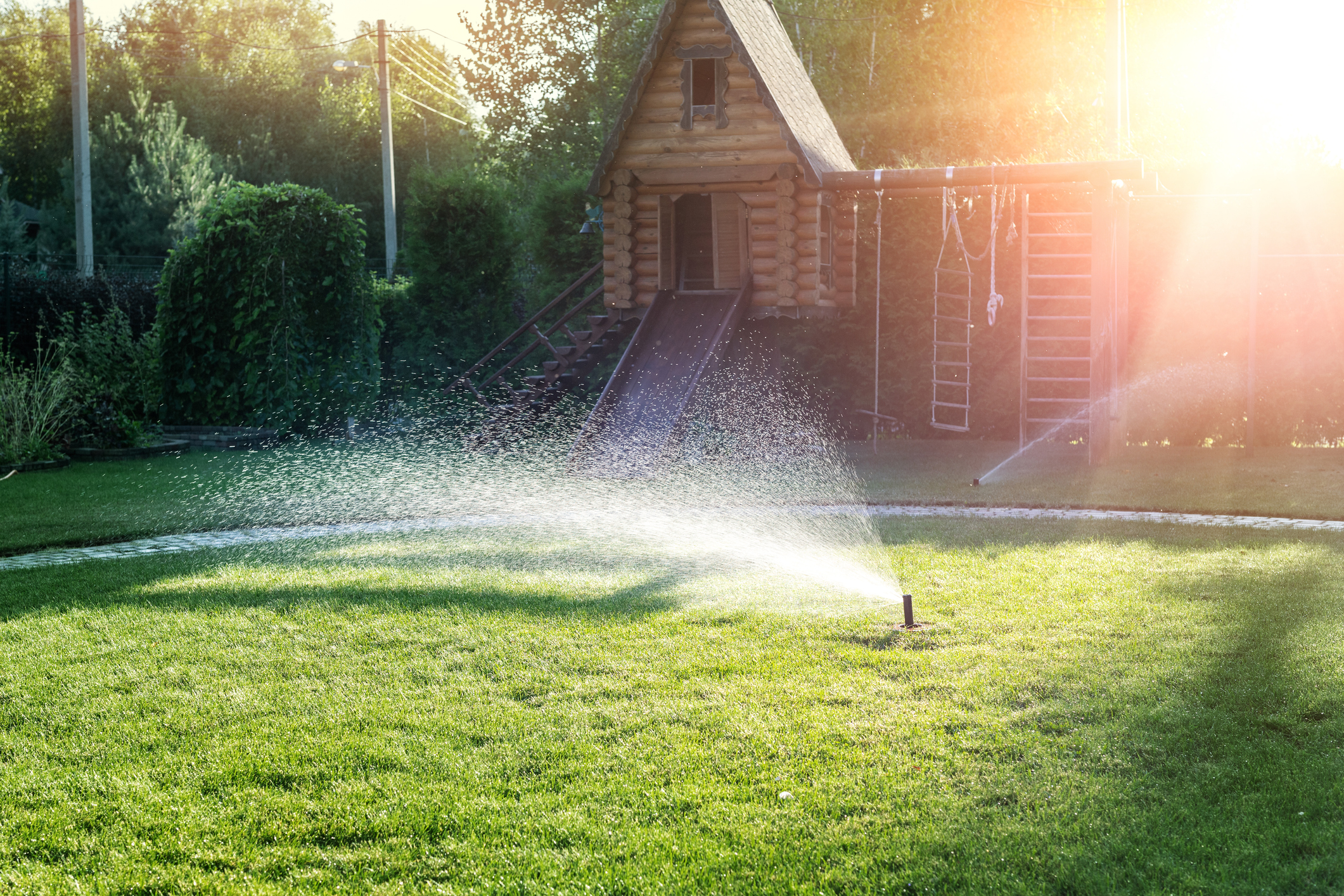
- Relying on memory for watering times. If you’re using a hose-end sprinkler rather than an in-ground system, pair an oscillating sprinkler with adjustable hose timer to keep sessions consistent without requiring you to be home for every run.
When to Transition From Sod Establishment Watering to a Normal Irrigation Routine
Three signals tell you the sod is ready for a standard warm season irrigation schedule:
- The tug test passes — firm resistance when you pull a corner
- New leaf growth is visible across the surface
- The lawn has been mowed at least once without the sod lifting
For most warm season grasses installed in summer, this happens between Week 3 and Week 6 depending on species, weather, and soil conditions.
Species timelines vary:
- Bermuda establishes fastest and typically transitions earliest
- Zoysia and St. Augustine take longer and need more patience
- Centipede is the slowest to root and the most sensitive to moisture stress during establishment
Once transitioned, follow a standard warm season watering routine: ½ to ¾ inch of water, 2–3 times per week, adjusted for heat and rainfall. Deep and infrequent — not the frequent shallow sessions of the establishment phase. For a full breakdown of timing and frequency once you’re in maintenance mode, see morning timing after Day 3 and why the morning window matters year-round for warm season lawns.
Resist the urge to keep babying the sod once it’s rooted. Continued over-frequent watering after establishment encourages shallow roots and creates ideal conditions for fungal disease.
Frequently Asked Questions About Watering Newly Sodded Warm Season Grass
How often should I water new sod in hot weather? During Days 1–3 in temperatures above 85°F, water 2–3 times per day. From Days 4–14, reduce to 1–2 morning sessions per day. The goal is to keep the top 1–1.5 inches of soil consistently moist — hot weather accelerates drying at the sod-soil interface, so err on the side of more frequent checks rather than longer run times.
Why are the edges of my new sod turning brown? Brown, curling edges are the first sign of underwatering in newly sodded warm season grass. Sod edges and corners dry out significantly faster than the center because they have less soil contact and more exposure. Check and hand-water the perimeter after every session if needed, especially in the first week.
Can I water new sod at night if it’s really hot? Only during Days 1–3 when the emergency priority is keeping the sod alive. After that, avoid night watering entirely. Warm season grasses are highly susceptible to fungal disease when wet overnight, and the risk outweighs the benefit once the sod has any root contact with the soil. If temperatures are extreme, add a midday session instead of watering at night.
How long before new warm season sod is fully established? Most warm season grasses establish well enough for a normal irrigation schedule between Week 3 and Week 6 after installation. Bermuda is fastest. Centipede and St. Augustine take longer. Use the tug test rather than the calendar — the sod is ready when it resists a firm pull and new growth is visible.
Should I fertilize new sod right away, or wait? Wait. Applying fertilizer immediately after installation can burn newly laid sod that hasn’t established root contact. Most warm season sod benefits from a complete warm season fertilizer application at 4–6 weeks, once rooting is confirmed by the tug test. Check with your sod supplier for species-specific recommendations.
What Success Looks Like
At 4–6 weeks post-installation, established warm season sod looks and behaves like a lawn. It holds color, resists pulling, responds normally to mowing, and runs on a standard irrigation schedule without special attention.
Getting there requires discipline in those first two weeks of watering newly sodded warm season grass: frequent moisture, morning timing after Day 3, consistent edge checks, and a willingness to trust the tug test rather than the calendar. The phase-based approach removes the guesswork — follow the schedule, watch the signals, and your sod has every reason to succeed.