Disclosure: This article contains affiliate links. If you purchase through these links, I may earn a small commission at no extra cost to you. As an Amazon Associate, I earn from qualifying purchases.
Chinch bug damage in St. Augustine grass is one of the most misdiagnosed lawn problems in the South. Homeowners see irregular brown patches spreading across their lawn during the hottest weeks of summer and assume it’s drought stress or fungal disease. They water more. They apply fungicide. The lawn keeps dying. By the time the real cause is identified, entire sections of turf are gone.
This article walks you through identifying chinch bug damage in St. Augustine grass correctly, confirming the infestation before you spend money on treatment, and eliminating the problem with the right products applied the right way.
What Chinch Bug Damage Looks Like in St. Augustine Grass
Chinch bug damage in St. Augustine grass starts as irregularly shaped patches of yellowing grass that quickly turn straw-brown and die. The patches don’t follow neat geometric patterns — they spread outward from a central point and grow in days, not weeks, as the insect population moves outward looking for fresh turf to feed on.
Where damage appears first:
- Along pavement edges, driveways, and sidewalks
- On sunny slopes or south-facing areas with intense heat exposure
- In areas with thick thatch accumulation
- Near fence lines and lawn borders
The grass blades yellow from the tip downward. If you pull back the dead turf and look at the stolons — the horizontal runners that St. Augustine uses to spread — they’ll be dried out or shriveled. This is a key detail. In drought stress, stolons stay alive and green. With chinch bugs, they’re dead.
Unlike fungal diseases such as brown patch, chinch bug damage does not produce circular rings or leaf lesions with defined edges. If you see those features, that’s a different problem entirely.
When Chinch Bugs Hit Hardest: Peak Season and Timing to Watch
In the South, chinch bugs in St. Augustine lawns are most active from late May through September. Peak feeding pressure typically hits in July and August when temperatures are highest and rainfall is unreliable.
Hot, dry conditions are ideal for chinch bug reproduction. A single generation can complete its life cycle in six to eight weeks, and overlapping generations mean populations build quickly through the summer. What looks like a small problem in late June can turn into a widespread infestation by mid-July.
Thatch-heavy lawns face higher risk. Chinch bugs live, breed, and hide inside the thatch layer — the dense mat of dead and living grass material between the soil surface and the green canopy. Thick thatch is essentially a chinch bug habitat.
Damage often seems to appear overnight. That’s because the insects feed before discoloration becomes visible. By the time you see yellow patches, the population has usually been active for a week or more.
Regional note: Florida homeowners typically face earlier season pressure and longer infestation windows than homeowners in Texas or along the upper Gulf Coast. If you’re in central or south Florida, start scouting in late April.
How to Confirm Chinch Bugs Before You Treat
Do not apply insecticide based on visual damage alone. Treating the wrong problem wastes money and — critically — pyrethroid insecticides applied unnecessarily kill beneficial predator insects like big-eyed bugs and ground beetles that naturally suppress chinch bug populations. Confirm the pest first.
The Float Test (Most Reliable)
- Cut both ends off a large metal coffee can or use a similar cylinder
- Push one end two to three inches into the soil at the border between dead and healthy turf — not in the center of the dead patch
- Fill the can with water and keep topping it off for five minutes
- Watch for insects floating to the surface
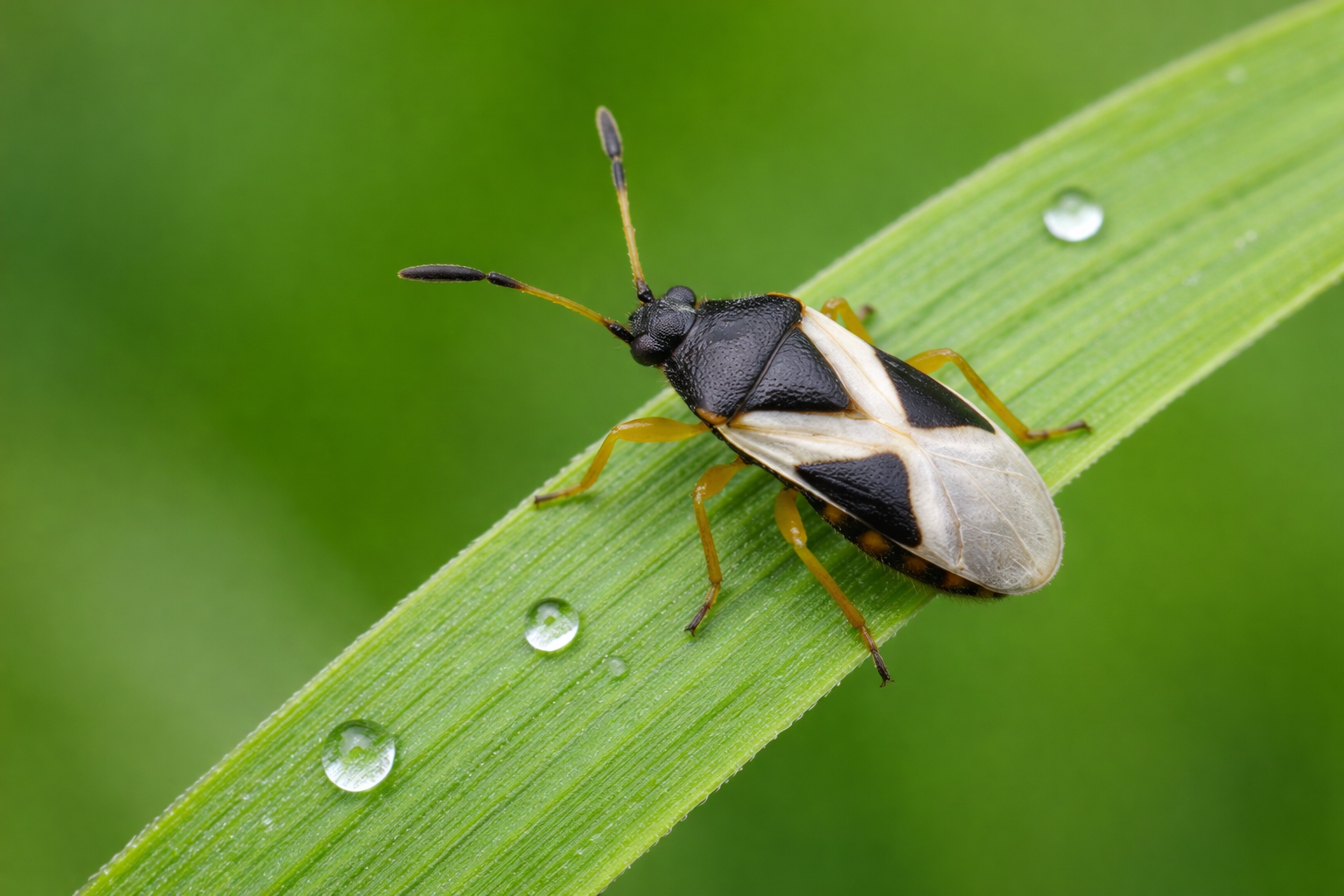
Adult chinch bugs are black with white wing patches, roughly one-fifth of an inch long. Nymphs (immature chinch bugs) are red-orange with a white band across their abdomen. Finding 20 or more insects per square foot confirms a damaging infestation level.
The Visual Parting Method
- Kneel at the edge between dead and living grass
- Part the grass at thatch level with your hands
- Look for fast-moving, tiny insects at the soil surface
Chinch bugs scatter quickly when disturbed, so move fast. Check in the morning or late afternoon — midday heat drives them deeper into thatch where they’re harder to spot.
How to Identify Chinch Bug Damage vs. Brown Patch, Drought Stress, and Other Look-Alikes
These three problems overlap in timing and appearance. Use this comparison to rule out alternatives before treating.
| Symptom | Chinch Bugs | Brown Patch | Drought Stress |
|---|---|---|---|
| Pattern shape | Irregular, spreading from hot edges | Circular or ring-shaped | Uniform or follows slope |
| Stolon condition | Dead and shriveled | Often still alive | Still alive |
| Responds to irrigation | No improvement | Worsens or no change | Improves within 24–48 hrs |
| Visible insects | Yes (confirmed by float test) | None | None |
| Leaf lesions | None | Yes — tan center, dark border | None |
| Peak timing | July–August, hot and dry | Warm nights, high humidity | Any dry period |
Key diagnostic rule: If the damaged area improves noticeably within 48 hours of thorough irrigation, drought stress is the likely cause. If there’s no improvement — or if the patches keep spreading — suspect chinch bugs or disease and do the float test before proceeding.
For a complete breakdown of how fungal disease presents in St. Augustine turf, including the ring patterns and leaf lesion details that distinguish it from chinch bug damage St. Augustine grass cases, see our guide to Brown Patch Disease in St. Augustine Grass.
What not to do: Do not increase watering hoping dead patches will recover from chinch bug feeding. Added moisture will not reverse the damage and delays correct treatment. It can also increase conditions favorable to fungal disease, creating a secondary problem.
How to Treat Chinch Bug Damage in St. Augustine: Products and Application Steps
Once you’ve confirmed chinch bug damage in St. Augustine grass, treatment should happen quickly. Populations grow fast in summer heat.
Which Products Work
Imidacloprid (systemic): Slower acting but provides longer residual control. Useful when the infestation has spread across a large area. Apply as a drench treatment in severe cases, either alongside or following granular bifenthrin application.
Resistance note: Pyrethroid resistance — including resistance to bifenthrin — has been documented in Florida chinch bug populations. If you apply a bifenthrin product at the correct rate and see no improvement within 10 to 14 days, switch to a different active ingredient class such as imidacloprid. Note that chlorpyrifos-based products, sometimes listed as an alternative, have been heavily restricted or banned for residential use in several states — confirm label availability in your state before purchasing.
Step-by-Step Application
- Mow and lightly irrigate 24 hours before treating. Apply about half an inch of water to the target area. This moistens the thatch layer and improves insecticide penetration to where the insects are actually living.
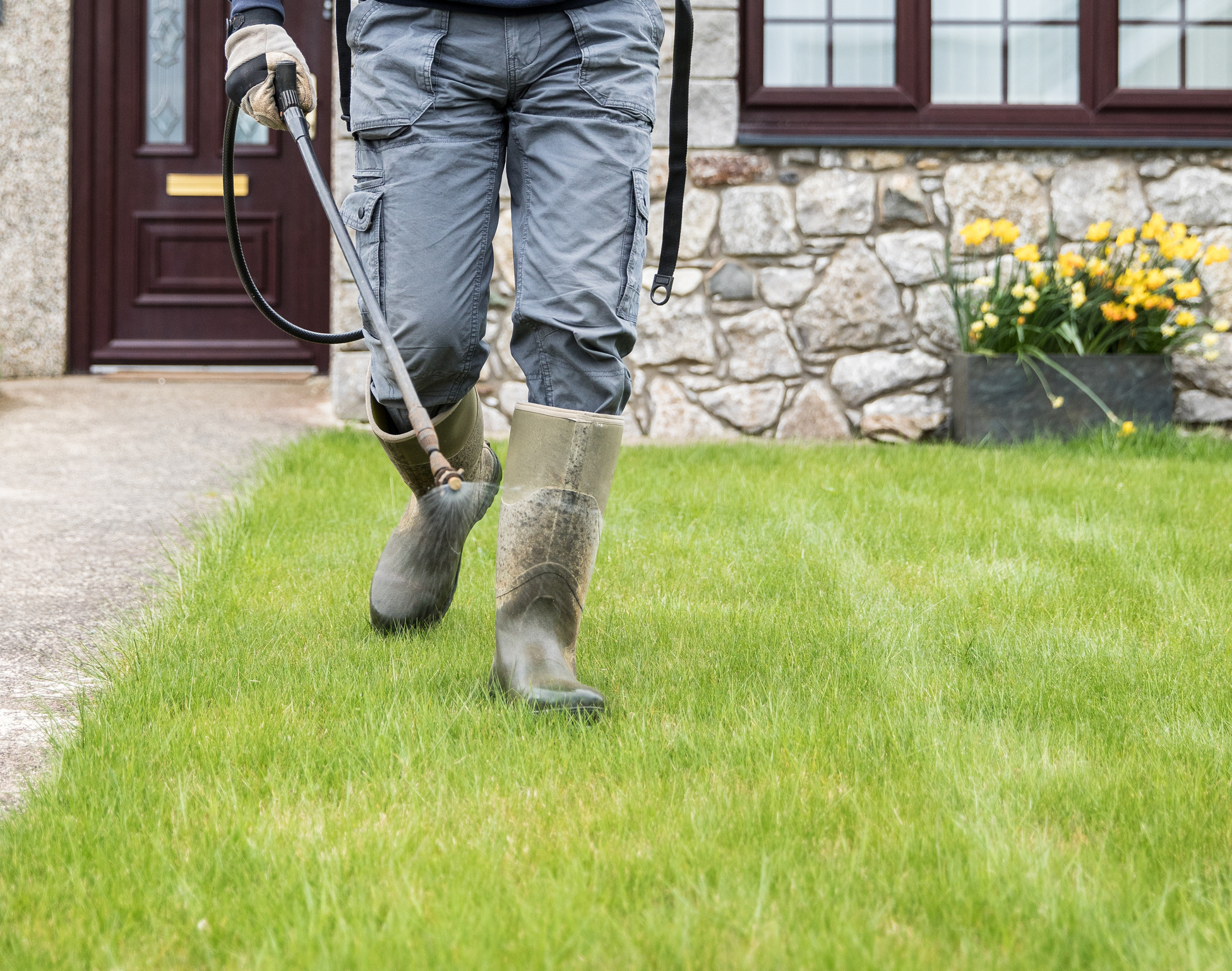
- Apply granular insecticide with a broadcast spreader. A quality broadcast spreader ensures even coverage — uneven application leaves untreated gaps where chinch bugs survive. Apply at the label rate exactly. Do not estimate.
- Treat the dead zone plus a 10-foot buffer into healthy turf. Chinch bugs are most active at the advancing edge of damage, not in the dead center. Treating only the brown patch misses the active population.
- Water in immediately after application. Follow label instructions — typically one-quarter to one-half inch of irrigation right after granular application to move the product through the thatch to the soil surface.
- Wait 14 days before re-treating. Do not double-apply within the same window. Over-application does not improve results and increases chemical load on your soil.
- Recheck with the float test at 14 days. This confirms whether the treatment worked. If insect counts are still above 20 per square foot and you used bifenthrin, switch active ingredients for the second application.
- Accept that dead patches will not green up. Chinch bug-killed turf does not recover. Once the infestation is eliminated, plan to resod or plug those areas with fresh St. Augustine.
Preventing a Repeat Infestation: Cultural Habits That Reduce Chinch Bug Risk
Treatment solves the current infestation. These practices reduce the odds of it coming back.
Manage thatch aggressively. Keep thatch below half an inch. Anything thicker becomes ideal chinch bug habitat. Dethatch St. Augustine in late spring — before peak insect season — using a vertical mower or dethatching rake.
Use slow-release nitrogen fertilizer in summer. Excess fast-release nitrogen pushes rapid, soft growth that chinch bugs feed on more easily. A slow-release fertilizer delivers a steadier nutrient supply without promoting the lush, tender growth that attracts and sustains heavy feeding.
Water deeply and infrequently. Shallow, frequent irrigation encourages thatch buildup and shallow root systems — both of which increase chinch bug risk. Aim for one inch of water per week applied in one or two sessions rather than daily light watering.
Don’t overwater as a pest deterrent. Moist thatch does not deter chinch bugs. They tolerate humidity well. Overwatering increases fungal disease risk without reducing insect pressure.
Scout early, starting in late May. Walk your lawn’s perimeter edges — pavement borders, fence lines, areas with southern sun exposure — and do a quick visual check or spot float test. Catching an emerging population before it spreads dramatically limits damage.
Consider resistant sod varieties when resodding. Some newer St. Augustine cultivars show improved tolerance to chinch bug feeding. If you’re replacing damaged areas, ask your sod supplier specifically about resistance levels in the varieties they carry.
Frequently Asked Questions About Chinch Bug Damage in St. Augustine Grass
What do chinch bugs look like in St. Augustine grass?
Adult chinch bugs are small — roughly one-fifth of an inch long — with black bodies and white wings folded flat across their back. Nymphs are easier to spot by color: they start bright red-orange with a white band across the abdomen and darken as they mature. You’re most likely to see them at thatch level along the edge of a damaged patch, especially in the morning or late afternoon.
How fast does chinch bug damage spread?
Fast. A confirmed infestation can expand a patch by several feet in a week under peak summer conditions. Chinch bugs move outward from depleted feeding areas into healthy turf, which is why damage grows at the edges rather than deepening in the center. If you’re watching a patch grow larger day by day, that expansion pattern is itself a diagnostic signal.
Will my lawn recover from chinch bug damage on its own?
The turf that’s already dead will not recover. Chinch bugs inject a toxin while feeding that kills grass tissue — once stolons are dead and dry, that area needs to be resodded or plugged. Surrounding healthy turf will not fill in quickly enough to cover significant damage on its own, particularly in summer when growth is slowed by heat stress.
Can chinch bugs come back after treatment?
Yes. A single insecticide application eliminates the current population but provides no permanent protection. If thatch remains thick, fertilizer timing stays off, or neighboring lawns carry high populations, reinfestation is possible within the same season or the following year. Scouting in late May each year is the best early-warning system.
Is brown patch or chinch bugs more likely if my lawn is dying in summer?
Both are common, and timing overlaps significantly. The fastest way to separate them: do the float test. If you find chinch bugs, that’s your answer. If you find nothing, look for circular damage patterns and leaf lesions consistent with brown patch. A lawn dying in irregular patches from the edges inward — especially near pavement — tilts strongly toward chinch bug damage St. Augustine grass cases rather than disease.
How do I know if my chinch bug treatment worked?
Repeat the float test 14 days after application. If insect counts drop below five per square foot and the patch stops expanding, treatment is working. The dead area will not green up — that’s not a sign of treatment failure. Success is measured by the infestation stopping, not by the dead turf recovering.
Do chinch bugs live in the soil or in the grass?
Chinch bugs live primarily in the thatch layer — the dense mat between the soil surface and the green grass canopy. They do not burrow into soil the way grubs do. This is why watering in insecticide to move it through the thatch is essential for effective treatment: the product needs to reach the zone where the insects actually live and feed.
Are chinch bugs worse in Florida than other Southern states?
Generally yes. Florida’s longer warm season and consistently high summer temperatures allow chinch bug populations to complete more generations per year and remain active for a longer window — sometimes from April through October. Homeowners in central and south Florida face the most severe and extended pressure. Texas and upper Gulf Coast homeowners typically deal with a shorter but still significant July–August peak.
Summary
Chinch bug damage in St. Augustine grass follows a recognizable pattern: irregular, expanding patches starting at hot lawn edges, dead stolons, and a sharp boundary between dying and healthy turf. The float test is your most reliable diagnostic tool, and using it before treating saves you from misapplied insecticide and wasted money.
If you confirm the infestation, apply a granular bifenthrin product across the damaged zone and a 10-foot buffer of healthy turf, water it in per label directions, and recheck at 14 days. In Florida, watch for pyrethroid resistance if results are poor — switch active ingredients rather than reapplying the same product. Dead patches won’t recover on their own, so plan to resod once the insects are eliminated. Long term, thatch management and proper fertilizer timing are your best defenses against a repeat problem.
Start with the float test at the edge of any brown patch before buying anything. If you find insects, you have a clear path forward. If you don’t, the look-alikes table above will point you toward the next diagnostic step.