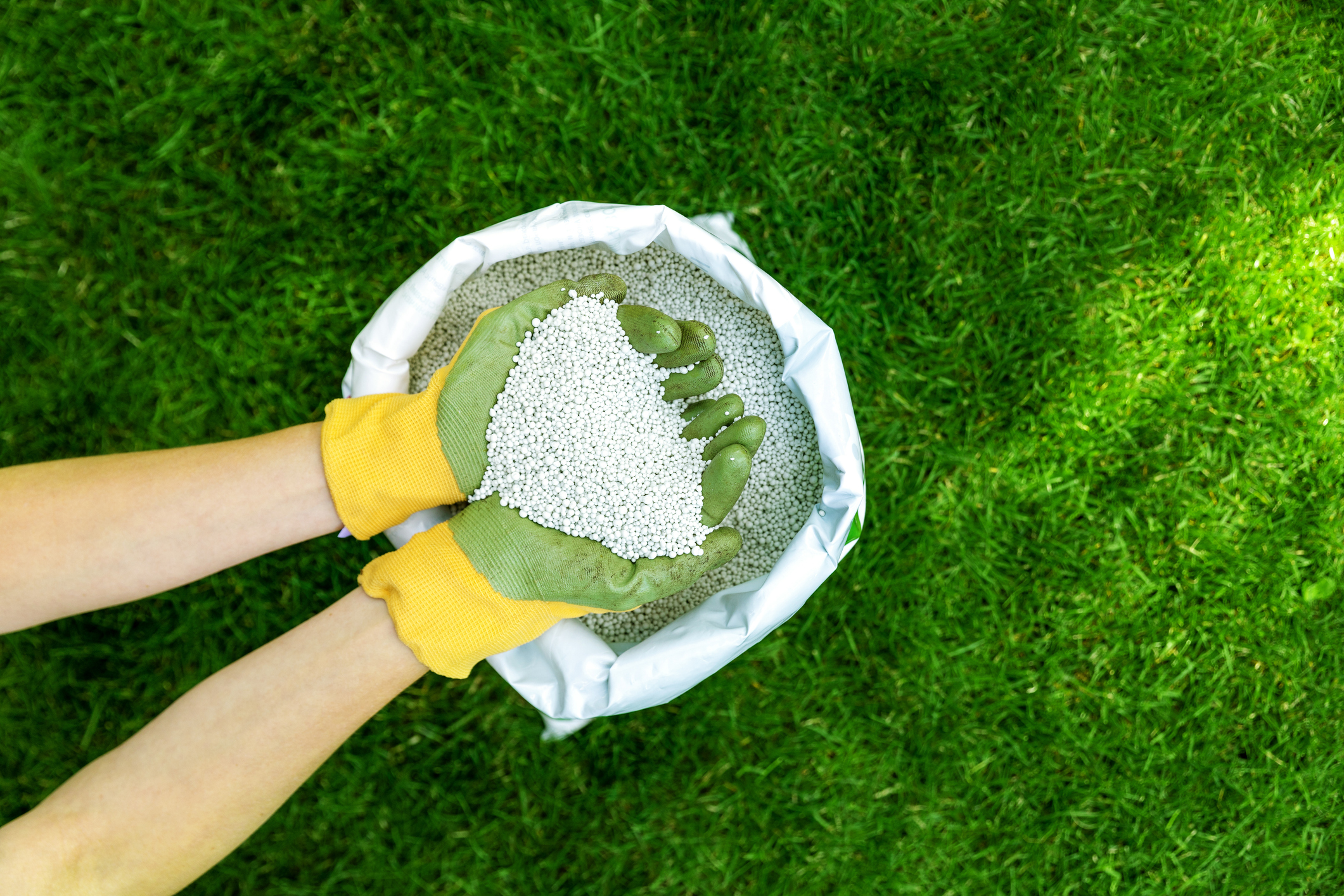
Walk into any garden center and grab a bag of lawn fertilizer. On the front, you’ll see three bold numbers — something like 10-10-10, 32-0-10, or 18-24-12. Knowing what the numbers on a fertilizer bag mean is the single most useful piece of knowledge you can have before spending money on lawn care. These numbers tell you exactly what’s inside, how much of it, and whether it’s the right product for your lawn’s current needs.
This guide explains the N-P-K ratio from the ground up: what each number represents, what each nutrient actually does, how to match a ratio to your lawn’s situation, and why the numbers never add up to 100.
Disclosure: This article contains affiliate links. If you purchase through these links, I may earn a small commission at no extra cost to you. As an Amazon Associate, I earn from qualifying purchases.
What the Three Numbers on a Fertilizer Bag Mean — and Why They Matter
The three numbers always appear in the same fixed order: nitrogen – phosphorus – potassium, abbreviated as N-P-K.
Each number is a percentage — specifically, the percentage of that nutrient by weight in the bag. If you have a 20-pound bag of 10-10-10 fertilizer, it contains:
- 2 lbs of nitrogen (10% of 20 lbs)
- 2 lbs of phosphorus (10% of 20 lbs)
- 2 lbs of potassium (10% of 20 lbs)
This information is part of what’s called the guaranteed analysis — a federally required label that appears on every fertilizer sold in the U.S. It’s not marketing copy. It’s a legal declaration of nutrient content.
One technical note worth knowing: the label doesn’t express phosphorus and potassium as pure elements. It uses P₂O₅ (phosphorus pentoxide) for the middle number and K₂O (potassium oxide) for the third. This means the actual elemental percentages are slightly lower than what the numbers show. For practical purposes, you don’t need to convert. Treat the numbers as direct percentages and you’ll make good decisions.
What Nitrogen — the First Number — Does for Your Lawn
Nitrogen is the nutrient most directly responsible for green color, shoot growth, and overall lawn density. When people say they want their grass to “pop,” they’re usually describing the effect of nitrogen.
A nitrogen-deficient lawn shows it clearly: slow growth, pale green or yellowing color that appears uniformly across the lawn. This is different from patchy yellowing, which typically suggests disease or burn patterns. Applying a nitrogen-rich fertilizer to a deficient lawn produces visible results within days.
The flip side is that too much nitrogen — especially during heat or drought — causes fertilizer burn, where grass blades scorch and turn yellow or brown. Understanding that risk is part of reading the numbers on a bag of fertilizer correctly.
The first number varies more dramatically between products than the other two. A bag labeled 5-10-31 and one labeled 32-0-10 are designed for completely different use cases — the first number tells you which category you’re looking at immediately.
Slow-Release vs. Fast-Release Nitrogen
Not all nitrogen behaves the same way once it’s on your lawn. There are two categories:
- Fast-release nitrogen (urea, ammonium nitrate): Delivers quickly and produces rapid green-up, but burns more easily and doesn’t last long.
- Slow-release nitrogen (sulfur-coated urea, IBDU, polymer-coated urea): Feeds gradually over several weeks, reduces burn risk, and requires fewer applications.
- They allow for even distribution when spreading.
- They protect granules from clumping during storage.
- They slow nutrient release in some formulations.
- First number (nitrogen): Green color and growth. The most impactful number for an established lawn.
- Second number (phosphorus): Root development and establishment. Most useful at seeding or sodding — unnecessary for most established lawns.
- Third number (potassium): Stress tolerance and resilience. Most valuable heading into heat or cold.
When buying, check the label for the words “slow-release” or “controlled-release” — especially for summer applications when heat stress makes lawns more vulnerable.
If you’re nervous about burning your lawn, organic-based slow-release options are worth considering. Products like Milorganite release nitrogen gradually through microbial breakdown. They’re very forgiving for beginners and nearly impossible to over-apply at label rates. If you prefer a synthetic slow-release fertilizer, Scotts Turf Builder Slow-Release Lawn Food is a widely used option that balances convenience with reduced burn risk.
What Phosphorus and Potassium — the Second and Third Numbers — Actually Do
Phosphorus — the Middle Number
Phosphorus supports root development and early plant establishment. It’s most valuable when you’re seeding a new lawn, laying sod, or overseeding thin areas. Strong roots early in a plant’s life lead to better drought and stress tolerance later.
Here’s the catch: most established lawns in the U.S. already have adequate phosphorus from years of fertilizing. Adding more doesn’t help. It can also run off into nearby waterways, where it contributes to algae blooms and water quality problems. This is why several states — including Minnesota, Wisconsin, and Maryland — restrict or ban phosphorus in lawn fertilizers unless a soil test confirms a deficiency.
Fertilizers labeled “starter fertilizer” have a higher middle number by design. Scotts Starter Food for New Grass is a widely available example. Ratios like 18-24-12 are typical for this category, because establishing roots is the priority at that stage.
If you’re not seeding or sodding, and you haven’t done a soil test, there’s a reasonable argument for choosing a fertilizer with a zero in the middle. You’re likely not phosphorus-deficient. Skipping it is both economical and environmentally responsible.
Potassium — the Third Number
Potassium operates quietly. It doesn’t produce the dramatic visual changes nitrogen does — its work is internal. Potassium strengthens cell walls. It improves how grass handles heat, drought, cold, and disease pressure. It supports overall plant resilience.
Think of potassium as the stress-tolerance nutrient. A lawn going into summer heat or preparing for winter dormancy benefits from adequate potassium in the weeks before that stress arrives.
This is exactly why “winterizer” fertilizers have a high third number. Ratios like 5-0-20 or 13-0-44 are designed to build potassium reserves before grass goes dormant.
How to Match Fertilizer Bag Numbers to What Your Lawn Needs Right Now
The right ratio depends on your lawn’s current growth stage and the season. Here are three practical scenarios:
Established lawn in the active growing season: Prioritize the first number. Choose a product with a high nitrogen content, little or no phosphorus, and moderate potassium. Ratios like 24-0-11 or 32-0-10 are common for this purpose.
New seed or sod: Root establishment is the priority. Look for a starter fertilizer with a higher middle number — 18-24-12 or similar. Use this only at seeding or sodding time, not as a routine lawn feed.
Heading into a stress season (late summer or fall): Reduce nitrogen and increase potassium. Ratios like 5-0-20 or dedicated winterizer blends help grass harden before heat peaks or cold dormancy sets in.
Grass type influences when you apply fertilizer — but not what each number means. That’s universal across all turf species. Still, knowing your grass type helps you time applications correctly and gets better results from whatever ratio you choose. For cool-season lawns in particular, the Complete Guide to Cool Season Grasses (Fescue, Bluegrass, Rye) covers how grass species differences affect your fertilizing decisions. For a complete picture of application timing across the entire year, the Cool Season Lawn Care Schedule Month by Month Guide walks through exactly when to apply based on grass type and season. For warm-season lawns specifically, a warm season fertilizer like Andersons PGF Complete 16-4-8 is a well-regarded all-around option that balances all three nutrients for grasses like Bermuda, Zoysia, and St. Augustine.
The most reliable way to stop guessing about ratios is a soil test. A basic home kit like the Luster Leaf Rapitest or a test through your state’s cooperative extension service will tell you exactly which nutrients are deficient. You stop paying for what you don’t need and apply what actually matters.
Why the Numbers on a Fertilizer Bag Don’t Add Up to 100
This is one of the most common points of confusion when reading fertilizer bag numbers. A bag of 10-10-10 fertilizer only accounts for 30% of its total weight — so what’s the other 70%?
The label isn’t hiding anything. It shows nutrient content, not total composition. That’s the number that matters for application decisions.
One practical implication: some premium fertilizers have much higher active nutrient percentages. A bag of 46-0-0 urea is almost entirely active nitrogen with very little filler. That’s efficient — but it also means a little goes a long way. Precision matters more with high-concentration products. Beginners are more likely to over-apply them.
Common Fertilizer Ratios You’ll See at the Store — and When to Use Each
| Ratio | Common Name | Best Used For |
|---|---|---|
| 10-10-10 | Balanced / all-purpose | General use when soil testing isn’t possible |
| 46-0-0 | Urea | Fast nitrogen boost — requires precise application |
| 32-0-10 | Lawn fertilizer | Established cool-season lawns in spring |
| 18-24-12 | Starter fertilizer | New seed, sod, or confirmed phosphorus deficiency |
| 5-0-20 | Winterizer | Pre-dormancy potassium building in fall |
On 10-10-10 specifically: It’s the ratio people default to because it looks balanced and simple. For an established lawn, you’re almost certainly paying for phosphorus you don’t need. It’s not harmful if applied at correct rates — but it’s rarely the most efficient choice. If you do want a 10-10-10 option, the Andersons PGF balanced 10-10-10 fertilizer is a well-regarded product for general use.
One important reminder: The ratio is only part of the decision. The total amount of nitrogen applied per 1,000 square feet matters more than the ratio alone. Always check the label’s application rate instructions — not just the numbers on the front.
Frequently Asked Questions
What does 10-10-10 fertilizer mean? It means the bag contains 10% nitrogen, 10% phosphorus, and 10% potassium by weight. A 20-lb bag contains 2 lbs of each nutrient. It’s a balanced, all-purpose ratio — but it’s rarely the best choice for an established lawn because most lawns don’t need extra phosphorus.
What is the best N-P-K ratio for a lawn? It depends on your situation. For an established lawn in the growing season, a high-nitrogen, low-phosphorus ratio like 24-0-11 or 32-0-10 is typical. For new seed or sod, a starter fertilizer like 18-24-12 works better. A soil test gives you the most accurate answer for your specific lawn.
Why don’t the three numbers on fertilizer add up to 100? Because the numbers only represent the active nutrients — nitrogen, phosphorus, and potassium. The rest of the bag is carrier material, filler, and coatings that help with even spreading and storage. This is normal and intentional.
Is phosphorus in fertilizer bad for the environment? In excess, yes. Phosphorus that isn’t absorbed by grass can run off into waterways and cause algae blooms. Most established lawns already have enough phosphorus. Some states have banned or restricted its use in lawn fertilizers for this reason. A soil test will tell you whether you actually need it.
What’s the difference between slow-release and fast-release fertilizer? Fast-release nitrogen (like urea or ammonium nitrate) acts quickly but can burn grass more easily and doesn’t last long. Slow-release nitrogen (sulfur-coated or polymer-coated urea, organic-based products) feeds gradually over weeks, reduces burn risk, and requires fewer applications. Look for “slow-release” or “controlled-release” on the label.
Do I need all three nutrients, or just nitrogen? Most established lawns primarily need nitrogen for routine maintenance. Phosphorus is most valuable during seeding or sodding. Potassium is helpful heading into heat or cold stress. A soil test tells you which nutrients are actually low so you’re not applying what you don’t need.
What does a high third number on fertilizer mean? A high third number means the product contains a high percentage of potassium. This is the stress-tolerance nutrient. Products with a high third number — like winterizer blends — are designed to strengthen grass before dormancy or periods of heat and drought.
Can I use the same fertilizer in spring and fall? Not ideally. Spring calls for higher nitrogen to support active growth. Fall calls for lower nitrogen and higher potassium to help grass harden before dormancy. Using a high-nitrogen fertilizer in fall can push tender growth that gets damaged by frost. Match the ratio to the season.
Conclusion
The three numbers on a fertilizer bag are always in the same order: nitrogen, phosphorus, potassium — N-P-K. Each is a percentage of that nutrient by weight. They don’t add up to 100 because the rest is carrier material. That’s intentional and harmless.
Here’s the practical takeaway for each number:
Matching fertilizer bag numbers to your lawn’s actual needs — based on the season, growth stage, and ideally a soil test — will save you money and produce better results than grabbing whatever’s on sale.
10-10-10 is rarely the best choice for an established lawn, but it’s a safe default if you’re not ready to dig deeper. When you are ready, a soil test is the single best tool for making a confident fertilizer decision.
From here, three articles are worth reading next: learn what happens after something goes wrong in our guide to fertilizer burn diagnosis and recovery, understand what your soil actually contains with our overview of soil amendments, and dial in your application timing by identifying what type of grass you have.