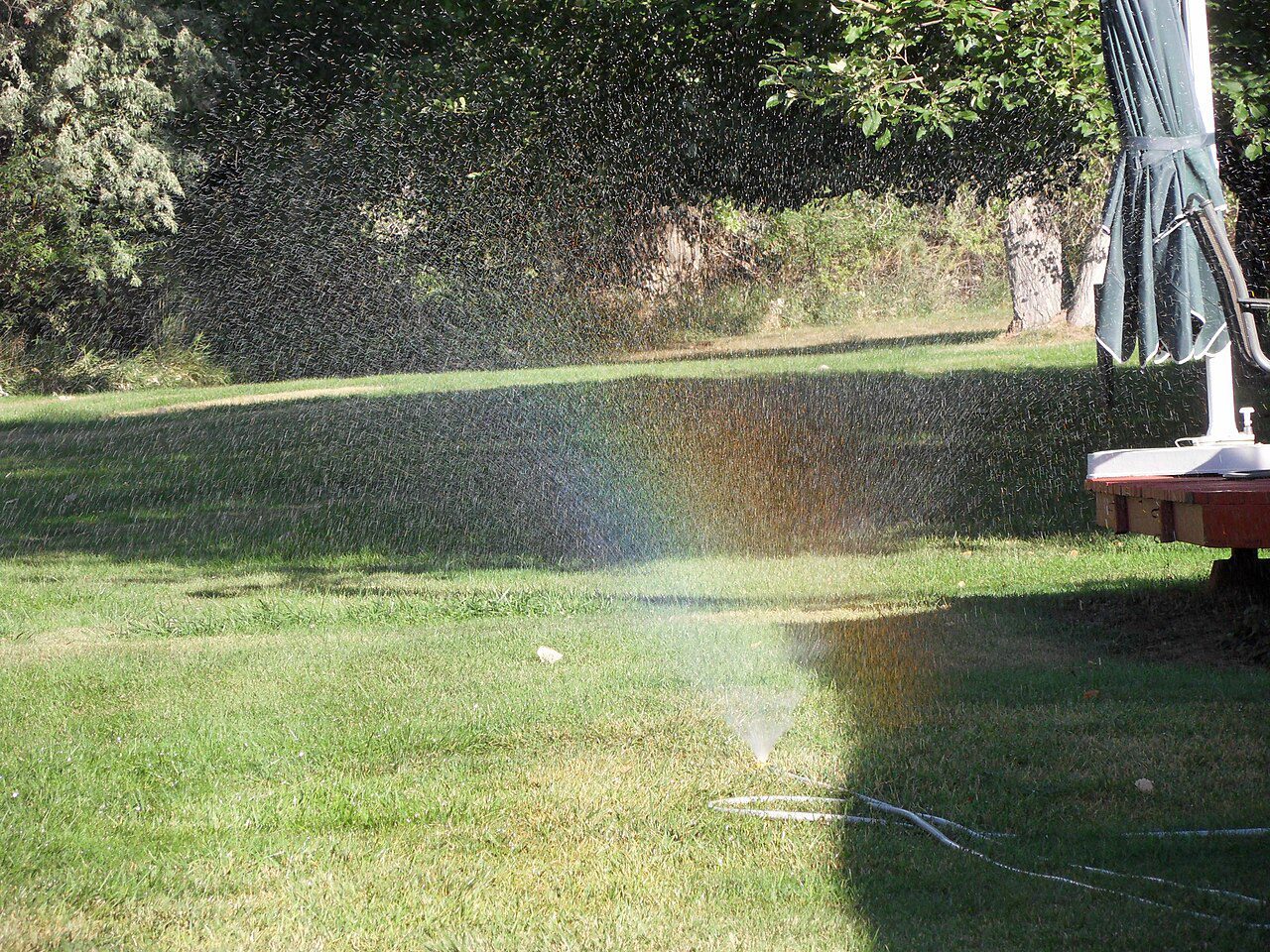

If you can’t measure what your sprinklers are putting out, you can’t water your lawn correctly — it’s that simple. This guide walks you through how to measure sprinkler output using the tuna can method and the more detailed catch cup test. By the end, you’ll have a concrete number — inches per hour — for each irrigation zone, and you’ll know exactly how to use that number to set your runtimes with confidence.
Disclosure: This article contains affiliate links. If you purchase through these links, I may earn a small commission at no extra cost to you. As an Amazon Associate, I earn from qualifying purchases.
Why Measuring Sprinkler Output Actually Matters for Your Lawn
Most watering targets are expressed in inches. Your grass type needs roughly 1 inch per week — St. Augustine grass watering requirements and tall fescue summer watering needs differ in the specifics, but both targets are useless if you don’t know how much water your sprinklers are actually delivering per hour. For a broader look at how those targets shift throughout the year, see How Much Water Does a Lawn Need Per Week by Season.
Here’s the thing about irrigation systems: zones on the same controller often perform very differently. Pressure variation, head spacing, and how much zone coverage overlaps all affect output. One zone might deliver 1.2 inches per hour while another delivers 0.6. If you’re running every zone for the same amount of time, you’re overwatering one and underwatering the other.
Knowing how to measure sprinkler output makes everything downstream accurate — how long to run each zone, when to skip a session after rain, and how to adjust timing by season. It’s the one piece of data that ties your schedule to your actual lawn.
A soil moisture meter can complement this process well. After you run your test and set your runtimes, use a soil moisture meter to confirm water is reaching the root zone — not just sitting at the surface. It’s a useful cross-check, especially on clay or compacted soils.
What You Need Before You Test Your Sprinkler Coverage
This is a simple gear list. Nothing specialized required.
Essential:
- A ruler or tape measure — a standard 12-inch ruler works fine
- A timer — your phone works
Optional but helpful:
- A marker to label cans by zone — useful when testing multiple zones in one session
- A rain gauge — doubles as a catch container and already has measurement markings
- A graduated catch cup irrigation test kit — available online, these include multiple uniform cups and a reading guide. Worth buying if you have more than two or three zones, irregular head spacing, or if your DIY results are showing a lot of variation. They remove guesswork from the measurement step and make zone comparison much easier.
Having the right tools on hand makes this process faster and more accurate — if you’re also looking to round out your lawn care setup, the Best Lawn Care Tools and Equipment for Homeowners is a useful reference for what’s worth owning.
How to Measure Sprinkler Output Using the Tuna Can Method
This is the core method for how to measure sprinkler output. Follow these steps for each zone.
1. Place cans across the zone in a grid pattern. Space them evenly throughout the zone — aim for at least 3 to 5 cans per zone. Place some near the heads, some at mid-range, and some at the far edges. This is important because a single can near one head gives you one data point, not a picture of the whole zone. You want to capture coverage variation.
2. Run that zone for exactly 15 minutes. Don’t run it longer. Fifteen minutes is enough to get a readable result, and it’s short enough that wind and evaporation don’t distort the numbers. It also makes the math simple — you’ll multiply up to an hourly rate. Run the test in the morning if you can, when wind is typically calmer and temperatures are lower.
3. Measure the water depth in each can. Use a ruler. Hold it straight up from the bottom of the can and read the depth. Record every measurement separately — don’t average them out yet. You want to see the spread first.
4. Calculate your output rate. Average all the readings, then multiply by 4. That gives you inches per hour.
- Example: Average depth of 0.25 inches × 4 = 1 inch per hour
- If that zone runs for 30 minutes, it’s delivering 0.5 inches per session
5. Repeat for every zone. Don’t assume they all perform the same. Measuring sprinkler output zone by zone is what makes per-zone runtime adjustments possible. Test each zone independently and record results separately.
How to Run a Catch Cup Test for More Accurate Zone Coverage
The catch cup test is the same concept as the tuna can method, but with more measurement points and better precision. Use this approach when:
- Your tuna can results show wide variation from one container to the next
- You have irregular head spacing or zones that overlap
- You’re trying to diagnose specific dry or wet patches in your lawn
1. Place 6 to 12 catch cups per zone in a grid. Include the corners and edges of the zone — not just the middle. Edge coverage is where most systems underperform.
2. Run the zone for 30 minutes. The longer runtime gives you more water to measure, which reduces the impact of small reading errors.
3. Measure each cup individually. Note the lowest reading and the highest reading across all cups.
4. Assess distribution uniformity (DU). DU is a measure of how evenly water is spread across a zone. Ideally, all cups should read within 25% of each other. If the spread between your lowest and highest readings exceeds that threshold, coverage is uneven enough to cause real problems — some areas are getting significantly less water than others.
5. Map where the low and high cups are. This tells you whether under-coverage is concentrated near the edges, between two heads, or in a specific corner. That information points directly to whether the fix is head repositioning, pressure adjustment, or nozzle replacement.
A dedicated catch cup set makes the reading step faster and reduces measurement error, but you can absolutely run this test with more tuna cans. The goal is the same: a complete picture of how to measure sprinkler output across every part of the zone, not just a single data point.
What to Do With Your Sprinkler Output Measurements
This is the payoff. Numbers mean nothing until you act on them.
Set zone runtimes by output, not by feel. If your target is 1 inch per week delivered in two sessions (0.5 inches each), and a zone delivers 1 inch per hour, you run that zone for 30 minutes per session. Zone delivering 0.75 inches/hour? You need 40 minutes. Zone delivering 1.25 inches/hour? You only need 24 minutes. Do this math for every zone and program your controller accordingly.
Adjust zones individually. Most irrigation controllers allow different runtimes per zone — use that feature. Running every zone for the same duration is one of the most common setup errors homeowners make. Your measurements make per-zone adjustments straightforward.
Use your numbers to manage post-rain irrigation. If your area received 0.75 inches of rain and your weekly target is 1 inch, you know you need one short supplemental session — not a full cycle. Without measured output, you’re guessing at how much to add. With it, the math takes about 30 seconds. For the full process on calculating what your lawn still needs after a rain event, see how to adjust your warm season watering schedule after heavy rain.
Automate once your runtimes are dialed in. Once you’ve measured sprinkler output for each zone and set accurate runtimes, a timer makes the system hands-off. See our guide on choosing a manual vs. automatic sprinkler timer to decide which approach fits your setup.
Common Reasons Your Sprinkler Output Is Uneven or Too Low
If your catch cup or tuna can results look off, here’s what to check before assuming a bigger problem:
- Clogged or misaligned heads: Debris in a nozzle reduces flow. A head that isn’t sitting perpendicular to the ground sprays at an angle and misses parts of the zone. Both are easy visual checks.
- Low water pressure: If pressure drops noticeably when two zones run at once, isolate and test each zone separately. Your results should improve with zones running one at a time.
- Head spacing issues: Heads that are too far apart leave gaps in coverage. This is a design problem — not something a nozzle swap will fix.
- Worn nozzles: Output degrades over time. If a zone that previously tested at 1 inch/hour now measures 0.6, worn or partially blocked nozzles are the likely cause. Replacement rotor sprinkler heads are an inexpensive fix — you can swap individual heads without touching the rest of the system.
Frequently Asked Questions About Measuring Sprinkler Output
How many inches per hour should my sprinklers put out?
Most residential sprinkler systems deliver between 0.5 and 2 inches per hour, depending on head type, spacing, and water pressure. Rotary heads tend to apply water more slowly (0.5–1 inch/hour) than fixed spray heads (1–2 inches/hour). The target isn’t a specific output rate — it’s understanding what your system delivers so you can match runtimes to your lawn’s weekly water needs.
Can I use any container for the tuna can test, or does the shape matter?
Shape matters. You need straight, vertical sides to get an accurate depth reading. Tuna cans work well because they’re shallow, stable, and uniform. Avoid tapered cups, bowls, or anything where the opening is wider than the base — those shapes make depth measurements unreliable.
Do I need to test every zone separately?
Yes. Zones on the same controller can deliver very different output rates due to pressure variation, different head types, and varying spacing. Running every zone for the same duration is a common mistake. Measuring each zone independently is what makes per-zone runtime adjustments possible.
What if my catch cups show very different amounts?
Wide variation between cups means uneven distribution — some parts of the zone are getting significantly more water than others. Check for clogged or misaligned heads first. If heads look fine, the issue may be spacing or pressure. Ideally, all cups should read within 25% of each other. A spread larger than that warrants head inspection or repositioning.
How often should I retest my sprinkler output?
Retest at least once per season, or after any repair to the irrigation system. Output changes as heads wear, pressure fluctuates, or new plantings alter how water moves across a zone. The numbers you measure today may not hold two years from now.
Does wind affect the test results?
Yes. Wind can push spray away from your containers and skew readings — especially with fixed spray heads that throw water in a defined arc. Run tests in the morning when wind is typically lightest. If conditions are consistently breezy, retest on a calmer day before acting on the numbers.
My output looks fine but I still have dry spots — what else could cause that?
Consistent output doesn’t rule out localized coverage gaps. A head may be partially blocked, aimed slightly off, or surrounded by taller grass that’s intercepting spray. Soil compaction can also prevent water from penetrating evenly even when surface delivery looks uniform. Walk the zone while it’s running to spot any heads with reduced or misdirected flow.
What success looks like: you have a written record of each zone’s output rate and the runtime needed to hit your weekly water target. Once you’ve learned how to measure sprinkler output and applied it to your system, watering stops being a best guess and becomes a repeatable process. Retest once per season or after any repair — output shifts as heads age, pressure changes, or new plantings alter how water moves across a zone. One afternoon of testing gets you a reference you’ll rely on for years.

Lawn Care Enthusiast & Homeowner
Subscribe to our Newsletter for Weekly updates!