Fall is the most important feeding window for cool season grass — but knowing how late you can fertilize cool season grass before the window closes is where most homeowners get tripped up. “Fall” can mean September in Minnesota or late November in Virginia. Apply too early and you miss the late-season benefit. Apply too late and the fertilizer sits unused in the soil. This guide gives you the real cutoff signal, how it varies by region and grass type, and what to do if you’ve already missed the window.
Disclosure: This article contains affiliate links. If you purchase through these links we may earn a small commission at no extra cost to you.
Why the Last Fall Fertilizer Application Matters More Than Any Other
Cool season grasses — Kentucky bluegrass, tall fescue, fine fescue, and perennial ryegrass — grow most actively when soil temperatures are between 50°F and 65°F. Spring and fall are their prime windows. Summer is survival mode.
In summer, high heat speeds up growth and respiration. The grass burns through nitrogen quickly and gains little lasting benefit from feeding. Fall is different. As top growth slows, the plant shifts its energy underground. It stockpiles carbohydrates and nutrients in its root system. Those reserves carry it through winter and fuel early spring green-up.
A well-timed late-fall feeding supports this process directly. The nitrogen you apply isn’t triggering a flush of leaf growth. Instead, it’s absorbed and stored as fuel the plant draws on in March and April when the ground warms back up.
For Kentucky bluegrass especially, fall is when the plant rebuilds after summer stress. Tall fescue uses the same window to deepen its root system before the ground hardens. Fine fescue and perennial ryegrass follow the same pattern at somewhat lower nitrogen demands.
This is the science behind why winterizer fertilizers exist as a product category — a topic covered in more depth in What Is Winterizer Fertilizer — And Is It Actually Worth Buying for Your Lawn?.
How Late Can You Fertilize Cool Season Grass? The Calendar vs. Reality
The most common mistake homeowners make is picking a calendar date — “I’ll fertilize in October” — without checking what the ground is actually doing. Understanding how late you can fertilize cool season grass means understanding that the cutoff is functional, not fixed. Once the grass has gone fully dormant and the soil approaches freezing, fertilizer can no longer be absorbed or used.
That said, calendar ranges give you a useful starting point for knowing when to start paying attention:
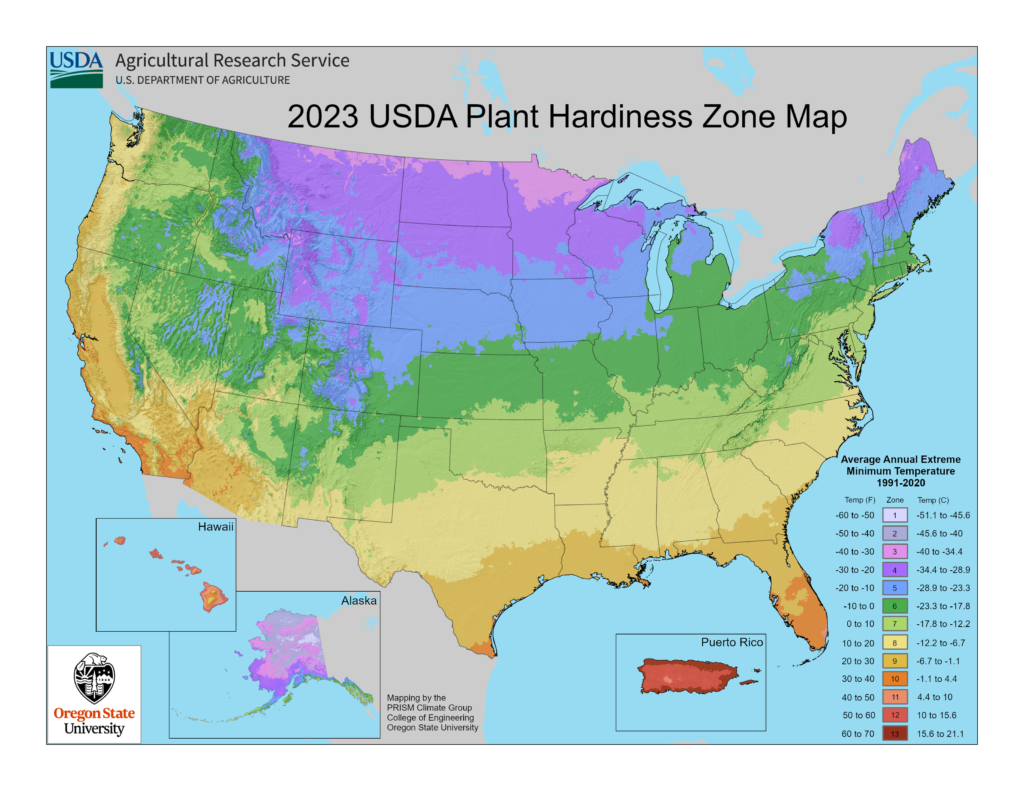
- Zone 4–5 (Minnesota, Wisconsin, northern New England): mid-October to early November
- Zone 6 (Ohio, Pennsylvania, lower New England): late October through early November
- Zone 7 (Virginia, Tennessee, Missouri): late October to mid-November
- Zone 7b–8a (North Carolina Piedmont, northern Arkansas): late November is possible in mild years
Treat these as windows to watch, not deadlines to schedule around. The actual cutoff in any given year depends on what the soil is doing — and that varies.
Soil Temperature: The Real Cutoff Signal for Fall Fertilization
Soil temperature at 2 to 4 inches depth is the governing variable — not air temperature, not the first frost, not the date on the calendar. When you’re asking how late you can fertilize cool season grass, this is the number that answers your question.
Cool season grass roots remain active and capable of nutrient uptake down to around 40°F. Below that threshold, the biological processes that allow the plant to absorb and use nitrogen effectively shut down. The practical rule:
Apply your last fall fertilizer when soil temperatures are still consistently above 40°F — ideally in the 45–55°F range.
Once soil temps fall below 40°F, the grass can’t absorb and use nitrogen efficiently. The nutrient sits in the soil. It then risks leaching through the soil profile into groundwater — especially with fast-release, water-soluble forms.
How to Check Soil Temperature
You don’t need to guess. Two reliable options:
- Soil thermometer — A basic probe thermometer designed for garden or lawn use costs under $15. It gives you an accurate reading in seconds. Push the probe 2–4 inches into the ground and check the reading. Take measurements in the morning when the soil is coolest — that gives you a conservative baseline. This is the most practical tool for making a confident timing decision.
- State extension soil temperature data — Many land-grant university extension services publish real-time soil temperature maps. Cornell Cooperative Extension covers New York. Iowa State Extension covers the Midwest. Similar resources exist across most of the northern U.S. These pull from weather station networks and are accurate enough for lawn timing decisions.
One important nuance: soil temperature lags behind air temperature by days or even a week or two. A stretch of warm days in late October can keep soil warm enough for fertilizer uptake even when the air feels distinctly cold. Don’t assume the soil is too cold without checking.
Last Fertilizer Timing by Climate Zone and Grass Type
By Climate Zone
The ranges below assume average fall conditions. In warmer-than-normal years, the window extends. In early cold snaps, it closes faster.
- Zone 4–5 (Minnesota, Wisconsin, Maine): Soil temps drop quickly once September ends. Target your final application by late September to mid-October. Don’t count on November.
- Zone 6 (Ohio, Pennsylvania, Connecticut): Mid-October through early November is the typical sweet spot. Watch soil temps closely in November.
- Zone 7 (Virginia, Tennessee, Missouri): Late October to mid-November. Milder falls genuinely extend the window — check soil temps rather than assuming it’s too late.
- Zone 7b–8a (NC Piedmont, northern Arkansas, southern transition): Late November is possible in mild years. This is the only region where a Thanksgiving-weekend fertilizer application might still make sense — but only if soil temps confirm it.
By Grass Type
Grass species differ in how actively their roots grow at cooler temperatures. That affects how late a feeding is still useful. Knowing your grass type is part of knowing how late you can fertilize cool season grass in your specific lawn.
- Kentucky bluegrass: Highly responsive to fall feeding. Relies heavily on carbohydrate storage for spring green-up, making the last-fall application particularly valuable. Don’t skip it. Learn more about this grass in our Complete Guide to Cool Season Grasses (Fescue, Bluegrass, Rye).
- Tall fescue: Its deep root system continues active growth into cooler temperatures than most cool season species. Handles later applications reasonably well — if you’re in Zone 6 and it’s early November, tall fescue can still benefit.
- Fine fescue: Lower nitrogen demand overall. A modest fall application is sufficient. Avoid heavy rates late in the season — fine fescues are sensitive to nitrogen excess. For help distinguishing fine fescue from other species, Kentucky Bluegrass vs Tall Fescue: Which Cool Season Grass Is Right for Your Yard? covers the key identification differences.
- Perennial ryegrass: Fast to respond to fertilizer, which cuts both ways. It can push new growth quickly — apply too late and that growth is vulnerable to hard frost damage. Don’t push the window with ryegrass.
If you’re not sure which grass type you have, the bluegrass vs. tall fescue comparison above is a good starting point for identification.
What Happens If You Fertilize Cool Season Grass Too Late in Fall
Missing the window isn’t catastrophic, but it isn’t free either. Here’s what actually happens when fertilizing cool season grass too late:
The fertilizer goes unused. If applied after the grass has gone fully dormant, nitrogen stays in the soil. The grass can’t absorb it. You’ve paid for nothing.
Leaching becomes a risk. Fast-release nitrogen is water-soluble. If the ground isn’t frozen but the grass is dormant, rain moves that nitrogen through the soil profile and eventually into groundwater. This is both wasteful and environmentally problematic.
Tender growth can be damaged. In zones where fall stays mild longer, a very late application can push a flush of new top growth. That growth hasn’t hardened off — and it’s vulnerable when the first hard freeze arrives.
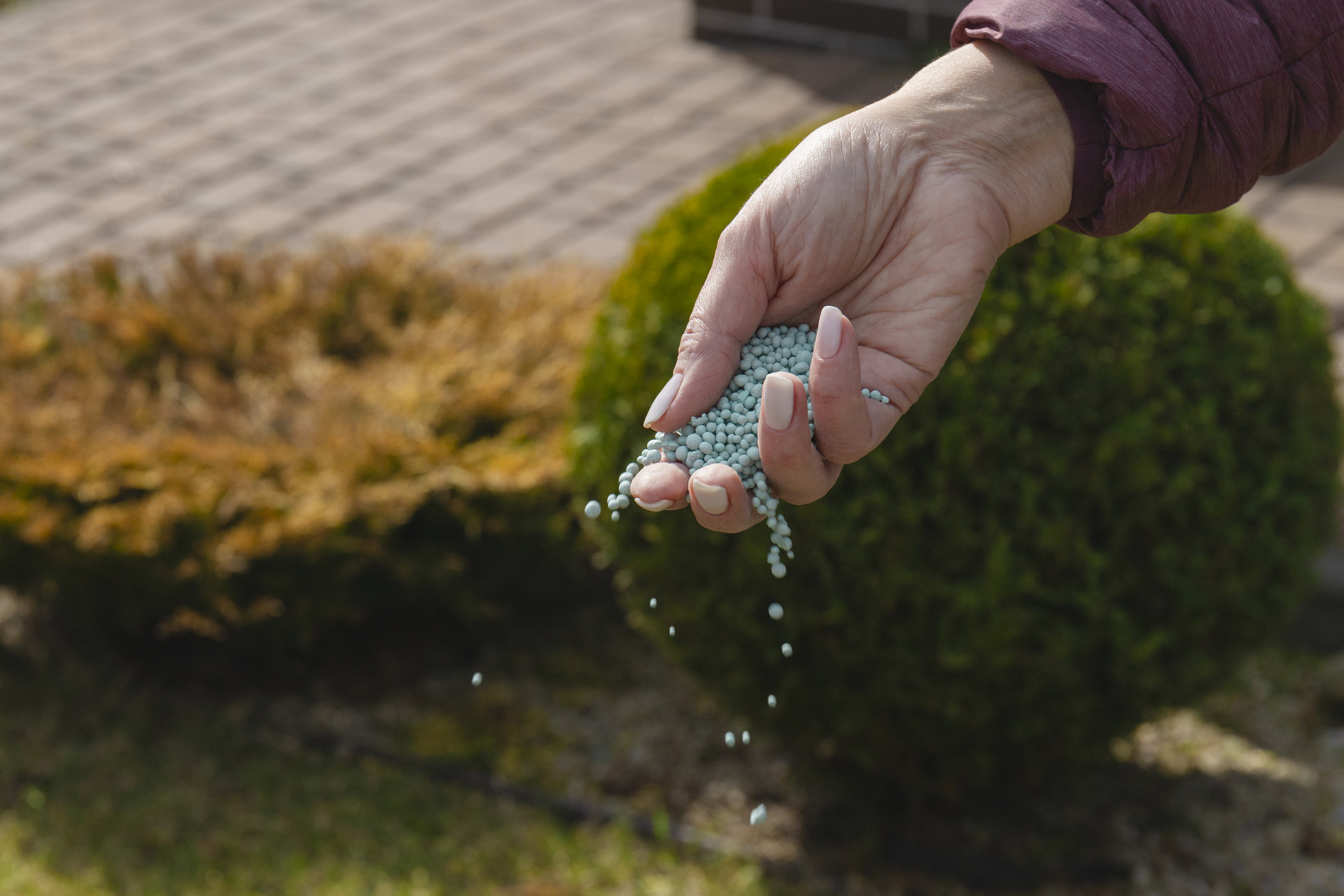
If you’re applying near the edge of the window, the safest product choice is a slow-release or controlled-release granular fertilizer. Look for “slow-release nitrogen,” “stabilized nitrogen,” or “polymer-coated urea” on the label. A product like Scotts Turf Builder Slow-Release Lawn Food is a dependable all-around choice that releases nitrogen more gradually and is far less prone to leaching. A winterizer product with a lower nitrogen percentage and higher potassium is a sensible late-window choice. The higher potassium also supports cell hardening and cold tolerance.
What to Do If You Already Missed the Fall Fertilization Window
First, don’t try to squeeze in a late application once soil temps have dropped below 40°F. The risk-to-benefit ratio doesn’t hold up.
If you’re close to the edge — still 3–4 weeks of soil temps above 45°F remaining — a modest application is still worth doing. It doesn’t need to be a full dose. Half the normal rate with a slow-release product is a reasonable call.
If you’ve genuinely missed it, accept it and redirect your focus to early spring. The first spring feeding matters more when you skipped fall. Plan to apply as soon as soil temps climb back above 50°F and the grass breaks dormancy. That first spring application becomes your bridge feeding.
Consider a light potassium application. Potassium aids cold hardiness. It’s less dependent on active plant growth than nitrogen to provide some benefit. If a soil test shows potassium deficiency, a modest application near the end of the window still makes sense.
Don’t panic about one missed fall feeding. A single skipped late-fall application won’t permanently damage a healthy lawn. You may see slightly slower spring green-up and a bit less density coming out of winter. A lawn with good fundamentals recovers.
For a full picture of what fall and winter lawn care should look like month by month, the Cool Season Lawn Care Schedule: Month-by-Month Guide for a Healthier Yard covers the complete seasonal flow.
Frequently Asked Questions
What is the latest date I can fertilize my lawn in fall?
There’s no single date that applies everywhere. The cutoff depends on your climate zone and, more importantly, your soil temperature. For most cool season lawns in Zone 4–5, the practical deadline is mid-October. In Zone 6, it extends to early November. In Zone 7 and warmer, late November is possible in mild years. Watch soil temperature, not the calendar.
Can I fertilize in November for cool season grass?
It depends on where you live. In northern zones like Minnesota or Wisconsin, November is almost always too late — soil temps have typically dropped below 40°F by then. In Zone 6 states like Ohio or Pennsylvania, early November can still work if the fall has been mild. In Zone 7 and the transitional south, November fertilization is often still within the window. Check your soil temperature before making the call.
What soil temperature is too cold to fertilize cool season grass?
Below 40°F, cool season grass roots can no longer absorb and use nitrogen effectively. That’s the functional cutoff. The ideal range for your last fall application is 45–55°F — the grass is still active enough to take up nutrients and store them for spring.
Does it matter what type of fertilizer I use for a late fall application?
Yes, significantly. Near the edge of the window, a slow-release or controlled-release nitrogen source is much safer than a fast-release product. Fast-release nitrogen is water-soluble and can leach through the soil if the grass isn’t actively absorbing it. Slow-release formulas reduce that risk. Look for “polymer-coated urea” or “stabilized nitrogen” on the label. A winterizer product with lower nitrogen and higher potassium is a sensible choice.
What if I fertilize and then it snows the next week?
A light snow shortly after fertilizing isn’t a problem. The fertilizer is already in the soil. As long as soil temperatures were above 40°F when you applied it and the grass had a chance to absorb some nitrogen before going dormant, you’ll see a benefit. Deep, prolonged freezes right after application are more of a concern — that’s when leaching and runoff become real risks.
Is one missed fall fertilizer application a big deal?
Not usually. Your lawn won’t die from a single skipped late-fall feeding. You may notice slightly slower spring green-up and a bit less density after winter. The bigger impact is that your first spring application becomes more important — it needs to serve as the bridge feeding your lawn missed in fall. One missed feeding in an otherwise well-maintained lawn is recoverable.
How do I check my soil temperature without a thermometer?
The most accurate option without a physical thermometer is to use your state’s extension service soil temperature data. Iowa State Extension, Cornell Cooperative Extension, and similar land-grant university resources publish real-time soil temperature readings from weather station networks. These are freely available online and accurate enough for lawn timing decisions. A basic soil probe thermometer is inexpensive, though — it’s worth having one on hand.
Conclusion
The key principle to carry away: soil temperature above 40°F is your cutoff signal, not a calendar date. The sweet spot for the last fall fertilizer application is when soil temps are in the 45–55°F range. At that point, the grass is still actively processing nutrients and storing reserves for spring. The closer you push to the edge of that window, the more important it is to use a slow-release product to reduce leaching risk and avoid pushing vulnerable new growth.
Knowing how late you can fertilize cool season grass comes down to reading your soil, not your calendar. If you’ve already missed the window, accept it, plan for early spring, and consider whether a light potassium application still makes sense for your conditions. If you also maintain a warm season lawn, a warm season fertilizer like Andersons Professional PGF Complete 16-4-8 is worth having in your rotation for those areas during their active growing season.
For more on the right products and timing logic, see the What Is Winterizer Fertilizer — And Is It Actually Worth Buying for Your Lawn? guide. For how fall fertilization fits into the full year, check the Cool Season Lawn Care Schedule: Month-by-Month Guide for a Healthier Yard. And if you want a deeper look at the grass types covered here, the Complete Guide to Cool Season Grasses (Fescue, Bluegrass, Rye) is the place to start.